

Journey 1 · Those Who Met the Lord
Saint Simon, Apostle
A zeal purified by the Lord
Feast day October 28
Tap to step inside
Saint Simon, Apostle
A zeal purified by the Lord
Map of a life
This life told in 11 chapters
Begin the journey OpeningOpening1 min
 Chapter 1 of 11A name found only in lists1 min
 Chapter 2 of 11The Zealot, not a Canaanite1 min
 Chapter 3 of 11The Zealots of that time1 min
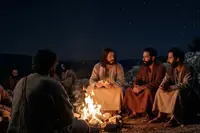 Chapter 4 of 11At the same table as a tax collector1 min
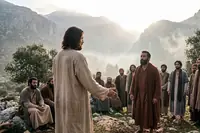 Chapter 5 of 11Chosen after a night of prayer1 min
- Chapter 6 of 11Apostle of Georgia1 min
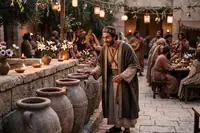 Chapter 7 of 11The bridegroom at Cana?1 min
 Chapter 8 of 11The roads after Pentecost1 min
 Chapter 9 of 11A cave by the Psyrtskha River1 min
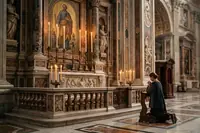 Chapter 10 of 11Lying beside his friend under the altar of Saint Joseph1 min
 Chapter 11 of 11A zeal purified1 min
Feast day
Saint Simon, Apostle
Some places may celebrate on a slightly different day.
October 28
Patron of
- Tanners
- Sawyers
Often depicted with
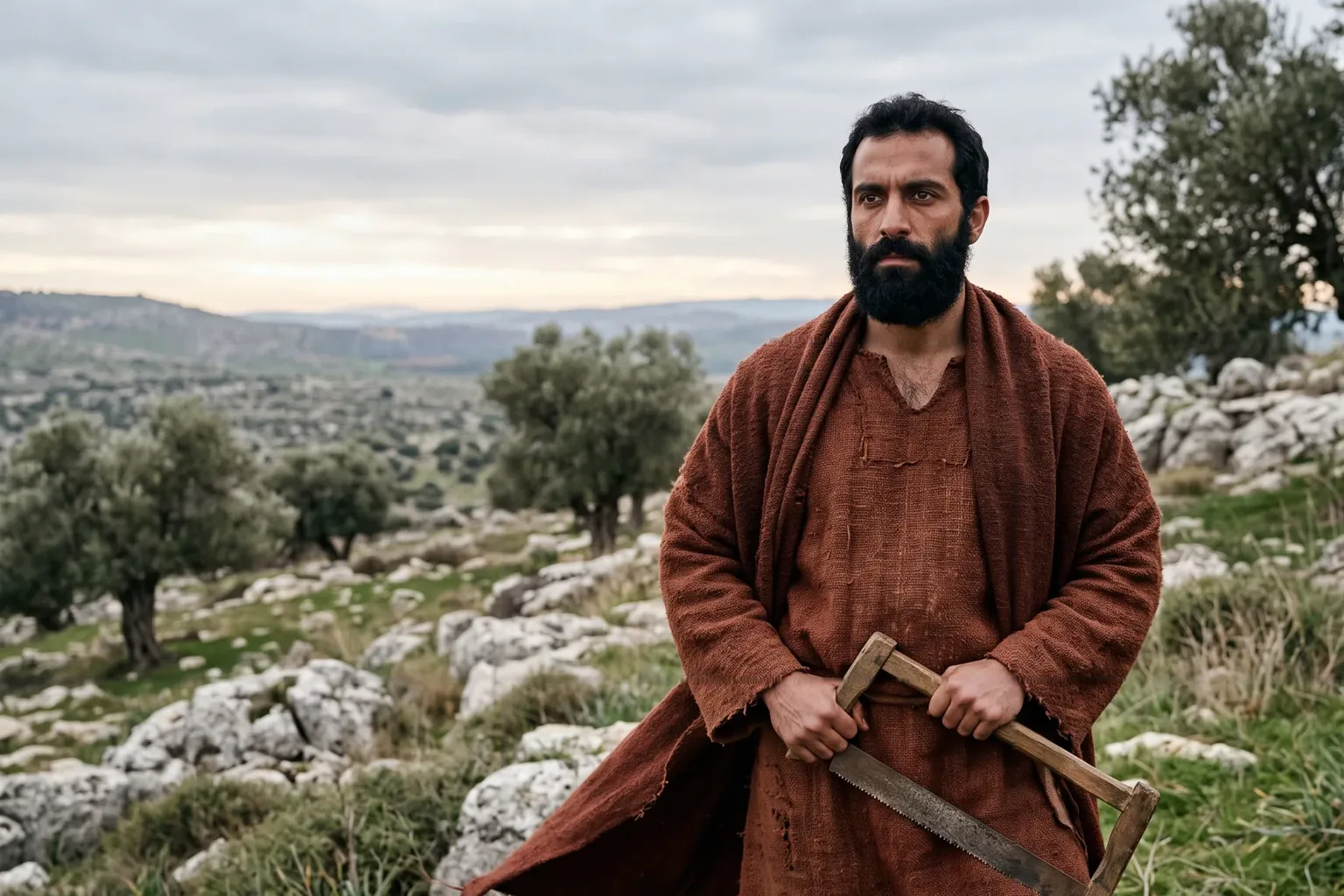
- A saw
- A fish
Opening
Opening
Among the Twelve Apostles, there are some everyone remembers: Peter, who denied his Master three times and then wept; John, who leaned on the Lord’s breast; Thomas, who demanded to put his hand into the nail marks; Judas Iscariot, the betrayer. And there are some about whom almost no one remembers anything. Saint Simon belongs to the second group.
The Gospels do not record a single word he spoke. No question, no action, no miracle is linked to his name. His name appears exactly four times in the New Testament, and all four times it is in the lists of the Twelve Apostles. Nothing more.
But in all four lists, his name always comes with one word: “Zealot”. That one word is enough to tell a whole story: of a man who may once have burned to drive the Roman army out of his homeland, who was then called by Jesus, and who let Him turn that fire into a different kind of fire.
Chapter 1 of 11
A name found only in lists
The four lists of the Twelve Apostles in the New Testament, in the Gospels of Matthew, Mark and Luke and in the Acts of the Apostles, are not entirely the same. But they follow a curious pattern: the names are always arranged in three groups of four, and the person at the head of each group never changes. Peter always heads the first group. Philip always heads the second. James the son of Alphaeus always heads the third.
Simon is always in the third group, the last one, near Jude Thaddeus and Judas Iscariot. Some guess that this was the group of the least prominent, or of those who followed the Lord last. No one knows for sure. What we do know is that when the Gospels mention a Simon without saying more, they always mean Simon Peter. For this Simon, another word has to be added so that no one confuses the two.
After the Lord’s ascension, the Acts of the Apostles tells that the eleven Apostles returned to Jerusalem, went up to the upper room, and “all these devoted themselves with one accord to prayer, together with some women, and Mary the mother of Jesus” (Acts 1:14). The name Simon the Zealot is in the list of those sitting in that room. It is the last time Scripture mentions him.
Chapter 2 of 11
The Zealot, not a Canaanite
The Gospel of Luke and the Acts call him “Simon who was called a Zealot”, using the Greek word Zēlōtēs. The Gospels of Matthew and Mark call him “Simon the Kananaios”. For many centuries this word caused a curious confusion.
Many old translations took “Kananaios” to mean “the Canaanite”, a member of the ancient pagan people who lived in the promised land before the Israelites. Others, including Saint Jerome and Saint Bede, took it to mean “the man from Cana”, the village in Galilee where Jesus worked His first miracle. As late as the thirteenth century, the most famous collection of saints’ lives of the Middle Ages, the “Golden Legend” of Jacobus de Voragine, still said that Simon was called “of Cana, the town in Galilee where the Lord changed water into wine”.
Today almost all scholars agree: “Kananaios” has nothing to do with Canaan or Cana. It is the Aramaic word “qan'ana”, meaning “zealot”, written in Greek letters. The Gospel of Luke, written for Greek-speaking readers, translated its meaning as “Zēlōtēs”. Two different words with the same meaning. That is why both names are still found in Vietnamese: Simon Nhiệt Thành — Simon the Zealot — and Simon “Cananêô”.
Chapter 3 of 11
The Zealots of that time
So what does “zealot” mean?
In the Jewish tradition, “zeal” was a great virtue: zeal for God, for the Law, for the honor of the nation. People held up Phinehas in the time of Moses, the prophet Elijah, and the Maccabee brothers who resisted the Greek king who tried to stamp out the Jewish religion, as examples of “zeal for the Lord.”
By the time of Jesus, the word had taken on a political meaning as well. In the year 6 AD, when the Romans held a census in Judea for taxation, a man named Judas the Galilean rose up calling on the people not to pay taxes to a foreign emperor, since only God was king. The uprising was crushed, but the fire smoldered on for decades. In the year 66 it flared into the Jewish war against Rome, and the most uncompromising of the rebels called themselves “the Zealots.” The war ended in the year 70 with Jerusalem and the Temple razed to the ground.
Was Simon part of that anti-Roman movement? No one knows for sure. The “Zealots” as an organized party probably only took clear shape a few decades after Jesus’ death. Simon may simply have been very fervent in keeping the Law. But he may also have been a young Galilean who dreamed of freeing his homeland by the sword, like so many young men of his time. Galilee, the homeland of Jesus and most of the Apostles, was also the homeland of Judas the Galilean.
Whatever the case, the word “Zealot” shows that Simon was a man with a fire in his heart. And that is the man Jesus called.
Chapter 4 of 11
At the same table as a tax collector
Among the Twelve there is another man worth noticing beside Simon: Matthew, the tax collector.
Tax collectors at that time were Jews who worked for the occupying authorities, collecting money from their own countrymen to pay to Rome, and often taking extra for themselves. Patriots saw them as traitors and counted them among the “sinners.” And to the “zealous,” paying taxes to Rome was an offense against God.
Yet Jesus called both. A man who had collected taxes for Rome, and a man who may once have wanted to drive Rome out. They walked with the Master along the same dusty roads, slept outdoors together, ate from the same pot, and were sent out two by two. Had they met anywhere else, they might not have been able to look each other in the face. But beside Jesus, they became brothers.
No page of the Gospels tells what the two said to each other. But the mere fact that they belonged to the same group is a sermon in itself: the Church is not a club for people who are alike, but a place where people who are different, even former enemies, learn to love one another because they love the same Master.
Chapter 5 of 11
Chosen after a night of prayer
The Gospel of Luke has a detail that is easy to overlook: before choosing the Twelve Apostles, Jesus “went up to the mountain to pray, and He spent the night in prayer to God”. At daybreak He called His disciples and chose twelve of them (Lk 6:12–13). The name Simon the Zealot was in the list read out that morning.
In other words, Simon was not chosen by chance, because he happened to be standing nearby, or because one more place was needed to make twelve. He was chosen after a night in which Jesus spoke with the Father. Jesus thought of him and called him by name, just as he was: the fire, the hot temper, perhaps even the dreams of swords.
Then the Gospel of Matthew tells that Jesus sent the Twelve out two by two, with very strange instructions: take no gold or silver or copper in your belts; no sack for the journey, no second tunic, no sandals or staff. Whatever house you enter, wish it peace. If any place does not welcome you, shake the dust from your feet and go. “Behold, I am sending you like sheep in the midst of wolves” (Mt 10:5–16).
Imagine a “zealot” hearing those words. No sword, no staff, not even a pair of sandals. Only a greeting of peace. If Simon had once dreamed of freeing his homeland by force, this was the moment that dream was turned upside down. He was sent out like a sheep, not like a wolf. And he went.
The Gospel tells that the Apostles came back and joyfully reported what they had done: they had preached, anointed many sick people and healed them. No one recorded where Simon went or whom he met. But in the villages of Galilee in those days, there must have been families whose doors he knocked on, saying: “Peace to this house.”
Chapter 6 of 11
Apostle of Georgia
The Georgians, an ancient Christian people of the Caucasus between the Black Sea and the Caspian Sea, take special pride in believing that the Gospel came to their country through the Apostles themselves. The Georgian chronicles tell that Saint Andrew, Saint Peter’s brother, came to preach there, and that Saint Simon the Zealot went with him, and then stayed in the western coastal region until his death.
The Georgian Orthodox Church therefore honors Saint Simon as one of the Apostles of its nation. These documents were written many centuries after the time of the Apostles, and historians regard them as tradition rather than historical records. But they show something moving: an Apostle whose every word the Gospels left unrecorded is remembered by a whole nation as a father in the faith.
Chapter 7 of 11
The bridegroom at Cana?
Because the word “Kananaios” was once understood as “from Cana”, an old tradition of the Eastern Churches added a beautiful story: Simon was the bridegroom at the wedding feast of Cana, where Jesus changed water into wine. According to that tradition, seeing the miracle on his wedding day, the young bridegroom left everything to follow the Lord.
This story is not in the Gospels, and it comes from an understanding that scholars today consider mistaken. But it shows how much people of old loved Simon: to an Apostle with no story at all, they gave the loveliest story they could find, the first wedding feast the Lord blessed with a miracle.
Chapter 8 of 11
The roads after Pentecost
After the upper room in Jerusalem, Scripture does not mention Simon again. What we know of the rest of his life comes from traditions, and those traditions do not agree with one another.
The Western tradition, spread throughout medieval Europe by the “Golden Legend”, tells that Simon went to preach in Egypt, then went with Saint Jude Thaddeus to Persia. The two least-mentioned Apostles worked side by side, and were martyred together there. That is why the Latin Church celebrates the two of them on the same day, October 28.
Some other traditions say he went as far as distant Britain in the west. Ethiopian Christians believe he was crucified in Samaria. And the Georgian chronicles of the eleventh century tell that he preached on the eastern shore of the Black Sea, in what is now Abkhazia, and died there.
As for how he died, the most widespread tradition says he was sawn in two. That is why in paintings and statues Saint Simon is often shown holding a saw, and he is regarded as patron of sawyers. Next to Saint Jude with his axe or club, the pair look more like two carpenters than two Apostles.
Chapter 9 of 11
A cave by the Psyrtskha River
In Abkhazia, a small land on the shore of the Black Sea, there is a town called New Athos. There, beside the Psyrtskha River rushing through a gorge, is a small stone church built around the ninth or tenth century, named after Saint Simon the Canaanite. Local people believe that Saint Simon spent his last years in a cave nearby, praying and preaching, and was killed right there in the gorge.
That small cave is still a place of pilgrimage today. It lies deep in the mountains, up a steep path along the river, where the air is damp and cold and the water roars below. In 1875, Orthodox monks from Mount Athos in Greece came and founded a large monastery there, and named the town New Athos in memory of their spiritual homeland.
No historical document confirms that Simon really went to Abkhazia. But for more than a thousand years, the people of the Black Sea region have regarded him as the Apostle who brought the Gospel to their homeland, and have cherished that cave the way a family cherishes its memories.
Chapter 10 of 11
Lying beside his friend under the altar of Saint Joseph
If you enter Saint Peter’s Basilica in Rome and walk toward the left transept, you will come to the altar of Saint Joseph. Beneath that altar lie relics venerated as those of Saint Simon and Saint Jude Thaddeus. In 1605, Pope Paul V had the relics of the two moved there from the old basilica, while the new Saint Peter’s Basilica was being completed.
The two least-mentioned Apostles, who by tradition preached together and died together, now lie side by side, right beneath the altar of Saint Joseph, another saint who left not a single word in the Gospels. It is a lovely coincidence.
There is an irony here: Saint Jude Thaddeus, who lies beside Simon, has become one of the most invoked saints in the world, the patron of “hopeless cases.” Simon, meanwhile, remains as quiet as ever. Two friends, one famous and one almost forgotten, yet with the same feast day, the same altar, the same Master.
Chapter 11 of 11
A zeal purified
In Vietnam, Simon is the baptismal name of quite a few people. But perhaps few of them know much about their patron, because Scripture itself tells us so little. If your name is Simon, you may find your patron like a quiet older brother: never the one to stand up and speak, but always there.
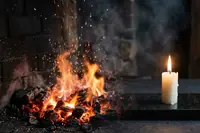
And perhaps what Simon leaves us is the very word attached to his name. Zeal is a fire. It can burn and divide and make people take up the sword against one another, as the Zealots of the year 66 dragged a whole nation into a tragic war. But it can also become a fire of love that makes a man leave everything and go to the ends of the earth, to the shores of the Black Sea or to Persia, just to tell people the Good News.
Jesus did not put out the fire in Simon’s heart. He turned it in the right direction. He taught a zealot to sit at the same table as a tax collector, and taught him that the Kingdom of God does not come by the sword, but by a love that dares to die for others.
Each of us has a fire like that: eagerness for what we believe is right, impatience to correct others, a passion for an ideal. Simon reminds us: do not let that fire go out, but let God purify it, so that it warms rather than burns.
The end of the story
You have walked with Saint Simon, Apostle to the end of the story.
Images that will stay with you:
A name that appears only in lists, but each time with the word "Zealot".
A man who may once have wanted to drive out the Romans, sitting at the same table as a man who once collected taxes for Rome.
The damp, cold cave by the Psyrtskha River, where the people of the Black Sea believe the Apostle spent his last years.
Stay in silence
At the end of the story, you realize that the Lord did not put out Simon’s zeal; He only turned it in the right direction.
Today, let the fire in you warm someone, instead of burning anyone.
Let us pray
Saint Simon,
the Gospels record no word of yours, but you stayed beside the Lord to the end. Teach me to be faithful even when no one mentions my name.
I too have zeal, which sometimes turns into impatience, wanting to correct others, wanting everything my own way. May God purify that fire in me as He did in you, so that it warms rather than burns.
Help me to sit at the same table as those unlike me, and to call them brothers and sisters.
Amen.
Sources
- Feast dayArticle, version 1.1
- Patron ofPatronages and symbols, version 1.1
- Often depicted withPatronages and symbols, version 1.1
Meet the next one
 Journey 1