

Journey 1 · Those Who Met the Lord
Saint James the Less, Apostle
The just man with calloused knees
Feast day May 3
Tap to step inside
Saint James the Less, Apostle
The just man with calloused knees
Map of a life
This life told in 10 chapters
Begin the journey OpeningOpening1 min
 Chapter 1 of 10Three men with one name1 min
 Chapter 2 of 10The relative who once did not believe1 min
 Chapter 3 of 10Knees like a camel’s1 min
 Chapter 4 of 10A pillar in Jerusalem1 min
 Chapter 5 of 10The first council1 min
 Chapter 6 of 10A letter on faith and works1 min
 Chapter 7 of 10A death recorded by a Jewish historian1 min
- Chapter 8 of 10A liturgy and a book bearing his name1 min
 Chapter 9 of 10May 31 min
 Chapter 10 of 10The just man1 min
Feast day
Saint James the Less, Apostle
Some places may celebrate on a slightly different day.
May 3
Patron of
- Uruguay (with Saint Philip)
- Hatters and weavers
Often depicted with
- A fuller’s club
- A book
Opening
Opening
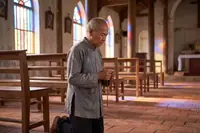
Nearly two thousand years ago in Jerusalem, people told of a man who prayed so much that his knees grew as hard and calloused as a camel’s. He knelt in the Temple for hours, asking God to forgive his people. The whole city called him by a nickname that even those who did not share his faith had to respect: “the Just”.
His name was James. The Church calls him James the Less, or James the Lesser, to distinguish him from Saint James the Greater, son of Zebedee and brother of Saint John. The name “the Less” or “the Lesser” is not because he was less important. It comes from a line in the Gospel of Mark, which calls him “James the younger” or “James the little”, perhaps because he was younger, or smaller in build, than the Apostle of the same name.
But that “little” man became the head of the Church in Jerusalem, presided over the Church’s first council, left a letter in the New Testament that people still debate today, and is one of very few New Testament figures whose death was recorded by a historian who was not a Christian.
Chapter 1 of 10
Three men with one name
To tell the story of Saint James the Less, one must begin with a puzzle that Bible scholars have discussed for centuries.
In the New Testament there are at least three men named James, besides James the son of Zebedee. One is James the son of Alphaeus, named in the list of the Twelve Apostles. Another is “James the younger”, whom the Gospel of Mark mentions when it says that at the foot of the cross “Mary the mother of James the younger and of Joses” stood watching from a distance. The third is “James, the brother of the Lord”, whom Saint Paul met in Jerusalem and called one of the “pillars” of the Church.
The tradition of the Latin Church, since the time of Saint Jerome in the fourth century, has taken these three to be one man: James the son of Alphaeus, who is also James the younger, also the “brother of the Lord”, and the author of the letter bearing the name James in the New Testament. The Catholic liturgical calendar celebrates him according to that understanding. Many scholars today think they may have been two or three different men. No one has enough evidence to be certain. This story follows the Church’s tradition, but the question remains open.
And what about the words “brother of the Lord”? In Hebrew and Aramaic there was no separate word for “cousin”; “brother” was used for any close relative. Catholic tradition understands James as a close relative of Jesus. And the detail that his mother, another Mary, stood at the foot of the cross shows that his whole family was bound to Jesus right to the very end.
Chapter 2 of 10
The relative who once did not believe
There is one thing the Gospels do not hide: at first, Jesus’ own relatives did not believe in Him.
The Gospel of Mark tells that when Jesus began to preach, crowds came in such numbers that He had no time even to eat. When His relatives heard, they set out to seize Him, “for they said, ‘He is out of His mind’” (Mk 3:21). The Gospel of John says it even more bluntly: “For not even His brothers believed in Him” (Jn 7:5).
If James was one of those “brothers”, then he once stood on the outside, watching his relative go out preaching with suspicious, perhaps embarrassed eyes. A craftsman from Nazareth, who had grown up in the same neighborhood and eaten and played with them, was now suddenly claiming to be the Messiah. It is easy to understand what the relatives thought.
Then what changed? Saint Paul, listing those who saw the Risen Lord, writes one very short line: “Then He appeared to James, then to all the apostles” (1 Cor 15:7). The Gospels do not tell of that meeting. No one knows where it happened, or what Jesus said to the relative who had once not believed in Him. But after that meeting, the man who had once thought Jesus was out of His mind became a man ready to die for Him.
Perhaps that is one of the quietest miracles of the New Testament: not a blind man made to see, but someone in the family whose heart was opened.
Chapter 3 of 10
Knees like a camel’s
What we know of James’s life in Jerusalem, outside the Bible, comes mainly from a second-century Christian writer named Hegesippus, whom the historian Eusebius quoted in his Ecclesiastical History.
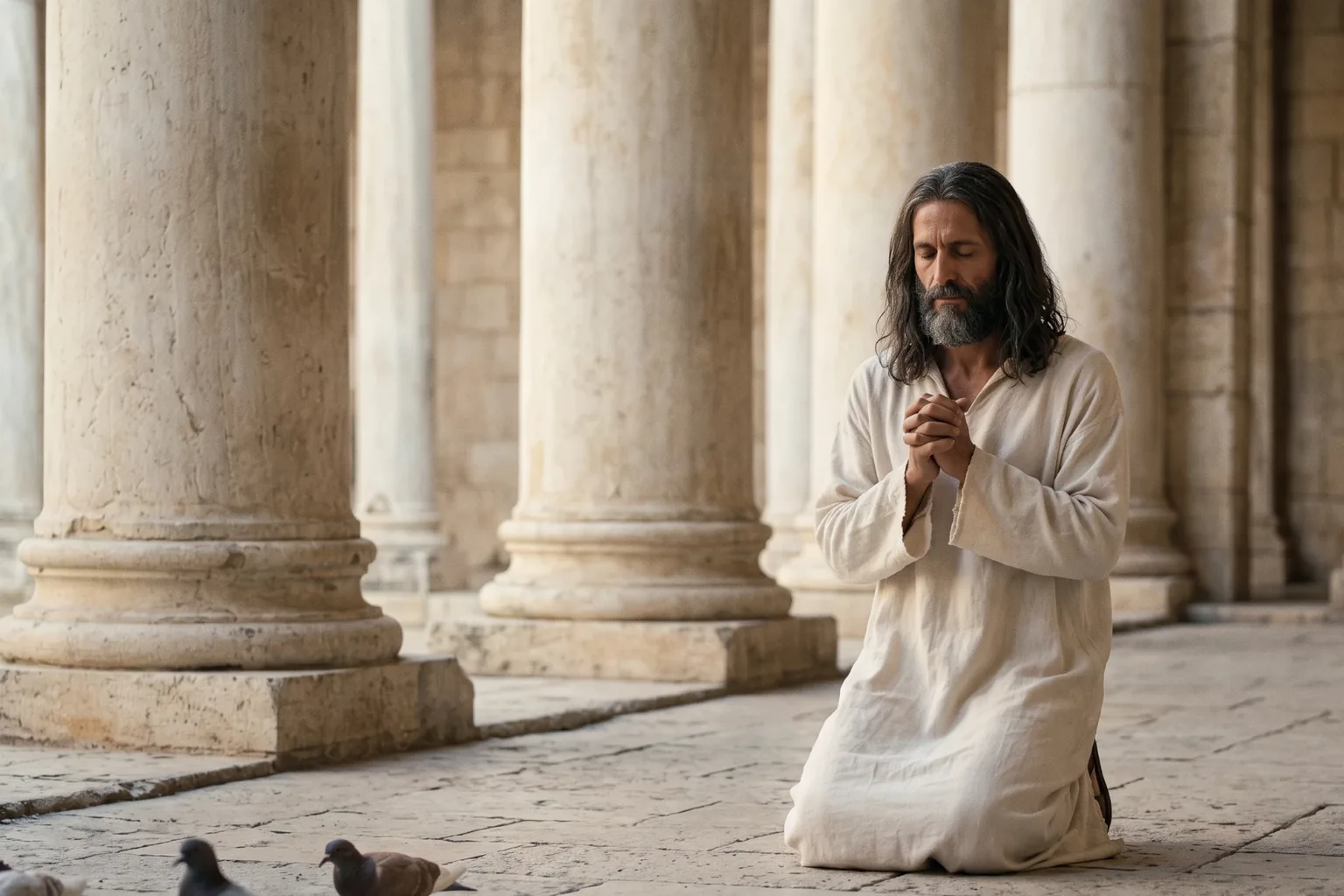
Hegesippus tells that James was consecrated from his mother’s womb: he drank no wine, ate no meat, never cut his hair, never anointed himself with oil, never went to the public baths. He wore linen. He often went into the Temple alone and knelt asking forgiveness for the people, so long that his knees grew hard as a camel’s. People called him “the Just”, and also by another name meaning “bulwark of the people”.
Historians today read these details with some caution, since Hegesippus wrote a hundred years later and may have embellished them. But the overall picture is very consistent: James was a devout Jew who kept the Law strictly, respected even by those who did not believe in Jesus. That is why he became a bridge between the young Christian community and his own people, in a city full of tension.
Chapter 4 of 10
A pillar in Jerusalem
About three years after his conversion, Saint Paul went up to Jerusalem to see Saint Peter. He writes that in the fifteen days he was there he saw none of the other apostles “except James, the brother of the Lord” (Gal 1:19). Fourteen years later, when he returned, he called James, Cephas and John those “reputed to be pillars”, and told how the three gave him the right hand of fellowship, agreeing that he should go and preach to the Gentiles (Gal 2:9). He put James’s name first.
The Acts of the Apostles has a detail that shows that position even more clearly. When Saint Peter was imprisoned by King Herod Agrippa and freed by an angel in the night, he went and knocked at the door of the house of Mary, the mother of Mark, where the faithful were praying. Before fleeing the city he left just one message: “Report this to James and the brothers” (Acts 12:17). From then on Peter left Jerusalem, and James stayed to care for the community.
Tradition calls him the first bishop of Jerusalem. He did not travel everywhere preaching like Peter or Paul. He stayed, among a poor and distrusted community, and kept it standing for nearly thirty years.
Chapter 5 of 10
The first council
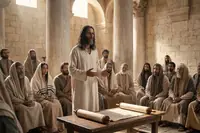
Around the year 49, the young Church faced its first great crisis. More and more non-Jews were coming to believe in Jesus. Some believers of Jewish origin demanded that they be circumcised and keep the whole Law of Moses in order to be saved. Paul and Barnabas strongly opposed this. The dispute grew so heated that the community of Antioch had to send people up to Jerusalem to ask the apostles.
At the meeting known as the Council of Jerusalem, Peter stood up and spoke first. Paul and Barnabas told what God had done among the Gentiles. And the one who spoke last, the one who gave the decision, was James. He quoted the prophet Amos, then concluded: “It is my judgment that we should not trouble the Gentiles who turn to God” (Acts 15:19). They asked only that they keep a few basic things, so that believers of Jewish and Gentile origin could sit at the same table.
What is remarkable is this: if anyone had reason to defend the Law of Moses to the end, it was James, “the Just”, the strictest keeper of the Law. Yet he was the one who opened the door to the Gentiles. He kept the Law himself, but did not force others to carry that burden. Thanks to that decision, the Church did not remain a small branch of Judaism, but became a common home for every people, including the Vietnamese people two thousand years later.
Chapter 6 of 10
A letter on faith and works
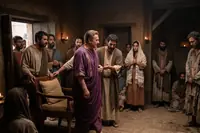
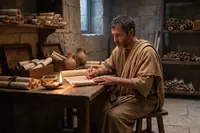
In the New Testament there is a letter bearing the name James, addressed “to the twelve tribes in the dispersion”. Church tradition regards it as the letter of Saint James the Less. It is a very practical letter, with almost no theory, full of everyday advice that sounds like the words of a strict but loving old uncle.
He scolds communities that seat the rich man with the gold ring in a good place while making the poor man in shabby clothes stand in a corner. He says the tongue, small as it is, is like a spark that can set a whole forest on fire. He reminds traders who like to say “tomorrow we will go to such a town, spend a year there, do business and make a profit” that their lives are only a puff of smoke that appears for a moment and then vanishes. And he writes his most famous line: “Faith without works is dead” (Jas 2:26).
There is one passage in the letter that every Catholic has met, even if they may not know where it comes from: “Is anyone among you sick? He should summon the presbyters of the Church, and they should pray over him and anoint him with oil in the name of the Lord” (Jas 5:14). That is the scriptural foundation of the Sacrament of the Anointing of the Sick. Every time a priest comes to a sick person’s bedside and takes out the holy oil, he is doing exactly what Saint James asked nearly two thousand years ago.
The letter later stirred controversy. In 1522, in the preface to his translation of the New Testament, Martin Luther called it “an epistle of straw”, because he thought it stressed works too much compared with faith. But Luther himself dropped that phrase in later printings. The Catholic Church, for its part, has always read the letter as a necessary reminder: faith that does not love others is empty faith.
Chapter 7 of 10
A death recorded by a Jewish historian
In the year 62, the Roman governor of Judea, Festus, died suddenly. His successor, Albinus, was still on his way from Rome. In that power vacuum, the high priest Ananus the Younger, son of the high priest Annas who had questioned Jesus, convened the Sanhedrin and brought to trial “the brother of Jesus, who was called Christ, whose name was James”, along with some others, accused them of breaking the law, and had them stoned.
Those lines were not written by a Christian author. They are in the “Antiquities of the Jews” of Flavius Josephus, a Jewish historian writing for Roman readers around the year 93. Josephus adds that the most fair-minded and law-abiding people in the city were outraged by this trial and sent letters of complaint, and the high priest Ananus was removed after only three months in office. It is one of the oldest pieces of evidence outside the Bible showing that Jesus and His disciples were real people in history.
Hegesippus tells of that death differently, more dramatically: the scribes took James up to the pinnacle of the Temple and told him to tell the people gathered for Passover to stop believing in Jesus. Instead he bore witness to Jesus once more, aloud. They threw him down. He did not die at once, but struggled to his knees and prayed for those killing him, like Jesus and like Saint Stephen: “Lord, forgive them, for they do not know what they are doing.” They stoned him, and a fuller took the club he used for beating cloth and brought it down on his head.
The two accounts differ in details and dates, and historians usually trust Josephus’s version more. But it is from Hegesippus’s account that in old paintings Saint James the Less is often shown holding a fuller’s club, the instrument that ended his life.
Chapter 8 of 10
A liturgy and a book bearing his name
There are two ancient texts bearing the name of James that few Vietnamese Catholics know about, though one of them has quietly found its way into our own devotion.
The first is the “Liturgy of Saint James”, one of the oldest known rites of the Mass, which took shape in Jerusalem around the fourth century and is traditionally linked to the first bishop of that city. Many of its prayers passed into the rites of the East. A hymn from this liturgy, beginning “Let all mortal flesh keep silence”, has been translated into many languages and is still sung in Advent in many churches around the world. The Orthodox Churches still celebrate the Liturgy of Saint James a few times each year, especially on his feast, October 23 in their calendar.
The second text is far more familiar, though few know its name. It is a second-century book called the “Protoevangelium of James”, because its writer presents himself as James, the brother of the Lord. The book is not part of the Bible, and scholars agree it was written long after Saint James’s death. But that very book is the only source for the names of Mary’s parents: Joachim and Anne. It is also the source of the feast of the Presentation of Mary in the Temple, and of the tradition of the Annunciation at the well that you can read about in the story of the Archangel Gabriel elsewhere in this app.
So every time Vietnamese Catholics celebrate the feast of Saints Joachim and Anne on July 26, or name a child Joachim or Anne, they owe something to an ancient book written under the name of James. Later generations borrowed his name because, in the memory of the first Christians, no one was closer to the family of Jesus than “the Just” of Jerusalem.
Chapter 9 of 10
May 3
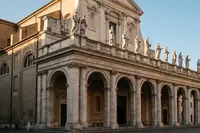
Saint James the Less is celebrated together with Saint Philip the Apostle. The reason is quite ordinary: in the sixth century in Rome, a church was built in honor of the two and relics believed to be theirs were placed there. The day that church was dedicated, May 1, became the common feast of the two Apostles. That church is now the Basilica of the Holy Apostles, right in the center of Rome. In 1955, when Pope Pius XII established the feast of Saint Joseph the Worker on May 1, the feast of the two Apostles was moved, and since 1969 it has been celebrated on May 3.
In 2002, a first-century limestone ossuary was made public in Israel, inscribed in Aramaic: “James, son of Joseph, brother of Jesus”. The news caused a sensation among scholars. But then the box’s owner was prosecuted by the Israel Antiquities Authority on suspicion of forging the inscription. After nearly ten years of trial, the court found insufficient evidence to convict him, but did not confirm the inscription as genuine either. Archaeologists are still divided today. That stone box seems to pose the same question as James himself: very close to Jesus, yet with so much we do not know for sure.
Chapter 10 of 10
The just man
In Vietnam, James is the baptismal name of many people. Some parishes celebrate their patron on May 3, others celebrate Saint James the Greater on July 25, and quite a few people named James go their whole lives without knowing which saint is their patron. If your parents gave you your name in early May, it may well be James the Less.
Looking back on his life, one sees a remarkable road: from a relative who thought Jesus was out of His mind, to a man who prayed until his knees were calloused; from the strictest keeper of the Law, to the one who opened the door to the Gentiles; from a man who stayed quietly in a hostile city, to one whom his very enemies called “the Just”.
Perhaps the lesson of James that comes closest to home is about family. Sometimes the hardest person to believe is the one closest to us. Sometimes we ourselves were once the one standing outside, watching others live their faith with suspicious eyes. James shows that it is never too late to be met by God. And once you believe, believe with your hands too, with deeds, with quiet hours on your knees, with justice toward the poor, as he wrote: “Faith without works is dead.”
The end of the story
You have walked with Saint James the Less, Apostle to the end of the story.
Images that will stay with you:
A relative who once thought Jesus was out of His mind, and then was met in person by the Risen Lord.
Knees as hard as a camel’s from hours of kneeling in prayer for his people.
The strictest keeper of the Law standing up to say: "We should not trouble the Gentiles who turn to God."
Stay in silence
At the end of his story, you realize that the hardest person to believe may be someone in your own family, and that it is never too late to be met by God.
Today, do one concrete thing for the poor, so that your faith is not only on your lips.
Let us pray
Saint James,
at first you too did not believe, and then the Risen Lord Himself came to meet you. I bring to you those in my family who are still far from God, those I love but do not know how to help understand.
Teach me to pray steadfastly as you did, kneeling long without tiring. Help me to guard my tongue, and not let one word set a whole forest on fire.
And may my faith have works: a meal shared with the hungry, a decent seat for the poor.
Amen.
Sources
- Feast dayArticle, version 1.1
- Patron ofPatronages and symbols, version 1.1
- Often depicted withPatronages and symbols, version 1.1
Meet the next one
 Journey 1