

Journey 6 · Keepers of the Lamp of Faith
Saint Pius X
The Pope of the Eucharist and of renewal in Christ
Feast day August 21
Tap to step inside
Saint Pius X
The Pope of the Eucharist and of renewal in Christ
Map of a life
This life told in 8 chapters
Begin the journey OpeningOpening1 min
 Chapter 1 of 8The worn shoes of a boy from Riese1 min
 Chapter 2 of 8Nine years as an assistant priest, nine years as a parish priest1 min
 Chapter 3 of 8Bishop of Mantua and Patriarch of Venice1 min
 Chapter 4 of 8The conclave of 1903 and a return ticket never used1 min
 Chapter 5 of 8The great reform: “To restore all things in Christ”1 min
 Chapter 6 of 8A poor man in the Vatican palace1 min
 Chapter 7 of 8A heart broken by the First World War1 min
- Chapter 8 of 8The holy Pope1 min
Feast day
Saint Pius X
Some places may celebrate on a slightly different day.
August 21
Patron of
- Pilgrims and migrants
- Children making their First Communion
- The Pontifical College of Pius X in Đà Lạt and many seminaries
Often depicted with
- The Pope’s white cassock
- A chalice and the Host
Opening
Opening
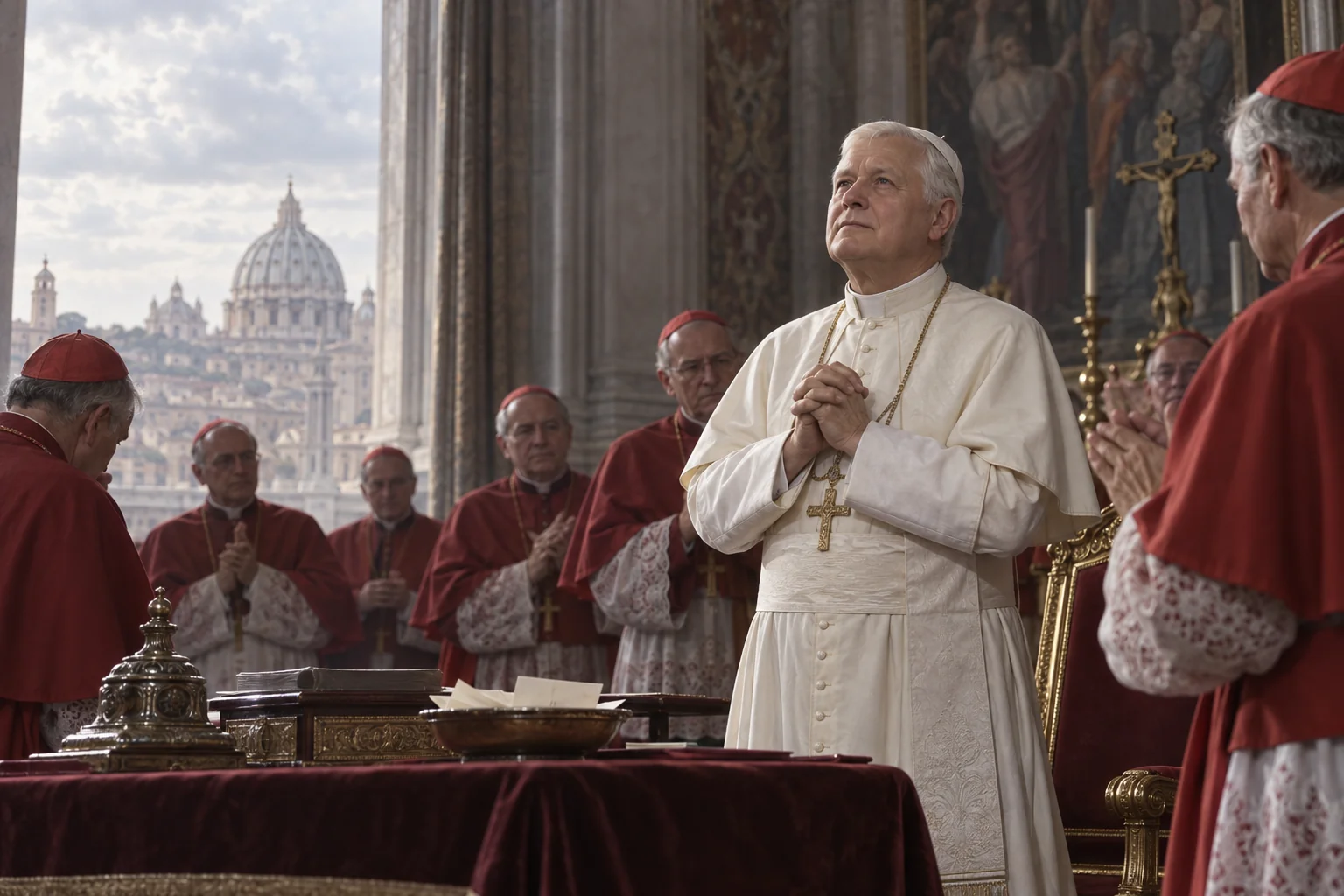
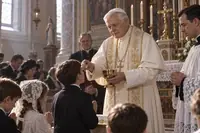
One peaceful morning at the beginning of the twentieth century in the Vatican, people saw a Pope in a simple white cassock, his kindly face marked by his peasant roots, kneeling to give the Body of the Lord tenderly to a child just seven years old. He bent down, looked deep into the child’s innocent eyes, and smiled with joy as if he himself were the one who had just received a great gift.
It looked like a small gesture, but it changed the course of Catholic worship: lowering the age of First Communion so that children could receive as soon as they reached the age of discretion, and at the same time throwing open the door of the tabernacle, inviting all the faithful to receive Communion often, even daily, instead of only on rare great feasts as the old custom had it.
That Pope of children was Saint Pius X — born Giuseppe Melchiorre Sarto. Born into a desperately poor peasant family, he climbed every rung of pastoral life: country assistant priest, exemplary parish priest, seminary rector, diocesan bishop and cardinal patriarch, and finally the chair of Saint Peter. That was a rare path compared with most of his predecessors, who came from the nobility or the Holy See’s diplomatic service. In a time when Modernism was trying to erode the roots of the Catholic faith from within, he raised the banner of steadfast reform under the motto: “To restore all things in Christ” — Instaurare omnia in Christo. He was also the first Pope in nearly four centuries, since Saint Pius V in the sixteenth century, to be canonized by the Church.
Chapter 1 of 8
The worn shoes of a boy from Riese
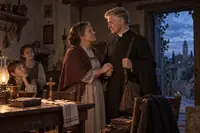
Giuseppe Melchiorre Sarto — whom his family affectionately called Bepi — was born on June 2, 1835, in Riese, a poor village in the province of Treviso, on the Venetian plain of northern Italy. His father, Giovanni Battista Sarto, was the postman and also the caretaker of the town hall, work that brought in only a meager wage; his mother, Margherita Sanson, worked as a seamstress to add to the family’s income. He was the second of ten children in a large family — according to some sources, the eldest of the eight children who survived childhood, in an age when infant mortality was still very high.
Throughout his childhood the Sartos never had enough. To attend the secondary school in Castelfranco, seven kilometers from home, young Bepi had to get up at dawn every morning, tie his old leather shoes around his neck or sling them over his shoulder, and walk barefoot the whole way along a rough, stony road. Only when he was near the school gate did he stop to wash his muddy feet and put his shoes on — a way of keeping the precious shoes, perhaps the only pair he owned, from wearing out too fast. That poverty taught him lessons he carried all his life: to value every drop of his parents’ sweat and tears, and to understand from the inside the hardship of the poor. He never forgot it, even on the chair of Saint Peter.
In 1850, through the intervention of the Patriarch of Venice, a fellow Venetian, the boy received a full scholarship to the major seminary of Padua. Bepi was an outstanding seminarian, always at the top of his class in philosophy, theology and canon law, yet he stayed humble and cheerful. On September 18, 1858, he was ordained a priest in the cathedral of Castelfranco, just after turning twenty-three.
Chapter 2 of 8
Nine years as an assistant priest, nine years as a parish priest
Unlike many Popes of his time who came from the nobility or were trained in the Holy See’s diplomatic service, Father Sarto was formed entirely in parish ministry, where he dealt every day with the very real difficulties of ordinary people.
For the first nine years, from 1858 to 1867, he was assistant priest at Tombolo, a small parish, serving as the right hand of an elderly parish priest whose strength was already failing. He opened night classes to teach illiterate adults in the parish to read — not uncommon in rural Italy at the time — loved teaching catechism to the children, and did not hesitate to give away his own food and clothes to the poorest and hungriest people of the parish.
For the next nine years, from 1867 to 1875, he was parish priest at Salzano, where he thoroughly renewed the moral and liturgical life of the whole parish. He organized model catechism classes, and set up a makeshift hospital to care for hundreds of victims of the terrible cholera epidemic that broke out across northern Italy in 1873. It took many lives in the region, and more than a few priests kept their distance for fear of infection. Father Sarto did the opposite: he carried the bodies and buried the dead himself, with no thought for the risk. He even borrowed against his own small life insurance policy to buy wheat and feed his parishioners in the years of bad harvests.
In 1875, he was appointed a canon of the Cathedral of Treviso and rector of the diocesan major seminary. In that post, he formed seminarians into holy priests, solid in doctrine and steeped in the spirit of the liturgy — a foundation that would shape his approach to reforming the Church many years later.
Chapter 3 of 8
Bishop of Mantua and Patriarch of Venice
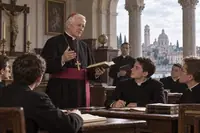
In 1884, Pope Leo XIII appointed him Bishop of Mantua — a diocese in serious crisis, both in clerical discipline and in the lukewarm faith of the laity. With patience, gentle kindness and no less firmness in correction, he brought the whole diocese back to life, reopening the seminary that had long been closed and restoring the systematic teaching of catechism.
In 1893, Leo XIII made him a cardinal and appointed him Patriarch of Venice. Though he headed one of the most splendid and cultured cities in Europe, Cardinal Sarto kept the frugal life of a peasant: he wore a simple black cassock and carried a cheap nickel pocket watch tied with a coarse cord instead of the silver chain customary for prelates of his rank.
He often walked through the poor alleys of Venice, chatting with the gondoliers — the ordinary working people of that city of canals — opened soup kitchens, and encouraged the Catholic Action movement to defend the rights of workers, carrying on the social spirit Leo XIII had launched with the encyclical Rerum Novarum. He was also passionate about reforming sacred music, working hard to restore the purity of Gregorian chant in the liturgy after a century in which all kinds of worldly music had crept into churches.
Chapter 4 of 8
The conclave of 1903 and a return ticket never used
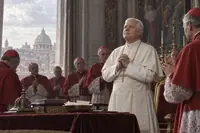
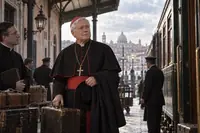
On July 20, 1903, Pope Leo XIII died after a reign of more than twenty-five years. Cardinal Sarto packed his bags to go to Rome for the conclave. He bought a return train ticket, convinced that after a few days of voting he would come back to Venice and carry on shepherding his flock as usual.
But in the conclave, after an event rare in the history of the Church — the Austro-Hungarian Emperor Franz Joseph I used an ancient right of veto to exclude Cardinal Rampolla, the candidate many expected to be elected — the cardinals began to shift their votes to Cardinal Sarto. Stunned and trembling, he begged his fellow cardinals in tears:
“Brothers, have pity on me! Do not choose me, I am completely unworthy and not capable!”
But on August 4, 1903, seeing God’s will in it, he wiped away his tears and accepted:
“If this cup cannot pass from me, I accept the holy will of God!”
He took the name Pius X, in memory of his predecessors of the same name who had fought steadfastly to defend the Church over the centuries. That return ticket to Venice was never used.
Chapter 5 of 8
The great reform: “To restore all things in Christ”
In eleven years as Pope, Saint Pius X renewed the Catholic Church in many different ways.
First of all, he was the Pope of the Eucharist. In 1905, he issued the decree Sacra Tridentina Synodus, encouraging all the faithful to receive Communion frequently, even daily, sweeping away the remnants of the Jansenist error that saw Communion as a reward reserved for those who had already reached perfection, rather than a necessary remedy for souls still weak. In 1910, he issued the historic decree Quam Singulari, lowering the age at which children could make their First Communion to about seven, the age of reason, when children can tell right from wrong, so that the still-pure souls of children could be guarded by the Eucharist itself from their earliest years, before facing the temptations of growing up.
At the same time, he fought resolutely against Modernism — a current of thought spreading among Catholic scholars at the time, which sought to reduce supernatural revealed truths to subjective religious feelings and to adjust doctrine to the secular philosophical currents of the day. He called it “the synthesis of all heresies”. In 1907, he issued the decree Lamentabili and the encyclical Pascendi Dominici Gregis, firmly upholding the unchangeable nature of the apostolic faith against attempts to reinterpret doctrine in a modernist direction.
He also launched the work of compiling the first unified Code of Canon Law in the history of the Church — the Code of 1917, though it was only formally promulgated after his death. At the same time, he himself compiled the “Catechism of Pius X”, in a concise, easy-to-understand question-and-answer format, which nourished the faith of generations of Catholics around the world, Vietnam included. In the liturgy, in 1903 he issued the motu proprio Tra le Sollecitudini, restoring the place of Gregorian chant and classical sacred polyphony, and banning worldly or theatrical music from church — a question he himself had cared deeply about since his days as Patriarch of Venice. He also reformed the Breviary and the general liturgical calendar of the whole Church.
Chapter 6 of 8
A poor man in the Vatican palace
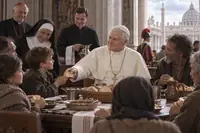
Though he sat on the papal throne, Pius X lived like the poor peasant he had once been. He abolished the long-standing custom that the Pope dine alone, and often invited friends, and even poor people, to eat at his table.
He refused to give titles or benefices to any of his relatives, though not a few of his predecessors had done so. His sisters went on living in poverty in a small apartment in Rome, with no privileges from their brother’s position. Every Sunday afternoon, he opened the Courtyard of San Damaso in the Vatican and taught simple catechism himself to poor children and to the people of Rome who came to listen. When the terrible earthquake struck Messina in 1908, flattening almost the entire city and taking tens of thousands of lives, he threw open the papal palace to take in and feed thousands of homeless victims, turning the Pope’s own residence into a temporary refugee shelter.
Chapter 7 of 8
A heart broken by the First World War
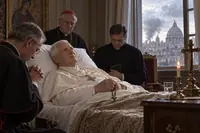
In the summer of 1914, the dark clouds of war covered all Europe. Foreseeing that the tragedy of the First World War would soon take the lives of millions of young men, Pope Pius X wept in anguish through the last weeks of his life.
He tried every possible diplomatic path to prevent the war that was looming. When the ambassador of the Austro-Hungarian Empire came to ask him to bless their army before it went into battle, the gentle Pope flatly refused:
“I bless only Peace, I will never bless war!”
But every effort failed. On July 28, 1914, the First World War officially broke out. Watching humanity rush headlong into a slaughter such as the world had never seen broke the old man’s heart. He fell gravely ill with bronchitis soon afterward.
On his sickbed, he spoke his last words through tears:
“I offer this wretched life of mine to God as a sacrifice to pray for world peace... I was born poor, I have lived poor, and I wish to die poor!”
At dawn on August 20, 1914, just over three weeks after the war broke out, Pope Pius X died peacefully, at the age of seventy-nine.
In keeping with his humble wishes, his body was not embalmed but was buried simply in the crypt of Saint Peter’s Basilica. Thirty years later, when the tomb was opened in preparation for his cause for canonization, people were astonished to find his body still wonderfully intact, even though it had not undergone any form of preservation.
Chapter 8 of 8
The holy Pope
Pope Pius XII beatified him in 1951, and on May 29, 1954, Pius XII himself solemnly canonized Pius X before hundreds of thousands of the faithful in Saint Peter’s Square. The Church celebrates him on August 21 each year.
In Vietnam, Pope Saint Pius X is the patron of a great many seminaries — among them the Pontifical College of Pius X in Đà Lạt, renowned in the history of priestly formation in Vietnam — as well as Eucharistic Youth associations and many parishes, a natural outgrowth of the love for the Eucharist he awakened in children all over the world.
Saint Pius X reminds us that the true life of the Church, and of every Christian, springs from the inexhaustible fountain of the Eucharist. The boy who tied his shoes around his neck to walk barefoot to school became the Pope who knelt to give the Body of the Lord to a seven-year-old child. His life asks us to bring children to Jesus in the Eucharist as early as we can, and to come often to the altar for strength, so that our lives may be truly “restored in Christ”.
The end of the story
You have walked with Saint Pius X to the end of the story.
A few details you keep carrying with you:
The poor boy tied his old leather shoes around his neck and walked barefoot seven kilometers to school, putting them on only near the gate.
When he realized he was about to be elected Pope, he begged the cardinals in tears: "Brothers, have pity on me! Do not choose me, I am completely unworthy!"
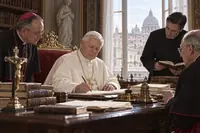
He knelt and tenderly gave the Body of the Lord to a child just seven years old, opening the way to lowering the age of First Communion throughout the Church.
Stay in silence
You understand why he is called the Pope of the Eucharist: the boy so poor he had to spare his only pair of shoes spent his pontificate opening the tabernacle door to everyone, above all to children.
To restore all things in Christ.
Let us pray
Saint Pius X,
as a boy you were so poor that you hung your shoes around your neck and walked barefoot to school. As Pope, you opened the door wide for little children to receive the Lord from the age of seven.
Pray for the children preparing for their First Communion, that they may love Jesus in the Eucharist.
Teach me to live humbly, never forgetting where I come from, and to receive Communion often and with fervor.
Amen.
Sources
- Feast dayAuthor’s edited profile
- Patron ofPatronages and symbols, version 1.1
- Often depicted withPatronages and symbols, version 1.1
- Reflectioncausesanti.va
- Reflectionvaticanstate.va
Meet the next one
 Journey 6