

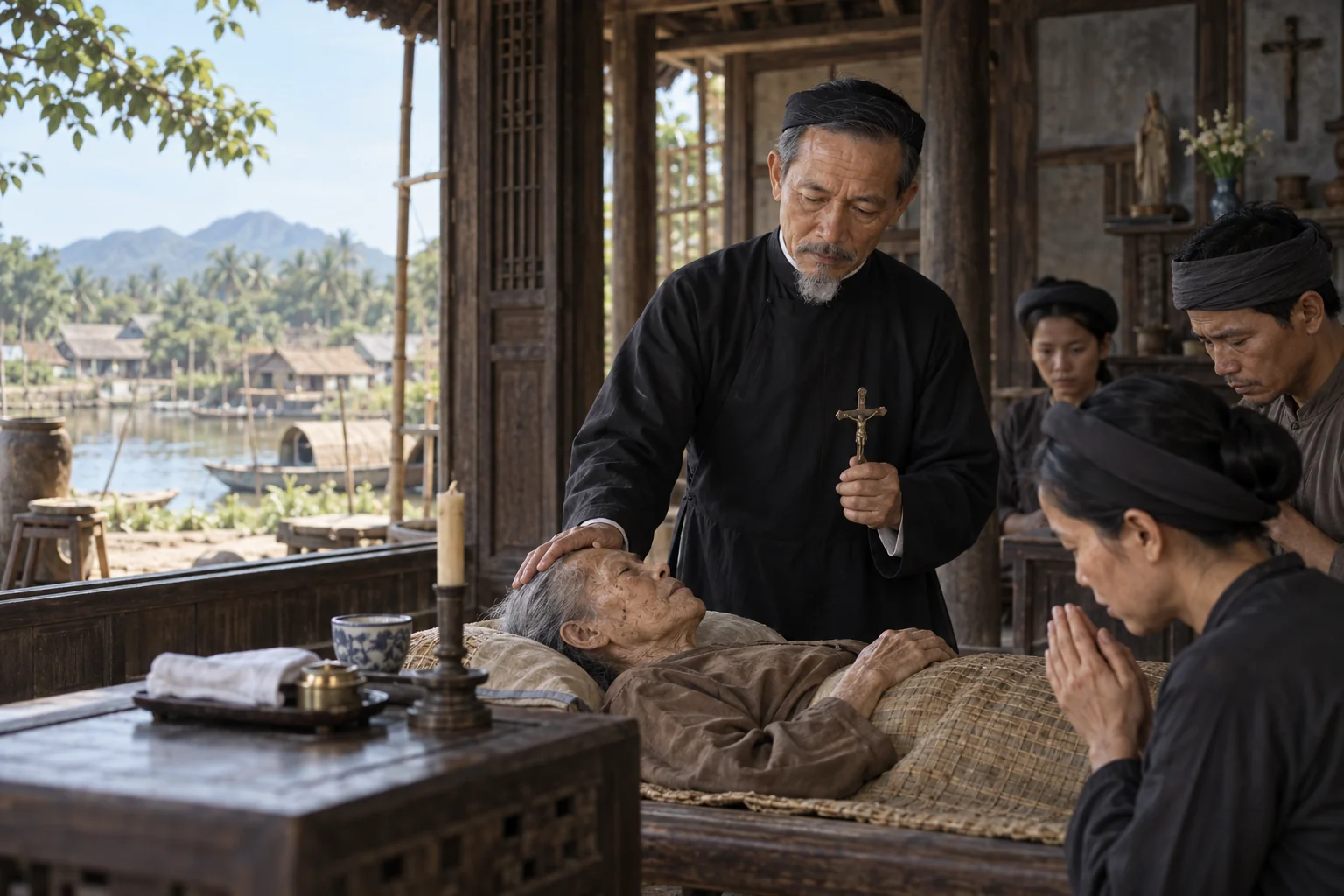
Journey 8 · Faith with a Vietnamese Face
Saint Peter Lê Tùy
An old shepherd and a serene smile at the execution ground of Quán Bàu
Feast day October 11
Tap to step inside
Saint Peter Lê Tùy
An old shepherd and a serene smile at the execution ground of Quán Bàu
Map of a life
This life told in 7 chapters
Begin the journey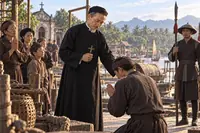 OpeningOpening1 min
 Chapter 1 of 7A son of the ancient village of Bằng Sở1 min
 Chapter 2 of 7More than thirty years as a tireless shepherd1 min
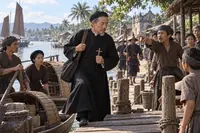 Chapter 3 of 7Arrested at the Thanh Gia ferry landing2 min
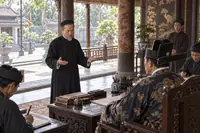 Chapter 4 of 7Steadfast before the court of Nghệ An1 min
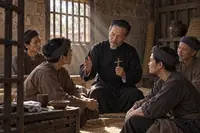 Chapter 5 of 7Four months of peace in prison1 min
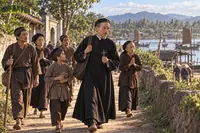 Chapter 6 of 7The hour of triumph at the execution ground of Quán Bàu1 min
 Chapter 7 of 7The first saint of the Archdiocese of Hà Nội1 min
Feast day
Saint Peter Lê Tùy
Some places may celebrate on a slightly different day.
October 11
Often depicted with
- A palm branch
- A priest’s cassock
Opening
Opening
On the morning of October 11, 1833, at the execution ground of Quán Bàu, a market outside the citadel of Nghệ An near the Vĩnh Giang River, where boats still plied up and down with salt and fish from the coast, an old man with snow-white hair and beard knelt on a patterned mat. He wore a white silk tunic, with a heavy bamboo cangue around his neck and chains on his legs.
So many people came that they packed the whole ground: not only Christians but non-Christians from the area too, many of whom had once been given medicine by the old man without paying a single coin. Among the crowd stood mandarins and soldiers who had guarded him in prison, unable to hide their red eyes.
Before doing his work, the executioner knelt in front of the old man. “Grandfather, I am only carrying out my superiors’ orders; please forgive me.” The old man smiled and gently patted the man’s shoulder with his thin hand.
“Do your duty with an easy heart, my son. I forgive you and I wish you every peace.”
The man with that smile was Father Peter Lê Tùy, the first priest of the Archdiocese of Hà Nội to die a martyr. He spent more than thirty years as a priest traveling through poor villages, from the plains of the North all the way to distant Nghệ An and Hà Tĩnh, and he fell at sixty not in fury and struggle but with a smile of forgiveness that made even his executioners bow their heads.
Chapter 1 of 7
A son of the ancient village of Bằng Sở
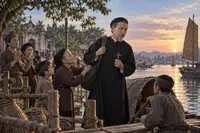
Lê Tùy was born around 1773 in the village of Bằng Sở, Ninh Xang canton, Thượng Phúc district, Thường Tín prefecture, in the former Hà Đông province (now Ninh Sở commune, Thường Tín district, Hà Nội). It is a land right beside the Red River, where the silt keeps the rice fields rich all year round, and a place where the Catholic faith took root very early. The boy was baptized as an infant, receiving the name Peter, and grew up in a devout farming family.
From childhood Tùy was gentle and quiet, worked hard in the fields, and loved prayer far more than children’s games. At twelve he asked his parents to let him enter the “House of God” at the parish of Kẻ Đầm, to learn Chinese characters and Latin and to test a vocation to the priesthood. Seeing that the boy stood far above his companions in virtue, his superiors sent him on to study philosophy and theology at the school of Kẻ Vĩnh.
At twenty-five, Tùy was received as a catechist, the first stage of a long road to the priesthood, which meant years of devoted service beside the missionaries, walking every village path to teach children the catechism and baptize the dying. In 1803, at thirty, the catechist Peter Tùy was ordained a priest by Bishop Delgado, whom the Vietnamese called Đức cha An, at the seminary of Kẻ Vĩnh.
Chapter 2 of 7
More than thirty years as a tireless shepherd
After his ordination, Father Peter Tùy served in turn as curate of the parish of Nam Am, then as parish priest of Chân Cống, and later of Kẻ Đầm, where he had taken his own first steps toward the priesthood as a boy of twelve. In 1823 he was given a greater task: parish priest of Đông Thành, in Nghệ An province, a large parish in the Western Vicariate of Tonkin, hundreds of kilometers by road from his home village of Bằng Sở.
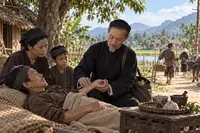
Over those years Father Peter Tùy became a familiar figure throughout Nghệ An and Hà Tĩnh: not a distant churchman, but a kindly old man who was always there when people needed him most. He lived simply, on rice with vegetables and soy paste, in a rough brown robe worn through at both shoulders. He had a special gift for reading the pulse and preparing traditional herbal remedies from old family recipes. Wherever he went he carried a small bag of medicines, ready to treat anyone for free, Christian or not, and when cholera swept the region, many people owed their lives to those hands.
He was also a teacher for poor children, patiently showing them each stroke of the Chinese characters and the Vietnamese script, each line of the catechism prayers. And he was a confessor known for his gentleness, who would sit for hours in the confessional, listening tirelessly to lost souls finding their way home. Little by little, non-Christians as well as Christians came to call him by an affectionate name: “holy old Tùy”.
Chapter 3 of 7
Arrested at the Thanh Gia ferry landing
In 1833, after Emperor Minh Mạng issued an edict of persecution harsher than ever before, the troops of Nghệ An province hunted relentlessly for the priests working in the area.
To understand what old Father Peter Tùy went through in the last ten years of his life, we need to picture a parish priest’s life in Nghệ An at that time. The parish of Đông Thành had none of the clear boundaries of a parish today. It took in dozens of mission stations scattered among the fields and low hills, sometimes a whole day’s walk apart. A priest caring for such an area could not sit and wait for the faithful to come to him. Whatever his age, in sun or rain, he had to go out to reach the dying in time for anointing, or a sickly newborn in time for baptism, things that could not wait even a day. For a man past fifty and then sixty, each such journey was a quiet sacrifice, to say nothing of doing it all in secret, in the years when the faith was most strictly forbidden.
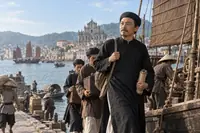
On June 25, 1833, Father Peter Tùy, now sixty years old, was on his way to hear the confession of a gravely ill man in the community of Thanh Gia and anoint him. Just as he stepped down to the ferry landing to cross the river, a local man, greedy for the reward offered by the authorities, recognized him and shouted for the soldiers.
The faithful on the ferry and on both banks, saw the soldiers rush in and, in their panic, were about to fight to save the old priest. But Father Peter Tùy raised his hand to stop them, his voice as calm as ever:
“Brothers and sisters, be calm. Do not use violence. This is God’s holy will. If God wants me to be arrested and to die for Him, I gladly accept. Go home and pray for me.”
The soldiers tied him up, put a heavy cangue on the sixty-year-old priest’s neck and chains on his legs, and marched him off to the provincial prison of Nghệ An.
Chapter 4 of 7
Steadfast before the court of Nghệ An
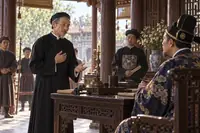
At the court, the governor saw an old man with snow-white hair and beard and a face so gentle that it was hard to believe he was a “criminal”, and he felt an instinctive respect. He did not order the usual flogging.
“Grandfather, you are sixty years old, your hair and beard are white as snow. Go home and enjoy your old age,” the judge said, pleading more than threatening.
“The court forbids the religion of Jesus very strictly. Out of respect for your age, I do not want to make trouble for you. Just step over this cross once, and I will at once petition the emperor to pardon you and send you home to your village this very day.”
The old priest knelt with his back straight, his hands joined, and answered in the same familiar gentle voice, yet without wavering at all:
“Your Excellency, I am past sixty, with one foot already in the grave — what would I want with this short earthly life? For more than sixty years I have worshiped only God, the Creator who made me, and I have been wholeheartedly loyal to the king and his officials. I have never done anything deceitful or harmful to the people or the country. The Cross is where my Lord died to redeem my soul; I honor and worship Him all my life — how could I dare trample on Him? If you wish to cut off the head of this old body, do so, but I will never deny my God.”
Unable to shake the faith of an old man who had lived nearly a whole lifetime, the mandarins threw him into the dark prison and sent a petition to the capital, Huế, asking for the death sentence.
Chapter 5 of 7
Four months of peace in prison
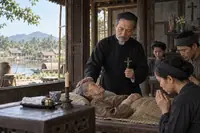
For four months in the prison of Nghệ An, from June to October 1833, old Father Peter Tùy lived almost like a hermit. The heavy cangue on his neck never took the smile from his lips. Every day he prayed, said the Rosary, and offered up his pain for the very country that held him captive.
Little by little, even the jailers and his fellow prisoners were won over by his holiness. They respectfully called him “Cụ Cố”, the Venerable Old Father, and of their own accord brought him rice and water and swept his sleeping place. Whenever the faithful slipped in to visit, it was he who comforted them and dried their tears, urging them to hold fast to the faith, to live in harmony, and to bear no grudge even against those who held him captive.
Chapter 6 of 7
The hour of triumph at the execution ground of Quán Bàu
At the beginning of October 1833, Emperor Minh Mạng’s sentence of beheading reached Nghệ An. On the morning of October 11, old Father Peter Lê Tùy was led out to the execution ground of Quán Bàu, outside the citadel of Nghệ An. He walked serenely in his white silk tunic, his face shining with the same peace the people of the area had known for so many years. Thousands followed in silence, many weeping as they walked.
At the place of execution he gently forgave the executioner and prayed a last time, commending his soul to God. Then the sword fell. The sixty-year-old shepherd had given his life to the very end.
The faithful of the Trang Nứa community bravely took his body away and buried it. In 1838, at the earnest wish of his home village, his relics were secretly carried back to be buried for good in the village of Bằng Sở itself, where he had been born sixty years before. Today the Saint Peter Lê Tùy Pilgrimage Center at Bằng Sở is a familiar place of pilgrimage, where people of every religion come to ask for blessings.
Chapter 7 of 7
The first saint of the Archdiocese of Hà Nội
On May 27, 1900, Pope Leo XIII beatified Father Peter Lê Tùy. And on June 19, 1988, Pope John Paul II canonized him, together with one hundred sixteen other Vietnamese Martyrs, in Rome. The Church celebrates him on October 11 each year.
Most of the stories of the Vietnamese Martyrs are full of fierce confrontation: bold professions of faith, savage floggings, tragic deaths amid the tears of thousands. The story of Father Peter Lê Tùy has a different color: nothing violent, no fierce struggle, only a kindly old man who spent his life giving medicine and teaching children their letters, walking out to his execution with a smile of forgiveness for the man about to kill him. Perhaps that is why so many people around Bằng Sở, even of other religions, still come to his tomb, the way one visits a kind old man of the village to whom everyone owes something.
The end of the story
You have walked with Saint Peter Lê Tùy to the end of the story.
Some simple moments from the old man’s life stay with you:
When the faithful were about to fight the soldiers to save him, the old man raised his hand to stop them, telling them to stay calm and accept God’s holy will.
Before the execution, when the executioner knelt asking forgiveness, he patted his shoulder gently: "Do your duty with an easy heart, my son. I forgive you."
During four months in prison, even the jailers came to admire him and of their own accord called him "Cụ Cố", caring for him without being asked.
Stay in silence
You understand why his story is so unlike that of many other martyrs: nothing violent, no fierce struggle, only a kindly old man walking out to the place of execution with a smile of forgiveness.
Do your duty with an easy heart, my son. I forgive you and I wish you every peace.
Let us pray
Saint Peter Lê Tùy,
when the executioner knelt asking forgiveness, you gently patted his shoulder: "Be at ease, my son, I forgive you." Even the jailers came to admire you and called you "Cụ Cố".
Pray for elderly priests, that they may live their old age in peace and joy.
Teach me to live gently, to accept God’s holy will in peace, and to forgive even before others have asked.
Amen.
Light a candle for Saint Peter Lê Tùy
Sources
- Feast dayAuthor’s edited profile
- Often depicted withPatronages and symbols, version 1.1
- Reflectionhdgmvietnam.com
- Reflectiontonggiaophanhanoi.org
Meet the next one
 Journey 8