

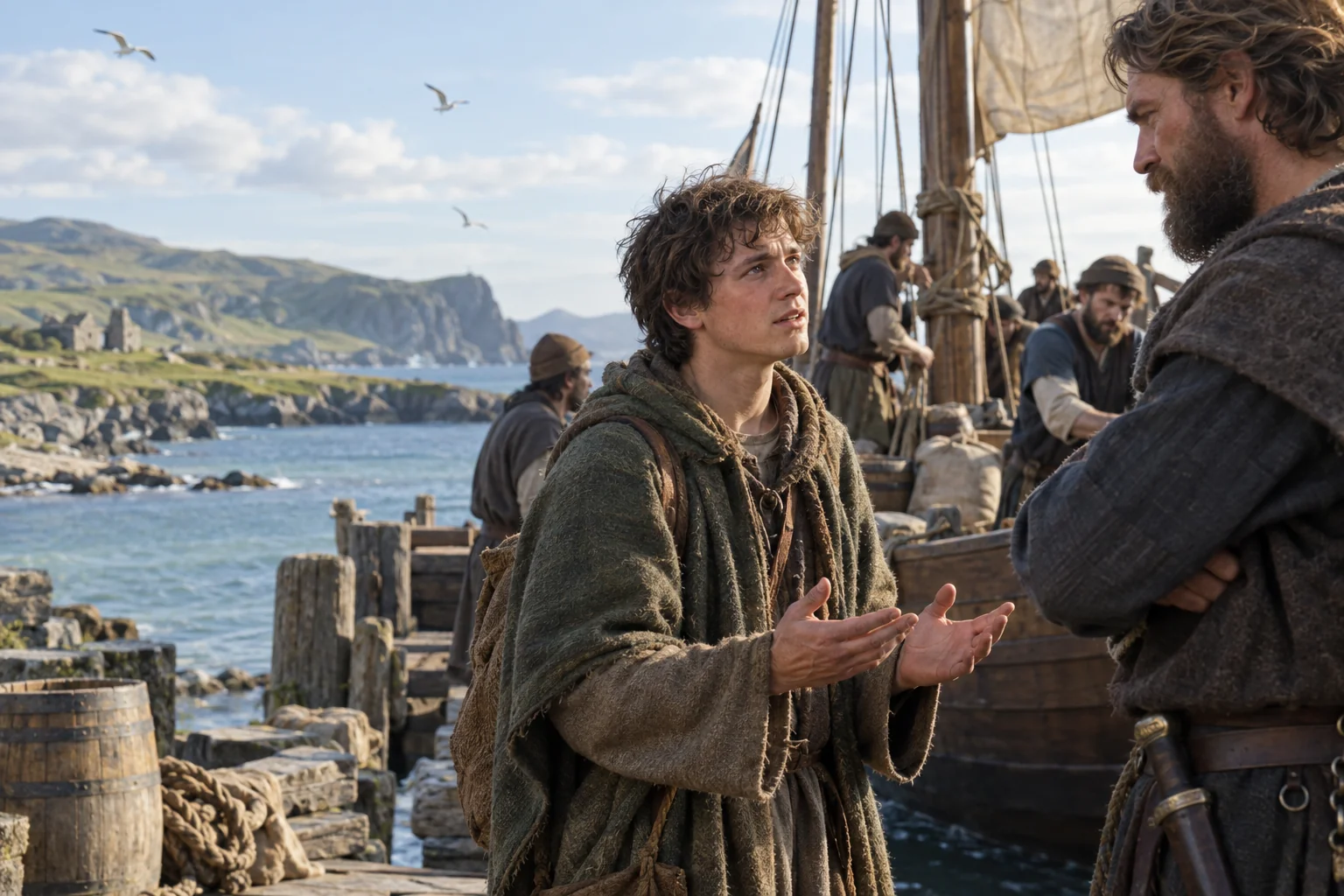
Journey 7 · Going Far, Standing Firm
Saint Patrick
The slave who became apostle of the Emerald Isle
Feast day March 17
Tap to step inside
Saint Patrick
The slave who became apostle of the Emerald Isle
Map of a life
This life told in 5 chapters
Begin the journey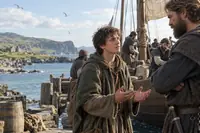 OpeningOpening1 min
 Chapter 1 of 5The terror of a sixteen-year-old1 min
 Chapter 2 of 5A call in a dream and an escape1 min
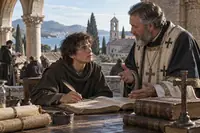 Chapter 3 of 5Preparing for the mission and the Easter Vigil fire at Slane2 min
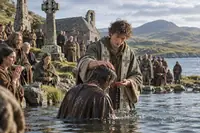 Chapter 4 of 5Thirty years building the “Island of Saints”1 min
- Chapter 5 of 5His last rest, and the see of Armagh1 min
Feast day
Saint Patrick
Some places may celebrate on a slightly different day.
March 17
Patron of
- Ireland
- Irish people all over the world
- Engineers
Often depicted with
- A shamrock
- A snake beneath his feet
- A bishop’s crozier
Opening
Opening
On the endless green hills of the island of Ireland in the fifth century, in a wild land still ruled by Druid priests and grim customs of sacrifice, a man in a coarse woolen cloak, holding a wooden shepherd’s staff, bent down to the grass. He plucked a tiny three-leaf clover — a shamrock — and held it up before the puzzled pagan chieftains and their people.
With that simple gesture he explained the deepest mystery of the faith:
“Look at this little plant: three separate leaves, yet only one stem! So it is with the Father, the Son and the Holy Spirit: three distinct Persons, yet only One God!”
The man with the shamrock was Patrick — Patricius — the great apostle of Ireland. His life is a great story of forgiveness: kidnapped by Irish pirates at sixteen and sold as a slave, herding sheep in hunger and cold for six years; yet after escaping safely home, it was a cry in the night from the very people who had enslaved him that called him back. He brought the Gospel to a barbarian island and made it the “Island of Saints and Scholars”, a lamp of learning for all of medieval Europe.
Chapter 1 of 5
The terror of a sixteen-year-old
Patrick was born around 385 at Banna Venta Berniae, a Roman settlement in Britain — perhaps in present-day Wales or Scotland, though the exact location is still debated by historians. His birth name was Maewyn Succat. His father, Calpurnius, was a deacon and a respected Roman magistrate; his grandfather, Potitus, was a priest, so the faith had been rooted in the family for generations.
Though he came from a respected and powerful Christian family, Patrick spent his youth in cold indifference. Later, in his Confession (Confessio), one of the very few writings to survive from the hand of a fifth-century figure, he honestly admitted that in those days he hardly cared about God, did not keep the commandments and ignored his parents’ advice.
When Patrick had just turned sixteen, disaster struck: a band of fierce Irish pirates landed on the coast, raided the villages and kidnapped the young man along with thousands of other people, carrying them off across the sea. On the wild coast of Ireland he was put up for sale in the slave market and sold to a pagan chieftain named Miliucc in the Slemish mountains of County Antrim.
For six long years, from sixteen to twenty-two, the young Roman, used to comfort, endured the hardship of slavery: hungry and in rags, exposed to rain, snow and the freezing north wind on desolate mountainsides, herding his master’s pigs and sheep. And at the very bottom of that loneliness and misery, the faith in Patrick’s soul suddenly awoke. In the empty wilderness, he found God. He prayed without ceasing:
“Every day I prayed a hundred times, and as many at night... I rose to pray before daybreak, in snow, frost and rain, yet I felt no weariness or cold, because the Spirit of God was burning within me!”
Chapter 2 of 5
A call in a dream and an escape
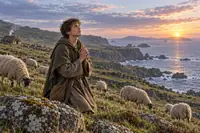
At twenty-two, while sleeping on the mountainside, Patrick heard a clear voice in a dream:
“Young friend, you have fasted well; soon you will go back to your homeland... The ship that will save you is ready!”
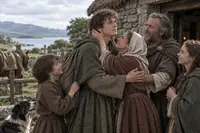
Trusting God, the young slave ran away from his master’s house. He walked through treacherous marshes and dense forests for more than three hundred kilometers to reach the coast. In the harbor, a merchant ship was getting ready to weigh anchor. At first the rough pagan sailors drove him away; but after he knelt and prayed earnestly, they changed their minds and let him on board. After many days adrift at sea and a long journey through the desolate wilderness of France, Patrick at last came home to the tearful embrace of his family in Britain.
His family embraced him and begged him, after so many perils, to stay at home in peace for the rest of his life. But God had other plans for him. Not long after he came home, one night Patrick had a vision that shook him to the core: he saw a man named Victoricus coming from Ireland with countless letters. The man gave him a letter headed “The Voice of the Irish”. And as he read it, he suddenly heard the cry of a multitude, children among them, from the wood of Foclut by the western sea, calling with one voice:
“We beg you, holy youth, come back and walk among us once more!”
That cry pierced Patrick’s heart. He realized that God wanted him to go back to the very land where he had been chained as a slave, not for revenge, but to bring salvation and set free the souls of the very people who had once held him captive.
Chapter 3 of 5
Preparing for the mission and the Easter Vigil fire at Slane
To prepare for that mission, Patrick went to France to study theology at the famous Abbey of Lérins — one of the most influential centers of spiritual formation in Western Europe at the time — and studied under the holy Bishop Germanus of Auxerre. He studied diligently for fifteen years.
In 432, after the death of Bishop Palladius — the first missionary sent to Ireland by the Holy See, who had not succeeded — Pope Celestine I consecrated Patrick a bishop and sent him to win Ireland for Christ. He took the name of his office, Patricius.
Returning to Ireland at almost fifty, Bishop Patrick faced countless deadly dangers: cruel barbarian chieftains, and above all the powerful class of Druid priests who held sway over a religion of magic. The turning point came on the night of the Easter Vigil in 433 on the Hill of Slane, on the north bank of the river Boyne. At that time the High King Laoghaire was holding a great pagan festival on the Hill of Tara not far away; a strict law forbade anyone in the whole region to light a fire before the king’s sacred fire was lit at the royal seat, and anyone who disobeyed would be put to death at once.
But Bishop Patrick was not afraid. That night, on the windswept summit of the Hill of Slane, about nine miles from Tara and clearly visible from afar, he lit the Easter fire, and it blazed out through the darkness. King Laoghaire, furious, sent the Druid priests to find out. Looking at the fire blazing on the high hill, the priests, trembling, warned the king:
“Your Majesty, if the fire burning tonight on the Hill of Slane is not put out at once, it will burn forever and will consume all the gods of this land!”
The king came with soldiers and priests intending to arrest and kill him. But with a holy calm, powerful preaching and signs that broke the power of their spells, Patrick left the king and his court astonished and subdued. Tradition says that one of the king’s own priests, named Erc, was so moved by Patrick’s holiness that he asked to become a Christian, and later even became the first bishop of that very Hill of Slane. Though King Laoghaire did not formally convert, he gave Patrick complete freedom to go and preach the Gospel throughout the country. Thousands of chieftains, princesses and ordinary people came asking for Baptism.
Chapter 4 of 5
Thirty years building the “Island of Saints”
For the next thirty years, from 432 to 461, the old bishop’s feet never tired. He went to every remote corner of Ireland, using the Gaelic language he had learned as a slave to speak warmly with the people. He baptized more than one hundred twenty thousand people; founded hundreds of parishes and ordained thousands of native priests; and established his cathedral see at Armagh in 444, making it the ecclesiastical center of the whole island — a position Armagh still holds today in both the Catholic Church and the Anglican Church in Ireland. He also encouraged monastic life, and thousands of young noblemen and noblewomen embraced its poverty, founding great monasteries devoted to copying Scripture and preserving culture — and in the centuries that followed, while continental Europe sank into the chaos of the barbarian invasions, those very monasteries became almost the only keepers of the treasures of classical learning, earning Ireland the name “Island of Saints and Scholars”.
Irish folk legend tells that Saint Patrick used his shepherd’s staff to drive all the venomous snakes off the island and into the sea. Although Ireland has had no snakes since the Ice Age, the image of driving out snakes carries a deep spiritual meaning: he swept the poison of magic and paganism out of the people’s souls.
He left a hymn known as “Saint Patrick’s Breastplate” — the Lorica, also called The Deer’s Cry — which wraps every moment of life in the presence of Christ:
“Christ with me, Christ before me, Christ behind me; Christ in me, Christ beneath me, Christ above me; Christ on my right, Christ on my left; Christ in the heart of all who think of me, Christ in the mouth of all who speak of me, Christ in the eyes of all who see me, Christ in the ears of all who hear me!”
Chapter 5 of 5
His last rest, and the see of Armagh
In his last years he humbly wrote his Confessio, giving thanks that God in His mercy had looked upon a sinful slave like him — a book still preserved today and the most reliable historical source on his life, written in the simple, sometimes clumsy style of a man who admitted his learning was limited but whose faith never wavered.
He died peacefully on March 17, 461, at Saul, or according to some sources at Armagh, at about seventy-six years of age, and was buried at Downpatrick. The whole island of Ireland mourned its beloved father for many days.
The Church celebrates Saint Patrick on March 17 each year. His feast has become Ireland’s national holiday and a festival of green celebrated all over the world, from Dublin to New York, from Sydney to Tokyo.
Saint Patrick shows that the suffering and injustice others have caused us can become a bridge to their salvation. A boy kidnapped to herd sheep as a slave became the one who brought the light of faith to the very land that had held him captive. His life asks each of us not to nurse resentment, but to let God’s love and forgiveness turn those who once hurt us into brothers and sisters walking the same road.
The end of the story
You have walked with Saint Patrick to the end of the story.
Three stages of his life fill you with admiration:
Kidnapped at sixteen, he lived as a slave herding sheep for six years on the freezing mountainsides of Ireland, where his faith suddenly awoke.
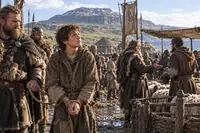
Safe at home at last, he dreamed of a letter, “The Voice of the Irish,” calling him back to the very land that had held him captive.
Defying the king’s ban on pain of death, he lit the blazing Easter fire on the Hill of Slane, and the priests foretold that his fire would burn forever.
Stay in silence
You understand the power of forgiveness in him: the pain and injustice others have caused us in the past can become the very bridge that brings them to salvation.
Christ with me, Christ before me, Christ behind me.
Let us pray
Saint Patrick,
you were taken as a slave at sixteen, and on the freezing mountainsides your faith awoke. Then you went back to the very land that had held you captive to bring them the Gospel.
Teach me to forgive those who have hurt me, and to pray for them.
May Christ be with me, before me, behind me, in my heart, and in the heart of everyone I meet today.
Amen.
Sources
- Feast dayAuthor’s edited profile
- Patron ofPatronages and symbols, version 1.1
- Often depicted withPatronages and symbols, version 1.1
- Reflectionconfessio.ie
- Reflectionconfessio.ie
Meet the next one
 Journey 7