

Journey 7 · Going Far, Standing Firm
Saint Sebastian
A soldier defending the faith under a rain of arrows
Feast day January 20
Tap to step inside
Saint Sebastian
A soldier defending the faith under a rain of arrows
Map of a life
This life told in 5 chapters
Begin the journey OpeningOpening1 min
 Chapter 1 of 5An officer of the Roman emperor’s guard1 min
 Chapter 2 of 5Strengthening the faith of the martyrs1 min
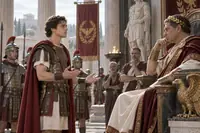 Chapter 3 of 5A rain of arrows on the Palatine Hill1 min
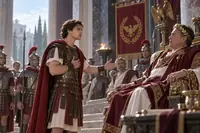 Chapter 4 of 5A brave return before the tyrant1 min
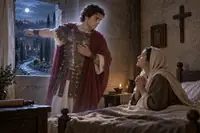 Chapter 5 of 5Patron against epidemics, and a favorite of painters1 min
Feast day
Saint Sebastian
Some places may celebrate on a slightly different day.
January 20
Patron of
- Soldiers and police officers
- Athletes and archers
- People in places struck by epidemics
Often depicted with
- Tied to a tree trunk
- Arrows
Opening
Opening
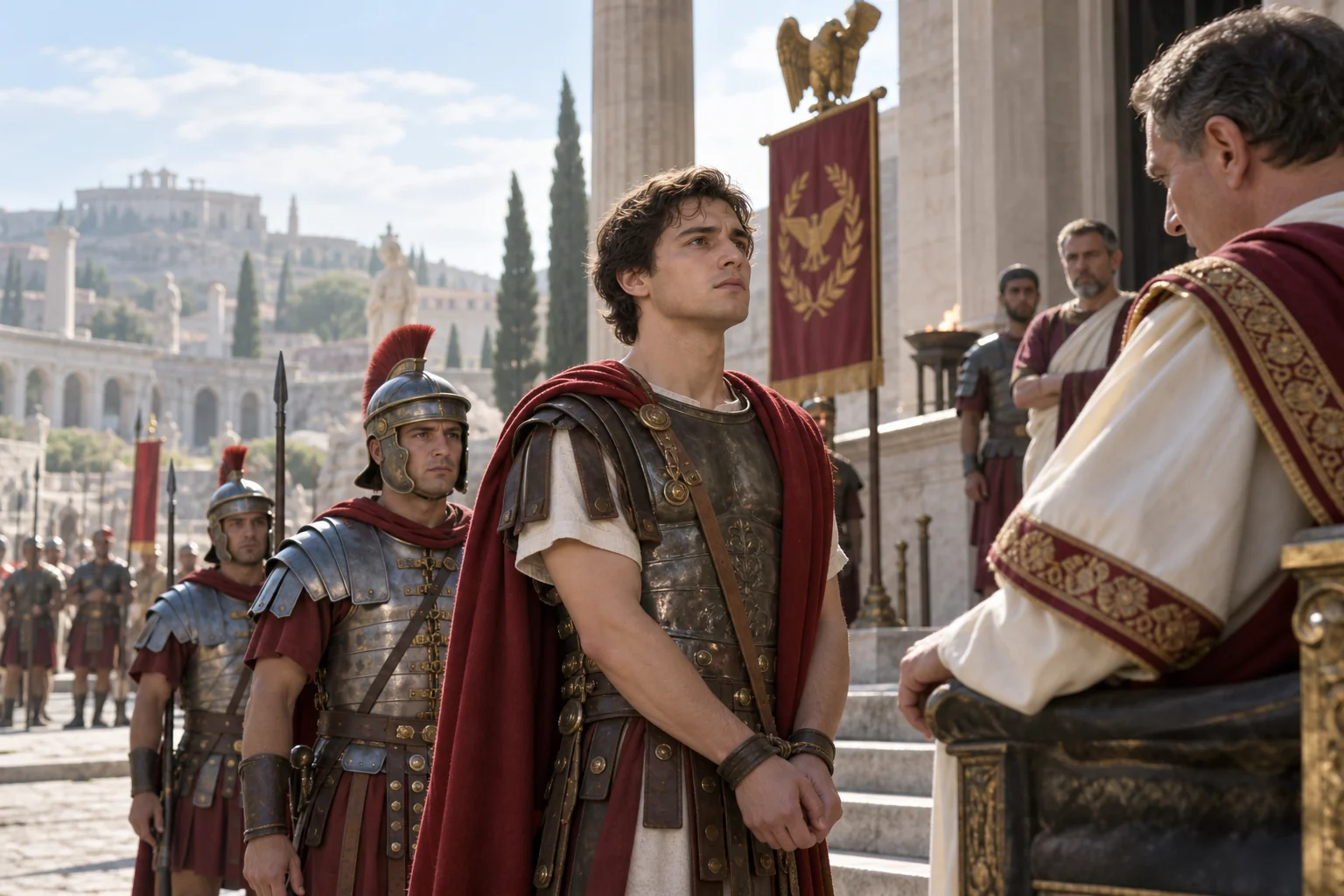
One morning at the beginning of the fourth century, on the military parade ground of the Palatine Hill in Rome, a cruel scene was unfolding: a young captain of the imperial guard, strong and handsome, had been stripped naked and tied tightly to the trunk of an old tree.
Before him stood a squad of seasoned Mauretanian archers. At Emperor Diocletian’s order, arrows whistled through the air one after another and sank deep into his body, until he bristled like a porcupine. Blood poured down, soaking the tree trunk, and the soldiers left, convinced that the young officer was dead.
That soldier was Sebastian (Sebastianus), the famous martyr of the Roman army. He wore the uniform of a commander of the imperial guard not for worldly honor but to shield the Christians held in dark prisons. And after being miraculously saved from the rain of arrows, he did not flee; he went back to stand before the tyrant, denouncing his cruelty and bearing witness to Christ to the last drop of his blood. He is honored as patron of soldiers and athletes, and especially invoked against epidemics.
Chapter 1 of 5
An officer of the Roman emperor’s guard
Sebastian was born around 256 in Narbonne, in Gaul, now in the south of France. His father was a nobleman of Narbonne, and his mother a devout noblewoman of Milan. He grew up in Milan and was firmly grounded in the Christian faith there. The city was already one of the most important Christian centers of northern Italy, though it would be more than a century before Saint Ambrose became its bishop.
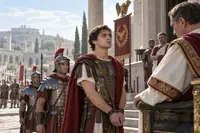
Around 283 he joined the army of the Roman Empire. Intelligent, exceptionally brave and well disciplined, Sebastian rose quickly. The emperors Diocletian and Maximian trusted him deeply and made him captain of the first company of the imperial guard, the Praetorian Cohort: the elite unit responsible for the emperor’s own safety, and a post any Roman officer would have longed for.
But it was not military glory that made the young nobleman put on a commander’s armor. He had seen that in the court and the army he could quietly use his rank and influence to shelter, comfort and help the Christians held in the dungeons during the persecution. It was a dangerous place to be, but from the inside he could reach places no ordinary Christian could go near.
Chapter 2 of 5
Strengthening the faith of the martyrs
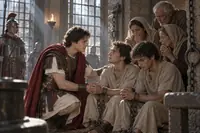
The ancient account Passio Sancti Sebastiani relates that in a Roman prison there were twin brothers of noble birth, Mark and Marcellian, who had been arrested for being Christians. They had bravely endured torture, but when the judge postponed their sentence for thirty days so that their family could persuade them, their aged parents, wives, children and close friends poured into the prison weeping bitterly, begging them to offer sacrifice to the gods just once, even in pretense, to save their lives and come home. Faced with their loved ones’ tears, the two martyrs began to waver.
At that moment Captain Sebastian, in his splendid commander’s uniform, strode into the cell and called out in a ringing voice to the two soldiers of God:
“Brave soldiers of Christ! You have fought steadfastly to the very last stage; why let the empty tears of this world rob you of your eternal crown of glory? Do not trade eternal ruin for this short, passing life on earth! Look up to heaven, where Christ is opening His arms wide to welcome you!”
His fiery words lit up the whole dungeon, and a holy light shone around him. Zoe, the wife of the jailer Nicostratus, who had been mute for six years, knelt at his feet, was healed, and began to praise God. Seeing that miracle, the whole family of Mark and Marcellian, the jailer Nicostratus and sixty-four prisoners and officials present in the cell burst into tears and fell to their knees, asking to renounce the idols and receive Baptism. Mark and Marcellian then went bravely to their execution and died as martyrs.
Chapter 3 of 5
A rain of arrows on the Palatine Hill
Such open preaching by a guard commander was soon discovered. Emperor Diocletian was furious to find that his most trusted officer, whom he had favored so highly, was a fervent Christian. The emperor summoned him and rebuked him angrily:
“I gave you high rank and made you commander of the guard protecting my life — why have you betrayed me to follow that false religion?”
Sebastian calmly replied with the honesty of a true soldier:
“Emperor, I have always been your most loyal soldier! I always pray to the living God, the one Creator, asking Him to keep you safe and bring peace to the empire! It is your worship of senseless idols of wood and stone that truly brings disaster on the empire!”
When neither honors nor threats could move him, Diocletian ordered the cruelest of deaths: he was to be tied to a wooden post and shot slowly to death by a squad of archers. The arrows sank deep into his body. The soldiers left, convinced he was dead. That night Saint Irene, a devout Roman widow, slipped out to the parade ground to take his body for burial.
But when she touched the bloodstained body, she was astonished to find that his heart was still faintly beating. With her maids she secretly carried him to her home on the Palatine Hill, where she washed and bandaged his wounds and nursed him. By God’s grace and his own soldier’s strength, Sebastian made a complete recovery.
Chapter 4 of 5
A brave return before the tyrant
His friends urged him to flee Rome quickly to save his life. But Sebastian firmly refused. He was convinced that God had saved his life so that he could bear even stronger witness to the truth, not so that he could hide in safety.
A few days later, as Emperor Diocletian and his splendid retinue were passing over the bridge leading to the temple of Apollo, Sebastian suddenly stepped out and stood firmly right in the middle of the road. Seeing the guard officer he had just ordered shot to death now standing tall before him, the emperor froze in shock, thinking he was seeing a ghost. Sebastian spoke in a firm voice that shook the whole retinue:
“I am Sebastian! Christ has saved my life so that I may stand here and denounce to your face your cruel injustice! Why do you so heartlessly persecute innocent Christians? They are the most upright citizens, praying day and night for your well-being and the well-being of the country!”
Stung in his pride, Diocletian flew into a rage and ordered the soldiers to seize him. This time the emperor had him clubbed to death with iron rods on the spot, in the Circus Maximus, the largest chariot-racing arena in Rome, where tens of thousands of ordinary people gathered. He endured the blows that crushed his flesh and bones until he died, a witness to Christ. It happened on January 20, traditionally in the year 288, though some other sources place it in 304, near the end of Diocletian’s persecution.
To keep Christians from venerating his body, the soldiers threw it into the Cloaca Maxima, the great sewer of Rome, which had drained the city since the days of the Republic centuries before. But that night Saint Sebastian appeared to a devout woman named Lucina and showed her where his body had caught. The faithful recovered his body and buried it with honor in a catacomb on the Appian Way, at the third milestone from the center of Rome.
Chapter 5 of 5
Patron against epidemics, and a favorite of painters
Later Emperor Constantine built the Basilica of Saint Sebastian Outside the Walls (San Sebastiano fuori le Mura) right over his tomb. It is one of the seven traditional pilgrimage churches of Rome, visited by the faithful for centuries.
Throughout the Middle Ages and the Renaissance, Saint Sebastian was especially honored as a protector against outbreaks of plague, such as the plague in Rome in 680 or in Milan in 1576. People saw the arrows in his body as the arrows of disease, and his survival as a sign of healing grace, so towns all over medieval Europe often built chapels in his honor as soon as an epidemic broke out.
Saint Sebastian tied to a tree, pierced with arrows, became one of the subjects most often painted by the great masters, among them Sandro Botticelli, Raphael, El Greco and many later painters; in the whole history of Christian painting, only Christ crucified and Our Lady were painted more often. The Church celebrates Saint Sebastian on January 20 each year. He is patron of soldiers, police officers, archers and athletes.
Saint Sebastian teaches every Christian courage. True faith is not armor to hide behind in selfish safety. It is the courage to stand for truth and justice, to speak up for the oppressed, and to stay faithful to Christ to the last drop of blood, whatever arrows of hatred the world may shoot.
The end of the story
You have walked with Saint Sebastian to the end of the story.
A few glimpses of his life stay with you:
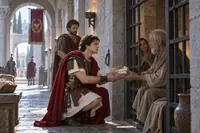
As captain of the imperial guard, he secretly used his position of power to comfort and shelter Christians held in dark prisons.
When the brothers Mark and Marcellian were about to waver before their family’s tears, he came to urge them not to trade an eternal crown for passing tears.
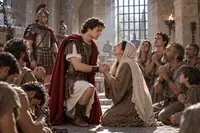
After surviving the rain of arrows, instead of fleeing, he stood in the very middle of the emperor’s road to denounce the emperor’s own injustice.
Stay in silence
Now you know what a faith that does not hide looks like: he was saved not to be safe, but to bear even stronger witness to the truth.
Christ has saved my life so that I may stand here and denounce to your face your cruel injustice!
Let us pray
Saint Sebastian,
you used your own position in the army to shelter Christians in prison. Saved from the rain of arrows, you still stood up to bear witness to the truth.
Pray for soldiers, police officers, security guards and athletes.
Teach me the courage to use whatever position I have to protect the weak, and not to stay silent in the face of injustice.
Amen.
Sources
- Feast dayAuthor’s edited profile
- Patron ofPatronages and symbols, version 1.1
- Often depicted withPatronages and symbols, version 1.1
- Reflectionnewadvent.org
- Reflectionvaticannews.va
Meet the next one
 Journey 7