

Journey 3 · Young Lives Freely Given
Saint Maria Goretti
A heart that did not belong to violence
Feast day July 6
Tap to step inside
Saint Maria Goretti
A heart that did not belong to violence
Map of a life
This life told in 5 chapters
Begin the journey
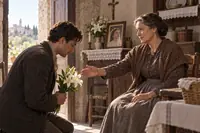
Feast day
Saint Maria Goretti
Some places may celebrate on a slightly different day.
July 6
Patron of
- Girls and young people
- Victims of abuse
- Purity
Often depicted with
- White lilies
- The martyr’s palm branch
Opening
Opening
Long before her name rang out over a Saint Peter’s Square packed with tens of thousands of people, Maria Goretti was little Marietta from a poor farming family: a girl with mud on her clothes who carried and minded her younger brothers and sisters every day, helped her mother cook, learned her catechism by heart, and lay awake night after night longing for the day she could receive the Lord.
People who tell her story often start with the knife and the painful death. But to really meet Marietta, we have to go back to the days before, when she was busy with countless small chores by the wood fire and had a whole future ahead of her that should have unfolded in peace.
Her holiness did not make her childhood need any less shelter and protection. Precisely because she was a child God loved with all His heart, what happened to her must be looked at with deep compassion and plain honesty.
Chapter 1 of 5
The wanderings of a poor family
Maria Teresa Goretti was born on October 16, 1890, in the village of Corinaldo, in the Marche region of central Italy, an old hill town still ringed by its medieval walls, with winding stone lanes climbing to the top. The house where she was born still stands in the heart of Corinaldo, a small place of pilgrimage for those who want to see where her life began before the painful story that came later.
Her father was Luigi Goretti and her mother Assunta Carlini, both farmers who worked the soil with their hands. She was baptized the very next day and grew up in a large family rich in faith and poor in everything else. On October 4, 1896, Maria received the sacrament of Confirmation.
As it grew harder and harder to make a living, the family left their home region with their children, moving first to Colle Gianturco and then, in 1899, to the marshes of Ferriere di Conca, now part of Borgo Le Ferriere in the province of Latina. It was then a low, damp land plagued by malaria all year round, where poor sharecroppers from all over central Italy came to clear and farm land rented from great landowners. The Gorettis farmed as tenants and shared a damp farmhouse with the Serenellis, a father and son.
For the poor, leaving home is rarely a promising adventure. It is usually a last resort: leaving the place where you were born because staying means not having enough to eat. Maria’s parents hoped to find a better life for their children, but the work was still back-breaking and deadly illness waited at the door.
In 1900, her father Luigi died of malaria, the disease that killed countless poor tenant farmers in these Pontine Marshes, which were not fully drained until decades later. Her mother Assunta was left alone in the swampy fields to raise the young children. Maria, not yet ten, had to take charge of the household: cooking, washing, mending clothes and soothing her little brothers and sisters so her mother could work in the fields all day.
A child can learn early to take care of others. That does not mean she stops being a child. Beneath all that capable maturity was still a young girl who badly needed a father, needed her mother’s arms, needed to go to school, learn to read and play like other children her age.
Chapter 2 of 5
Longing for her First Communion
Maria never went to school and could not read or write. She learned her catechism by listening closely and memorizing it, snatching every spare moment between feeding the animals and sweeping the house. Her longing to receive Jesus in the Eucharist made her prepare her soul with great seriousness.
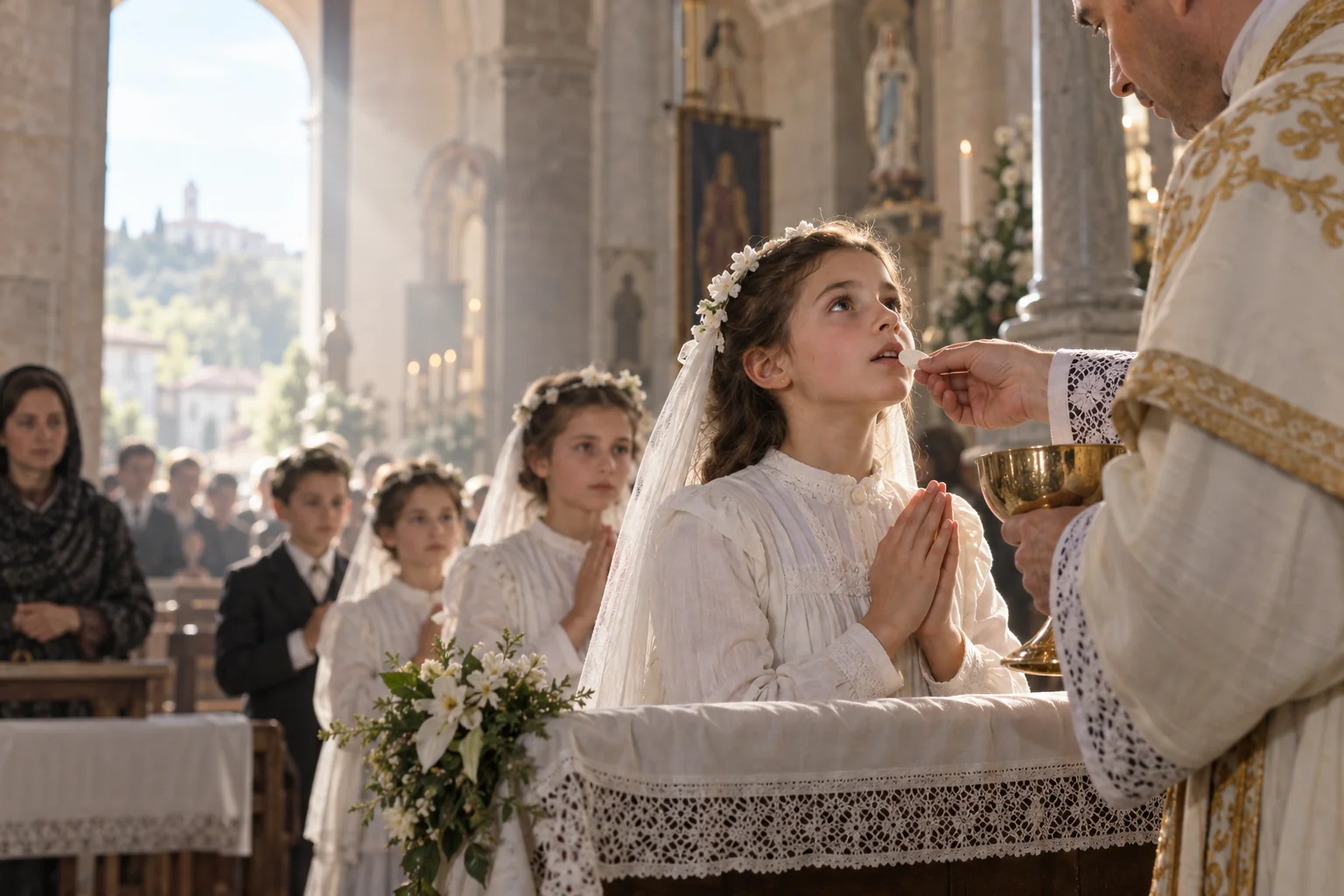
On June 16, 1901, Maria made her First Communion in the church at Conca.
To an outsider it might have looked like an ordinary feast day in a poor parish. For Marietta it was the holiest meeting of her life. She welcomed the Lord into a life with no treats or presents of its own. The days that followed went on as hard as before: lighting the fire, washing clothes, carrying the little ones. Holy Communion did not lift her out of her poor home, but it lit a steady flame in her: her life belonged entirely to God, and even the hardest chores could be done with love.
That picture is very close to the eldest daughters of poor Vietnamese families, who at ten are already taking their mother’s place: cooking, minding the little ones, toiling at housework. Faith should bring them gentle support, not burdens beyond their strength. God’s love always calls adults to open their arms and protect the childhood of the young.
Chapter 3 of 5
Fear in an empty room
Alessandro Serenelli, a twenty-year-old living in the same house, began to lust after Maria and repeatedly harassed and threatened her. She firmly refused him. But she was so terrified that she said nothing to her mother, afraid that Alessandro would kill her mother and her brothers and sisters, as he had threatened.
A child who is threatened may choose silence out of terror, out of fear that her family will be dragged in, and out of confusion about whether anyone would believe a child like her. That tearful silence calls on adults to notice and care, and never, ever to blame the victim.
Around noon on July 5, 1902, while everyone was busy threshing grain outside, Alessandro slipped into the house, overpowered Maria and tried to assault her. The eleven-year-old fought him to the end, struggling and pleading:
“No, Alessandro! Don’t do it, it is a sin, you will go to hell!”
Enraged at being refused, Alessandro pulled out a knife and stabbed her fourteen times. Maria collapsed in a pool of blood. She was rushed to the hospital in Nettuno, a few kilometers away, where the doctors fought to save her, operating for hours without proper anesthesia.
She did not die because she did anything wrong. The violent crime is entirely the responsibility of the one who committed it. Her attacker had not given Maria her dignity, and he had no power to take it from her.
This matters for anyone who has suffered sexual violence: no one loses the purity of their soul because of what someone else forced on their body. Remembering Saint Maria Goretti should stir the conscience of all of us to stand with those who have been hurt, to listen to them, protect them and help them heal.
Chapter 4 of 5
Forgiveness from a hospital bed
In her last hours, Maria received the last sacraments fully conscious. When the priest gently asked whether she forgave the one who had harmed her, she said words that the world has never forgotten:
“I forgive Alessandro... For the love of Jesus I forgive him, and I want him to be with me in heaven!”
That forgiveness does not make murder a small thing. It did something no blade could ever undo: with her body torn by pain, she refused to give her heart over to the poison of hatred.
No one can force a victim to forgive as quickly as Maria did. Forgiveness is not a form of words that others have the right to demand of the wounded, as if saying them settles everything. For her, it was a grace that flowed from her deep union with Jesus on the Cross.
On the afternoon of July 6, 1902, Maria died, more than three months short of her twelfth birthday. Her poor mother was shattered at losing her good daughter; her little brothers and sisters were left bewildered without their gentle big sister. The Church honors her as a martyr for guarding her purity and forgiving fully to her last breath. But before we look at the halo, her family’s heartbreaking grief deserves a moment of silence.
Chapter 5 of 5
The conversion of her killer
Alessandro was sentenced to thirty years of hard labor. In his first years in prison he was hard and closed in on himself. Then, through the prayers of the local bishop and a dream in which he saw Maria Goretti gathering white lilies and handing them to him, something woke in him, and he wept in repentance.
When he had served his sentence, the first thing Alessandro did was to go and find Assunta — the mother whose eldest daughter he had taken. He fell at the poor old woman’s feet and pleaded:
“Signora, will you forgive me?”
Assunta, in tears, raised him up and said:
“If my daughter forgave you from her hospital bed, who am I not to forgive you?”
The next day the two of them went to church together and received Communion side by side, and the whole congregation was deeply moved. The forgiveness of an eleven-year-old girl had rescued a soul from ruin. Alessandro spent his last years as a Capuchin lay brother, quietly working in a friary until his death.
On April 27, 1947, Pope Pius XII beatified Maria Goretti. On June 24, 1950, she was canonized in Saint Peter’s Square as her mother Assunta looked on in tears. It was the first time in the history of the Church that a mother lived to see her child canonized. Her feast is July 6 each year. Her remains now rest in the Shrine of Our Lady of Graces in Nettuno, which welcomes thousands of pilgrims every year, many of them young families and schoolchildren.
The daughter of an unschooled family of farmhands was named a saint before the whole world. Telling her story in catechism classes or at home today teaches very real lessons: respecting our own bodies and those of others, never mistaking violence and coercion for love, daring to speak up to a trusted adult when threatened, and protecting the childhood of the young.
Marietta left us far too soon. Remembering her, we are called to build a world where every child is kept safe and can grow up whole.
The end of the story
You have walked with Saint Maria Goretti to the end of the story.
Some scenes you cannot forget:
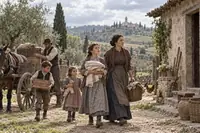
At only ten, running the whole household and soothing the little ones so her mother could work in the fields without worry.
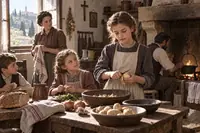
Resisting to the end, she pleaded with her attacker: "It is a sin, you will go to hell!"
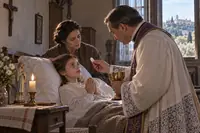
From her hospital bed, she forgave: "I want him to be with me in heaven!"
Stay in silence
It sinks in: the forgiveness of an eleven-year-old girl did what no blade could ever do. It rescued a soul from ruin.
Forgiveness does not make a crime light — but it keeps the wounded heart from falling into the hands of hatred.
Let us pray
Saint Maria Goretti,
at only ten you took your mother’s place caring for the little ones. When you were attacked, you resisted to the end. And from your hospital bed you forgave the very one who harmed you: "I want him to be with me in heaven."
Keep children safe from all violence and abuse. May they grow up pure, safe and loved.
Teach me to forgive, and to believe that forgiveness can save a soul when no blade could.
Amen.
Sources
- Feast dayAuthor’s edited profile
- Patron ofPatronages and symbols, version 1.1
- Often depicted withPatronages and symbols, version 1.1
- Reflectionmariagoretti.org
- Reflectionparrocchie.it
Meet the next one
 Journey 3