

Journey 3 · Young Lives Freely Given
Saint Dominic Savio
Joy in the middle of the schoolyard
Feast day May 6
Tap to step inside
Saint Dominic Savio
Joy in the middle of the schoolyard
Map of a life
This life told in 6 chapters
Begin the journey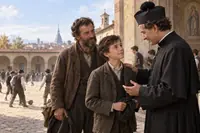 OpeningOpening1 min
 Chapter 1 of 6The son of a poor blacksmith1 min
- Chapter 2 of 6Meeting a teacher who could see far1 min
 Chapter 3 of 6To be a saint, always be cheerful1 min
 Chapter 4 of 6Standing between two stones about to fly1 min
 Chapter 5 of 6A trip home with no return1 min
- Chapter 6 of 6A saint for schoolchildren1 min
Feast day
Saint Dominic Savio
Some places may celebrate on a slightly different day.
May 6
Patron of
- Children’s choirs and altar servers
- Expectant mothers (his little garment)
- Young people
Often depicted with
- A schoolboy’s clothes
- The words "Death rather than sin"
Opening
Opening
There was once a young schoolboy who longed with all his heart to become a saint. At first he was sure that becoming a saint must mean doing something extraordinary and hard: going without food and drink, enduring painful beatings, or staying up all night by lamplight to pray.
But his beloved teacher, Saint John Bosco, soon noticed that headlong fervor. The teacher gently took his hand and led him back to very simple, everyday things: back to the lessons in class that had to be learned by heart, to the noisy, laughing games in the schoolyard, and to the small duties of each day, done with care.
That was a decisive turning point in Dominic Savio’s life. A young person’s eager love for God needs a wise hand to guide it, so that it does not turn into harsh self-punishment but grows into a healthy, joyful life full of friendship. The boy learned that lesson at Don Bosco’s side, then let that same holy joy light up the whole schoolyard at Valdocco.
Chapter 1 of 6
The son of a poor blacksmith
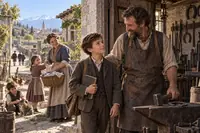
Domenico Savio — whom Vietnamese Catholics affectionately call Đa Minh Savio — was born on April 2, 1842, in the small village of San Giovanni, in the commune of Riva presso Chieri, in Piedmont, northern Italy. His father, Carlo Savio, was a poor, hardworking blacksmith; his mother, Brigida Gaiato, was a seamstress. The family had eleven children and lived by manual labor, scraping by from day to day, but it was a close and devout household.
Dominic’s childhood passed in the peaceful villages of Murialdo and then Mondonio, in the commune of Castelnuovo d’Asti — the same corner of Piedmont where Don Bosco himself was born, where vine-covered hills roll on one after another, and in winter the fog hangs thick from morning until noon. The boy was bright and quick, loved to learn, got on well with children his age, and loved the village church from an early age.
In 1849, at just seven years old, Dominic was allowed to make his first confession and First Communion. At that time it was a rare exception, since the usual rule made children wait until eleven or twelve to receive the Eucharist.
In a small notebook on the day of his First Communion, the seven-year-old carefully wrote four resolutions to guide his whole life:
- I will go to confession and Communion as often as my confessor allows.
- I want to keep the feast days holy.
- My friends will be Jesus and Mary.
- Death rather than sin!
These resolutions of a seven-year-old sound very simple, but they took deep root in his soul. Dominic did not live in comfort. To get to school, he had to walk many kilometers of dirt road every day under burning sun or sleet. The home that nurtured his vocation was a hardworking home, where every book and every day of school was paid for with his parents’ sweat and tears.
Chapter 2 of 6
Meeting a teacher who could see far
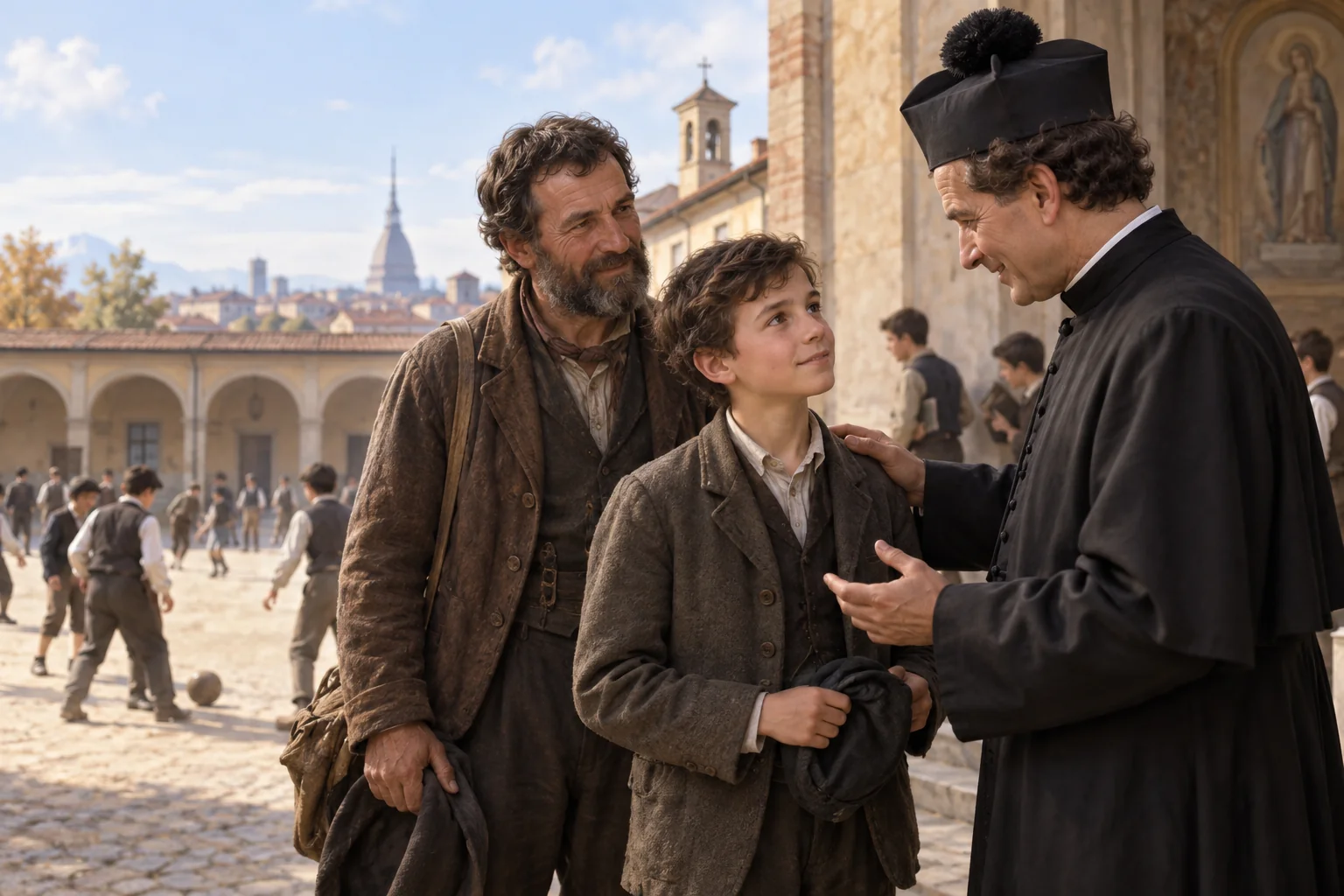
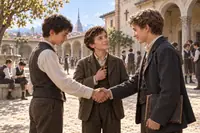
On October 2, 1854, his father took Dominic by the hand to meet Don Bosco at Becchi, the priest’s own home village. Don Bosco was then devoting himself to gathering and educating homeless, abandoned boys in the city of Turin — children left behind by the wave of industrialization transforming every street corner of the capital of the Kingdom of Piedmont-Sardinia at that time. Don Bosco looked deep into the boy’s bright eyes. He saw a sharp mind, a pure soul, and the seed of holiness, if only it were tended and guided well.
Don Bosco later recalled a lovely image from that first conversation: Dominic looked up at him and said:
“Father, I am like a piece of rough cloth; you are the tailor, please cut me into a beautiful garment to offer to the Lord!”
The boy put all his trust in his teacher. He wanted to be good, and he humbly understood that he very much needed someone to show him the way.
At the end of October that year, Dominic entered the school at Valdocco in Turin. Only a few years earlier, Don Bosco had had to borrow a rickety wooden shed — Mr. Pinardi’s old storehouse — as the first chapel where the street boys could gather; by the time Dominic arrived, Valdocco had grown into a boarding house with hundreds of boys from every background, with workshops, classrooms and even a church under construction. The twelve-and-a-half-year-old stepped from a peaceful countryside into a busy world of lessons, prayers, games of tag and countless different temperaments. Here he learned more than his letters; he learned to live with others, to give way to them and to walk alongside them.
Chapter 3 of 6
To be a saint, always be cheerful
In Lent 1855, after hearing Don Bosco preach a moving sermon on the duty to become holy, the longing in Dominic’s heart flared up. He grew unusually quiet and withdrawn, anxious that he did not know how to do enough to please God. He began, on his own, to put shards of pottery and stones in his bed as penance, and in the depth of the snowy winter covered himself with just one thin blanket.
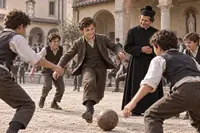
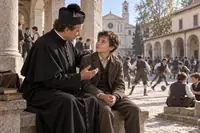
When he found out, Don Bosco stepped in at once and strictly forbade him to do such penances anymore. The teacher kindly sat him down and showed him the true road to holiness: holiness does not lie in tormenting the body, but in always being cheerful, doing one’s schoolwork and small acts of devotion well every day, and joining wholeheartedly in good games with friends in the schoolyard.
It was guidance full of fatherly love. The grown man did not exploit the boy’s innocent fervor to push him beyond his strength. Don Bosco taught him that the body too is a gift from God to be cared for, and that serving God never requires us to give up the pure joy of childhood.
Dominic took that teaching to heart. He went back to the schoolyard, ran and jumped with all his might, laughed and joked, studied hard, and always kept an eye out to help the friends around him. His devotion did not make him an odd loner; it made him a friend everyone liked, who brought peace to those around him.
Chapter 4 of 6
Standing between two stones about to fly
Among the moving stories Don Bosco recorded about Dominic is the time he stopped a bloody fight between two schoolmates. Over a grave insult, two boys had challenged each other to throw stones until one of them fell. The other boys stood around cheering them on.
Hearing of it, Dominic rushed to the scene. When words failed to persuade them, he pulled out the small crucifix he wore around his neck and stood right between the two. He held the crucifix high and said firmly:
“Before you throw stones at each other, look at this Crucified One, and throw the first stone at my head!”
The extraordinary courage of a boy barely in his teens stunned the two rivals. Slowly they let the sharp stones fall to the ground, hung their heads in shame and shook hands.
The story is not telling children to rush headlong into danger beyond their strength. It shows the courage to stand apart from the crowd when the crowd is wrong, to protect one’s friends and to make peace.
At school, Dominic always noticed the weaker students and the newcomers who were still shy and bewildered and being teased. He went up to talk to them, invited them to play, and patiently went over the lessons with them.
On June 8, 1856, Dominic and his close friends founded the “Company of the Immaculate Conception” at the school. Together they promised to live as good examples and to help one another in their studies and their faith. Young people do not have to wait until they are grown up and have position or authority to start living responsibly for others.
Chapter 5 of 6
A trip home with no return
But Dominic’s body was very frail. In the winter of 1856, his health declined quickly. Persistent coughing and endless fevers wore him out until he could no longer get up to go to class. Don Bosco brought in the best doctors to treat him, but the crude medical methods of the time could not stop the advancing lung disease. With a heavy heart, his teacher decided to send him home to Mondonio to recover.
On March 1, 1857, Dominic said goodbye to Valdocco. It broke his heart to leave the school he had loved for more than two years. He hugged each of his friends, and when he said goodbye to Don Bosco, he whispered:
“Father, I will never come back here again...”
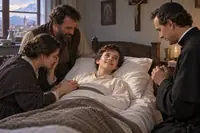
Back with his family, his illness grew worse each day. He received the last sacraments peacefully, with his parents and the parish priest beside him.
On the evening of March 9, 1857, Dominic Savio lay in bed and slowly opened his eyes to look at his parents weeping beside him. His face suddenly lit up with a radiant smile. He spoke his last words:
“Goodbye, Father... Oh, what beautiful things I see!”
, and died gently, not yet fifteen years old.
Don Bosco grieved for his young student and wrote a moving life of him himself, published in 1859. The book became one of the founding texts of Salesian education, translated into dozens of languages and still read in Don Bosco schools around the world today.
Chapter 6 of 6
A saint for schoolchildren
Dominic Savio was beatified by Pope Pius XII in 1950, and canonized on June 12, 1954. The Salesian family and the Church celebrate him on May 6 each year. He became one of the youngest saints of the Church canonized not for martyrdom, but for heroic virtue in ordinary life.
In parishes, catechism classes and children’s movements in Vietnam, the name of Saint Dominic Savio brings to mind an older brother, a model friend for schoolchildren.
He reminds young people today that holiness is not something distant, fanciful and out of reach.
- Holiness is doing your homework well;
- not cheating on exams;
- stopping a mocking comment about a friend on social media;
- inviting a lonely classmate to play;
- and keeping your soul always pure, shining with joy in the schoolyard of life.
The end of the story
You have walked with Saint Dominic Savio to the end of the story.
You still remember vividly:
Writing four resolutions in his notebook at seven, among them: "Death rather than sin!"
Telling Don Bosco: "I am like a piece of rough cloth; please cut me into a beautiful garment to offer to the Lord!"
Holding up a crucifix between two friends about to throw stones: "Throw the first stone at my head!"
Stay in silence
You see clearly: holiness, for him, was never about tormenting the body, but about being cheerful, studying hard, and noticing the friend who needs a helping hand.
Young people do not need to wait until they are grown up to begin living responsibly for others.
Let us pray
Saint Dominic Savio,
at seven you wrote in your notebook: "Death rather than sin!" You asked Don Bosco to make you into a beautiful garment to offer to the Lord, and dared to stand between two friends about to throw stones at each other.
Pray for schoolchildren, that they may be cheerful, study hard and keep their souls pure.
Help them have the courage to do what is right among their friends, and to bring peace where there is conflict.
Amen.
Sources
- Feast dayAuthor’s edited profile
- Patron ofPatronages and symbols, version 1.1
- Often depicted withPatronages and symbols, version 1.1
- Reflectiondonboscowest.org
- Reflectionjournal.salesianstudies.org
Meet the next one
 Journey 3