

Journey 3 · Young Lives Freely Given
Saint Aloysius Gonzaga
The one who laid down a crown
Feast day June 21
Tap to step inside
Saint Aloysius Gonzaga
The one who laid down a crown
Map of a life
This life told in 5 chapters
Begin the journey

Feast day
Saint Aloysius Gonzaga
Some places may celebrate on a slightly different day.
June 21
Patron of
- Catholic youth and students
- Those who care for the sick in epidemics
Often depicted with
- A white lily
- A crucifix
- A rosary
Opening
Opening
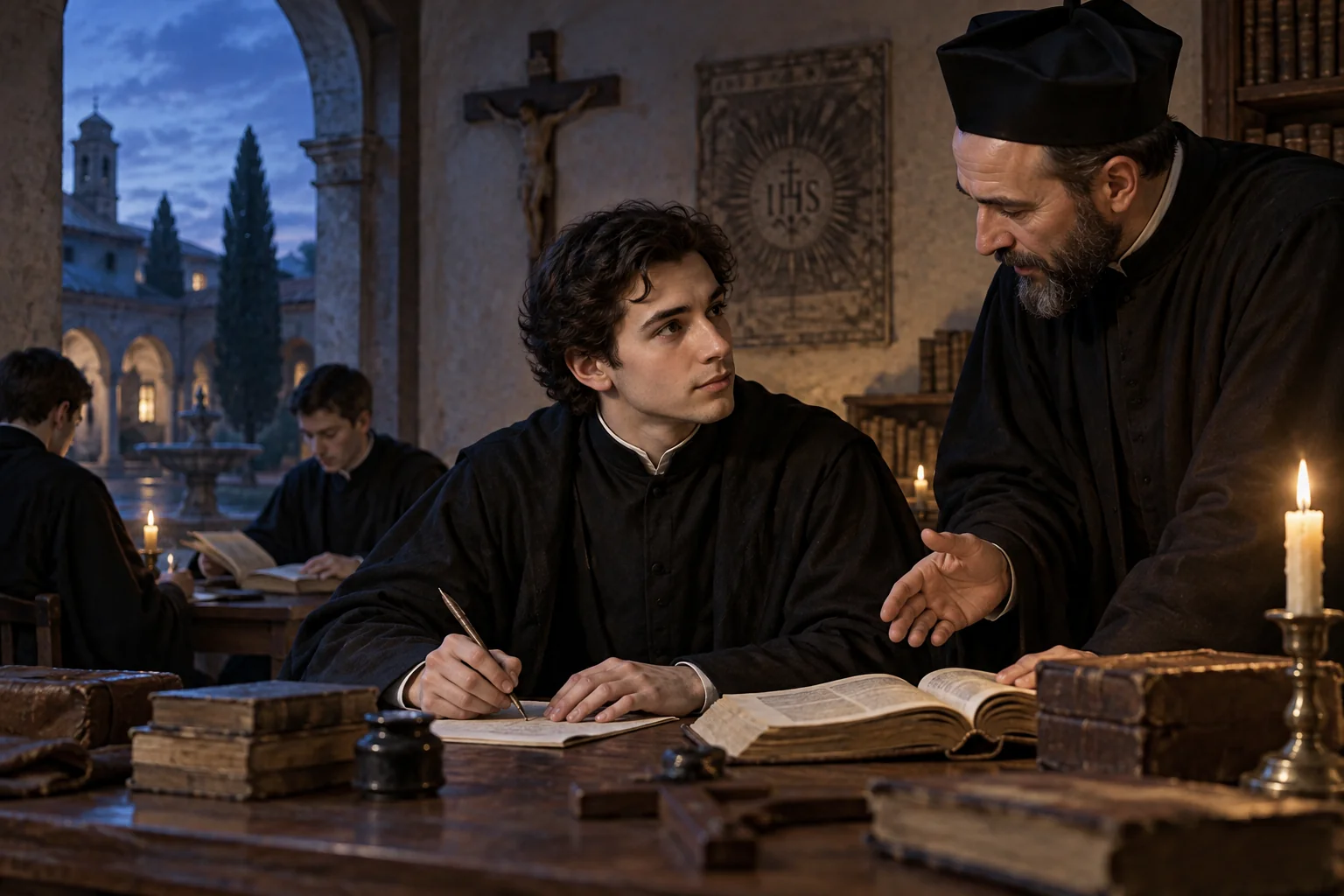
Aloysius Gonzaga was born into one of the most powerful families in Italy, where the brightest of futures had been laid out for an eldest son: a famous marquisate to inherit, magnificent palaces to live in, vast lands to own, and the power to command others. He could easily have walked that red carpet without ever asking where he really belonged.
Yet Aloysius asked the question. And the answer from the depths of his heart led him to walk out of the palace, give up his right to succeed his father, enter the poor life of the Jesuits, and finally bend down beside the sick and dying in the filthy streets of Rome.
Raised to command armies, he learned to kneel down and cradle a broken body. That was the road that brought him to the altars.
Chapter 1 of 5
A childhood of armor and courts
Aloysius, Luigi in Italian, was born on March 9, 1568, in the castle of Castiglione delle Stiviere, in Lombardy, northern Italy, an old hillside fortress that had passed through several families before coming to a minor branch of the famous Gonzagas of Mantua. His father, Marquis Ferrante Gonzaga, was a renowned general in the service of the King of Spain; his mother, Marta Tana, was a devout woman of noble birth. His father poured all his ambition into training his son for a glorious military career, while his mother quietly sowed the seeds of prayer and compassion in his heart.
From the age of four or five, little Aloysius was dressed by his father in a miniature suit of armor and helmet and taken along to army camps. The clash of swords, gunfire and military parades were the first world he knew. But he was frail, and long bouts of kidney illness in childhood soon taught him a sobering lesson: even the most powerful people on earth cannot master their own bodies.
Around the age of nine, Aloysius and his younger brother were sent to Florence to learn the manners of the nobility. At the end of 1579 he moved to Mantua; and in 1582 he went to Spain, to serve as a page at the royal court in Madrid.
Those glittering courts shone with poetry, painting and luxury, but beneath them lay hypocrisy, power struggles and dissolute living, and the young man thought hard about what life is really for. Aloysius turned more and more to silence. Devotional books, the psalms and hours of quiet prayer kindled in him a completely different ideal.
In 1580, at just twelve, Aloysius received his First Communion from the hands of the holy Archbishop Charles Borromeo himself. From then on, his bond with Jesus mattered more to him than any worldly glory or wealth.
Chapter 2 of 5
A tug of war between father and son
In Madrid, after a long time of reflection and prayer, in 1583 Aloysius clearly recognized his calling: he wanted to give himself to God in the Society of Jesus. When he told his father, the marquis flew into a towering rage.
For a father who had poured his heart and his money into preparing his eldest son to carry on the family name and bring it glory, the decision was a painful blow he could not accept. He used all his authority to forbid it, sending his son back to the noble courts of Italy in the hope that a round of lavish feasts would make him give up the idea of religious life.
Yet Aloysius held firm. He would not accept a title simply because the world had decided it for him. The quiet but fierce tug of war went on for three years. In the end, faced with his son’s steadfastness and tears, the father gave in.
In November 1585, at the castle in Mantua, Aloysius signed the document renouncing all his rights to the title and the marquisate’s property in favor of his younger brother Rodolfo. He was seventeen. Straight afterwards he set out for Rome, presented himself to the Superior General of the Jesuits, Father Claudio Acquaviva, and was received into the novitiate of Sant’Andrea al Quirinale, a house on top of the Quirinal Hill in the heart of Rome, where Bernini would later build one of the city’s loveliest Baroque churches.
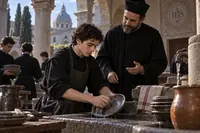
Giving up a title is not simply leaving money and land behind. It meant laying down all the pride that family and society had placed on his shoulders. He chose a life in which he had to learn everything from the beginning: to sweep, to wash dishes, to obey, and to be one among his poor brothers.
Chapter 3 of 5
Learning humility and obedience
Aloysius entered the Jesuit novitiate of Sant’Andrea in Rome. He brought with him a burning fervor, and also the excessively harsh penances he had practiced back in the palace.
His superiors wisely helped him find his way. Someone used to being severe with himself also needs to learn balance, to fit into the shared rhythm of community life and to listen to others’ guidance. Sometimes the hardest renunciation is not giving up outward possessions, but giving up one’s own idea of how to become holy. Saint Robert Bellarmine, the renowned scholar then teaching in Rome, became his understanding spiritual father through these years.
In 1589 his superiors sent Aloysius home to settle a bitter land dispute between his brother Rodolfo and the Duke of Mantua. Giving up the title had not made him indifferent to his family. With humility and the respect he had earned, he settled the quarrel and brought peace to his homeland, then returned to Rome in May 1590 to continue his theological studies.
A religious vocation does not cut family ties; it purifies them, so that the religious can become a bridge of reconciliation for their own flesh and blood.
Chapter 4 of 5
Plague season in Rome
In 1591, drought and famine were followed by a devastating epidemic that raged through Rome. The dead lay in the streets, the hospitals were overwhelmed, and the stench of death hung over everything. The Jesuits opened the doors of their houses to receive and care for the sick.
Aloysius threw himself into the relief work with the other young religious. He went through the alleys begging alms and carried abandoned sick people on his back to the hospital. He washed festering, foul-smelling bodies, changed bandages, fed the sick spoonful by spoonful and lovingly prepared them for the last sacraments. The young man who had grown up in gilded halls now came as close as anyone could to human misery.
Fearing for the lives of the young students, the superiors forbade them to enter the most infected areas. Aloysius asked for and was given work at a less dangerous hospital. But on the way he came upon a plague victim lying near death by the roadside. Without a moment’s hesitation he bent down, took the sick man in his arms and carried him on his back to the infirmary.
And in that very act of self-forgetting love, the deadly disease entered his body.
On March 3, 1591, Aloysius fell gravely ill. Three months of high, delirious fever wore him out completely. The one who had cared so devotedly for the sick now lay humbly in bed, letting others care for him.
In his last days, Aloysius wrote his gentle mother a letter full of faith:
“Dearest mother, do not weep... I am going ahead to wait for you in our heavenly homeland... Our love will never be lost, but will be joined forever in God.”
The son about to enter eternity was trying to comfort the mother who would remain on earth.
Chapter 5 of 5
Twenty-three years, wholly given
On the night of June 21, 1591, with Saint Robert Bellarmine and his brothers in the Society praying around him, Aloysius Gonzaga died peacefully, his eyes fixed on the crucifix, softly speaking the holy name:
“Jesus...”
He was twenty-three years old.
His body was buried in the church of Sant’Ignazio in Rome. Later his skull was brought back to Castiglione delle Stiviere and enshrined in the basilica that bears his name, his homeland’s way of welcoming home the son his vocation had kept away for so many years.
Aloysius was beatified in 1605 and canonized on December 31, 1726. The Church made him patron of Catholic youth and students around the world, and later he was also honored as patron of those who care for the victims of epidemics, a title that felt very close to home in the pandemic years just past. His feast is June 21 each year.
Saint Aloysius Gonzaga teaches young people what true freedom is: freedom is not doing whatever we like, but daring to refuse the temptations of empty glory in order to choose what has eternal value. Not every expectation the world places on our shoulders is God’s true calling.
Aloysius laid down an earthly crown. And at the end of the road, the young nobleman held a poor sick man in his arms. In that act of bending down, the true royalty of Christian love shone out.
The end of the story
You have walked with Saint Aloysius Gonzaga to the end of the story.
You surely cannot forget:
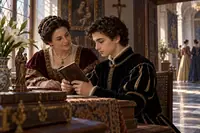
Born to inherit a marquisate, he signed away all his rights of inheritance when he had just turned seventeen.
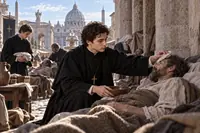
In a time of plague, he carried a sick stranger on his back, and from him he caught the disease that took his life.
In his last days, he wrote to his mother: "I am going ahead to wait for you in our heavenly homeland."
Stay in silence
You understand one more thing: true freedom is not doing what we like, but daring to refuse a crown in order to choose what has eternal value.
Not everything the world expects of us is the road God has set aside for us.
Let us pray
Saint Aloysius Gonzaga,
you were born to inherit a marquisate, but at seventeen you gave it all up to follow the Lord. In a time of plague, you carried a sick stranger on your back, and that is how you died.
Pray for young people and students, that they may learn to choose what lasts longer than fame and comfort.
Teach me the courage to bend down to the sick and the needy, even when it may cost me.
Amen.
Sources
- Feast dayAuthor’s edited profile
- Patron ofPatronages and symbols, version 1.1
- Often depicted withPatronages and symbols, version 1.1
- Reflectioncausesanti.va
- Reflectionjesuits.global
Meet the next one
 Journey 3