

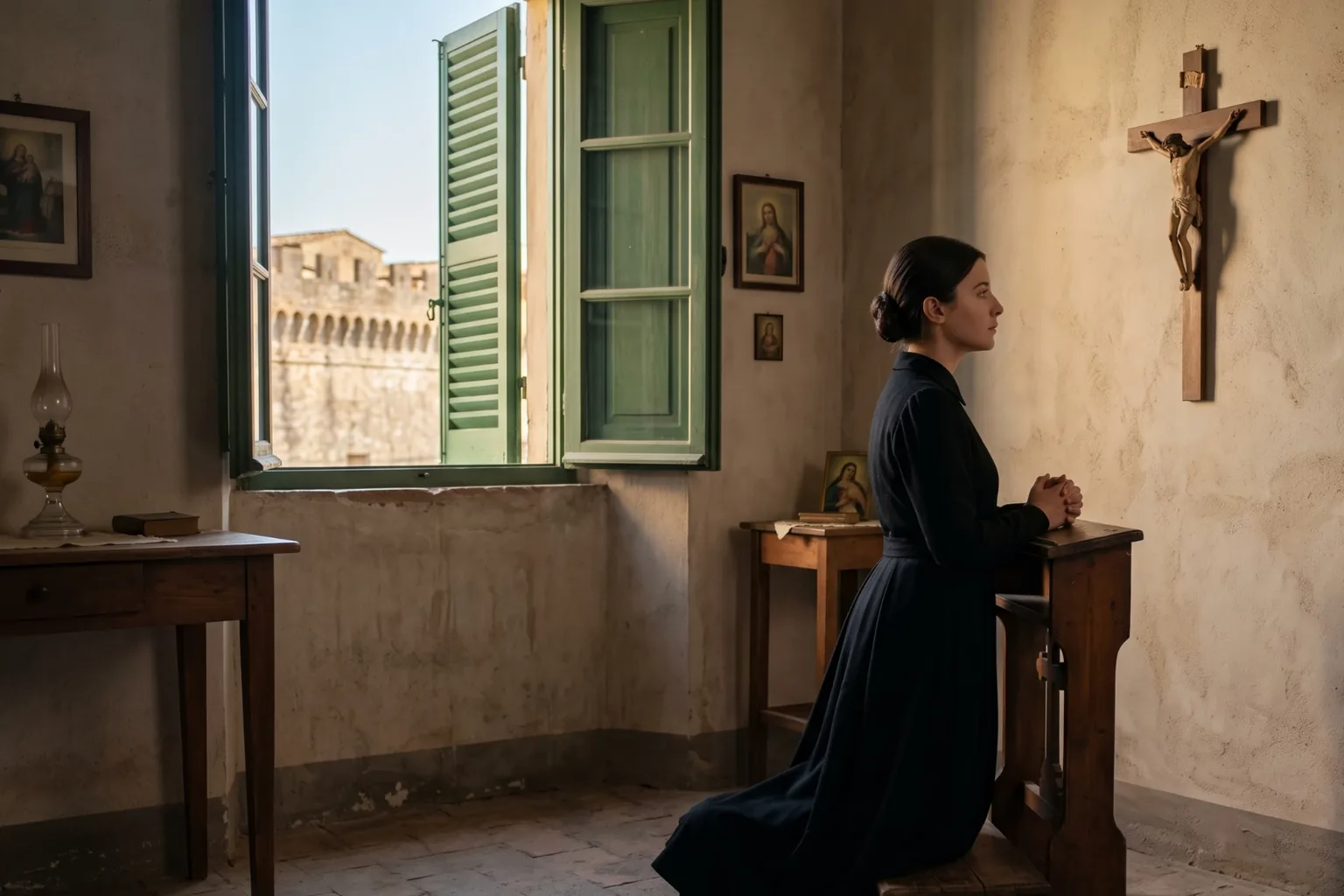
Journey 3 · Young Lives Freely Given
Saint Gemma Galgani
The little jewel of Lucca
Feast day April 11
Tap to step inside
Saint Gemma Galgani
The little jewel of Lucca
Map of a life
This life told in 12 chapters
Begin the journey OpeningOpening1 min
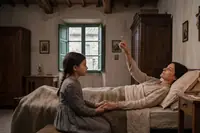 Chapter 1 of 12The little girl who wanted “to go to heaven with Mama”1 min
 Chapter 2 of 12A pharmacy gone bankrupt1 min
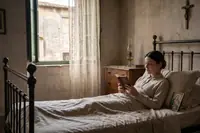 Chapter 3 of 12The March miracle1 min
 Chapter 4 of 12The stigmata of Thursday night1 min
 Chapter 5 of 12A second mother and Father Germanus1 min
 Chapter 6 of 12The guardian angel and the ink1 min
 Chapter 7 of 12A brother in heaven1 min
- Chapter 8 of 12Pages of autobiography1 min
 Chapter 9 of 12The convent door that did not open1 min
 Chapter 10 of 12Holy Saturday1 min
- Chapter 11 of 12Patron of those who have lost their parents1 min
 Chapter 12 of 12A jewel in the dust1 min
Feast day
Saint Gemma Galgani
Some places may celebrate on a slightly different day.
April 11
Patron of
- Pharmacists
- Students
- Orphans
- People with back pain
- Paratroopers
Often depicted with
- The stigmata
- A guardian angel
Opening
Opening
Her name, “Gemma”, means “jewel” in Italian. Her mother gave her that name because of something the priest said when he baptized the child: “Call her Gemma; may she be a jewel of heaven.”
She lived only twenty-five years, at the end of the nineteenth century and the beginning of the twentieth, in Lucca, a small walled city in Tuscany, Italy. She did not travel far, founded no religious order, wrote no theological books. She wanted to enter religious life and was refused. She lost her mother at eight and her father at nineteen, went through her family’s bankruptcy, fell gravely ill and nearly died, and spent her last years living on the kindness of a family not her own.
Yet only thirty-seven years after her death, the Church raised her to the altars. And what she left behind (letters, a diary, an autobiography written at her confessor’s command) made Gemma Galgani one of the most talked-about saints of the twentieth century, much loved and much debated.
Chapter 1 of 12
The little girl who wanted “to go to heaven with Mama”
Gemma was born on March 12, 1878, in the village of Camigliano near Lucca, the fifth of eight children of Enrico Galgani, a well-to-do pharmacist, and Aurelia Landi, a devout mother. The family moved to Lucca when she was small.
Aurelia had tuberculosis. Knowing she would not live long, she taught her children to pray very early, and often spoke to the little girl about heaven. It is told that once she asked: “Would you like to go to heaven with Mama?” The little girl asked what there was in heaven. Her mother answered: Jesus, Our Lady, the angels. And the little girl said: “I want to go.”
On September 17, 1886, Aurelia died. Gemma was eight. Later she wrote that when her mother died, she did not understand why she was not allowed to go with her.
Enrico sent his daughter to the boarding school of the Sisters of Saint Zita. Gemma did well, won the prize in religion, and studied French, drawing and music. The sisters described her as a sensitive girl, often quiet, but kind to her friends.
Chapter 2 of 12
A pharmacy gone bankrupt
Enrico was a good and generous father, perhaps too generous. He lent money to many people and sold medicines on credit to poor families who could not pay. Then, in the last years of the century, his business declined and his debts piled up.
In 1897 he fell ill with throat cancer. Gemma left school to come home and nurse her father. On November 11 of that year he died. Shortly afterward, creditors came and seized the house and furniture. It is said that they even went through Gemma’s pockets for her last few coins.
At nineteen, Gemma found herself looking after the younger children. A few years earlier, the brother she loved most, Gino, who was studying for the priesthood, had also died of tuberculosis. The remaining brothers and sisters went their separate ways. She lived for a time with an aunt, then returned to Lucca.
Several men came to ask for her hand, among them some well-off young men, for she was beautiful. She refused them all. She told her family that she wanted to belong only to Jesus.
Chapter 3 of 12
The March miracle
At the end of 1898 Gemma fell seriously ill. The doctors found inflammation of the lower spine, then an ear infection, then an abscess in the head. Her legs were paralyzed, and she lay bedridden for months. The doctors gave up, and the family prepared for her death.
During that time, an acquaintance gave her the life of a young Passionist religious, Gabriel of Our Lady of Sorrows, who had died in 1862 at only twenty-four and was not yet canonized. As she read, Gemma came to feel he was like a brother to her. She began a novena for healing, through the intercession of Brother Gabriel and of Saint Margaret Mary Alacoque, the great apostle of the Sacred Heart of Jesus.
On March 3, 1899, after the novena, Gemma was suddenly healed. She got up from her bed. The doctors could not explain it. She attributed the grace to the Sacred Heart of Jesus, through the intercession of Brother Gabriel.
The young religious she had prayed to was later canonized in 1920 as Saint Gabriel Possenti, patron of the youth of Italy. Her bond with the Passionists, Brother Gabriel’s order, would last for the rest of Gemma’s life.
Chapter 4 of 12
The stigmata of Thursday night
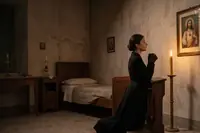
Only three months after her healing, on the evening of Thursday, June 8, 1899, the eve of the feast of the Sacred Heart, Gemma was praying when she was seized by a violent pain. As she tells it in her autobiography, she saw Our Lady, and saw flames coming from the wounds of Jesus and touching her hands, feet and side. When she came to, there were bleeding wounds on her hands and feet.
From then on, almost every week, from Thursday evening until three o’clock on Friday afternoon, the hour Jesus died on the Cross, the wounds reappeared, and they closed again during the rest of the week. This went on for about two years; then, at her spiritual director’s word, she asked God to take away the outward signs.
In fairness, it should be said that even at the time Gemma’s stigmata were controversial. Doctor Pietro Pfanner, who had treated her since childhood, examined her and suspected a nervous disorder. He said that when he wiped away the blood, he found no deep wounds beneath. Many others, including her spiritual director, the Archbishop of Lucca and the family who took her in, testified that they had seen real wounds. To this day, researchers have not reached agreement.
What matters is this: in canonizing Gemma, the Church did not rely on the stigmata or any extraordinary phenomena. As it always has, the Church looked at her life of virtue, to see whether she had lived faith, hope and charity to a heroic degree. Mystical phenomena, even if real, do not make holiness. Gemma was canonized for the way she lived, not for what happened to her body.
Chapter 5 of 12
A second mother and Father Germanus
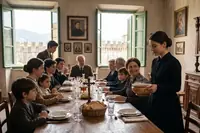
In 1899, at a parish mission in Lucca, Gemma met the Passionist fathers. Through them she came to know the Giannini family, a well-off, devout family with many children living in Lucca. Cecilia Giannini loved her like a daughter and invited her to come and live with them. Gemma called her “Mama”. She lived with that family in her last years, helping with the housework, looking after the children, and praying quietly.
In September 1900 she met the man who would become her spiritual director: Father Germanus Ruoppolo, a Passionist priest and theologian, who had been given the task of examining what was happening to this young woman. At first he was very cautious, even skeptical. But little by little he became convinced that he was dealing with a holy soul.
It was Father Germanus who asked Gemma to write down her life, and who kept the hundreds of letters she sent him. After her death he wrote her first biography and promoted her cause for canonization.
Chapter 6 of 12
The guardian angel and the ink
In Gemma’s letters and diary, one figure appears again and again: her guardian angel. She said she saw her angel, talked with him as with a brother, was taught by him, and was sometimes sternly scolded when she did something wrong.
Father Germanus tells a story that was later often repeated: there were times when Gemma asked her guardian angel to carry her letters to him in Rome, and he declared that he received those letters without their ever going through the post. Readers today may or may not believe it, but those stories show that for Gemma the invisible world was as close as the kitchen of the Giannini home.
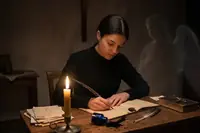
She also told of struggles with the devil: nights when she was harassed, beaten and tempted to despair. Father Germanus tells that once the notebook Gemma was writing at his command was splattered with ink, its pages smeared, and she believed it was the devil’s doing to stop her writing. To this day those ink-stained pages are kept at the shrine in Lucca.
Whatever readers think of those stories, one thing is certain: Gemma never tried to draw attention to herself. She asked God to take away the stigmata. She hid the wounds under gloves. She told these things only to her spiritual director, because she was ordered to. To outsiders she was just a poor girl living in someone else’s house: quiet, often smiling, hardworking.
Chapter 7 of 12
A brother in heaven
There is a friendship in Gemma’s life that few people notice: a friendship with someone she never met.
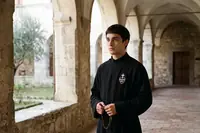
Brother Gabriel of Our Lady of Sorrows, born Francesco Possenti in 1838 in Assisi, was the son of a well-off official. As a young man he was elegant, fond of dancing and going to the theater, and his friends jokingly called him “the dancer”. Twice he fell gravely ill and promised to enter religious life if he recovered, and twice he forgot his promise once he was well. At eighteen, during a procession with an image of Our Lady in Spoleto, he seemed to hear Our Lady asking him how much longer he would delay. He entered the Passionists, and only six years later, in 1862, died of tuberculosis, before he could be ordained a priest.
Gemma read his life while lying bedridden, and she said that he came to visit her during her illness, calling her “little sister”. After she recovered, she went on talking with that “brother” in her prayers, as with a member of the family.
There is a lovely coincidence: in 1908, five years after Gemma’s death, Brother Gabriel was beatified; in 1920 he was canonized. Two young people, a young man who once loved dancing and a poor orphan girl, both died of tuberculosis in their twenties, both were bound to the Passionists, and both are now honored by the Church. In Italy, young people see them as companions on the road.
Chapter 8 of 12
Pages of autobiography
In 1901, at Father Germanus’s command, Gemma sat down to write her life. She wrote in the plain Italian of a girl who had not finished her schooling, without ornament, naive in places. She owned up to her childhood faults: pride, a love of praise, a time she lost her temper with her family. She wrote of her sufferings, her joys and her spiritual experiences with surprising honesty.
After her death, Father Germanus had her letters and notes published. They were translated into many languages and are still read today. Readers may or may not believe what she said about angels and visions. But few can finish reading without sensing the soul of a young woman who loved Jesus with her whole heart and was not afraid to say so in the simplest words.
Chapter 9 of 12
The convent door that did not open
What Gemma longed for most in her life was to enter the Passionist nuns, an enclosed order devoted to meditating on the Passion of Jesus. But she was refused, because of her poor health, and perhaps also because the extraordinary things surrounding her made superiors wary. She also asked to enter other orders, and was refused by them all.
At that time there was no Passionist convent in Lucca. Gemma told those around her that one day there would be such a convent in Lucca, though she would not live there. Two years after her death, in 1905, the first Passionist convent in Lucca was founded. Today the remains of Saint Gemma are kept in the shrine of that very convent, which she had dreamed of entering but never could.
She never wore the habit. But people still call her “the Daughter of the Passion”.
Chapter 10 of 12
Holy Saturday
At the beginning of 1903, Gemma again fell ill with tuberculosis, the disease that had taken her mother and brother. To avoid infecting the Giannini children, she was moved to a small room across from the house. In her last weeks she suffered greatly in body and soul. She went through what the mystics call the “dark night”, when God can no longer be felt at all and one clings to bare faith.
She died on Holy Saturday, April 11, 1903, in the hours when the Lord lies in the tomb, before the night of Easter. She was twenty-five. Those present said she died very peacefully, smiling, after weeks of pain.
In 1933 Pope Pius XI beatified her. On May 2, 1940, the feast of the Ascension, as Europe was sinking into the Second World War, Pope Pius XII canonized her.
Chapter 11 of 12
Patron of those who have lost their parents
Because her father was a pharmacist, Saint Gemma is regarded as patron of pharmacists. Because she once suffered from a spinal illness, people ask her prayers for those with back pain. She is also patron of students, of young people struggling with temptation, and, perhaps closest to her heart, of those who have lost their parents.
Here is something few would expect: in some countries Saint Gemma is also regarded as patron of paratroopers. Part of her heart was taken to Madrid, Spain, in 1985 and is venerated there.
In Vietnam, Gemma has become a fairly common baptismal name for girls in recent decades. If your name is Gemma, your patron is a very young woman, not many years older than you, who knew loss, sickness, poverty and rejection.
Chapter 12 of 12
A jewel in the dust
People may argue forever about the stigmata, the angels, the ink. But there is one thing no one disputes: an orphan girl, penniless, sick, turned away by religious orders and living in someone else’s house, did not let herself sink into bitterness. She went on loving: loving Jesus crucified, loving the Giannini children, loving the sinners for whom she offered sacrifices every day.
In her letters she wrote many times that all she wanted was to love Jesus very much, more than anything. A great desire in a very small person.
A jewel does not become precious because it is placed in a velvet box. It is precious in itself. Gemma is a jewel found in what the world counts as dust: poverty, sickness, failure. And perhaps that is the comfort she sends to young people today: you do not need a perfect life to become holy. You only need to love, right in the midst of your imperfect life.
The end of the story
You have walked with Saint Gemma Galgani to the end of the story.
Images that will stay with you:
An eight-year-old girl who did not understand why she was not allowed "to go to heaven with Mama".
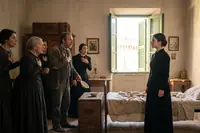
Creditors going through the pockets of a nineteen-year-old girl for her last few coins.
A young woman refused by the religious orders, saying that one day there would be a convent in Lucca, though she would not live there.
Stay in silence
At the end of her story, you realize that Gemma did not need a perfect life to become holy; she simply loved, right in the midst of a life full of loss.
If your life is not what you hoped, find one small thing to love today, right where you are.
Let us pray
Saint Gemma,
you lost your mother as a little girl, your father as you were growing up, then your home and your health, and you were refused what you longed for most. Yet you never stopped loving God.
Pray for young people who have lost their parents, for those living in others’ homes, for those refused a dream. May they meet good families like the Giannini family who welcomed you.
And teach me to love Jesus crucified, so that I may not fear the small crosses of my life.
Amen.
Sources
- Feast dayArticle, version 1.1
- Patron ofPatronages and symbols, version 1.1
- Often depicted withPatronages and symbols, version 1.1
Meet the next one
 Journey 3