

Journey 6 · Keepers of the Lamp of Faith
Saint Charles Borromeo
The archbishop who walked barefoot through the plague
Feast day November 4
Tap to step inside
Saint Charles Borromeo
The archbishop who walked barefoot through the plague
Map of a life
This life told in 6 chapters
Begin the journey OpeningOpening1 min
 Chapter 1 of 6A young nobleman of Arona1 min
 Chapter 2 of 6A powerful cardinal at twenty-two2 min
- Chapter 3 of 6The rescuer of the Council of Trent1 min
 Chapter 4 of 6The reforming shepherd of Milan2 min
 Chapter 5 of 6The battle amid a historic plague1 min
 Chapter 6 of 6The last rest of a candle burned down2 min
Feast day
Saint Charles Borromeo
Some places may celebrate on a slightly different day.
November 4
Patron of
- Seminarians
- Bishops
- The city of Milan (Italy)
Often depicted with
- A rope around his neck (penitential procession)
- A cardinal’s red robes
Opening
Opening
In the autumn of 1576, plague swept through Milan like a whirlwind of death. Within a few months, fifteen thousand people died, nearly one sixth of the city’s whole population. Bodies were piled up, and the stench crept through every alley. The Spanish governor who ruled the city, the mayor, the magistrates and almost all the wealthy nobility hurriedly gathered up their gold and silver, mounted their horses and fled Milan, leaving tens of thousands of poor people lying in despair, waiting to die in the empty streets.
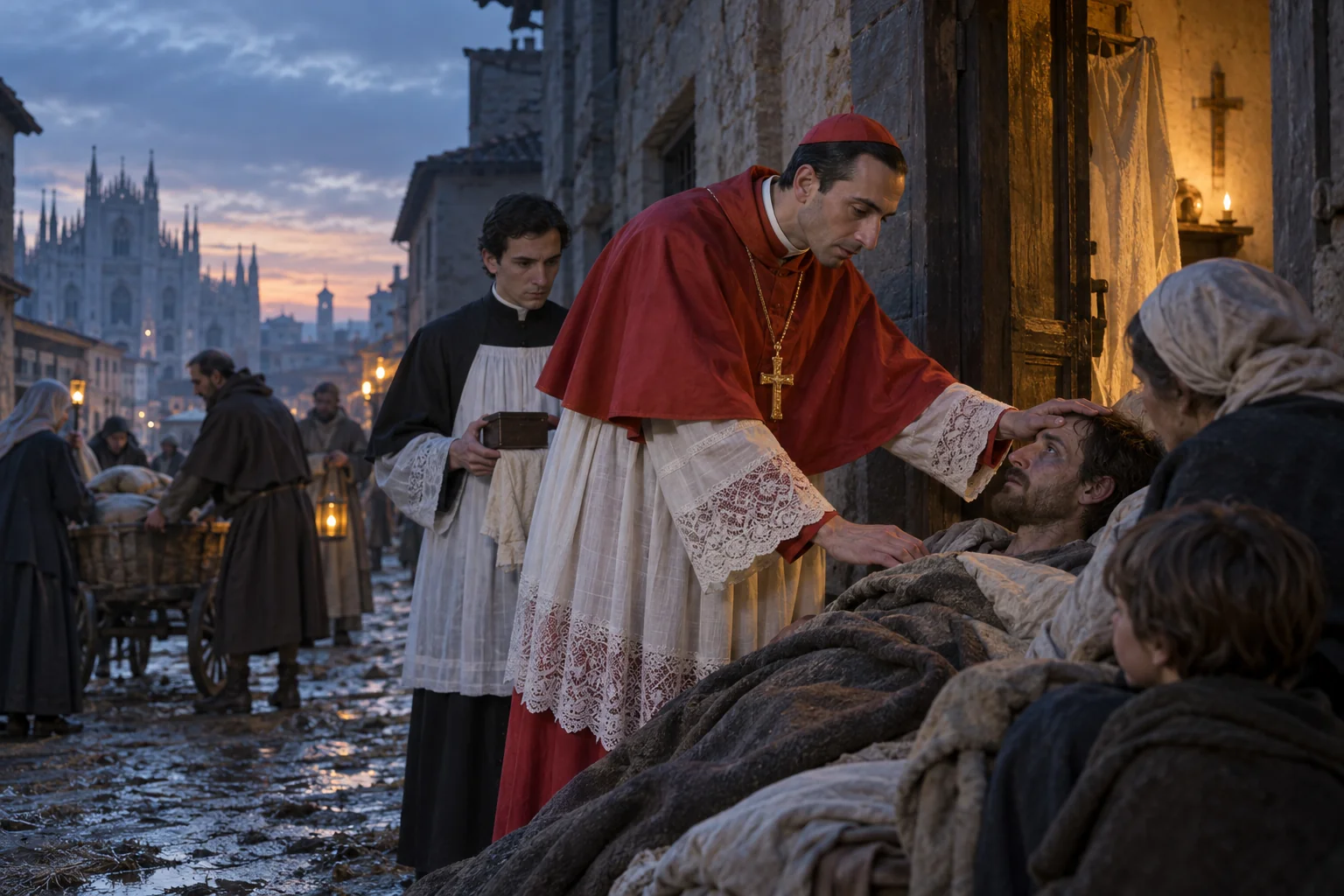
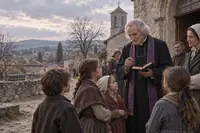
It is told that in the midst of that devastation, a Cardinal Archbishop only thirty-eight years old, who was then away attending the funeral of a fellow bishop elsewhere, mounted a mule and rode straight back as soon as he heard the plague had broken out. He did not hide in a safe palace. He put on the purple cloak of penance, tied a hemp rope around his neck like a condemned man, sprinkled ashes on his head, and walked barefoot through the streets until his feet bled, carrying a large cross himself at the head of a procession praying for forgiveness for the whole city.
That shepherd was Charles Borromeo (Carlo Borromeo). He was the living picture of the kind of bishop the Council of Trent hoped to form: he used the whole enormous fortune he had inherited from one of the most powerful families in Italy to feed the poor in a famine, bandaged with his own hands the plague victims everyone else avoided, and gave every last ounce of his strength to reforming the clergy and rebuilding holiness in a Church that needed healing.
Chapter 1 of 6
A young nobleman of Arona
Carlo Borromeo was born on October 2, 1538, at the castle of Arona, an ancient fortress reflected in the blue waters of Lake Maggiore, one of the largest and most beautiful lakes of northern Italy, where small islands still bear the Borromeo family name, such as Isola Bella, which later generations turned into a palace garden famous throughout Europe. His father, Count Gilberto Borromeo, was both a nobleman and a respected general. His mother, Margherita de’ Medici, was the sister of Cardinal Giovanni Angelo de’ Medici, who would later become Pope Pius IV. Carlo was the third child of one of the most powerful families in Renaissance Italy.
Anyone who met Carlo as a child saw a boy with a stammer, quiet, of few words, somewhat shy before a crowd. But behind that reserved exterior was an iron will that astonished even adults. At twelve, following the custom of the time, which allowed noble families to “place” their children in church offices to enjoy the revenues, the boy was given charge of the huge income of the Benedictine Abbey of Saint Gratian at Arona. Most other noble children in that position would simply have treated it as personal income. But Carlo, at twelve, told his father plainly: all those revenues were property belonging to the poor, and he would keep only the minimum needed for his studies, giving all the rest away to those in need.
At fifteen, he went to study law at the University of Pavia, one of the most prestigious centers of learning in Italy at the time. Overcoming his stammer with remarkable perseverance, in 1559, at twenty-one, he earned his doctorate in both civil and canon law with distinction.
Chapter 2 of 6
A powerful cardinal at twenty-two
At the end of 1559, an event completely changed the course of Carlo’s life: his uncle was elected Pope, taking the name Pius IV. At once the new Pope summoned his young nephew to Rome. At the beginning of 1560, when he had just turned twenty-two and was not even a priest yet, Carlo Borromeo was made a cardinal deacon, and at the same time appointed Secretary of State of the Holy See and Archbishop of Milan, two of the most influential offices in the whole Church, given to a young man who had barely come of age.
In the history of the Renaissance Church, the abuse of “nepotism” (Popes favoring their relatives with lucrative offices) was almost always bound up with corruption and a life of luxury unworthy of clerical rank. But this time there was something different: God seemed to use that very flawed system to bring a worthy soul to exactly the position from which he could rescue a whole Church in crisis.
The young cardinal worked with rare diligence. He ran the entire diplomatic machinery of the Holy See and helped restore order to the troubled city of Rome. Yet though he lived right in the middle of the splendid Vatican palace, amid every temptation of power and luxury that a man in his position could have fully enjoyed, Carlo kept a quiet, austere way of life, eating frugally and caring nothing for personal fame or gain.
In 1562, a family event tested him once again: his elder brother Federico died suddenly without an heir. Pressure from the whole Borromeo family and from noble friends poured in, urging Carlo to lay aside the cardinal’s robes, return to lay life, marry and have children to keep the family line and inherit the vast fortune waiting for him. By the standards of the age it was a reasonable demand: the family needed an heir, and Carlo was the only choice left.
But to put an end to all such plans for good, in July 1563 Carlo Borromeo quietly asked to be ordained a priest, and in December of the same year he was consecrated a bishop at twenty-five. From then on his life belonged to the altar, and his family had nothing left to bargain over.
Chapter 3 of 6
The rescuer of the Council of Trent
Carlo Borromeo’s greatest service to the whole Church was rescuing the Council of Trent and seeing it through to a successful close. That ecumenical council, which lasted from 1545 to 1563, had been convened to respond to the Protestant Reformation and to reform the Church from within.
By 1562, the Council had been stalled for nearly a decade by bitter political disputes between the Holy Roman Emperor, the king of France and the king of Spain, each wanting to tilt the Council in its own favor. Many in the Church at the time had almost given up hope, thinking the Council would never be finished.
With diplomatic skill far beyond his years, a patience rare in a young man, and the almost absolute moral authority he had built up from his first years in Rome, the twenty-four-year-old Cardinal Carlo Borromeo wrote thousands of letters to kings, smoothed over one quarrel after another, and patiently persuaded the bishops of Europe to return to the council table. Thanks to those tireless efforts, the Council of Trent was rescued and brought to a successful close in December 1563. It remains one of the most far-reaching and lasting councils in the history of the Catholic Church.
After the Council ended, Carlo himself headed the commission that produced the “Catechism of the Council of Trent” (Catechismus Romanus), the standard catechism used to form priests and lay people throughout Europe for centuries afterward. At the same time, he took a direct part in reforming the Roman Missal and the Breviary, laying the foundation for a unified liturgy throughout the Latin Church.
Chapter 4 of 6
The reforming shepherd of Milan
In 1565, after his uncle the Pope died, Carlo Borromeo faced a choice: stay in Rome, where he could easily have kept holding the highest positions of power in the Curia, or go back to his real flock in Milan, the diocese he had held in name for five years but had never actually set foot in, being busy with the work of the Holy See. He chose Milan, a diocese which, tellingly, had been without a resident bishop for eighty years, as one bishop after another simply collected its revenues from afar without ever living there as a shepherd should.
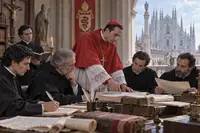
Back in Milan, Carlo began a thorough reform, true to the spirit of the Council of Trent he himself had helped to save. He sold the gold and silver plate and the valuable paintings left in the bishop’s house to give to the poor, turning the luxurious episcopal palace into something close to an austere monastery. He was the first in the history of the Church to set up a properly organized system of major seminaries, forming priests in character and spiritual life as well as in theology, a model that later became the standard for priestly formation throughout the world.
He founded the Confraternity of Christian Doctrine (Confraternita della Dottrina Cristiana), opening hundreds of Sunday classes for more than forty thousand poor children in the diocese, children whom no one had ever before taught the faith in any systematic way. He held eleven provincial councils and six diocesan synods to correct the lax discipline that had taken root among the clergy over decades. He went in person, on foot or sometimes riding a mule, to visit every parish, even the most remote, including places perched on the snowy peaks of the Alps, journeys no bishop before him had ever made.
His strictness in restoring discipline met fierce opposition from those used to the lax ways of the past, especially in some badly decayed religious orders. On the evening of October 26, 1569, while Carlo was kneeling in prayer with his household in the chapel of the bishop’s palace, Girolamo Donati, nicknamed “Farina”, a friar of the Umiliati (a long-decadent order Carlo was in the process of dissolving), slipped in and fired an arquebus straight at his back from only a few meters away. Those present said the bullet seemed to bounce off his cloak with a strange sound, only grazing the skin of his back without causing serious injury, while Carlo calmly stayed on his knees and went on praying to the end, as if nothing had happened. After that narrow escape, he fully forgave the man who had tried to kill him, though the civil authorities still executed the leaders of the plot, and in 1571 Pope Pius V dissolved the Umiliati entirely.
Chapter 5 of 6
The battle amid a historic plague
In 1576, as told at the beginning of this story, the great plague broke out in Milan. While the civil authorities fled, Carlo Borromeo declared that he would stay with his flock until death, if need be.
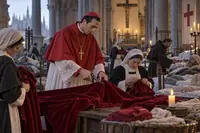
He wrote his will, gave away everything left of the family fortune to the poor, then threw himself into the fight against the plague with everything he had. He turned the city’s churches into field hospitals. He took all the expensive velvet and silk curtains left in the bishop’s palace and had them cut up and sewn into warm clothes for patients shivering with fever. Every day he fed the sick with his own hands and anointed hundreds of dying people with holy oil, despite the ever-present risk of infection.
When the city was placed under strict lockdown (“no one out, no one in,” under the harsh quarantine measures of the time), he had altars set up at street crossroads, so that people shut up in their homes could stand at their windows and join in the Mass and receive the Body of the Lord from afar. At the city’s largest quarantine camp, called the Lazzaretto, a church of its own was later built, commissioned by him, to keep the memory of those tragic days.
He spent the entire remaining family fortune, even shouldering a huge debt, just to buy enough food to save tens of thousands of lives. That extraordinary courage, at a time when almost everyone with power had fled, won the admiration of all Europe: not because of any miracle of healing, but because he stayed, steady and present, in the most dangerous place of all.
Chapter 6 of 6
The last rest of a candle burned down
Looking back, Carlo Borromeo’s whole life was like a candle willingly burning itself away without rest. He slept only two or three hours a night, on a hard wooden plank, and ate only one meal a day, usually just dry bread and water, an austerity that few even among enclosed monks of his time could keep up for long.
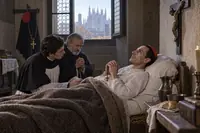
In the autumn of 1584, after an exhausting visitation into the snowy mountains to see distant parishes, he fell gravely ill with a severe malarial fever. He struggled back to Milan. Lying on a simple bed spread with straw, his eyes on the crucifix placed before him, he spoke his last words:
“Lord, here I am, I am coming to You.”
On the evening of November 3, 1584, the great archbishop died peacefully, at the age of forty-six: a short life in years, but packed with service few could match. The whole city of Milan, where he had stayed through the plague when everyone else had fled, went into mourning.
Pope Clement VIII beatified him in 1602, and on November 1, 1610, Pope Paul V solemnly canonized Charles Borromeo. The Church celebrates him on November 4 each year. In Milan Cathedral, the Duomo, where he stopped to pray before plunging into the heart of the plague in 1576, his remains are still kept in a crypt of their own beneath the sanctuary, and the faithful still come from everywhere to pray there. Not far away, in his hometown of Arona, stands a colossal statue thirty-five meters high including its pedestal, affectionately called the “Sancarlone”. Completed in 1698, it is hollow inside, with a framework of stone, brick and iron, and for nearly two hundred years it was the tallest statue in the world that visitors could climb inside, until the Statue of Liberty in New York surpassed it in 1886. Visible from far across Lake Maggiore, it is a lasting reminder of a man who chose to stay in the most dangerous place when everyone else had fled.
Saint Charles Borromeo leaves a lesson for every shepherd and every Christian in every age:
“If you want the lamp of your faith to give light to others, you must accept that the oil of your life be used up.”
His whole life proved the truth of those words. To reform the Church or society, noisy slogans and decrees issued from afar are not enough. One must begin with one’s own conversion and holiness; only then can that life draw others to follow.
The end of the story
You have walked with Saint Charles Borromeo to the end of the story.
Some images stay etched in your mind:
When officials and nobles fled Milan because of the plague, the young cardinal put on the cloak of penance, walked barefoot until his feet bled, and carried the cross at the head of a procession praying for the whole city.
He took the precious velvet and silk curtains left in the bishop’s palace and had them cut up and sewn into warm clothes for patients shivering with fever.
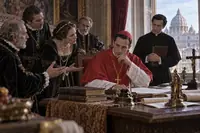
When a friar shot him in the back as he prayed, the bullet bounced off, and he stayed kneeling where he was to finish the prayers as if nothing had happened.
Stay in silence
You see the cost of a shepherd’s life: if you want the lamp of faith to give light to others, you must accept that the oil of your own life be used up.
If you want the lamp of your faith to give light to others, you must accept that the oil of your life be used up.
Let us pray
Saint Charles,
when everyone was fleeing the city because of the plague, you walked barefoot carrying the cross at the head of a procession of prayer, and cut up even the curtains to sew warm clothes for the sick.
Pray for those living amid epidemics and disasters, and for all who stay to serve them.
Pray for bishops and priests, that they may wear out their lives for their flock as you did.
Amen.
Sources
- Feast dayAuthor’s edited profile
- Patron ofPatronages and symbols, version 1.1
- Often depicted withPatronages and symbols, version 1.1
- Reflectionvaticannews.va
- Reflectionstatuasancarlo.it
Meet the next one
 Journey 6