

Journey 6 · Keepers of the Lamp of Faith
Saint Alphonsus Liguori
The lawyer who stood on the side of forsaken souls
Feast day August 1
Tap to step inside
Saint Alphonsus Liguori
The lawyer who stood on the side of forsaken souls
Map of a life
This life told in 8 chapters
Begin the journey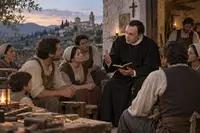 OpeningOpening1 min
 Chapter 1 of 8A child prodigy at the castle of Marianella1 min
 Chapter 2 of 8The hospital of the incurables2 min
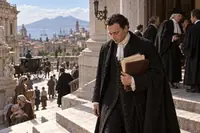 Chapter 3 of 8The “Evening Chapels” in the streets of Naples1 min
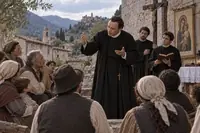 Chapter 4 of 8The birth of the Redemptorists1 min
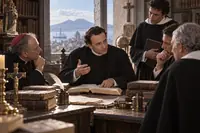 Chapter 5 of 8The Doctor of Moral Theology1 min
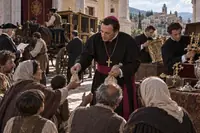 Chapter 6 of 8Bishop of the poor, his chin pressed against his chest1 min
 Chapter 7 of 8A bitter cup at the end of his life and his last words2 min
 Chapter 8 of 8Doctor of the Church1 min
Feast day
Saint Alphonsus Liguori
Some places may celebrate on a slightly different day.
August 1
Patron of
- Confessors and moral theologians (proclaimed by Pius XII in 1950)
Often depicted with
- A bishop’s crozier
- A pen and a book
Opening
Opening
One afternoon in 1723, in the largest courtroom in the city of Naples, a twenty-six-year-old lawyer stood frozen amid mocking eyes. In eight years of practice, he had never lost a single case. But that day, in an enormous property dispute between two powerful families, he had misread a clause in a document — just a small oversight, but enough to turn the whole case against him. His opponent laughed with delight. The judge shook his head. And in that moment, the reputation he had worked so hard to build for nearly a decade collapsed in front of everyone.
The lawyer did not wait for anyone to comfort him. He walked straight out of the courtroom, took off his elegant lawyer’s gown, and said words people later remembered as the turning point of his life:
“World, I know you now! Courts, farewell, you will never see my face again!”
That man was Alphonsus Maria de Liguori. Few would have guessed that this humiliating stumble was the door to one of the richest and most fruitful lives in the history of the Church: a bishop of the poor, founder of the Redemptorists, and a Doctor of moral theology revered throughout the Catholic world to this day. It was not the rash sulk of a loser wanting to take his anger out on life. It was the moment a great soul realized that all his years of talent had been poured into a game far too small for what it could do.
Chapter 1 of 8
A child prodigy at the castle of Marianella
Alphonsus was born on September 27, 1696, at Marianella, a small town on the outskirts of Naples, into a powerful noble family. His father, Don Giuseppe Liguori, was a captain in the royal navy, a post that demanded both noble birth and iron discipline. His mother, Donna Anna Cavalieri, was a deeply devout woman who quietly planted the seeds of faith in the eldest of her eight children from very early on, with no idea how they would grow.
From childhood, Alphonsus showed an intelligence that astonished adults. Under the best tutors a noble family could hire, the boy mastered Latin, Greek, French and Spanish, while also loving poetry and painting, and became a skilled harpsichord player, the most aristocratic instrument of the Baroque age, which demands both dexterity and a refined ear. At only twelve, when most children his age were still learning their letters, Alphonsus entered the lecture halls of the University of Naples. At sixteen, in 1713, he successfully defended his doctorate in both Civil Law and Canon Law at once, something unheard of in the history of that university.
At nineteen, he began practicing as a lawyer in the courts of Naples, and for the next eight years, with a sharp mind and rare honesty (he never took bribes and never agreed to defend a case he knew to be fraudulent), he won every case he took on, becoming one of the most famous and wealthy lawyers in the Kingdom of Naples. His father, openly proud, began planning a suitable noble marriage to carry that brilliant career forward for the family.
Chapter 2 of 8
The hospital of the incurables
But the stumble in court in 1723 turned everything upside down. After walking out of the courtroom with his honor in pieces, Alphonsus did not go home to complain. He shut himself in his room for three days and three nights, fasting and praying. In that silence, one question kept coming back to him: all those years of talent, all those hours of late nights and early mornings, had in the end served only the property quarrels of the rich, while out there so many poor souls were abandoned, with no one to care for them.
He began to frequent the Hospital of the Incurables (Ospedale degli Incurabili), one of the oldest hospitals in Naples, founded at the beginning of the sixteenth century by a noble widow named Maria Lorenza Longo, which took in patients with diseases the medicine of the time regarded as hopeless: syphilis, chronic sores, illnesses that made even families keep their distance. Alphonsus did not go there as a lawyer paying a token visit; he rolled up his sleeves to care for them, dress their wounds and sit beside people the whole city had turned its back on.
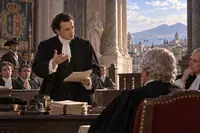
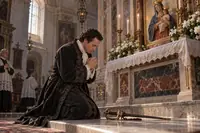
On August 28, 1723, as he bent over to care for a patient, something unusual happened to him: a light seemed to fill the whole room, and he heard a voice in his mind, clearly and twice over: “Leave the world and give yourself to Me.” That hospital later kept a specially venerated image of Our Lady (Our Lady of Mercy), where patients and caregivers came to pray. Before that very image, stunned by what he had just experienced, Alphonsus hurried to a nearby church, fell to his knees, unbuckled the nobleman’s sword that a man of his lineage always wore at his side, laid it at the feet of the statue of Our Lady, and made his vow:
“Mother Mary, I give up everything to devote my whole life to Jesus and to you.”
Laying down that sword was not merely symbolic. For an eighteenth-century nobleman, the sword was the sign of his station, of the family’s honor, of the right to stand as an equal among the nobility. Giving it up meant giving up the whole place in society he had been raised for during twenty-seven years.
His father, Don Giuseppe, reacted with fury: first rage, then tearful pleading, then a long, cold refusal even to look at his son. But Alphonsus did not waver. He entered the seminary, and on December 21, 1726, at thirty, he was ordained a priest.
Chapter 3 of 8
The “Evening Chapels” in the streets of Naples
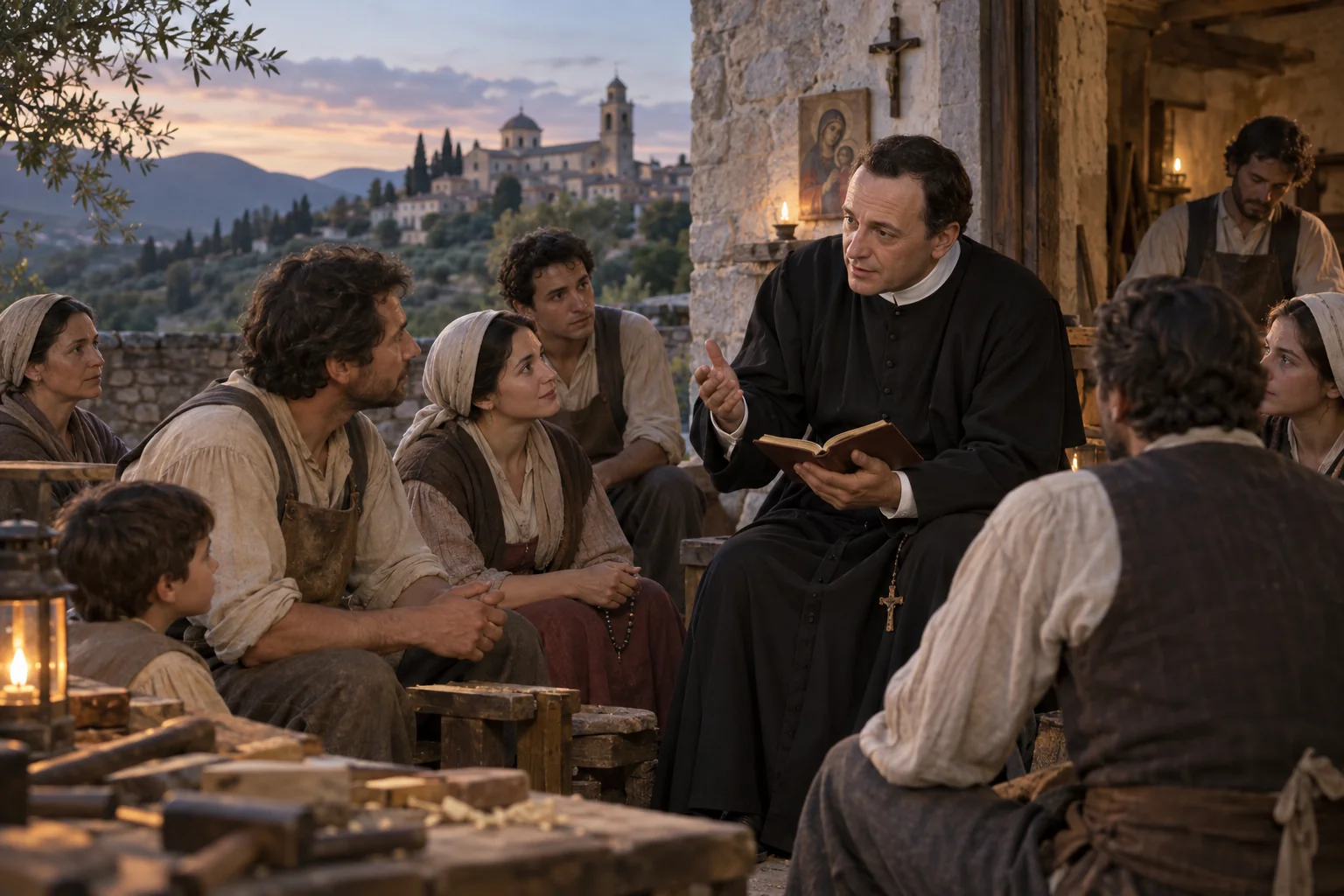
Once a priest, Father Alphonsus did not seek any prestigious position among the clergy of Naples, though one was well within reach for a man of his background and learning. Instead, he went down into the poor neighborhoods and noisy docks of the city, where porters, fishermen and poor craftsmen gathered, along with reformed thieves whose souls no one bothered to care for.
From there, he started a unique pastoral movement called the “Evening Chapels” (Cappelle Serotine). Every evening, after a hard day’s work, he gathered those workers on street corners and in workshop courtyards, teaching them to pray in the plainest language possible, without flourishes, without lofty theological terms. Little by little, those very people once regarded as “the dregs of society” became the ones passing on the faith to their own friends and neighbors. The movement spread quickly, with hundreds of small groups springing up all over the city, changing the moral face of Naples, a city notorious for crime and corruption around its docks.
But that extraordinary pace of work wore down his health. In the autumn of 1732, on doctors’ orders, he had to leave the city to rest in Scala, a small town in the mountains above the Amalfi coast, known for its steep stone stairways and clean air.
It was in that place, meant only for recovery, that Father Alphonsus saw a situation that shocked him even more than the poverty of the city: goatherds and peasants scattered across the mountainsides were completely forgotten spiritually. They did not know who Jesus was in any meaningful sense; no priest had ever set foot there; they had lived for generations in ignorance mixed with superstition. The shepherd’s heart in him ached. He saw that there needed to be a religious congregation devoted to bringing the Gospel to those most forgotten people, not stopping at the familiar poor neighborhoods.
Chapter 4 of 8
The birth of the Redemptorists
On November 9, 1732, in that very mountain town of Scala, Father Alphonsus and a first group of priests formally founded the Congregation of the Most Holy Redeemer (Congregatio Sanctissimi Redemptoris, CSsR), known in English as the Redemptorists. The congregation’s spirituality is summed up in a short line from Psalm 129: “Copiosa apud Eum Redemptio”: with Him is plentiful redemption.
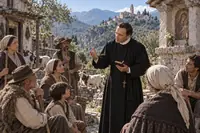
The members of the new congregation committed themselves to radical poverty, walking barefoot to the most remote villages to hold parish missions (long periods of preaching in country areas that had never had a resident priest). Their way of preaching, true to the spirit Father Alphonsus handed down, had to be simple and down-to-earth, avoiding empty, flowery rhetoric, so that even the least educated peasant could understand and feel God’s merciful love for him.
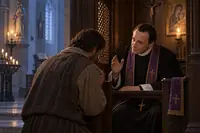
One of Father Alphonsus’s most revolutionary contributions lay in the confessional itself. At the time, the influence of Jansenism (an extremely rigorist current that had spread through the Church in France and parts of Italy) had turned many confessionals into places of harsh interrogation rather than forgiveness. Many priests refused absolution over small faults, so that the faithful gradually grew afraid of the sacrament of Reconciliation and stayed away from it altogether. Father Alphonsus taught his priests a completely different approach:
“The confessional is a place of mercy, not a place of execution. The confessor must be a gentle father, a physician who heals wounds, not a harsh judge. Open your arms wide to embrace the penitent, and remember that Christ Himself died for them.”
Chapter 5 of 8
The Doctor of Moral Theology
To give priests a balanced pastoral guide that did not fall into extremes in either direction, Father Alphonsus spent many years writing his great work, “Moral Theology” (Theologia Moralis). He skillfully found the middle way between rigid strictness (Rigorism), which smothers the human conscience with excessive demands, and lax permissiveness (Laxism), which makes morality meaningless because anything can be justified.
He proposed the theory of “Equiprobabilism” (Aequiprobabilismus), a system of moral reasoning that takes the truth of the Gospel and the salvation of souls as its supreme measure, instead of mechanical formulas. That work, though highly scholarly, became the standard handbook for the formation of priests throughout the Catholic Church for hundreds of years afterward.
Father Alphonsus was also one of the most prolific authors in the history of Catholic spirituality, with more than one hundred eleven works translated into more than seventy languages, nourishing the everyday faith of so many generations. “The Glories of Mary” (Le Glorie di Maria) is a masterpiece of Marian theology, explaining each line of the Hail, Holy Queen and praising the boundless kindness of Our Lady. “Visits to the Blessed Sacrament and to the Blessed Virgin Mary” became a bedside book for countless believers, teaching people to talk heart to heart each day with Jesus in the Eucharist. He also wrote “The Practice of the Love of Jesus Christ” and “The Way of the Cross”, and above all he was the author of the most famous Italian Christmas carol, still sung all over the world today: “Tu scendi dalle stelle” (“You come down from the stars”).
Chapter 6 of 8
Bishop of the poor, his chin pressed against his chest
In 1762, at sixty-six, when he wished only to live his last years in the monastery, Father Alphonsus received an order from Pope Clement XIII: he must accept the office of Bishop of Sant’Agata dei Goti, a poor diocese in southern Italy, run down both materially and morally. He bowed his head in obedience, though he was old and his health was no longer what it had been.
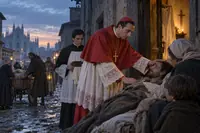
As soon as he took charge of the diocese, the first thing he did was sell the gilded carriage and every valuable left in the bishop’s house to buy food for the starving poor. He wore a coarse, faded religious habit, patched again and again, personally restored discipline among the clergy, opened catechism classes, and traveled to the most remote parishes in the diocese. In the terrible drought and famine of 1764, he did not hesitate to sell even his bishop’s ring, the sign of his office, and a golden chalice, to buy wheat and save tens of thousands of people from starving to death.
In 1768, a cruel illness struck: severe degenerative arthritis of the cervical spine. The disease slowly bent his spine forward permanently, until his chin was pressed hard against his chest, creating a bleeding, gangrenous sore right on the skin of his chest: a dull, unending pain that no medicine could relieve in an age before modern painkillers. He could celebrate Mass only seated on a specially built wooden chair, and drank through a tube because he could not lift his head.
Yet amid that relentless physical pain, the old bishop kept reading and writing tirelessly, holding up his forehead with one hand so that he could see the page in front of him. In 1775, after thirteen years of outstanding service in a body almost completely crippled, Pope Pius VI finally allowed him to resign as bishop because of his great age and failing health.
Chapter 7 of 8
A bitter cup at the end of his life and his last words
Anyone imagining that his last years at the monastery of Pagani would bring peace after so many decades of toil would be wrong; the reality was far harsher. Those were the years when he had to endure an inner martyrdom even more painful than his physical illness.
In 1780, through the deceit of some of his colleagues within the very congregation he had founded, together with political interference from the court of Naples, a falsified rule, quite different from the spirit he had laid down, was submitted to the Holy See without his real consent. Misled by false information, Pope Pius VI issued a decree that caused Alphonsus the deepest pain: he, the founder himself, was excluded from the Redemptorists, the congregation he had brought to birth with such anguish nearly fifty years before.
Rejected by his own brothers in the congregation, unjustly stripped of authority by the Holy See, the eighty-four-year-old saint did not complain or try to clear his name at any cost. He fell on his knees before the Eucharist, held back his tears, and said:
“The Pope wills it, God wills it; I submit to God’s holy will in all things.”
He accepted that humiliation in complete silence, without a single word of public self-defense, to the end of his life.
Along with the pain of rejection, he also had to go through a dark night of faith lasting many years: temptations to despair and persistent fears of God’s severe judgment assailed the man who had spent his whole life preaching mercy to others. There is a bitter paradox here: the very man who had taught a whole generation of priests that the confessional must be a place of kindness was the one who had to wrestle most fiercely with his own fear of being abandoned by God.
Amid that inner storm, he clung to the Rosary as his lifeline. He told the brother caring for him in his last days:
“If you see me forget to pray the Rosary, please remind me at once, for my salvation is bound up with the Rosary.”
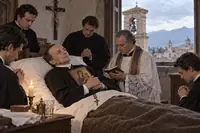
At noon on August 1, 1787, as the bells of the church of Pagani rang for the Angelus (the very hour at which he had stopped to pray all his life), he held the image of Our Lady of Perpetual Help tightly to his chest and died peacefully at the age of ninety, a rare age to reach in the eighteenth century.
Chapter 8 of 8
Doctor of the Church
Six years after his death, in 1793, the Holy See reviewed the whole file of the expulsion of 1780, uncovered the deceit of those former colleagues, fully restored his honor and formally recognized Alphonsus Maria Liguori as the one true Founder of the Redemptorists.
Pope Pius VII beatified him in 1816, and on May 26, 1839, Pope Gregory XVI solemnly canonized him. In 1871, Pope Pius IX proclaimed him a Doctor of the Church, formally recognizing his broad contributions to moral theology. In 1950, Pope Pius XII proclaimed him patron of all confessors and moral theologians, a fitting honor for the man who spent his whole life turning the confessional from a place of fear into a place of mercy. The Church celebrates him on August 1 each year.
In Vietnam, the Redemptorists have been present since 1925, closely linked with devotion to the icon of Our Lady of Perpetual Help, so familiar to Vietnamese believers, with parish missions in the countryside, and with accompanying the poor in remote areas, carrying on the spirit Father Alphonsus himself began on the mountainsides of Scala nearly three hundred years ago.
Saint Alphonsus leaves a lesson that has never gone out of date: faith in God is not a heap of rules that crush people, but the Good News of overflowing, redeeming love. The man who won every case for eight years, then lost everything over one small oversight, spent the rest of his life reminding everyone: however heavy your sins, never be afraid and run away from God. Run to the confessional, take shelter in the merciful Heart of the Redeemer, under the mantle of Our Lady of Perpetual Help, where, as his own long life showed, one will always find life and full forgiveness.
The end of the story
You have walked with Saint Alphonsus Liguori to the end of the story.
Three scenes you can hardly set aside:
After an oversight that made him lose a case for the first time in eight years of practice, the lawyer took off his gown and declared he was leaving the courts forever.
He unbuckled his nobleman’s sword, laid it at the feet of the statue of Our Lady of Mercy, and vowed to give up everything to devote his whole life to God.
At the end of his life, expelled from the congregation he had founded through a deceitful plot, he said only: "The Pope wills it, God wills it; I submit to God’s holy will in all things."
Stay in silence
You see what it means to come home: the man who had won every case and then lost his honor over one small oversight spent the rest of his life teaching others never to be afraid and run from God.
The Pope wills it, God wills it; I submit to God’s holy will in all things.
Let us pray
Saint Alphonsus,
you were a lawyer who had never lost a case, until the day you lost one and left everything to follow the Lord. At the end of your life, shut out by the very congregation you founded, you still said: "I accept God’s holy will."
Pray for those who are failing or have lost their good name, that they may find a new path in God.
Teach me to pray every day, for as you taught, whoever prays will be saved.
Amen.
Sources
- Feast dayAuthor’s edited profile
- Patron ofPatronages and symbols, version 1.1
- Often depicted withPatronages and symbols, version 1.1
- Reflectionvatican.va
- Reflectioncssr.news
Meet the next one
 Journey 6