

Journey 6 · Keepers of the Lamp of Faith
Saint John Vianney
The poor parish priest of the remote village of Ars
Feast day August 4
Tap to step inside
Saint John Vianney
The poor parish priest of the remote village of Ars
Map of a life
This life told in 7 chapters
Begin the journey OpeningOpening1 min
 Chapter 1 of 7A childhood in hiding during the French Revolution1 min
 Chapter 2 of 7The seminary’s “dull donkey”2 min
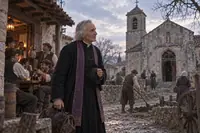 Chapter 3 of 7The wonderful transformation of Ars2 min
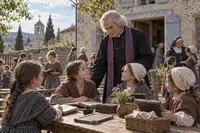 Chapter 4 of 7Eighteen hours a day in the confessional and an endless line of people2 min
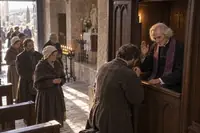 Chapter 5 of 7The devil’s attacks and three attempts to flee1 min
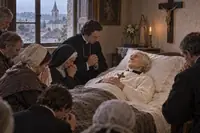 Chapter 6 of 7A candle burned down in the holy ground of Ars1 min
- Chapter 7 of 7Patron of all priests1 min
Feast day
Saint John Vianney
Some places may celebrate on a slightly different day.
August 4
Patron of
- Parish priests (proclaimed by Pius XI in 1929)
- Priests
Often depicted with
- A black cassock
- A confessional
Opening
Opening
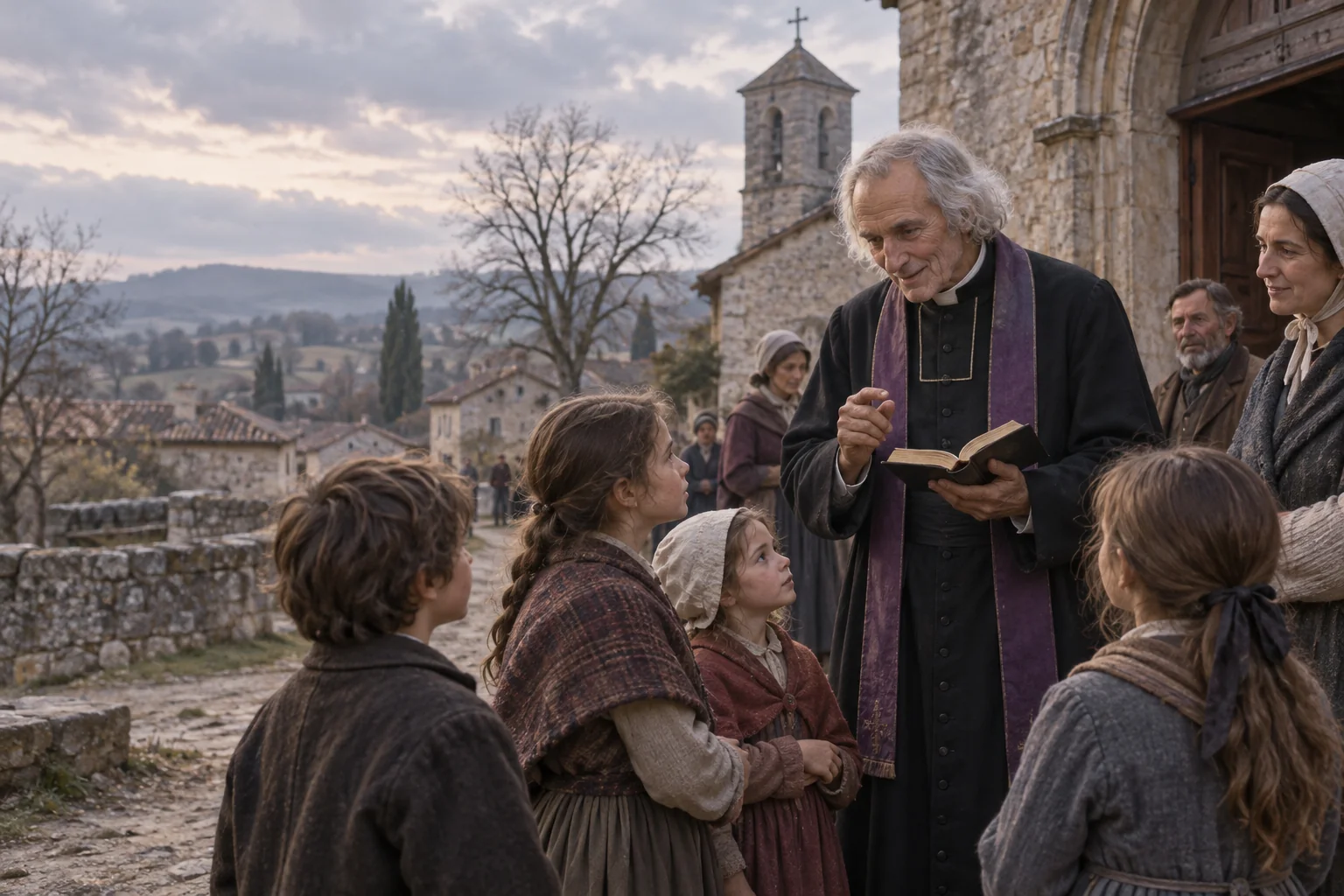
One gray winter afternoon in 1818, on the muddy path leading into a small village in the Dombes region of eastern France, a young priest led a donkey carrying an old wooden chest holding a few books. He was thin, his eyes sunken from many sleepless nights of prayer, his black cassock worn and faded at the shoulders.
The thick fog made him lose his way. Fortunately, he met a shepherd boy named Antoine Givre driving his flock across a field. He went up to him, asked the way to the village of Ars, then smiled and said to the boy words that later became legendary:
“My child, you have shown me the way to Ars; I will show you the way to Heaven.”
As soon as he reached the edge of the village, he knelt right down on the muddy ground and prayed fervently for every soul in that poor village, though he did not yet know a single face among them.
That priest was John Vianney — Jean-Baptiste-Marie Vianney — whom the whole Catholic world would come to know as the Curé of Ars. He came from a farming family with little schooling, was once regarded as the dullest student in the seminary, and was nearly expelled because he simply could not master Latin grammar. And yet with silence, tears of penance shed on the cold church floor, and an almost limitless mercy in the confessional, he turned a tiny village where faith had grown cold into one of the greatest places of pilgrimage in nineteenth-century France, and in the end he was proclaimed patron of all priests throughout the world.
Chapter 1 of 7
A childhood in hiding during the French Revolution
John Vianney was born on May 8, 1786, in the village of Dardilly, near the city of Lyon. His father, Matthieu Vianney, and his mother, Marie Béluze, were simple, devout farmers, raising six children together in the plain life of a farming village. He was the fourth child.
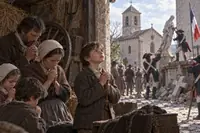
John’s childhood fell in the darkest years of the French Revolution, when anticlericalism ran so high that churches were closed, statues of saints were smashed without mercy, and priests who remained loyal to the Holy See — called “refractory priests” in the language of the time — were hunted down to be sent to the guillotine or deported. Little John had to learn his catechism in secret, sometimes even in dark cowsheds, where the smell of straw and dung mingled with whispered prayers. He made his First Communion at thirteen, in a room with every window shut, while outside people deliberately parked a few hay carts to block the view of the patrolling police. Seeing the quiet but steadfast courage of priests who risked their lives to keep serving the faithful in that darkness, the boy formed a dream he never let go of: to become a priest and save souls.
Chapter 2 of 7
The seminary’s “dull donkey”
Only at twenty, when religious peace was restored under Napoleon, did John begin school, learning his letters in a small class run by Father Balley in the village of Écully. Older than his classmates and slow to memorize, he struggled terribly with his studies — especially Latin, the required language of all priestly training at the time, whose complicated grammar he simply could not retain.
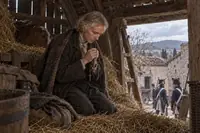
In 1809, he was conscripted into the army of Emperor Napoleon, which was then fighting all over Europe and constantly calling up young men. Because he fell seriously ill, he could not catch up with the troops who had already set out, and ended up in a remote village called Les Noës. Through no intention of his own, he became a deserter in the eyes of the authorities and had to live under a false name, hiding in the loft of a cowshed for more than a year, until an amnesty was declared for deserters.
In 1812, he entered the major seminary of Saint-Irénée in Lyon. But exams in Latin continued to be a nightmare for him. After a disastrous oral exam (perhaps from sheer nerves, he could hardly get a word out in Latin), the seminary professors decided to send him home, judging him too slow for the studies the priesthood required.
Fortunately, Father Balley — his first teacher, and also a holy priest who had lived in hiding through the Revolution — vouched for him and patiently tutored him word by word, never discouraged even though his pupil made very slow progress. When the vicar general of the diocese asked plainly, “Is Brother Vianney devout?”, the seminary authorities, though still doubtful about his intellectual ability, had to admit: “Father, he is as devout as an angel, praying the Rosary without ceasing.” Hearing that, the vicar general declared:
“Then ordain him! The grace of God will do the rest!”
On August 13, 1815, John Vianney was ordained a priest at Grenoble, at twenty-nine, late by the usual standards, after years of struggle. At first he was not even given faculties to hear confessions, because his superiors still feared that his moral theology was not solid enough to handle the complicated cases of conscience penitents might bring.
Chapter 3 of 7
The wonderful transformation of Ars
After three years as assistant to Father Balley himself at Écully, in 1818 he was appointed parish priest of Ars-sur-Formans, a remote village of only two hundred thirty inhabitants in the Dombes, a marshy region dotted with ponds east of Lyon, known then for its damp climate and hard life.
As he gave him the assignment, the vicar general said sadly:
“There is no love of God at all in that village; go there and plant the love of God in their hearts.”
Faith in Ars had indeed grown pitifully cold: the villagers spent their days drinking in the taverns, worked hard all day on Sundays, which the Church’s law set aside for rest and worship, and on Sunday evenings held dances the parish priest regarded as debauched. The village church was covered in cobwebs, cold and desolate, and hardly anyone went there.
Father Vianney did not set out to win the village with punishing decrees or harsh sermons of condemnation. He began by emptying himself. For years, he ate almost nothing but a few boiled potatoes, sometimes moldy, kept in a basket hung from a beam — food he cooked himself once for the whole week so as not to waste time cooking every day. He slept on a wooden plank lined with rotting straw, only two or three hours a night. Most of the rest of the time he lay prostrate before the tabernacle, beating his breast and sobbing, begging:
“Lord, grant me the conversion of my parish; I am willing to suffer every pain all my life!”
With his own meager money he refurbished the altar, and cleaned the church with his own hands until it shone. In the pulpit he did not have the flowery eloquence of many learned priests, but his simple sermons, sometimes wet with tears, on God’s mercy and the horror of sin had a power to touch hearts that no argument could match. Patiently, time after time, he urged the villagers to give up the taverns, keep Sunday holy, and put an end to the dances he believed opened the way to so many other sins.
Then something almost no one expected happened: one by one, from longtime drunkards to the most dissolute young men of the village, people began to come to his confessional. After only a few years, all the taverns in Ars had closed one after another for lack of customers. That tiny village was transformed into a kind of open monastery in the middle of ordinary life: the church was always packed for Mass, the Rosary was prayed regularly morning and evening in every family, and an atmosphere of holiness spread through the lanes that had once been noisy with drunken quarrels.
Besides renewing the parish’s spiritual life, he founded the home called “La Providence” — the House of Providence — to feed and educate, free of charge, hundreds of poor, hungry orphan girls of the region, a work of charity he kept going almost entirely through the generosity of benefactors and the Providence he trusted completely, day by day.
Chapter 4 of 7
Eighteen hours a day in the confessional and an endless line of people
Word of the Curé of Ars’s holiness spread quickly, far beyond the borders of the remote Dombes, so that from 1827 on, a huge wave of pilgrims began to pour into that tiny village. Every year more than one hundred thousand people — from bishops, scholars and nobles to notorious sinners looking for peace of conscience — made the difficult journey there. Extra stagecoach lines had to be opened, and later even special trains, linking Lyon with Ars to serve the endless stream of people.
Father Vianney was almost “imprisoned” in his cramped wooden confessional. In freezing winter as in sweltering summer, he sat hearing confessions sixteen to eighteen hours a day without a break, leaving only for about half an hour to celebrate Mass and hastily eat a boiled potato. Some penitents had to wait patiently in line for three days and nights before their turn came to be heard.
It is said that God gave him a rare gift of reading souls: he could see clearly the sins penitents deliberately kept hidden, reminding them of details they themselves had long forgotten. But what made him different was not that ability to “read” sins, but how he responded to them: before the most hardened sinners, he did not raise his voice to rebuke them. He laid his head on their chest and sobbed. When one penitent asked in surprise, “Father, why are you crying?”, he answered, choked with tears:
“I am crying because you will not cry for your sins.”
It was those tears — not any eloquence — that melted hearts that seemed to have been frozen for years. He also had the habit of taking the heaviest penance on himself: he would give the penitent a few simple Hail Marys, and then he himself, night after night, stayed awake scourging himself to make reparation in their place.
About the priestly calling, he gave a short definition that has become one of the most quoted sayings in the history of the Church in France:
“The priest is the Love of the Heart of Jesus.”
Chapter 5 of 7
The devil’s attacks and three attempts to flee
A life so wholly given to saving souls made him, by his own account, the target of fierce attacks from the devil. For thirty-five long years, he said, he was harassed at night by something he nicknamed “Grapin”: it shook the bed he lay on, smashed things in his room, howled like a wild beast, and once even set his bed on fire to keep him from sleeping. Instead of being frightened, he only smiled and told those around him: “When Grapin makes such a racket, it is a sign that tomorrow a big fish will be caught in the net.” And indeed, according to the stories handed down, the next morning some notorious sinner always came to confession.
But the greatest temptation of his life did not come from those nightly disturbances, but from his own longing to withdraw into the life of a hermit. He always felt inadequate and ignorant, and feared the responsibility of caring for a whole parish before the judgment seat of God — a fear that perhaps had its roots in those years of being considered “dull” at the seminary, and that never fully faded even after he had become a priest admired by all France.
Three times he packed a small bundle and quietly slipped out of Ars in the dead of night to look for a monastery where he could live as a hermit, hoping to spend the rest of his life in silence, free of a parish priest’s heavy burden. But all three times, hearing the church bells of Ars ring the alarm and seeing his parishioners running after him, weeping and begging him not to leave them, he could not bring himself to go, and, wiping away his tears, turned back to his flock.
Chapter 6 of 7
A candle burned down in the holy ground of Ars
In the summer of 1859, at seventy-three, his body was completely exhausted after more than forty years of austerity, lack of sleep, and constant hours in the confessional. On July 29, 1859, after hearing confessions for sixteen hours during a fierce summer heat wave, he collapsed and was carried to bed by his helpers.
Knowing he would soon go to God, he said serenely to those around him: “I am going to rest at last.” Twenty priests from neighboring parishes came to keep watch around his sickbed, an astonishing number for a village priest and a sign of how highly the French clergy regarded him. When the priest brought him Holy Communion as Viaticum, his sunken eyes filled with tears, and he whispered:
“How moving it is that the Lord comes to visit His poor servant one last time!”
At dawn on August 4, 1859, as a refreshing shower fell after a long spell of hot, dry days, Saint John Vianney died in the perfect peace of a man who had lived his calling to the full. Hundreds of thousands of people from all over France poured into Ars to say farewell to a beloved father, from a tiny village no one had ever imagined could produce such a man. Today his body is still preserved almost intact after more than a century and a half, laid in a transparent glass reliquary in the Basilica of Ars, which still welcomes hundreds of thousands of pilgrims every year.
Chapter 7 of 7
Patron of all priests
Pope Pius X beatified him in 1905, and on May 31, 1925, Pope Pius XI canonized John Vianney. In 1929, Pius XI himself proclaimed him patron of all parish priests throughout the world. In 2009, on the one hundred fiftieth anniversary of his death, Pope Benedict XVI opened the “Year for Priests” throughout the Church and formally proclaimed Saint John Vianney patron of all the priests of the world, not only parish priests. The Church celebrates him on August 4 each year.
Saint John Vianney leaves a clear lesson for every shepherd and every Christian: holiness does not depend on diplomas, talent, or high office. A man once considered too dull to become a priest proved that however ordinary, however weak a person may be, if they know how to give their whole life as an instrument of God’s mercy, and how to bear suffering patiently for the salvation of others, then even in the poorest village, a spot that hardly appeared on the map of France, that person can still light up an entire age.
The end of the story
You have walked with Saint John Vianney to the end of the story.
Three scenes keep coming back to your mind:
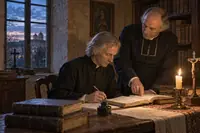
Lost in the fog, he met a shepherd boy and said: "You have shown me the way to Ars; I will show you the way to Heaven."
Judged by the seminary too dull to become a priest, he was ordained only after someone testified: "He is as devout as an angel, praying the Rosary without ceasing."
Hearing confessions sixteen to eighteen hours a day, he laid his head on a penitent’s chest and wept, and when asked why, he answered: "I am crying because you will not cry for your sins."
Stay in silence
You understand the secret of a shepherd’s life: the man once thought too dull to become a priest turned the coldest village in France into a place hundreds of thousands came to every year, simply by emptying himself and by his sincere tears.
The priest is the Love of the Heart of Jesus.
Let us pray
Saint John Vianney,
you were once thought too dull to become a priest. Yet at Ars you sat in the confessional for more than ten hours a day, and wept for the sins of those who came to you.
Pray for priests, especially my parish priest, that they may have health, zeal and joy in their ministry.
Help me to be truly sorry for my sins, and not to be afraid to come to God’s mercy.
Amen.
Sources
- Feast dayAuthor’s edited profile
- Patron ofPatronages and symbols, version 1.1
- Often depicted withPatronages and symbols, version 1.1
- Reflectionvatican.va
- Reflectionarsnet.org
Meet the next one
 Journey 6