

Journey 6 · Keepers of the Lamp of Faith
Saint John XXIII
The Pope who threw open the windows to let in fresh air
Feast day October 11
Tap to step inside
Saint John XXIII
The Pope who threw open the windows to let in fresh air
Map of a life
This life told in 7 chapters
Begin the journey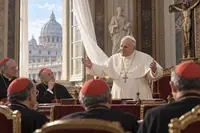 OpeningOpening1 min
 Chapter 1 of 7The son of a poor farmer of Sotto il Monte2 min
 Chapter 2 of 7Ten years as a secretary and the lesson of the trenches1 min
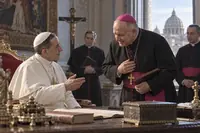 Chapter 3 of 7Thirty years as a diplomat across borders2 min
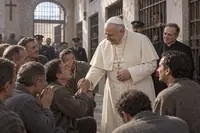 Chapter 4 of 7“Habemus Papam” – the Holy Spirit’s surprising choice1 min
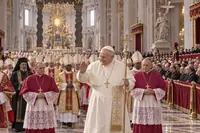 Chapter 5 of 7Opening the Second Vatican Council1 min
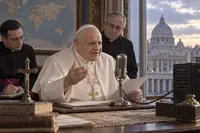 Chapter 6 of 7Messenger of world peace and his last breath1 min
- Chapter 7 of 7A saint of kindness1 min
Feast day
Saint John XXIII
Some places may celebrate on a slightly different day.
October 11
Patron of
- The Italian Army (2017)
Often depicted with
- The Pope’s white cassock
Opening
Opening
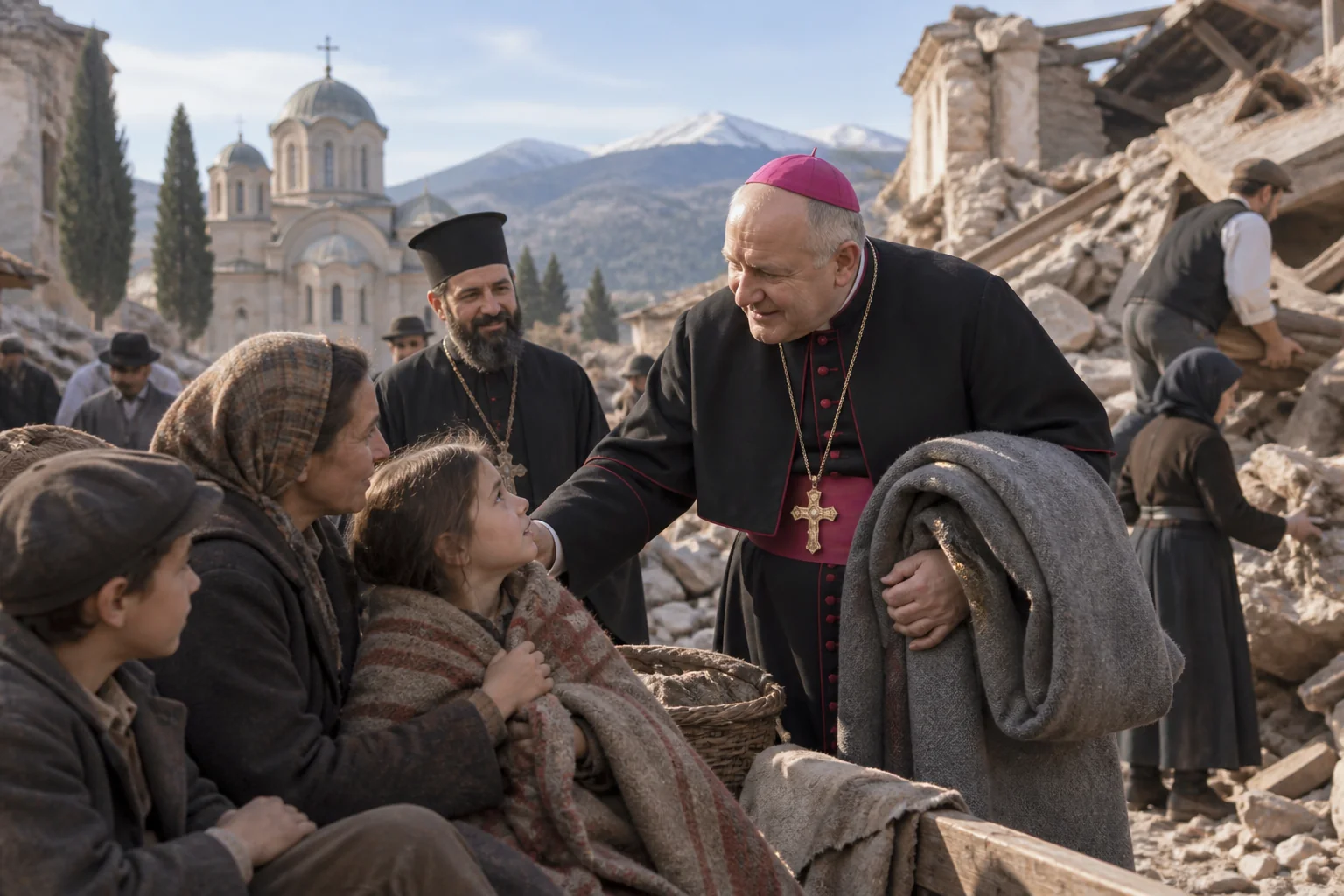
One evening in October 1962, tens of thousands of people holding glowing candles packed Saint Peter’s Square. With a peaceful moon shining on the basilica, an eighty-year-old Pope, stout, with the kindly face of a country grandfather, stepped out onto the balcony.
He did not read a lofty theological address. He looked down with a father’s love at the crowd gazing up at him and spoke words so simple that they moved millions of hearts inside and outside the Church:
“Dear brothers and sisters, when you go home tonight, give your little children a hug and a caress, and tell them: This is a hug from the Pope for you!”
That speech, which the Italian press later called the “Discorso della Luna,” the moonlight speech, sums up Angelo Giuseppe Roncalli, Pope John XXIII, whom people of every religion still fondly call “the Good Pope,” Il Papa Buono.
When he was elected to the chair of Saint Peter at seventy-seven, observers almost all agreed that he would be only a “transitional Pope,” a safe choice that would give the cardinals more time to settle on the real successor. But moved by what he believed was the Holy Spirit, this elderly Pope made a decision that changed the face of the Catholic Church in modern times: he convened the Second Vatican Council. “Throw open all the windows of the Church,” he once said, “so that the fresh breeze of the Holy Spirit may rush in and renew the face of the Church in the heart of today’s world.”
Chapter 1 of 7
The son of a poor farmer of Sotto il Monte
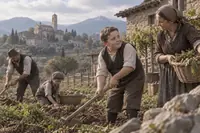
Angelo Giuseppe Roncalli was born on November 25, 1881, in the small village of Sotto il Monte, at the foot of a hill in the province of Bergamo, in Lombardy, northern Italy. His father, Giovanni Battista Roncalli, and his mother, Marianna Mazzola, were poor sharecroppers who farmed other people’s land, though according to the family tree the Roncallis had once been minor nobility, long since come down in the world with nothing left but the name. He was the fourth of thirteen children.
Little Angelo grew up poor: eating corn porridge, walking barefoot in muddy fields and working beside his parents like a grown man from childhood. But the house was full of faith and family warmth. His uncle Zaverio, a devout bachelor, became his first teacher and planted in the boy a love of prayer and a deep attachment to parish life.
With the help of local benefactors (not unusual in Italy then, when noble families or local clergy often paid the school fees of gifted peasant boys), Angelo entered the minor seminary of Bergamo at eleven. He was a hardworking, humble, cheerful seminarian, so honest that his classmates found him almost naive.
At fourteen he began keeping a spiritual diary, later published as “Journal of a Soul” (Giornale dell’Anima). He kept it for nearly seventy years, right up to his last days, and it shows a steady, persistent effort to live in union with God through the simplest things of every day rather than through great achievements.
In 1901, he was sent to Rome to study theology at the Apollinare. His studies were interrupted for a year of military service as an ordinary soldier, in uniform and living in barracks. It was an unusual experience for a seminarian, and one that would come back far more harshly thirteen years later. On August 10, 1904, Angelo Roncalli was ordained a priest in the church of Santa Maria in Monte Santo, in the heart of Rome. The next morning, celebrating his first Mass in the crypt of Saint Peter’s, above what is believed to be the tomb of the chief of the Apostles, he quietly offered his whole life to the service of the Church. No one then, not even he, could imagine how far that road would lead.
Chapter 2 of 7
Ten years as a secretary and the lesson of the trenches
After his ordination, Father Angelo was chosen as private secretary to Bishop Radini-Tedeschi of Bergamo, a man with a social vision rare in Italy at the time, who believed the Church must stand with poor workers in their disputes with factory owners. For ten years at his side, from 1904 to 1914, Father Roncalli taught Church history at the seminary and took a direct part in the growing Catholic workers’ movement, standing with striking workers in their just demands. It was a ministry rooted in real life, far from the picture of a priest who never leaves the church grounds.
In 1914, when the First World War broke out, Father Roncalli was called back into the army. This time he served as a sergeant in a military hospital and was later made an army chaplain, bringing the sacraments and comfort to the soldiers at the front. His black cassock was caked with the dust and mud of the trenches. He bandaged soldiers torn apart by shellfire, sat beside dying young men listening to their last choked words, and saw for himself the inhuman brutality of a war on a scale the world had never known. Those bloody years left him with a burning longing for peace, which nearly fifty years later he would pour into one of the most influential encyclicals of the twentieth century.
Chapter 3 of 7
Thirty years as a diplomat across borders
In 1921, Pope Benedict XV called him to Rome to reorganize the Society for the Propagation of the Faith, which coordinates the missionary work of the whole Church. In 1925, he was consecrated a bishop and appointed Apostolic Visitor to Bulgaria, an Orthodox country where the presence of a representative of the Roman Catholic Church was not always warmly welcomed. He chose as his episcopal motto “Obedience and Peace,” Obœdientia et Pax, and it stayed with him through all his years as a diplomat.
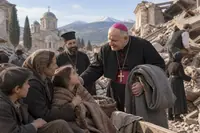
In his ten years in Bulgaria, from 1925 to 1934, he patiently overcame a great deal of suspicion and slowly built a sincere, brotherly friendship with the local Orthodox bishops, work that called for tact and perseverance more than authority. In 1934 he became Apostolic Delegate to Turkey and Greece, where most people were Muslim or Orthodox and Catholics were a tiny minority.
It was in Istanbul, in the darkest years of the Second World War, that Archbishop Roncalli’s quiet charity saved tens of thousands of Jews from the Nazi genocide. As the Holy See’s representative in a neutral country, he issued transit visas from the apostolic delegation and worked with other embassies to organize secret transports taking Jewish women and children from the Balkans to safety in Palestine. For those who could not get visas, he even issued baptismal certificates, without requiring them to be baptized, simply so they would have papers to escape the Nazi manhunt across the Balkans. Years later, witnesses from Jewish relief organizations confirmed that thousands of lives had been saved thanks to Roncalli.
In 1944, just after France had been liberated from fascist occupation, he was unexpectedly appointed Apostolic Nuncio in Paris. It was an extremely delicate post in a deeply divided country, as France dealt with those who had collaborated with the Vichy regime, among them a number of bishops. With his simplicity, humility, good humor and scrupulous fairness, he quickly won the goodwill of French politicians of every persuasion.
In 1953, Pope Pius XII made him a cardinal and appointed him Patriarch of Venice. At seventy-two he must have thought he would spend his old age in peace beside the lovely canals of that famous city. He lived among the people of Venice, went by gondola to visit poor parishes and threw open the doors of his residence to anyone who wanted to see him, whoever they were.
Chapter 4 of 7
“Habemus Papam” – the Holy Spirit’s surprising choice
On October 9, 1958, Pope Pius XII died after a long and commanding reign of nineteen years that had led the Church through the Second World War and the first years of the Cold War. The conclave met at a time of extreme world tension, with East and West locked in bitter confrontation.
On October 28, 1958, after the eleventh ballot, the cardinals chose Cardinal Angelo Roncalli. He took the name John XXIII, a name no Pope had used for more than five hundred years, since a disputed “antipope” of the fifteenth century. The choice itself was a quiet sign of his wish to make things new.
When he stepped out onto the balcony of Saint Peter’s to greet the world for the first time as Pope, commentators almost all predicted that a Pope of seventy-seven would be a safe “transitional” choice, with a short reign in which nothing much would happen.
What followed surprised them all. Right after his coronation he began breaking one rigid custom after another that had bound the Vatican court for centuries. He went on foot to visit poor parishes in the heart of Rome. He visited the Bambino Gesù children’s hospital and sat down beside the beds to comfort each sick child. And on Christmas 1958, only two months after his election, he walked into Regina Coeli prison in Rome, something no Pope had ever done.
Standing among the stunned prisoners, the good Pope smiled and said:
“You could not come to see me, so I had to come to see you myself... I had a brother who was once in prison, so I understand very well what is in your hearts!”
Hundreds of prisoners burst into tears and fell on their knees at his feet.
Chapter 5 of 7
Opening the Second Vatican Council
On January 25, 1959, only three months after his election, John XXIII told a small group of cardinals at the Basilica of Saint Paul Outside the Walls of a decision that astonished both the Church’s leaders and the world: he would convene an Ecumenical Council for the whole Church, the Second Vatican Council.
He summed up the Council’s purpose in one short Italian word: “Aggiornamento,” renewal, bringing up to date. As he saw it,
- the Church must not shut itself up like an isolated fortress, afraid of the world outside;
- the Church must throw open its windows and speak with the modern world in the language of kindness and hope, instead of using harsh condemnations as it had done with many new currents of thought in the past;
- and the Church must actively promote the ecumenical movement, seeking to heal the centuries-old divisions with its Orthodox and Protestant Christian brothers and sisters.
On October 11, 1962, the Second Vatican Council solemnly opened in Saint Peter’s Basilica, with more than two thousand five hundred bishops from every continent, one of the largest gatherings of bishops in the history of Christianity. In his famous opening address, Gaudet Mater Ecclesia (“Mother Church rejoices”), John XXIII bluntly rejected the “prophets of doom,” who saw nothing in the modern world but darkness and decay. On the contrary, he said, God is leading humanity into a new order full of hope, and the Church must walk alongside it rather than stand outside and criticize.
Chapter 6 of 7
Messenger of world peace and his last breath
In that same October of 1962, just a few days after the Council opened, the Cuban Missile Crisis broke out, pushing the United States and the Soviet Union to the brink of a nuclear war that could have destroyed humanity. As the whole world held its breath, John XXIII intervened in the only way a Pope could: he broadcast a radio message urgently calling on President Kennedy and Chairman Khrushchev to step back, for the sake of all humanity. Many historians later noted that his sincere appeal helped soften both sides and played its part as the world escaped nuclear catastrophe by a hair’s breadth.
In April 1963, already in pain from advanced stomach cancer, he issued one of the most influential encyclicals of the twentieth century, “Pacem in Terris” (Peace on Earth). It was the first encyclical addressed not only to Catholics but to “all people of good will,” a sign of the spirit of dialogue he pursued all his life. True peace, he wrote, must rest on four pillars: truth, justice, love and freedom.
By the last days of May 1963, the cancer had reached its final stage. From his sickbed in the Vatican he could look out on Saint Peter’s Square, where tens of thousands of people knelt in prayer for him day and night. He whispered his last words:
“My journey is over... But the work of the Council must go on! May all be one — Ut unum sint... Lord, You know how much I have loved You!”
On the evening of June 3, 1963, the Monday after Pentecost, Pope John XXIII died peacefully at the age of eighty-one. People of every race, ideology and religion wept as they said goodbye to a man who had shown what kindness means in an anxious age.
Chapter 7 of 7
A saint of kindness
On September 3, 2000, Pope John Paul II beatified him. And on April 27, 2014, Divine Mercy Sunday, Pope Francis canonized John XXIII together with Pope Saint John Paul II, in a rare double canonization witnessed by hundreds of thousands of the faithful in Saint Peter’s Square. The Church celebrates him on October 11 each year, the anniversary of the opening of the Second Vatican Council, his greatest work.
Pope Saint John XXIII shows us that the greatest holiness can look very plain and homely, with no need for lavish ceremonies or elaborate speeches to touch people’s hearts. The barefoot peasant child of Sotto il Monte who became the Pope on the moonlit balcony, inviting the whole world to hug their children, reminds each of us not to look at life with gloom and fear. Keep a kind smile, open your heart wide to others, and let the wind of the Holy Spirit blow away hardness and selfishness and refresh your faith every day.
The end of the story
You have walked with Saint John XXIII to the end of the story.
A few moments you cannot help retelling:
Under the moon, on the balcony over Saint Peter’s Square, he told his children: "When you go home tonight, give your little children a hug, and tell them: This is a hug from the Pope for you!"
In Istanbul during the Second World War, he even issued baptismal certificates to Jews who had never been baptized, simply so they could escape the Nazi manhunt.
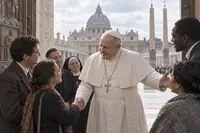
On Christmas 1958, he walked into Regina Coeli prison and told the prisoners: "You could not come to see me, so I had to come to see you myself!"
Stay in silence
You feel something very human in this Pope: sometimes the greatest holiness needs only a heart that can embrace others like a loving grandfather.
Throw open all the windows of the Church, so that the fresh breeze of the Holy Spirit may rush in.
Let us pray
Saint John XXIII,
you told everyone to go home and hug their children, saying it was a hug from the Pope for them. At Christmas you went into the prison to visit the prisoners.
Teach me to live kindly and cheerfully, like a good grandfather.
Pray for those in prison, for those persecuted because of their race or their faith, and for the unity of Christians.
Amen.
Sources
- Feast dayAuthor’s edited profile
- Patron ofPatronages and symbols, version 1.1
- Often depicted withPatronages and symbols, version 1.1
- Reflectionvatican.va
- Reflectionpapagiovanni.com
Meet the next one
 Journey 6