

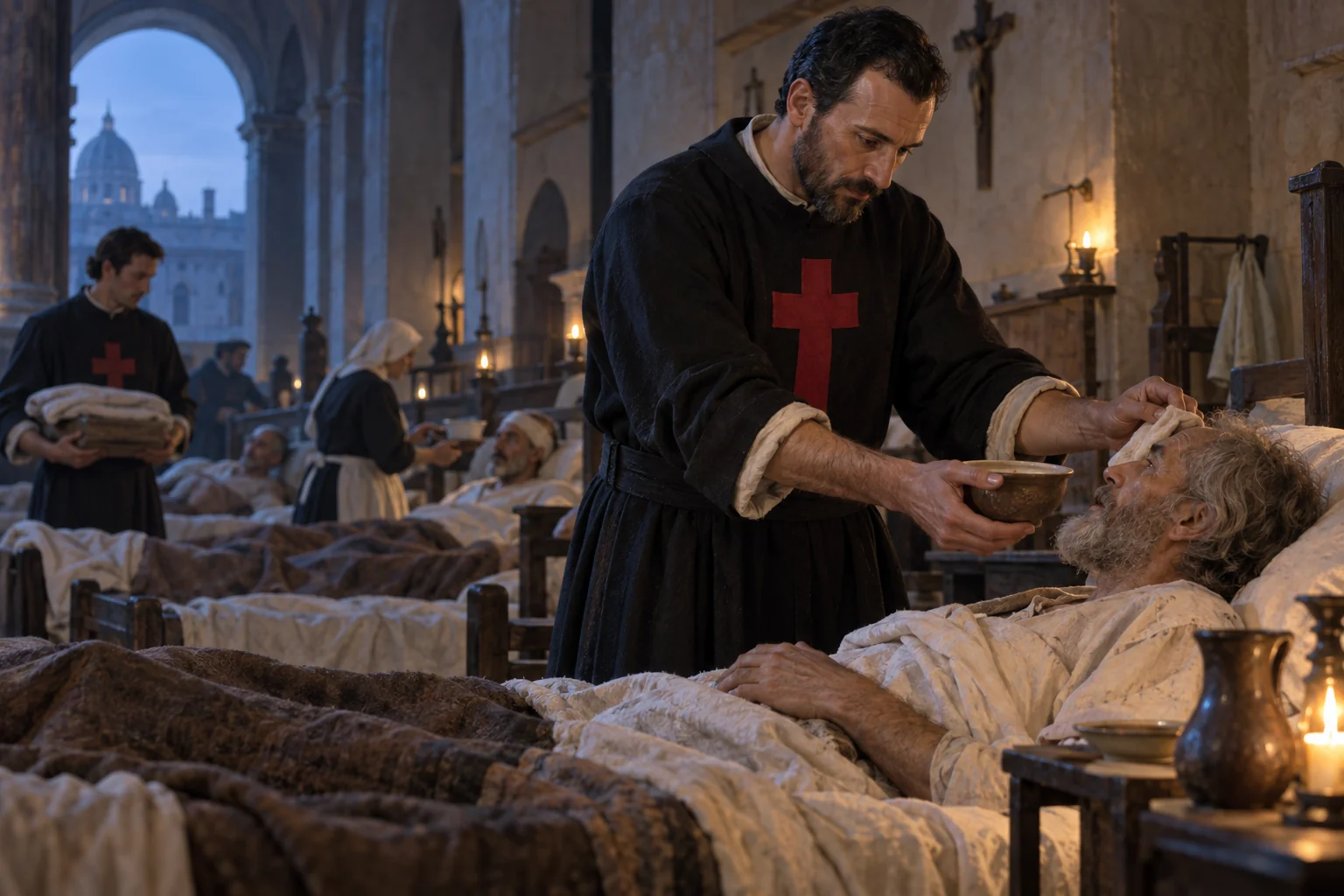
Journey 4 · Hands That Stayed with the Suffering
Saint Camillus de Lellis
A red cross at the bedside of the poor
Feast day July 14
Tap to step inside
Saint Camillus de Lellis
A red cross at the bedside of the poor
Map of a life
This life told in 6 chapters
Begin the journey OpeningOpening1 min
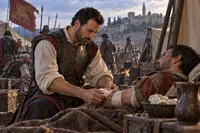 Chapter 1 of 6A rough soldier and the swamp of gambling1 min
 Chapter 2 of 6A wound in his foot and the lesson of Saint James’s Hospital1 min
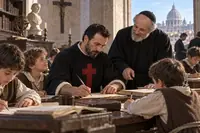 Chapter 3 of 6The birth of the Camillians and the symbol of the Red Cross1 min
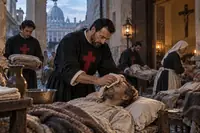 Chapter 4 of 6Raging epidemics and a frontline relief worker1 min
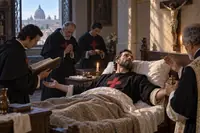 Chapter 5 of 6Bleeding feet and the hour of departure1 min
- Chapter 6 of 6Patron of the sick and of doctors and nurses1 min
Feast day
Saint Camillus de Lellis
Some places may celebrate on a slightly different day.
July 14
Patron of
- The sick and hospitals (declared by Leo XIII in 1886)
- Nurses (declared by Pius XI in 1930)
Often depicted with
- A red cross on a black habit
Opening
Opening
Centuries before the International Red Cross was born, there was a tall, burly man, once a mercenary soldier hopelessly addicted to gambling, who sewed a red cloth cross on the chest of his religious habit and led a band of religious into rooms reeking of death to care for the sick.
Camillus de Lellis knew bodily pain to the full: for thirty-six years he lived with an open wound in his foot that never healed. But instead of letting it make him bitter, he let that pain teach him to bend down and tend the wounds of others with all the love of a gentle mother.
He founded the Ministers of the Sick, usually called the Camillians, who make a heroic fourth vow: to serve the sick even at the risk of their own lives in times of contagious disease.
Chapter 1 of 6
A rough soldier and the swamp of gambling
Camillus was born on May 25, 1550, in Bucchianico, in the Abruzzo region of Italy. His father, Giovanni de Lellis, was an officer in the royal army; his mother, Camilla Compelli, was a devout woman who gave birth to him when she was nearly fifty.
Trouble came early: his gentle mother died when he was only thirteen, and his father was always away at war. Lacking his mother’s care and guidance, Camillus grew up unruly and reckless. At nineteen, he followed his father into the armies of the Republic of Venice and the Spanish Empire, becoming a hardened mercenary.
After his father’s sudden death at war, the young soldier sank deeper and deeper into a dissolute life. Gambling took hold of him like a madness: once he lost all his pay, his sword and weapons, his officer’s coat, and finally even the shirt off his back in the bitter winter of Naples.
Penniless and humiliated, Camillus had to wander the streets begging for crusts of bread.
Late in 1574, at the end of his rope, he got work as a laborer on a building project at the Capuchin friary of San Giovanni Rotondo. There the patience, gentleness and fatherly advice of the friary’s superior touched the former soldier’s conscience. On February 2, 1575, as he rode a donkey along a mountain road back to the friary, God’s grace suddenly struck his heart: Camillus fell to the ground, beating his breast and weeping bitterly, begging God to forgive his sinful past.
Chapter 2 of 6
A wound in his foot and the lesson of Saint James’s Hospital
After his conversion, Camillus earnestly asked to join the Capuchins. But a chronic open sore on his right ankle — left over from an injury in his soldiering days — flared up badly, oozing foul-smelling pus, so that he could not keep up with the order’s austere discipline.
He made his way to Rome and was admitted for treatment to the Hospital of San Giacomo degli Incurabili — Saint James’s Hospital for the incurable, a large institution that Pope Leo X himself had raised to one of the city’s great hospitals in 1515. To pay for his treatment and keep, Camillus asked to work as an attendant caring for other patients in the hospital.
It was here that Camillus saw a cruelty that broke his heart: at that time, most of the attendants in public hospitals were scoundrels and released prisoners hired for a pittance. They treated the sick with great cruelty: cursing, beating and starving them, too lazy to change dressings or wash them, leaving the sick lying in excrement crawling with maggots. Some even threw people who were still barely alive into the morgue to steal their belongings.
The newly converted soldier’s heart ached. He prayed earnestly:
“Lord, if only I had a company of men who would work not for earthly wages, but for the love of Jesus, to care for these suffering sick people with the love of a gentle mother!”
Through his extraordinary dedication, Camillus gradually won the trust of the hospital authorities and was given responsibility for running it — becoming the “master of the house” of the whole institution, with full authority to reorganize the care of the sick.
Chapter 3 of 6
The birth of the Camillians and the symbol of the Red Cross
Seeing that the care of the sick needed reform from the roots up, Camillus resolved to study despite being over thirty. He sat on the same benches as schoolboys, learning Latin word by word, then studied theology at the Roman College. Under the wise spiritual guidance of Saint Philip Neri — the apostle of joy of Rome — Camillus was ordained a priest in 1584, at the age of thirty-four.
Turning down a comfortable post as a diocesan priest, he gathered a group of friends who shared his ideal and formally founded the Ministers of the Sick in 1586. Pope Sixtus V approved the congregation and granted its members the privilege of wearing a red cloth cross on the chest of their black habit — a public sign that they were soldiers of the love of the Cross, always ready to shed their blood for the lives of others.
Father Camillus brought about a revolution in the care of the sick: he set the standard that
- each patient must have a separate, clean bed with a warm mattress and sheets changed regularly;
- the sickrooms must always be well aired, with windows open to the sunlight;
- food must be prepared to suit each patient’s condition;
- and most important of all, when caring for the sick, the religious must see Christ Himself suffering in their bodies.
He gave his brothers a rule to learn by heart:
“When you touch the body of a sick person, touch it with the tenderness and reverence with which you would touch the Body of the Lord! Serve the sick with the heart of a mother caring for her only child in pain!”
Chapter 4 of 6
Raging epidemics and a frontline relief worker
The heroic love of Father Camillus and the religious of the Red Cross was tested by fire in the terrible epidemics that swept through Rome in 1590 and 1591. When all the officials, the rich and even the families of the sick fled the city in terror, Father Camillus and his brothers volunteered to go into the very heart of the outbreak.
They went from house to house, carrying plague victims barely clinging to life on their backs to the infirmary. They washed sore-covered bodies reeking of death, gave them water spoonful by spoonful, and gently closed the eyes of the dying. When the hospitals were overwhelmed, he turned his own house into a place to receive the sick. In those epidemics, many young Camillians caught the disease and died as martyrs of charity.
Beyond the hospitals, Father Camillus was also the first in history to set up military ambulance units serving right on the battlefield: in 1595 and 1601, when the imperial armies fought the Turks in Hungary and Croatia, he sent religious wearing the Red Cross to the front lines to bandage and give first aid to the wounded of both sides, without distinguishing friend from foe — a humanitarian spirit that came nearly three hundred years before Henry Dunant’s International Red Cross.
Chapter 5 of 6
Bleeding feet and the hour of departure
Throughout his thirty-six years as superior, Father Camillus was always the one doing the heaviest work: he kept night watch beside the most serious cases, emptied bedpans with his own hands, and cleaned up spittle and phlegm. He refused every privilege that came with his position.
Most moving of all, he himself endured terrible bodily pain every day: the ulcer on his foot never healed and constantly oozed pus and blood; on top of that, kidney stones and a hernia tormented him, so that every step felt like treading on thorns. Yet the big man still leaned on his stick and limped from one sickbed to another to comfort others.
In May 1614, knowing his strength was spent, he asked to resign as Superior General to prepare to meet God. Lying sick at the house of Saint Mary Magdalene in Rome, he asked his brothers to read him the Gospel of the Passion of Jesus.
On the evening of July 14, 1614, after receiving the Anointing of the Sick and Viaticum, Father Camillus de Lellis stretched out his arms in the shape of a cross, his eyes fixed on a picture of the suffering Lord, and whispered his last prayer:
“Lord Jesus, may Your Most Precious Blood shed on the Cross redeem me!”
, and died peacefully at the age of sixty-four.
Chapter 6 of 6
Patron of the sick and of doctors and nurses
Pope Benedict XIV beatified him in 1742 and canonized him on June 29, 1746. In 1886, Pope Leo XIII proclaimed Saint Camillus de Lellis patron of the sick and of hospitals, together with Saint John of God. In 1930, Pope Pius XI declared him patron of doctors and nurses. The Church celebrates him on July 14 each year.
In Vietnam, the Camillians are much loved for their centers for people in the final stages of HIV/AIDS, their charity clinics, and their care for poor patients at the bedside in Đồng Nai and many other provinces.
The life of Saint Camillus de Lellis is a story of conversion and compassion: a man once lost to addiction became a great saint of charity.
He reminds everyone who works in medicine of a lasting truth: a sick person is not a biological machine to be repaired; a sick person is a whole human being, with a soul and a body, longing to be healed by both medical skill and the sincere warmth of a loving heart.
The end of the story
You have walked with Saint Camillus de Lellis to the end of the story.
You will picture again:
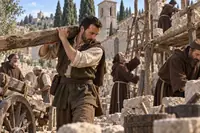
The soldier addicted to gambling who once lost even the shirt off his back, in the bitter winter of Naples.
Seeing scoundrels throw people still barely alive into the morgue to steal their belongings, he prayed for people who would care for the sick with the love of a gentle mother.
For thirty-six years, on ulcerated, bleeding feet, he still limped from one sickbed to another.
Stay in silence
You come to see: a sick person is not a machine to be repaired, but a whole human being longing to be healed with both skill and a sincere heart.
Touch the body of a sick person with the tenderness and reverence with which you would touch the Body of the Lord.
Let us pray
Saint Camillus,
you were once a soldier addicted to gambling, who lost even the shirt off his back. Then for thirty-six years, on ulcerated feet, you went from one sickbed to another.
Pray for those caught in gambling and addiction, that they may find their way home.
Pray for those caring for the sick in my family, that they may care with the love of a gentle mother.
Amen.
Sources
- Feast dayAuthor’s edited profile
- Patron ofPatronages and symbols, version 1.1
- Often depicted withPatronages and symbols, version 1.1
- Reflectioncamilliani.org
- Reflectioncausesanti.va
Meet the next one
 Journey 4