

Journey 8 · Faith with a Vietnamese Face
Saint Vincent Phạm Hiếu Liêm
A doctor of theology and the dialogue of the Four Religions
Feast day November 7
Tap to step inside
Saint Vincent Phạm Hiếu Liêm
A doctor of theology and the dialogue of the Four Religions
Map of a life
This life told in 6 chapters
Begin the journey OpeningOpening1 min
 Chapter 1 of 6A son of the scholarly family of Trà Lũ1 min
 Chapter 2 of 6Eight years of study at the University of Santo Tomas1 min
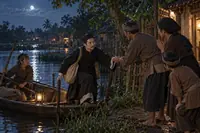 Chapter 3 of 6Fourteen years as a wandering shepherd2 min
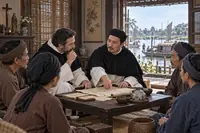 Chapter 4 of 6The historic debate of the Council of Four Religions1 min
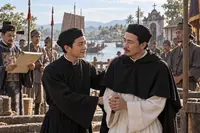 Chapter 5 of 6An unjust sentence and a martyr’s song1 min
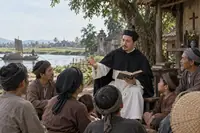 Chapter 6 of 6The scholar saint of the Church in Vietnam1 min
Feast day
Saint Vincent Phạm Hiếu Liêm
Some places may celebrate on a slightly different day.
November 7
Often depicted with
- A palm branch
- The Dominican habit
- A book
Opening
Opening
On the afternoon of November 7, 1773, at the execution ground of Đồng Mơ just outside the gates of the capital, Thăng Long, in the time of Lord Trịnh Sâm, a forty-one-year-old man knelt on a patterned mat the faithful had spread for him. He wore the white Dominican habit with the friars’ black cloak over it. He held himself straight and strong, yet he had the calm of a scholar more at home with books than with battles.
Around him were not only soldiers and curious onlookers. In the crowd stood mandarins who had once faced him in debate at the lord’s palace, unable to hide their sorrow. The executioner stepped forward. The priest smiled and gave a slight nod, then lifted his eyes to heaven and recited the Creed aloud, first in Latin and then in Vietnamese, before calmly offering his neck to the sword.
He was Father Vincent Phạm Hiếu Liêm, known in religion as Vincent of Peace, the first Vietnamese Dominican priest to shed his blood for the faith. Only a few weeks earlier, this same man had spent three whole days and nights in Lord Trịnh’s palace debating theology as an equal with representatives of Confucianism, Buddhism and Taoism, in what came to be called the Council of the Four Religions.
Chapter 1 of 6
A son of the scholarly family of Trà Lũ
Phạm Hiếu Liêm was born in 1732 in the hamlet of Đông, in the village of Trà Lũ, Thiên Trường prefecture, Sơn Nam Hạ — an area now in Xuân Trung commune, Xuân Trường district, Nam Định province, in the heart of the rich Red River delta, a place with a long tradition of learning where the faith had taken root generations before. His father, Anthony Doãn Trinh Điểm, was an upright mandarin; his mother, Mary Magdalene Thảo, kept a devout home.
From childhood Liêm was remarkably bright. He picked things up at once, mastered the Four Books and Five Classics under the region’s best-known teachers, and was writing poetry before any of his friends. At twelve he asked to join the mission house at Lục Thủy to learn Latin and try out the religious life.
In 1750, when Liêm turned eighteen, Bishop Hilario de Jesús, seeing his outstanding gifts and virtue, decided to send him with four other seminarians across the sea to Manila, capital of the Philippines, to study at one of the most famous schools in Asia.
Chapter 2 of 6
Eight years of study at the University of Santo Tomas
The University of Santo Tomas, founded by the Dominicans in 1611 and raised to university rank by a decree of Pope Innocent X in 1645, is the oldest degree-granting university in Asia still in continuous operation. There, in the old stone corridors of Intramuros, the walled city the Spanish built in the heart of Manila, the young seminarian from Trà Lũ spent eight years of tireless study, from 1750 to 1758.
He learned Spanish and Latin and completed the course in scholastic philosophy and theology based on the thought of Saint Thomas Aquinas, after whom the school was named. Among hundreds of students from Spain and the colonies, the young Vietnamese stood out for his sharp mind, his closely reasoned eloquence and a humility his professors could not fail to notice.
In September 1753 he made his profession in the Order of Preachers, the Dominicans, at the friary of Santo Domingo in the heart of Manila, taking the religious name Vincent of Peace (Vicente de la Paz). In 1758, at twenty-six, he was ordained a priest, with a doctorate in theology, an honor few Vietnamese of his time had ever achieved.
With that degree he could easily have stayed in Manila to teach, or taken a comfortable post in a well-established diocese. But that very autumn, Father Vincent Liêm boarded a sailing ship and crossed the sea back to his homeland — where the Catholic faith had been outlawed by Lord Trịnh Sâm.
Chapter 3 of 6
Fourteen years as a wandering shepherd
Back home, Father Vincent Liêm was appointed to teach philosophy and theology at the seminary of Trung Linh, and later sent to care for large parishes in the Hải Dương and Nam Định regions: Quất Lâm, Lục Thủy, Trung Lao, Kẻ Mốt.
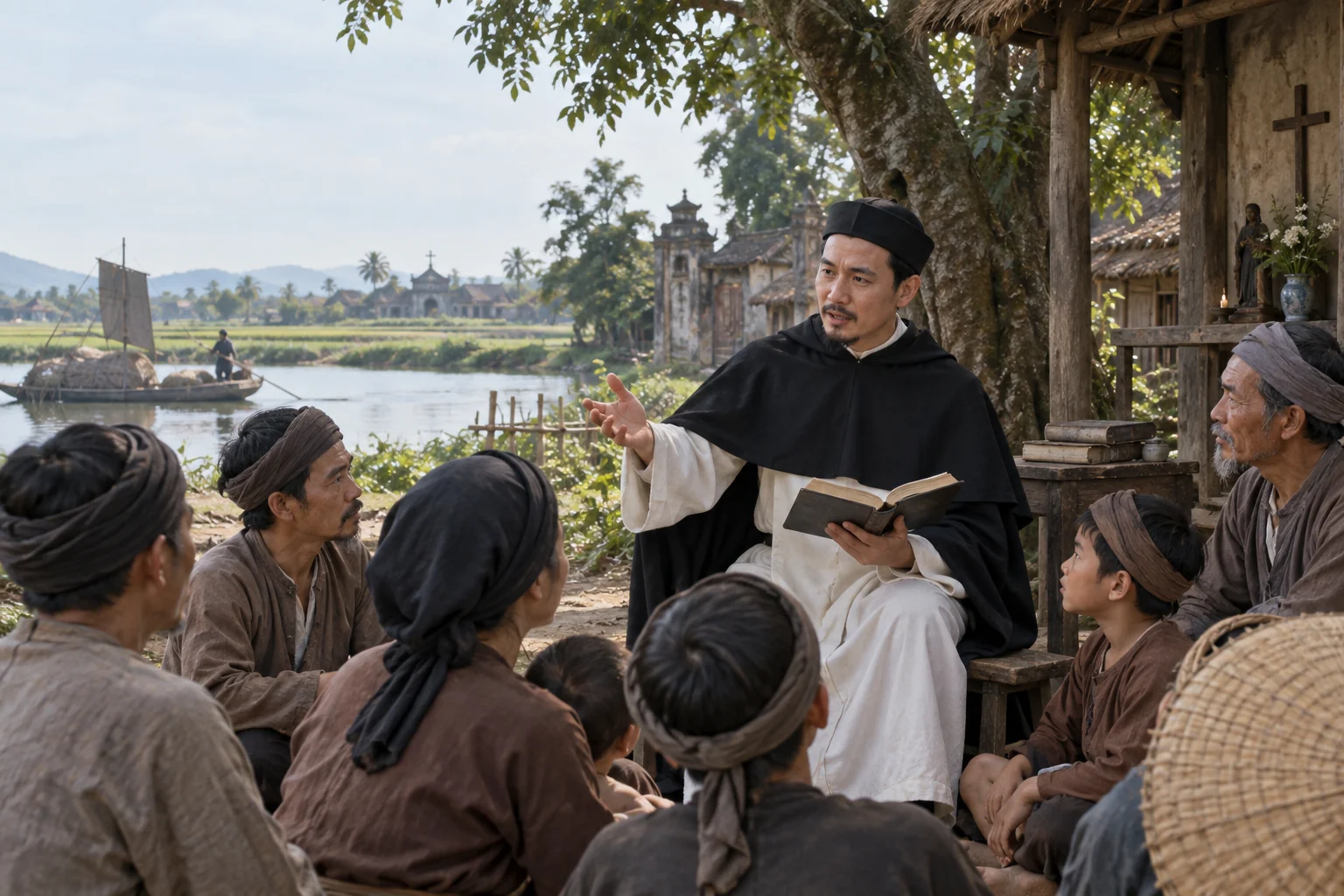
In those years Lord Trịnh Sâm was tightening the edicts against the faith in Tonkin. For fourteen years, from 1758 to 1772, the doctor of theology from one of the best schools in Asia lived a life nothing like what his degree might have brought him: disguised as a peasant, he paddled through the creeks night after night to say Mass, hear confessions and teach the catechism to the faithful in the dark.
What set Father Vincent Liêm apart was the way he used his deep Confucian learning to open a conversation with the scholar class, who tended to regard the Catholic faith with suspicion as a foreign religion that threatened the moral order. He patiently explained that the faith did not reject filial piety or the good traditions of the nation; it brought filial piety to its fullness.
In those years a priest in Tonkin had to be always looking over his shoulder. By day Father Vincent Liêm might be just a man in a conical hat with his trousers rolled up to the knee, paddling a basket boat with a few bundles of firewood or baskets of fish between the river landings, like hundreds of other fishermen on that stretch of river. Only when night fell and the boat put in at a hidden landing did he quietly step ashore and slip into a house arranged beforehand, where a few dozen faithful sat waiting by an oil lamp turned down as low as it would go. Such a Mass might last less than an hour, yet it took days of preparation and watchfulness by a whole Catholic neighborhood: someone watching the road, someone watching the landing, someone ready to sound the alarm on a bamboo whistle at the sight of a stranger.
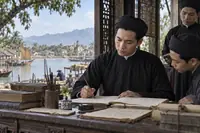
In the middle of that anxious life, Father Vincent Liêm was more than once questioned by the village scholars themselves. They prized learning, so they were more inclined to respect a man who had earned degrees as far away as the Philippines than to fear him. Over tea and wine they would sometimes invite him to debate just for the pleasure of it, to see how this learned priest would answer hard questions about the three bonds and the five constant virtues. More than once, after such harmless-seeming conversations, a scholar quietly began to look further into the Catholic faith and little by little asked to learn the catechism. It was a slow, patient sowing, quite unlike the noisy public preaching people often imagine.
On October 2, 1773, after saying Mass in the Lương Đống community, on his way by boat to the parish of Liễu Dinh, Father Vincent Liêm was spotted by a band of village watchmen and arrested with the two catechists traveling with him. They handed him over to the prefect of Phụng Thiên. There came a tearful reunion: he met Father Jacinto Castañeda, whom the Vietnamese called Cha Gia, a Spanish missionary of the same Dominican order who had been arrested a few days before. The two embraced, not in sorrow, but because both understood that from now on they would walk the rest of the road together.
Chapter 4 of 6
The historic debate of the Council of Four Religions
Seeing that Father Vincent Liêm was a Vietnamese steeped in Confucian learning who also held a Western doctorate, a rare combination at the time, the official had the two priests sent to the capital, Thăng Long, for closer questioning.
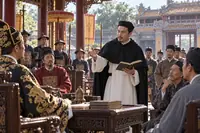
In the capital something unheard of happened. At the wish of a noble lady of Lord Trịnh’s household, said to be the mother of Lord Trịnh Sâm, a debate was arranged in which representatives of four great religions would sit down together and argue which was the truest way. The gathering, called the Council of the Four Religions, went on for three days and nights in the lord’s palace, bringing together a mandarin of the Hanlin Academy representing Confucianism, an eminent monk representing Buddhism, a master representing Taoism, and Father Vincent Phạm Hiếu Liêm representing the Catholic faith.
Before mandarins, scholars and even members of the royal family, Father Vincent Liêm set out his arguments clearly and calmly. He quoted precisely from the Four Books and Five Classics themselves, a weapon no one expected a Catholic priest to handle so well, to show that Confucianism, for all its wisdom about cultivating oneself, ordering the family and governing the state, cannot answer the question of where the universe came from or what becomes of the soul after death. He also pointed out the limits of the Buddhist teaching of rebirth and karma and of the Taoist quest for immortality, before affirming the heart of his own belief: there is only one God, who made heaven and earth and all things, and Jesus Christ, the Word made flesh, who died on the cross, is the way that leads human beings to eternal life.
His arguments, learned and gentle, left the representatives of Confucianism, Buddhism and Taoism with no answer. Even Lord Trịnh Sâm’s mother, who had organized the debate, could not hide her admiration for the Vietnamese priest’s gifts.
Chapter 5 of 6
An unjust sentence and a martyr’s song
But admiration won in a debate was not enough to save him. Fearing the spreading influence of the Catholic faith, and under pressure from conservative mandarins at court, Lord Trịnh Sâm ordered both Father Vincent Liêm and Father Jacinto Gia beheaded.
When the sentence was announced, Father Vincent Liêm did not flinch. He turned to Father Gia and said with a smile:
“Father, we are about to drink to the full the cup of rejoicing with Jesus in the Kingdom of Heaven.”
On the afternoon of November 7, 1773, the two Dominican priests were led out to the execution ground of Đồng Mơ, outside the gates of Thăng Long. Thousands of the faithful, and many non-Christians who had heard of the holy doctor, crowded the execution ground, weeping as they saw them off. Father Vincent Liêm walked serenely in his familiar white habit and black cloak. At the place of execution he knelt, raised his hands to bless the sobbing crowd one last time, then bowed his head in prayer.
After three strokes of the gong, the sword came down. Father Vincent Phạm Hiếu Liêm and Father Jacinto Castañeda fell together, ending their lives of self-giving in the heart of the ancient capital. The faithful bravely gathered up the two priests’ bodies and buried them with honor in the church of Trung Linh. Today his relics are still venerated in many churches of the diocese of Bùi Chu.
Chapter 6 of 6
The scholar saint of the Church in Vietnam
On April 15, 1906, Pope Pius X beatified Father Vincent Phạm Hiếu Liêm. And on June 19, 1988, Pope John Paul II canonized him, together with one hundred sixteen other Vietnamese Martyrs, in Rome. The Church celebrates him on November 7 each year.
Among the one hundred seventeen Vietnamese Martyrs, Father Vincent Liêm’s story is unique: he is the only one who stood in a public debate with the three great religions of the East, and rather than avoid it, he stepped straight into the dialogue, carrying the learning of both cultures within him. He did not see his faith as something to hide, or Confucian learning as the enemy of faith. For him both could rest on the same shoulders, as long as the one carrying them used them for the right purpose: seeking the truth and bringing it to light, even at the cost of his life.
The end of the story
You have walked with Saint Vincent Phạm Hiếu Liêm to the end of the story.
Three moments in the scholar’s life fill you with admiration:
With a doctorate in theology from one of the best schools in Asia, he chose to sail back to a homeland where the faith was strictly outlawed rather than stay comfortably in Manila.
For three days and nights in Lord Trịnh’s palace, he stood alone before representatives of Confucianism, Buddhism and Taoism at the Council of the Four Religions, using the Four Books and Five Classics themselves to defend his faith.
When the sentence was announced, he turned to the priest condemned with him and said with a smile: "Father, we are about to drink to the full the cup of rejoicing with Jesus in the Kingdom of Heaven."
Stay in silence
You understand why he did not avoid the dialogue: for him, Eastern learning and Western faith were not opposed, but could rest together on the same shoulders in the search for truth.
Father, we are about to drink to the full the cup of rejoicing with Jesus in the Kingdom of Heaven.
Let us pray
Saint Vincent Phạm Hiếu Liêm,
you held a doctorate in theology, yet chose to return to a homeland where the faith was outlawed. Before the Council of the Four Religions, you used the Four Books and Five Classics themselves to speak of your faith.
Pray for Vietnamese Catholic intellectuals, that they may use their knowledge to serve their homeland.
Teach me to hold dialogue gently and respectfully with people of other beliefs.
Amen.
Light a candle for Saint Vincent Phạm Hiếu Liêm
Sources
- Feast dayAuthor’s edited profile
- Often depicted withPatronages and symbols, version 1.1
- Reflectiongpbuichu.org
- Reflectionvntaiwan.catholic.org.tw
Meet the next one
 Journey 8