

Journey 8 · Faith with a Vietnamese Face
Saint Joseph Nguyễn Duy Khang
A faithful catechist beside his spiritual father
Feast day December 6
Tap to step inside
Saint Joseph Nguyễn Duy Khang
A faithful catechist beside his spiritual father
Map of a life
This life told in 5 chapters
Begin the journey OpeningOpening1 min
 Chapter 1 of 5A boy from the village of Trà Vi1 min
 Chapter 2 of 5The loyal companion of Bishop Hermosilla1 min
 Chapter 3 of 5An arrest on the river and a fateful day1 min
 Chapter 4 of 5Torn by the lash and a profession of faith in the prison of Hải Dương1 min
 Chapter 5 of 5The hour of triumph at the execution ground of Năm Mẫu2 min
Feast day
Saint Joseph Nguyễn Duy Khang
Some places may celebrate on a slightly different day.
December 6
Often depicted with
- A palm branch
- An oar
Opening
Opening
On the morning of December 6, 1861, at the execution ground of Năm Mẫu, outside Hải Dương, a twenty-nine-year-old man knelt on a pile of rotting straw, his body thin after months of imprisonment and torture. He wore a grimy white tunic blotched with old bloodstains, a heavy cangue around his neck, and his hands never let go of his rosary.
More than a month earlier, on this very ground, he had watched the man he called father, Bishop Jerome Hermosilla, Vicar Apostolic of Eastern Tonkin, kneel and fall under the executioner’s sword, together with another bishop and a Dominican priest. Since that day he had been in prison, waiting for his turn.
When he was led out, they asked whether he had anything to say. He lifted his eyes, brimming with tears, to heaven, then turned to the waiting executioner and said with uncanny calm:
“Sir, my father has gone on ahead; now please cut off my head, so that I may quickly follow in his footsteps to God.”
That catechist was Joseph Nguyễn Duy Khang, one of the hundreds of catechists who quietly carried the work of mission beside foreign missionaries and bishops through the centuries when the Church in Vietnam had to live in the shadows. With no holy orders and no vestments, catechists were the clergy’s right hands: interpreters, guides, boatmen, men who took the lash in place of the bishops and priests they served. Khang was one of them, and he did not leave his post until his last breath.
Chapter 1 of 5
A boy from the village of Trà Vi
Joseph Nguyễn Duy Khang was born in 1832 in the village of Trà Vi, in today’s Vũ Thư district, Thái Bình province — a plain in the Red River delta, enriched by centuries of river silt, where the persecutions under the Nguyễn dynasty always cut deep, because Catholics there were far more numerous than in many other parts of Tonkin.
Young Khang grew up in a devout farming family, a quiet, honest boy, deeply devoted to his parents. While many children his age thought only of going out to the fields to help their families, Khang showed an early longing to give himself to the work of the faith. At fifteen his parish priest sent him to the vicariate’s Latin school, the equivalent of a minor seminary at the time, to learn Chinese characters, Vietnamese script and Latin.
Seeing that Khang was gifted and unusually mature for his age, his superiors chose him not for the priesthood but for the catechists of the Eastern Vicariate, a calling well suited to his quiet, unassuming nature. Khang made his profession in the Dominican Third Order, committing himself to poverty, chastity and obedience in the midst of ordinary life rather than in an enclosed community.
For many years afterward Khang traveled through the remote Catholic villages of Thái Bình, Hải Dương and Nam Định, teaching catechism to new converts and prayers to little children, helping the priests with the sacraments, and caring for poor sick people whom hardly anyone else bothered about.
Chapter 2 of 5
The loyal companion of Bishop Hermosilla
In 1857 one decision changed the rest of Khang’s life. Bishop Jerome Hermosilla, the Spanish Dominican then in charge of the Eastern Vicariate of Tonkin, saw in him good sense, complete faithfulness and rare physical stamina, and chose him as his closest assistant. From then on Khang hardly ever left his side.
It was also when the Church in the North entered one of the darkest periods in its history. In 1861 Emperor Tự Đức’s court issued the Phân Sáp decree, a policy meant to root out the Catholic faith entirely. Catholic families were to be split up and scattered among non-Catholic villages where they could be controlled more easily, and each person was to be branded with the words “Tả Đạo” (“false religion”) on the right cheek and the name of their place of exile on the left. From August 1861 the clergy had almost nowhere safe to hide; every village and every roof could become a trap.
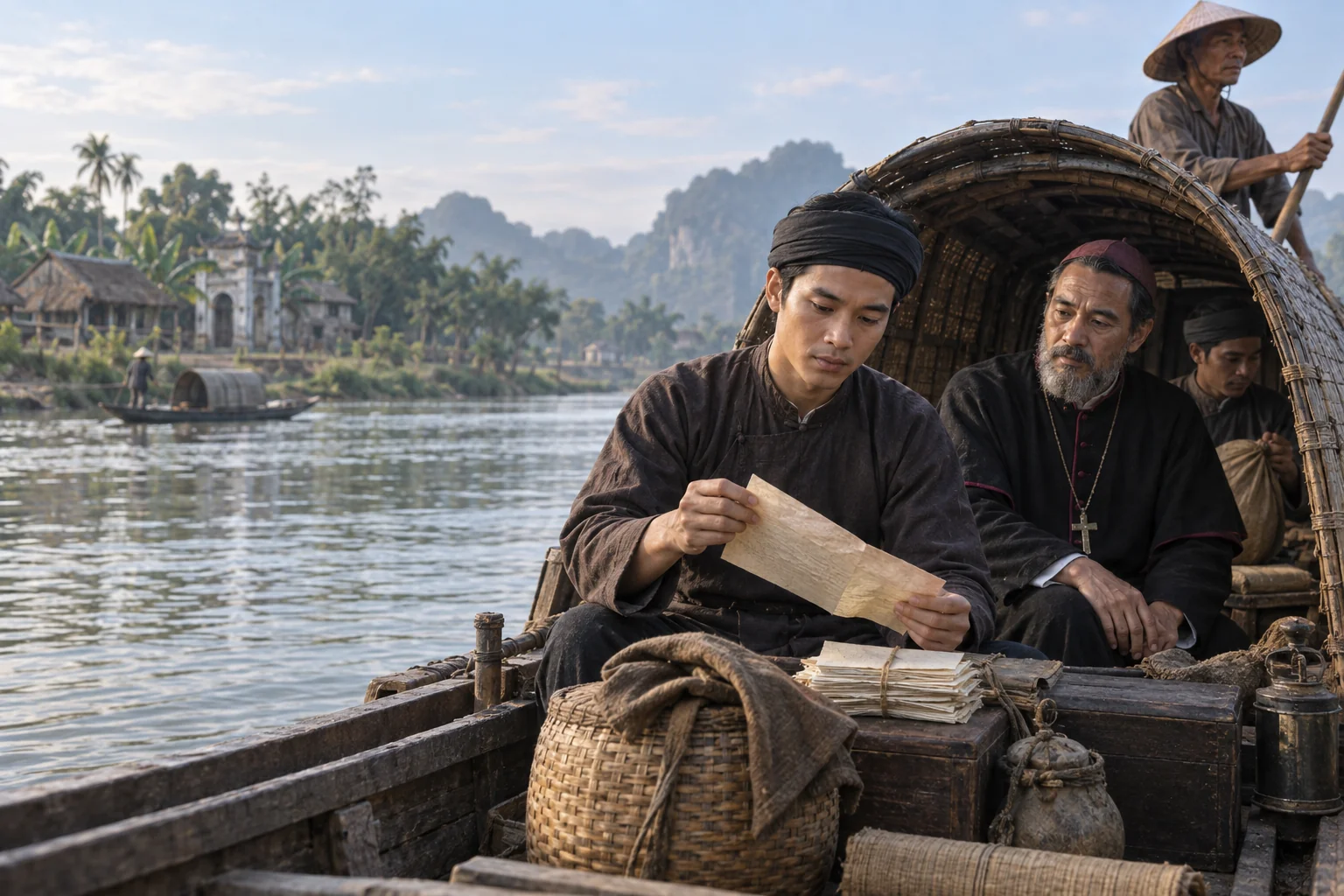
Bishop Hermosilla was constantly on the run from one village to another, sometimes hiding for days on end in small boats on the waterways of Hải Dương. Khang was always at his side like a shadow: paddling him to safety in the dead of night, feeling his way across flooded fields to avoid the guard posts, going out to beg a handful of rice here and there for the bishop, who was by then over sixty.
Between the two men, a foreign bishop who had given half his life to the mission and a young catechist from Thái Bình, grew a bond almost like that of father and son. The bishop saw Khang as a son he could trust with his life, and to Khang the bishop was the dearest spiritual father he had ever known.
Chapter 3 of 5
An arrest on the river and a fateful day
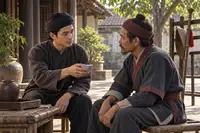
On October 21, 1861, at the height of the manhunt, a local canton chief, whom the records name as Đội Bằng, led soldiers straight to the small boat moored by the riverbank where Bishop Hermosilla and Khang were hiding.
The moment the soldiers rushed in, Khang, with the strength of a man used to the water and to hard work, instinctively grabbed the boat pole to fight his way out for them both. But Bishop Hermosilla stopped him in time. “Don’t fight back, my son,” he said, his voice keeping its familiar calm;
“entrust yourself to God’s holy will.”
Khang let go of the pole. Both men let the soldiers tie them up and take them to the prison of Hải Dương.
It is a small detail that says a great deal about the two men: a young catechist, strong enough and quick enough to fight for his life, laid down his weapon at a single word from the man he revered. Obedience in a moment of life and death weighs far more than obedience in peaceful days.
Chapter 4 of 5
Torn by the lash and a profession of faith in the prison of Hải Dương
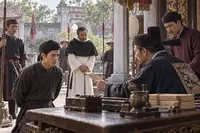
At the court of Hải Dương, the governor, knowing that Khang was Bishop Hermosilla’s closest assistant, used every means to make him reveal where papers and sacred objects were hidden and who the other priests and seminarians still in hiding in the vicariate were.
They stripped him, tied him to a wooden post and had him beaten without mercy, hundreds of rattan strokes on his back. Blood streamed down and his flesh was torn open, but Khang clenched his teeth and endured it, without letting slip a single word that could endanger anyone.
Getting nothing, the judges had soldiers clamp iron pincers onto his calves and wrench them, a torment that made him faint in the middle of the courtroom. But as soon as he came to, still moaning with pain, he declared loudly:
“I am only an assistant who follows and serves my bishop. Everything in the vicariate is known to my bishop alone; I know nothing else... I am a man of the Faith; I am ready to die for God’s religion and to die with my bishop, but I will never betray my brothers.”
Seeing that the lash could not break him, the judges tried to force him to step over the cross laid in the middle of the courtroom, the usual way of making a Christian renounce the faith in public. Though his body was broken by flogging after flogging, Khang fell to his knees, embraced the cross and kissed it fervently.
Powerless against such steadfastness, the judges had him thrown back into prison, in the same cell as Bishop Hermosilla, to await execution. In those last days, in the damp and dark of the cell, Khang went on doing what he had done for years: seeing to every bite and every sip for the frail old bishop and praying with him every night, the two of them encouraging each other to hold fast to the faith to the end.
Chapter 5 of 5
The hour of triumph at the execution ground of Năm Mẫu
On November 1, 1861, the sentence of beheading for Bishop Jerome Hermosilla, together with another Dominican bishop, Bishop Valentine Berrio-Ochoa, and a priest, Father Peter Almató, was carried out at the execution ground of Năm Mẫu. Khang, though imprisoned with them and also sentenced to death, was not executed on the same day as his spiritual father, perhaps because the court’s procedure for a Vietnamese catechist with no clerical rank took longer.
For more than a month afterward Khang stayed in prison alone, without the bishop. It was perhaps the hardest part of his whole ordeal: the spiritual father he had followed like a shadow was no longer there to pray with him and share a bowl of rice each evening.
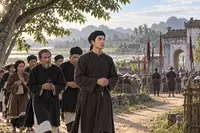
On December 6, 1861, his turn came. Khang was led out to the same execution ground of Năm Mẫu where Bishop Hermosilla had fallen more than a month before. He knelt on the straw, his hands joined at his chest and his eyes raised to heaven in a last prayer. After three strokes of the gong, the executioner’s sword came down. The twenty-nine-year-old catechist ended his life of quiet service on the very ground where his spiritual father had shed his blood before him.
Catholics bravely took his body home for an honorable burial in his native village of Trà Vi. On May 20, 1906, Pope Pius X beatified him. And on June 19, 1988, Pope John Paul II canonized Joseph Nguyễn Duy Khang, together with one hundred sixteen other Vietnamese Martyrs, in Rome. The Church celebrates him on December 6 each year, together with thirty-eight other saints of the great Dominican family of Vietnam.
Among the one hundred seventeen martyrs canonized in 1988 there were bishops and priests — leaders on whom a whole vicariate relied. But there were also people like Khang, never ordained, never standing at the altar to offer Mass, whose whole life was one quiet task: to follow, to serve and to protect the one entrusted to him. His story reminds us that in a community of faith, it is not only those in the highest positions who matter. Sometimes it is those who quietly row a boat through the night, beg rice a handful at a time, and stand between danger and the one they serve who carry the heaviest share of the whole community’s load.
The end of the story
You have walked with Saint Joseph Nguyễn Duy Khang to the end of the story.
A few moments in the catechist’s life move you:
When the soldiers rushed in, he instinctively grabbed the pole to fight back, but Bishop Hermosilla stopped him, and he let go and let himself be tied up.
Though cruelly tortured to reveal where the other priests were hiding, he only declared: "I am a man of the Faith; I am ready to die for God’s religion and to die with my bishop, but I will never betray my brothers."
More than a month after the bishop had been executed, when his own turn came, he simply said: "My father has gone on ahead; now please cut off my head, so that I may quickly follow in his footsteps to God."
Stay in silence
You understand what a life of quiet service means: it is not only those in the highest positions who matter. The one who quietly rows through the night and stands between danger and the one he serves may carry the heaviest share of the whole community’s load.
My father has gone on ahead; now please cut off my head, so that I may quickly follow in his footsteps to God.
Let us pray
Saint Joseph Nguyễn Duy Khang,
you were a quiet catechist who rowed through the night, standing between danger and your bishop. Under torture you still did not betray your brothers.
Pray for those who serve quietly in the parish: catechists and teachers of the faith, people whose names no one remembers.
Teach me to be faithful to those God has placed beside me, and never to betray my brothers and sisters.
Amen.
Light a candle for Saint Joseph Nguyễn Duy Khang
Sources
- Feast dayAuthor’s edited profile
- Often depicted withPatronages and symbols, version 1.1
- Reflectiondongnudaminhthaibinh.net
- Reflectionnguoitinhuu.org
Meet the next one
 Journey 8