

Journey 1 · Those Who Met the Lord
Saint Stephen
Forgiveness outside the city gate
Feast day December 26
Tap to step inside
Saint Stephen
Forgiveness outside the city gate
Map of a life
This life told in 6 chapters
Begin the journey OpeningOpening1 min
 Chapter 1 of 6A crack in the first community1 min
 Chapter 2 of 6Bread shared, and the word of God proclaimed1 min
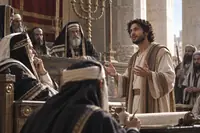 Chapter 3 of 6The history of salvation told before a court1 min
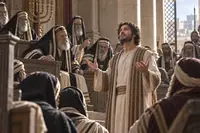 Chapter 4 of 6Heaven opened, and a hail of stones1 min
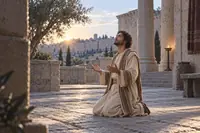 Chapter 5 of 6Two prayers among the stones1 min
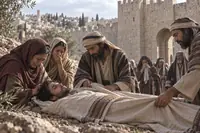 Chapter 6 of 6Mourning, and the Gospel spreading out1 min
Feast day
Saint Stephen
Some places may celebrate on a slightly different day.
December 26
Patron of
- Deacons
- Stonemasons
Often depicted with
- Stones
- The martyr’s palm branch
- A deacon’s vestment
Opening
Opening
As the stones whistled through the air and rained down on him, Stephen looked up to heaven and asked the Lord Jesus to receive his spirit. Then, with the last of his strength, he sank to his knees and cried out in a loud voice, praying for the very men who were stoning him to death:
“Lord, do not hold this sin against them!”
The first person in the Church to bear witness with his blood followed his Master’s road to the end with just two short prayers: one placing his life completely in the Lord’s hands, the other refusing to let those who harmed him be shut out from mercy.
And yet, long before that terrible hour outside the city gate, Stephen began his service with a very ordinary task: seeing to the daily meals of the poor widows of the community, so that no one was overlooked. His road to martyrdom began in a young Church learning to share its bread and clothing fairly and kindly.
Chapter 1 of 6
A crack in the first community
After Pentecost, the number of believers in Jerusalem grew at a dizzying pace. The faithful shared one faith in the risen Lord, but that did not mean every difference and everyday friction miraculously disappeared.
There were then two groups in the community: Greek-speaking Jews, most of whom had come back from Jewish communities abroad, and local Hebrew-speaking Jews. The Greek speakers began to complain that the poor widows in their group were being overlooked in the daily distribution of food, while the other group was favored.
The young community at once faced a very practical question of fairness. Those who were alone and helpless, with the least voice, were easily forgotten in the very place where everyone called one another brother and sister: a paradox any community knows, even today.
The Twelve Apostles called the whole community together. Since they could not neglect prayer and the preaching of God’s word to wait on tables, they proposed that the community choose seven men of good reputation, full of the Spirit and wisdom, to be entrusted with this work of service. The whole community agreed. The seven chosen were brought before the Apostles, who laid hands on them and prayed.
Stephen’s name headed the list of the seven: a man full of faith and of the Holy Spirit. The Church has always seen in the Seven the beginnings of the ministry of deacons.
Scripture does not record Stephen’s birth, age or hometown. His name is Greek and means “crown”, a name from the same language as those who had complained, and one that takes on deeper meaning in light of the crown of martyrdom he would soon receive. He appears first not as a preacher, but as someone his brothers trusted to care for the weakest members of the community.
Chapter 2 of 6
Bread shared, and the word of God proclaimed
Looking after material needs did not shut Stephen up in small practical tasks. Acts tells us he was full of grace and power, working great wonders and signs among the people, while still arguing passionately in defense of the faith whenever he had the chance.
Some members of the “Synagogue of the Freedmen” (descendants of Jews once enslaved and later freed), together with Jews of the diaspora from Cyrene, Alexandria, Cilicia and distant Asia Minor, stood up to argue fiercely with him. These must have been people used to living between two cultures, used to sharp debate in fluent Greek. Yet they could not stand against the wisdom and the Spirit with which he spoke.
Beaten in argument, they secretly put men up to accusing him falsely of blasphemy against Moses and God, against the Temple and the Law. They stirred up the crowd, seized Stephen and dragged him before the Sanhedrin, the highest religious council of the Jewish people at that time.
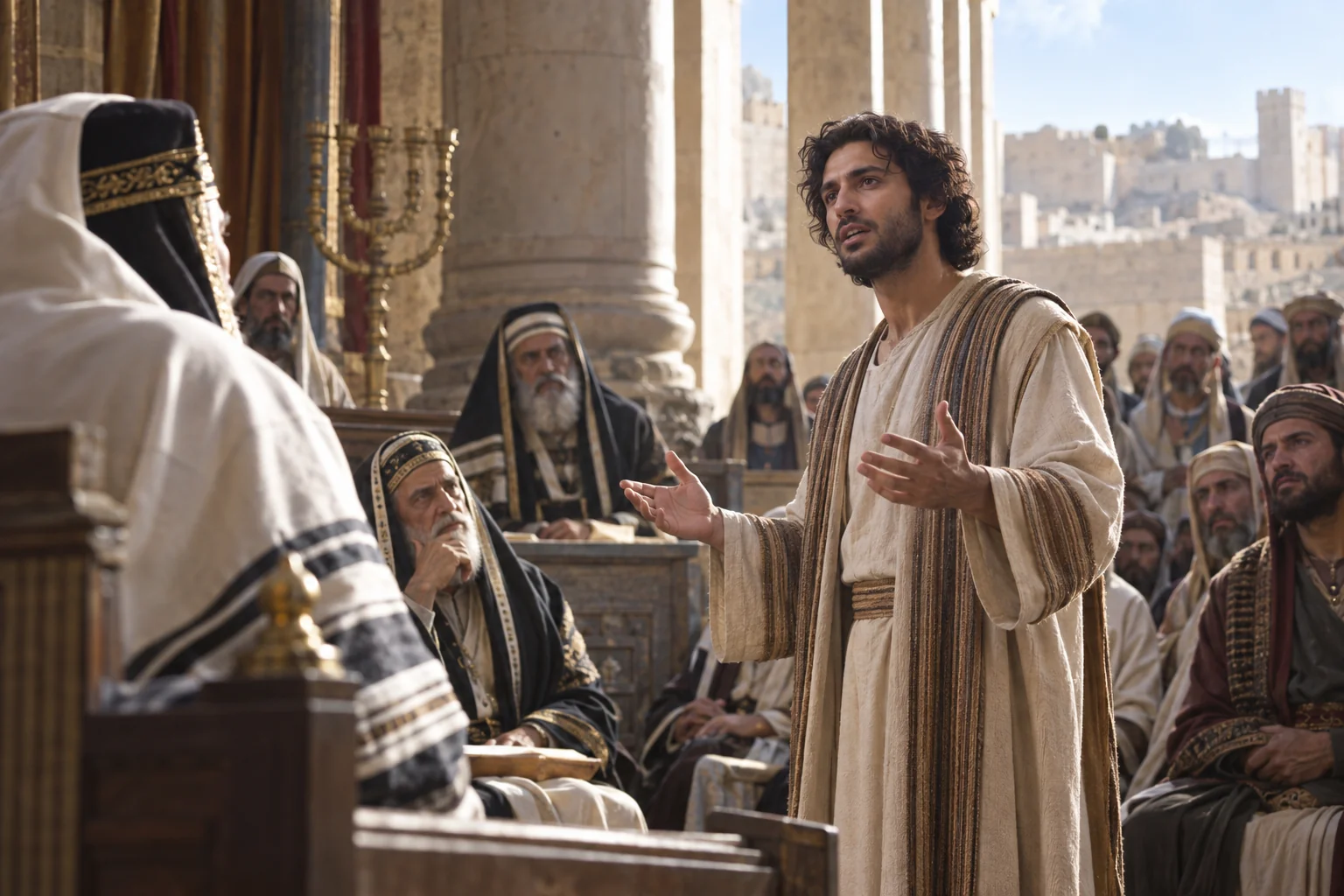
False witnesses stood up and accused him of saying that Jesus of Nazareth would destroy this holy place and change the customs Moses had handed down. Stephen stood surrounded by hostile eyes, and everyone in the court, looking intently at him, saw that his face shone like the face of an angel.
That image speaks of deep peace, of a soul wholly united to the Lord in the fiercest storm. It does not make the false accusations any less dangerous: the man who day after day had seen to fairness for the poor now faced the most outrageous injustice of his life.
Chapter 3 of 6
The history of salvation told before a court
When the high priest asked:
“Are these accusations true?”
, Stephen did not argue or try to defend himself first. He calmly began to speak, retelling the whole history of his ancestors’ faith, from the days when the patriarch Abraham still lived in distant Mesopotamia.
He recalled how Joseph was hated by his own brothers and sold into Egypt, but God was with him and used that very misfortune to save the whole family from famine. He told of Moses, rejected and driven away by his own people, then sent back by God to free them from slavery; and of how that people had so often stubbornly turned their backs on God, even after receiving the most precious words of life.
Stephen’s long speech was not a history lesson to fill time. It was a forceful answer: God has never let Himself be confined within the four walls of a Temple built by human hands. He has always walked with His people, even in exile, and history shows that His truest messengers were always the first to be rejected by those who claimed to be most devout.
Finally, filled with the Spirit, he bluntly exposed the hypocrisy of the very men sitting in judgment on him: they were always resisting the Holy Spirit, just as their ancestors had persecuted the prophets, and they had betrayed the Righteous One. That stinging rebuke belongs to a very tense debate within the Jewish world of that time, and must never be twisted into a condemnation of the Jewish people for all time; Stephen himself and his whole community were Jews.
Chapter 4 of 6
Heaven opened, and a hail of stones
Hearing those words, the judges were enraged and ground their teeth at him. But Stephen, filled with the Holy Spirit, gazed up to heaven. He saw the glory of God, and Jesus standing at the right hand of God.
He cried out in the middle of the seething court:
“Look, I see heaven opened, and the Son of Man standing at the right hand of God!”
The man who had just retold the history of salvation now bore witness to One who was alive and reigning. The One they had condemned to death and crucified naked on Calvary was now in the glory of God, and at those words their fury could no longer be held back.
They shouted aloud, covered their ears as if they could not bear another word, and rushed at him together, dragging him outside the walls of Jerusalem to stone him, for the Law required executions to take place outside the holy city. The witnesses took off their cloaks to throw more freely and laid them at the feet of a young man named Saul. That young man stood there approving the killing of a righteous man, not knowing that before long he himself would carry the name of the One Stephen had just proclaimed.
Scripture does not give the exact date of this event, only that it happened in the 30s of the first century, before Saul was struck down on the road to Damascus. Saul did not throw a stone himself, but his approval and his guarding of the cloaks became a painful memory that Paul the Apostle never forgot, and never once tried to hide in his letters.
Chapter 5 of 6
Two prayers among the stones
As the stones pounded his body, Stephen spoke the first prayer:
“Lord Jesus, receive my spirit!”
He gave his life to the very One he had just seen reigning in glory, without hesitation or fear.
Then he sank to his knees and spoke the second prayer, which has moved every generation since:
“Lord, do not hold this sin against them!”
And having said this, he fell asleep.
Those two prayers echo the trust and forgiveness of Jesus Himself on the Cross. The disciple became like his Master in the very way he faced human violence and cruelty. Stephen’s forgiveness does not make the killing right, nor does it erase the responsibility of those throwing the stones.
But it shows one thing: Stephen firmly refused to let the poison of hatred take over his soul, even in the moment of greatest pain. In those last moments, his body torn and defenseless, he still kept the most sacred freedom no one could take from him: the freedom to bless, to forgive.
Chapter 6 of 6
Mourning, and the Gospel spreading out
Devout men came to take Stephen’s body for burial and mourned him bitterly. Scripture records those tears and does not hurry past them. The Church does not ask us to be indifferent, or to treat the death of a loved one lightly just because they died for the Lord. The pain of loss is always a real wound, and it needs its tears.
Right after Stephen’s death, a fierce persecution broke out across Jerusalem. The believers had to scatter throughout Judea and Samaria to escape, leaving behind homes and fields. And yet the very people scattered by that storm carried the seed of the Gospel with them and sowed it wherever they went. Out of sorrow, the death of the first martyr became fertile ground that bore fruit he could never have foreseen as he fell.
The Church celebrates Saint Stephen on December 26, right after Christmas. The first martyr is placed beside the manger of Bethlehem in the liturgical calendar as a reminder that the joy of the Son of God coming into the world is not a soothing lullaby, but a love that dares to go with us into the darkest and most painful places of earthly life.
For Vietnamese Catholics, Saint Stephen holds together two things that should never be separated: serving at the Lord’s altar, and caring for the bowl of rice of the poor right beside us.
Above all, his prayer of forgiveness is still healing medicine for the festering wounds of family and parish life today: when we are misunderstood, falsely accused or badly treated, may we have a little of Stephen’s courage, not to repay wrong with wrong, but to use gentleness and a sincere prayer to heal ourselves, and even those who have hurt us.
The end of the story
You have walked with Saint Stephen to the end of the story.
Some things you will hardly forget:
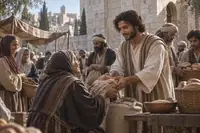
Entrusted with sharing food among the poor widows, he did it so well that the whole community chose him to lead.
Before a court full of hatred, his face shone like the face of an angel.
Amid the hail of stones, he still knelt and prayed for the very people killing him: "Lord, do not hold this sin against them!"
Stay in silence
And you realize that the man who day after day saw to fairness for others met, at the end of his life, the greatest injustice of all, and still chose to forgive.
Forgiveness does not erase what happened, but it keeps our heart from being taken over by the poison of hatred.
Let us pray
Saint Stephen,
you began by sharing food with poor widows, and ended by praying for the very people stoning you: "Lord, do not hold this sin against them!"
Teach me to forgive, especially those who have hurt me most.
Help me serve the poor fairly, leaving no one out. And when I am treated unjustly, may my face keep its peace, as yours did before the court.
Amen.
Sources
- Feast dayAuthor’s edited profile
- Patron ofPatronages and symbols, version 1.1
- Often depicted withPatronages and symbols, version 1.1
- Reflectionvatican.va
- Reflectiongutenberg.org
Meet the next one
 Journey 1