

Journey 3 · Young Lives Freely Given
Saint Stanislaus Kostka
Footsteps nothing could stop
Feast day November 13
Tap to step inside
Saint Stanislaus Kostka
Footsteps nothing could stop
Map of a life
This life told in 5 chapters
Begin the journey
Feast day
Saint Stanislaus Kostka
Some places may celebrate on a slightly different day.
November 13
Patron of
- Poland
- Catholic youth
- Novices
Often depicted with
- Holding the Child Jesus
- A lily
- An angel bringing Holy Communion
Opening
Opening
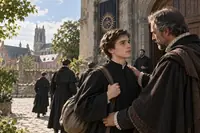
Early one morning in the autumn of 1567, the gate of a boarding house in Vienna opened, and a seventeen-year-old quietly slipped out. He took off his fine clothes, put on a beggar’s coarse, threadbare garment, took a staff in his hand and began to walk.
Behind him lay the illustrious Kostka family of the Kingdom of Poland, the fury of his powerful father, and his own brother’s fists. Ahead of him lay a journey of more than fifteen hundred kilometers across the snow-covered Alps, on foot, to the city of Rome.
That young man was named Stanislaus Kostka. He had only one goal: to enter the Society of Jesus and belong entirely to Jesus.
His life was as brief as a shooting star: less than eighteen years on earth. Yet his burning love and stubborn determination still speak to young people, generation after generation.
Chapter 1 of 5
A childhood at Rostkowo Castle
Stanislaus Kostka was born on October 28, 1550, at Rostkowo Castle in northern Poland, near the town of Przasnysz. His father, Jan Kostka, was a powerful senator; his mother, Małgorzata Kryska, was a devout noblewoman. The Kostka family was among the wealthiest and most distinguished of the high nobility of that time.
Stanislaus grew up in luxury, but from childhood he showed a pure soul, had no taste for showy luxury, and loved to pray. Whenever he heard coarse talk or lewd stories at court banquets, the boy would blush and lower his head, or faint from distress.
In 1564, at fourteen, Stanislaus and his older brother Paul were sent by their father to Vienna, the capital of Austria, to study at the renowned college run by the Jesuits.
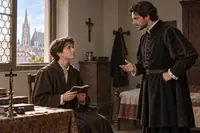
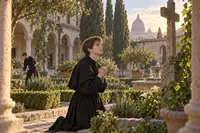
In Vienna, the two brothers and their tutor lodged in the house of a Protestant nobleman. There the deep difference between the two brothers came out: Paul threw himself into the lavish partying of the young nobility, while Stanislaus devoted all his time to study, penance and prayer. He went to Mass every day, went to confession and Communion often, and night after night knelt in prayer by his bed until dawn.
Chapter 2 of 5
Beatings, and a wondrous healing
Stanislaus’s holy way of life became a thorn in the side of his brother Paul. Paul felt it was a silent accusation against his own self-indulgence, and claimed Stanislaus was disgracing the noble name of the Kostka family.
Paul and the tutor began mocking him, insulting him viciously and beating him again and again. Yet Stanislaus bore it all gently, without a word of complaint, only quietly praying for his own brother.
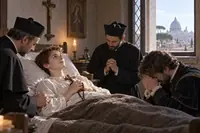
In December 1565, after months of mistreatment and excessive penance, Stanislaus fell deathly ill. His condition was so grave that the doctors shook their heads. Because the owner of the house was a Protestant who firmly refused to let a priest bring the Body of the Lord into his home, Stanislaus faced death without being able to receive Viaticum.
Near death, the young man earnestly prayed to Saint Barbara — patron of those who long to receive Communion at the hour of death. And Saint Barbara appeared in the sickroom, radiant, with two angels, and gave him the Body of the Lord.
Right afterwards, Our Lady appeared holding the Child Jesus, placed the Child in Stanislaus’s arms and said gently:
“My son, join the Society of my Son!”
After that vision, Stanislaus recovered completely, to everyone’s astonishment.
Chapter 3 of 5
A walk of a thousand kilometers
Sure now of God’s call, Stanislaus went to the Jesuit Provincial of Austria to ask to enter the Society. But fearing that his father Jan Kostka’s great political power would bring trouble and persecution on the order, the Provincial did not dare accept him.
Undaunted, Stanislaus decided to look farther afield. On August 10, 1567, while his brother Paul was still asleep after a night of partying, Stanislaus put on beggar’s clothes and quietly left Vienna. He walked for hundreds of kilometers through the forests of Germany to the city of Augsburg to see Saint Peter Canisius — the Jesuit Provincial of Upper Germany.
When Paul woke up and discovered his brother had run away, he immediately set off after him on horseback. At one point Paul rode right past Stanislaus on the road, but because he was dressed in a beggar’s rags, his brother did not recognize him.
In Germany, Saint Peter Canisius recognized the young Pole’s extraordinary vocation. To put him beyond his family’s reach, he wrote a letter of recommendation and sent Stanislaus on foot to Rome with two other Jesuits to see the Superior General.
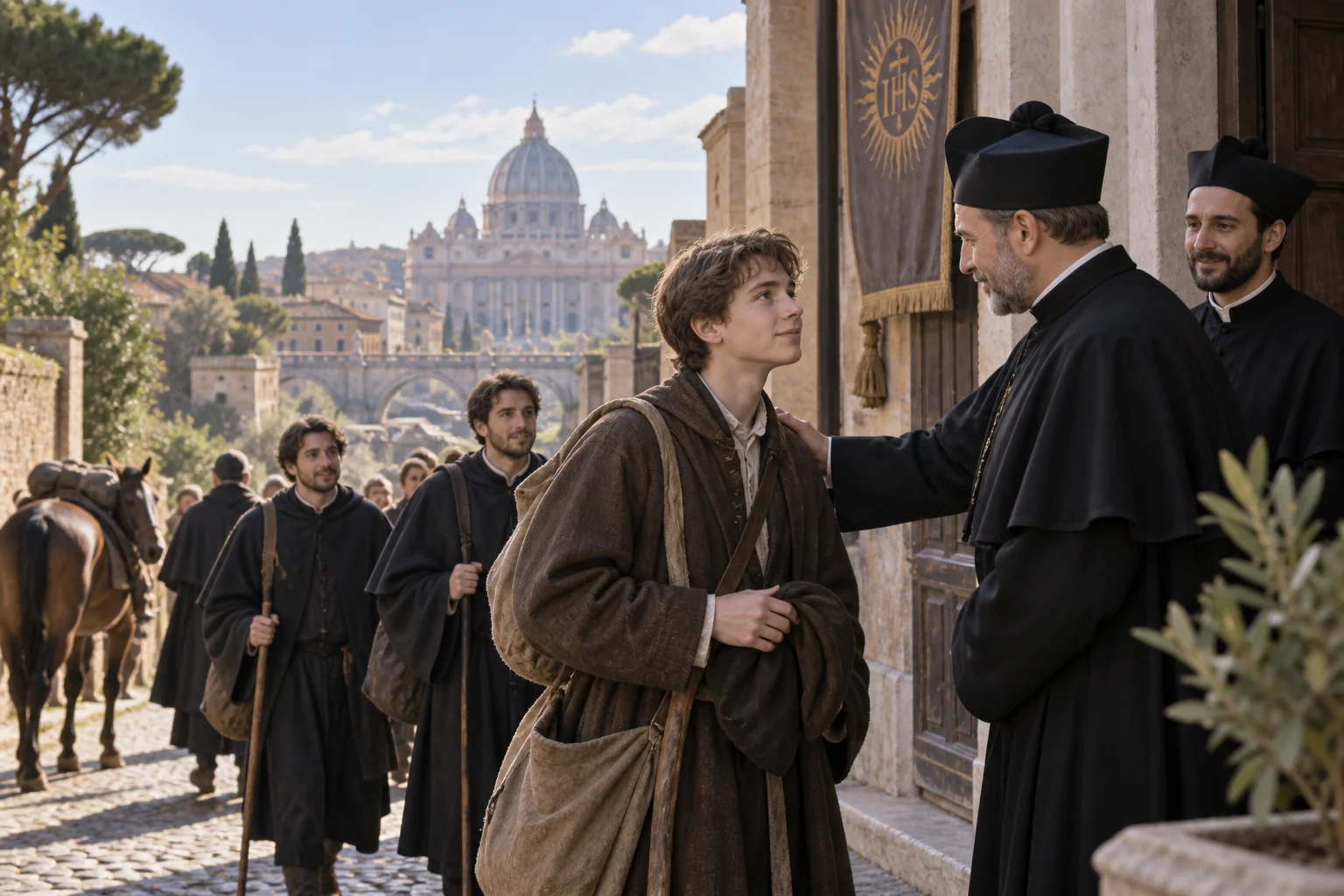
The journey from Augsburg to Rome was a feat of sheer will: the seventeen-year-old nobleman walked on bleeding feet, crossed the freezing, snow-covered Alps, and begged for crusts of dry bread to survive.
On October 25, 1567, after more than two months of walking over fifteen hundred kilometers, Stanislaus set foot in Rome and fell at the feet of Saint Francis Borgia — the Superior General of the Jesuits. Three days later, on his seventeenth birthday, he formally entered the Jesuit novitiate of Sant’Andrea al Quirinale in Rome — the same novitiate where, eighteen years later, another young nobleman named Aloysius Gonzaga would come to give his life to God.
Chapter 4 of 5
Ten radiant months in the novitiate
When his father, Jan Kostka, heard that his son had entered the order in Rome, he wrote a furious letter full of threats: he would bring in troops to raze the house, drag his son back to Poland in chains, and throw him in a dungeon until he died.
Stanislaus wrote back, respectful as a son yet utterly firm:
“Father, I have always honored and loved you more than anyone on earth. But I must obey God, my Father in heaven, first of all. I have followed His call, and I will never turn back!”
The ten months he spent in the novitiate of Sant’Andrea in Rome were ten months lived entirely in the fire of God’s love. The young nobleman gladly took on the lowliest jobs: washing dishes in the kitchen, cleaning the toilets, waiting on tables for his brothers.
His love for Jesus in the Eucharist and for Mary burned so fiercely that whenever he prayed, his chest seemed to be on fire, and people often had to lay wet cloths on his chest to cool the heat of that holy love.
Chapter 5 of 5
A shooting star returns to heaven
At the beginning of August 1568, Stanislaus sensed that his day to go home to God was near. He wrote a short letter to Our Lady, asking her to take him to heaven on the very feast of her Assumption, August 15. He always kept that letter over his heart.
On August 10, after a day of serving the sick, he came down with a high fever. The doctors thought it was just an ordinary summer fever, but Stanislaus smiled and said he would never recover.
On the night of August 14 into the morning of August 15, 1568, his body was spent. He fervently received the last sacraments, holding his crucifix and rosary tight. Around three in the morning, his face suddenly lit up. He opened his eyes, looked around and whispered to the fathers that Our Lady and the holy virgins were coming to take him home.
Having said those words, Stanislaus Kostka died peacefully with a smile on his face, not yet eighteen. In the very room where he died at Sant’Andrea, a polychrome marble statue showing him on his deathbed, by the sculptor Pierre Le Gros, was later placed, and a bronze urn inlaid with precious lapis lazuli was made in 1716 to hold his relics — a place of pilgrimage that visitors to Rome can still see today, right beside the chapel that also welcomed Saint Aloysius Gonzaga.
After his brother’s death, Paul was a changed man. He wept in repentance for the rest of his life, gave up his sinful ways and became an eager witness to the holiness of the younger brother he had once abused.
Pope Benedict XIII solemnly canonized Stanislaus Kostka on December 31, 1726, on the same day as Saint Aloysius Gonzaga. The Church celebrates him on November 13 each year; the Jesuits keep August 15. He was made patron of Poland and of Catholic youth.
Saint Stanislaus Kostka left us a motto to live by:
“I was born for greater things!”
He reminds young people today not to let laziness, selfish pleasure-seeking or worldly pressure tie down their feet. They can find the courage to get up, leave mediocre habits behind and pursue the beautiful ideals of the Gospel, because a young soul is made to reach for God Himself.
The end of the story
You have walked with Saint Stanislaus Kostka to the end of the story.
Some footsteps you will hardly forget:
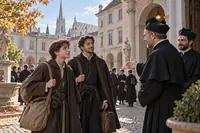
Beaten by his brother for his devout way of life, he only quietly prayed for that same brother.
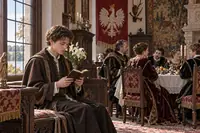
Dressed as a beggar, he walked more than fifteen hundred kilometers to enter the Society of Jesus.
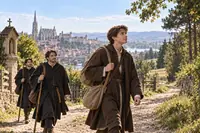
Writing to his father amid thunderous threats: "I must obey God, my Father in heaven, first of all."
Stay in silence
You can see: no wall of power is high enough to stop a heart that has decided to belong wholly to God.
I was born for greater things — every young person has the right to believe that about themselves.
Let us pray
Saint Stanislaus,
beaten by your brother for living your faith, you still prayed for him. Then you walked more than fifteen hundred kilometers to enter religious life.
Pray for young people who want to follow God but meet opposition at home. Give them courage, and help them keep their love for their families.
Help me pray for those who make me suffer, as you did.
Amen.
Sources
- Feast dayAuthor’s edited profile
- Patron ofPatronages and symbols, version 1.1
- Often depicted withPatronages and symbols, version 1.1
- Reflectionjesuits.global
- Reflectionordo.jesuitssouthern.africa
Meet the next one
 Journey 3