

Journey 1 · Those Who Met the Lord
Saint Philip the Apostle
Show us the Father
Feast day May 3
Tap to step inside
Saint Philip the Apostle
Show us the Father
Map of a life
This life told in 5 chapters
Begin the journey OpeningOpening1 min
 Chapter 1 of 5An invitation from the fishing village of Bethsaida1 min
 Chapter 2 of 5The arithmetic of a practical man2 min
 Chapter 3 of 5A door opened for those from far away1 min
 Chapter 4 of 5The face that was right beside him2 min
 Chapter 5 of 5Telling two men apart, and the years of tradition2 min
Feast day
Saint Philip the Apostle
Some places may celebrate on a slightly different day.
May 3
Patron of
- Uruguay (together with Saint James the Less)
Often depicted with
- A tall cross
- A basket of bread (the multiplication of the loaves)
Opening
Opening
At the Last Supper, with the shadow of the Cross already at the door, one disciple came close to the Master and said something that sounded like a child asking his father for something simple:
“Lord, show us the Father, and that will be enough for us.”
That man was Philip. He had followed the Master for years, had eaten with him and slept under the open sky, had seen countless miracles with his own eyes. And yet in their very last hours together, he still needed the Master to patiently show him what he should have recognized long before: the One sitting right in front of him was the living face of the Father.
Some questions seem so naive they are embarrassing, and yet they turn out to be the door to one of the deepest truths in the whole Gospel.
Chapter 1 of 5
An invitation from the fishing village of Bethsaida
Philip came from the fishing village of Bethsaida in Galilee — the same home as the brothers Andrew and Peter, a small village where the Jordan flows into the lake, where perhaps the three had grown up together as boys, playing on the fishing pier before becoming three of the Twelve Apostles. The name Philip is Greek, meaning “lover of horses,” and rather unusual for a Jewish family, perhaps reflecting that his birthplace was a crossroads of cultures, not far from the busy Greek-speaking cities of the region. Scripture tells us nothing more about his parents, his exact trade, or his age at the time.
In the first days of Jesus’ public life, he sought Philip out and said just two words:
“Follow me.”
No long explanation, no miracle to convince him. Philip followed at once, simply, as though he had been waiting for those words for a very long time.
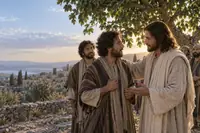
Right after meeting the Master, the first thing he did was run to find his close friend Nathanael, bursting with the news:
“We have found the one Moses wrote about in the Law, and the prophets too: Jesus, son of Joseph, from Nazareth!”
Hearing the name Nazareth — a poor, out-of-the-way village with no particular reputation in all of Galilee — Nathanael scoffed, making no attempt to hide his prejudice:
“Can anything good come from Nazareth?”
Faced with that blunt doubt, Philip did not lose his temper, nor did he try to drag his friend into a long argument to prove himself right. He only smiled and offered a surprisingly simple invitation:
“Come and see.”
That invitation did not force anyone to believe before understanding. It simply gave his friend the chance to step forward himself, see with his own eyes, and meet with his own heart. Philip knew the limits of what he could do: he could bring his friend to the door, but the rest, persuading him and touching the depths of his heart, he had to leave to Jesus himself.
Chapter 2 of 5
The arithmetic of a practical man
In the list of the Twelve Apostles, Philip’s name appears regularly, but the most vivid sketches of his character come from Saint John’s Gospel, which seems to pay special attention to the small details of the disciples’ lives.
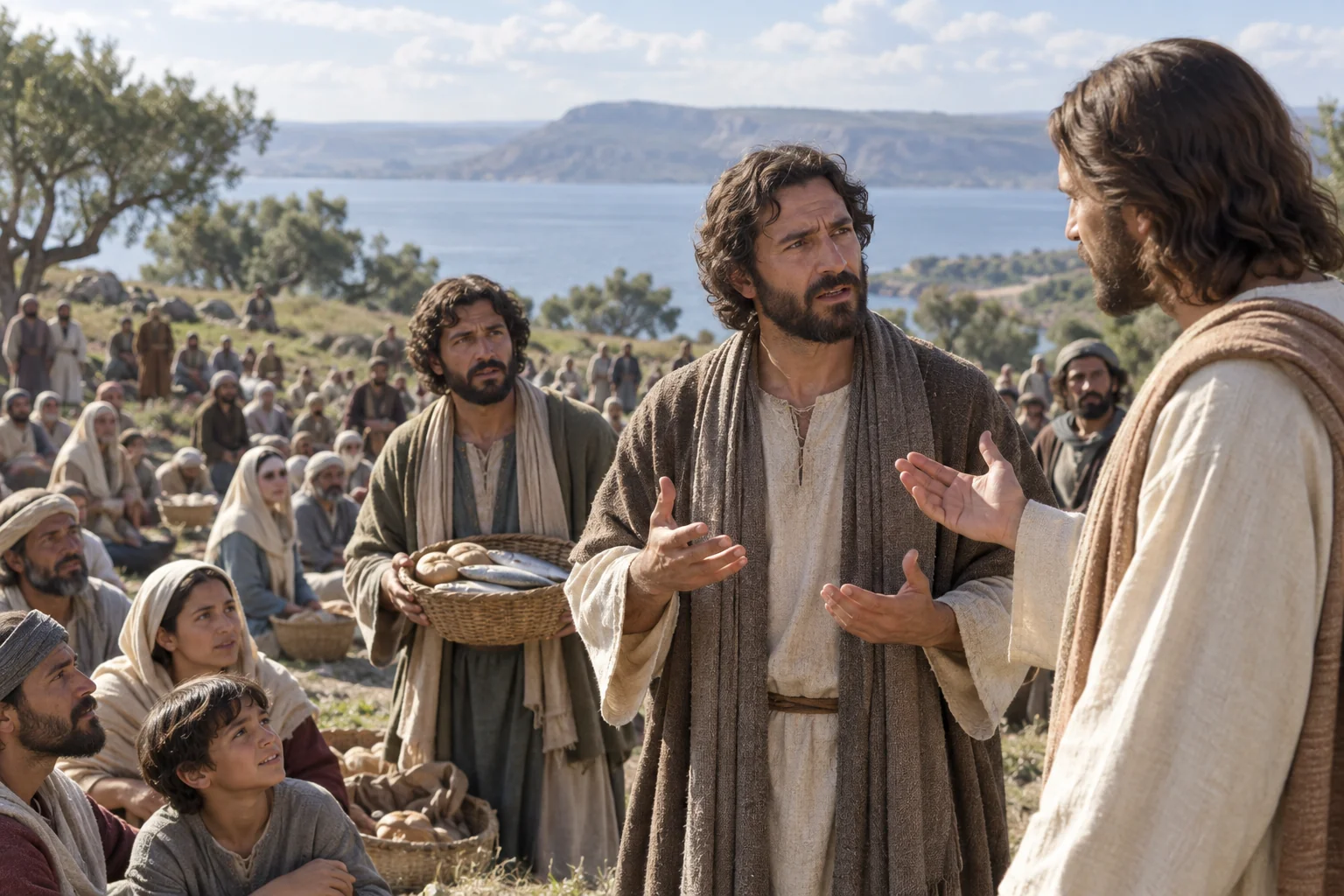
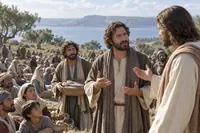
One afternoon, looking at the exhausted crowd of thousands who had followed him up a deserted hillside near the Sea of Galilee, Jesus turned to Philip and tested him with a question:
“Where are we to buy bread for all these people to eat?”
A very practical man, not given to daydreaming, Philip immediately looked over the crowd, did the sums, and answered at once:
“Two hundred denarii worth of bread would not be enough for each of them to have a little.”
Two hundred denarii — nearly a year’s wages for an ordinary laborer at the time — and yet he could see it would hardly make a dent. He saw how many people there were, saw clearly the limits of the money, and honestly admitted that the problem was far beyond human means.
Then Jesus took the five barley loaves and two small fish that Andrew had found with a boy in the crowd, looked up and gave thanks to the Father, and broke them; the bread kept multiplying until a whole sea of people had eaten their fill. Philip must have stood there speechless, watching something far beyond any sum he had just done.
Jesus did not fault his careful sums at all. Any shared work of service needs practical people who know that money, means and human strength all have their limits. But through that very event, Philip learned a much deeper lesson: when we have done all we can and entrust the rest to God, God’s grace can open ways out that no earthly calculation could ever foresee.
Perhaps, in that moment of stunned silence, Philip had to look again at the answer he had just blurted out. He was not wrong to calculate — two hundred denarii really was not enough. What he lacked was not the ability to calculate, but the ability to imagine something beyond every calculation. A disciple, it turns out, does not have to give up being practical in order to have faith. One can be both good with numbers and someone who knows where to stop calculating and make room for a greater power.
Chapter 3 of 5
A door opened for those from far away
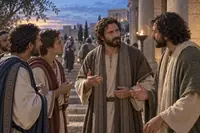
At Jesus’ last Passover in Jerusalem, some Greeks came from far away for the feast — perhaps devout foreigners familiar with Jewish culture but not Jews by birth. Since Philip’s name sounded familiar, a name from their own world, they came to him and said: “Sir, we wish to see Jesus.”
Philip did not decide on his own, even about something that seemed so simple. He went to find Andrew to talk it over, and only then did the two of them go together to tell the Master. That way of acting shows a man who knew how to listen, who did not brush aside the wishes of strangers, but respectfully acted as a bridge bringing them closer to the One they were seeking.
Jesus received the message, then spoke one of the deepest teachings of the whole Gospel: the image of the grain of wheat sown in the earth, which must die to bear many new ears of grain. The visitors from afar who came looking for him were, without knowing it, standing on the threshold of a mystery that would cross every boundary of nation, color and language. Philip probably did not yet grasp all that this hour meant, but his simple kindness quietly helped open the way for those strangers to enter into salvation.
Chapter 4 of 5
The face that was right beside him
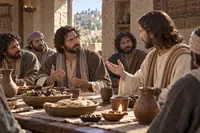
Then at the Last Supper, hearing his Master speak of going away, Philip could not hold back and blurted out: “Lord, show us the Father, and that will be enough for us.”
Jesus looked at him, surprised and tender at once:
“Have I been with you all this time, and still you do not know me, Philip? Whoever has seen me has seen the Father.”
That answer must have taken Philip back over every stretch of road they had traveled: his Master’s hand gently touching the sores of a leper no one dared go near; his Master’s eyes looking with pity on the hungry crowd in the wilderness; his Master’s heart opening wide to welcome even those driven out and rejected by society; and now, right before his eyes, a love ready to stoop down and wash the disciples’ feet, ready to give its whole life on the Cross. God the Father, invisible, whose power seemed distant and unfathomable, had in fact revealed Himself completely in every gesture and every concrete act of love of the Son who had been sitting right in front of him all along.
Sometimes we keep looking for dazzling signs far away, forgetting that God is patiently showing His love through the simple, familiar things happening every day right before our eyes. Philip was not scolded or pushed aside for his somewhat naive question. On the contrary, his very sincerity became the occasion for Jesus to speak a truth that would echo for generations to come.
This is worth pausing over: Philip had been with the Master from the very first days, had heard countless sermons, had witnessed so many obvious miracles. And yet on the very last night, he was still asking a question as if he had just met the Master for the first time. That does not show he was slower than the others. It shows a much simpler truth: recognizing God in Jesus is not a single flash of light, over and done with, but a journey we have to walk again and again, each time deeper, right up to the last moment of a life spent following the Master.
After the Ascension, the Acts of the Apostles still records his name among the community at prayer in the upper room in Jerusalem. That is the last certain trace of him left in the New Testament.
Chapter 5 of 5
Telling two men apart, and the years of tradition
In the same Acts of the Apostles, there is another figure also named Philip, one of the Seven chosen to serve at the community’s tables — the one who went down to preach in Samaria, baptized the Ethiopian court official reading the prophet Isaiah in his chariot, and later had four daughters with the gift of prophecy. He was a deacon, quite different from Philip of the Twelve Apostles we are speaking of. Two men with the same name, both devoted to serving the Gospel, but with two entirely separate callings, and scholars have since taken care to tell them apart.
Ancient Christian tradition links the Apostle Philip’s final missionary work to the region of Phrygia, in Asia Minor, and his martyrdom to the city of Hierapolis — a flourishing Roman city famous for its hot springs and the stunning white limestone terraces known today as Pamukkale. In 2011, after many years of searching, archaeologists discovered there a massive octagonal building built in his honor — a martyrium whose design resembles the Church of the Nativity in Bethlehem or Peter’s house in Capernaum — along with a tomb believed to be his. The stories of exactly how he was martyred — some say crucified upside down, others hung on a pillar — vary over time, and are sometimes mixed up with the story of the deacon of the same name. So we should treat these traditions with due historical caution rather than as a fixed and certain record.
The Church celebrates Saint Philip the Apostle on May 3 each year, together with Saint James the Less.
For believers named Philip, or for anyone whose work is introducing the faith to others, he leaves a beautiful, practical example: be patient in listening to people’s questions, even questions full of doubt and prejudice; never make someone searching feel ashamed of what they do not know; and gently lead them to meet the Lord, instead of arguing to win. That simple invitation, “come and see,” can still be spoken today through the kindness and sincerity of the way we live.
The end of the story
You have walked with Saint Philip the Apostle to the end of the story.
A few images that stay with you:
Hearing the two words "Follow me", he went at once — then ran to find his friend and share that joy, keeping none of it for himself.
Standing before the hungry crowd, doing the sums and shaking his head: "Two hundred denarii would not be enough."
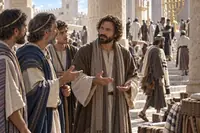
Even at the Last Supper, still blurting out: "Show us the Father."
Stay in silence
And perhaps you realize: he had been with the Master from the first days, had seen so many miracles, and still on the last night asked as if meeting him for the first time. Recognizing God is not a single moment, but a journey we walk again and again.
Whoever has seen me has seen the Father — sometimes what we are searching for is already right beside us, if we only look a little more closely.
Let us pray
Saint Philip,
hearing the two words "Follow me", you went at once, then ran to find your friend and share that joy. And yet even at the Last Supper, you still asked the Master: "Show us the Father."
I am often like you: close to the Lord without recognizing Him. Open my eyes to see the Lord in the very people beside me.
And when I do the sums and shake my head at tasks too big for me, remind me that the Lord can do what I cannot.
Amen.
Sources
- Feast dayAuthor’s edited profile
- Patron ofPatronages and symbols, version 1.1
- Often depicted withPatronages and symbols, version 1.1
- Reflectionvatican.va
- Reflectiongutenberg.org
Meet the next one
 Journey 1