

Journey 1 · Those Who Met the Lord
Saint James the Greater
The cup he asked for, the road he walked
Feast day July 25
Tap to step inside
Saint James the Greater
The cup he asked for, the road he walked
Map of a life
This life told in 5 chapters
Begin the journey
Feast day
Saint James the Greater
Some places may celebrate on a slightly different day.
July 25
Patron of
- Spain
- Pilgrims and travelers (the road to Compostela)
- Soldiers
Often depicted with
- A scallop shell
- A pilgrim’s staff and wide-brimmed hat
- A water gourd
Opening
Opening
One day, the two sons of Zebedee took the Master aside, hesitated a moment, and then blurted out what they had long been hoping for: that one might sit at his right and the other at his left when he came into his glory.
Many years later, the Acts of the Apostles closes the story of one of those two — James — in a single, chillingly short sentence: King Herod had James, the brother of John, killed with the sword.
No final speech. No account of a trial. One sentence, and that is all. Between that request for a place of honor and this silent death by the sword lies a whole life spent learning to drink the bitter cup he had rashly said he could drink, before he knew what was in it.
Chapter 1 of 5
The elder son of Zebedee
James fished on the Sea of Galilee with his father Zebedee and his younger brother John. The family was probably better off than most fishermen in the region: Saint Mark’s Gospel notes that they had hired men working with them, not just a father and two sons on their own. When Jesus passed by and called them, the two brothers left their boat and their old father among the hired men, with no long farewell, and followed him at once.
Liturgical tradition calls him “James the Greater” — meaning the first, or the elder — to distinguish him from another James, the son of Alphaeus, also one of the Twelve. Two men with the same name but completely different lives, seldom mentioned together in the Gospels.
Jesus gave the two brothers a nickname that was hardly flattering: Boanerges, “sons of thunder.” It was not given in fun. When a Samaritan village refused to welcome Jesus and his companions, the brothers flew into a rage and asked whether he wanted them to call down fire from heaven and burn up the whole village, as if punishing anyone who opposed them were the obvious thing to do. Jesus turned and rebuked them sharply. Following the Master did not give you the right to punish whoever crossed you. That was the first lesson James had to learn, and not an easy one for a man with his temper.
Chapter 2 of 5
Three times close to the Master
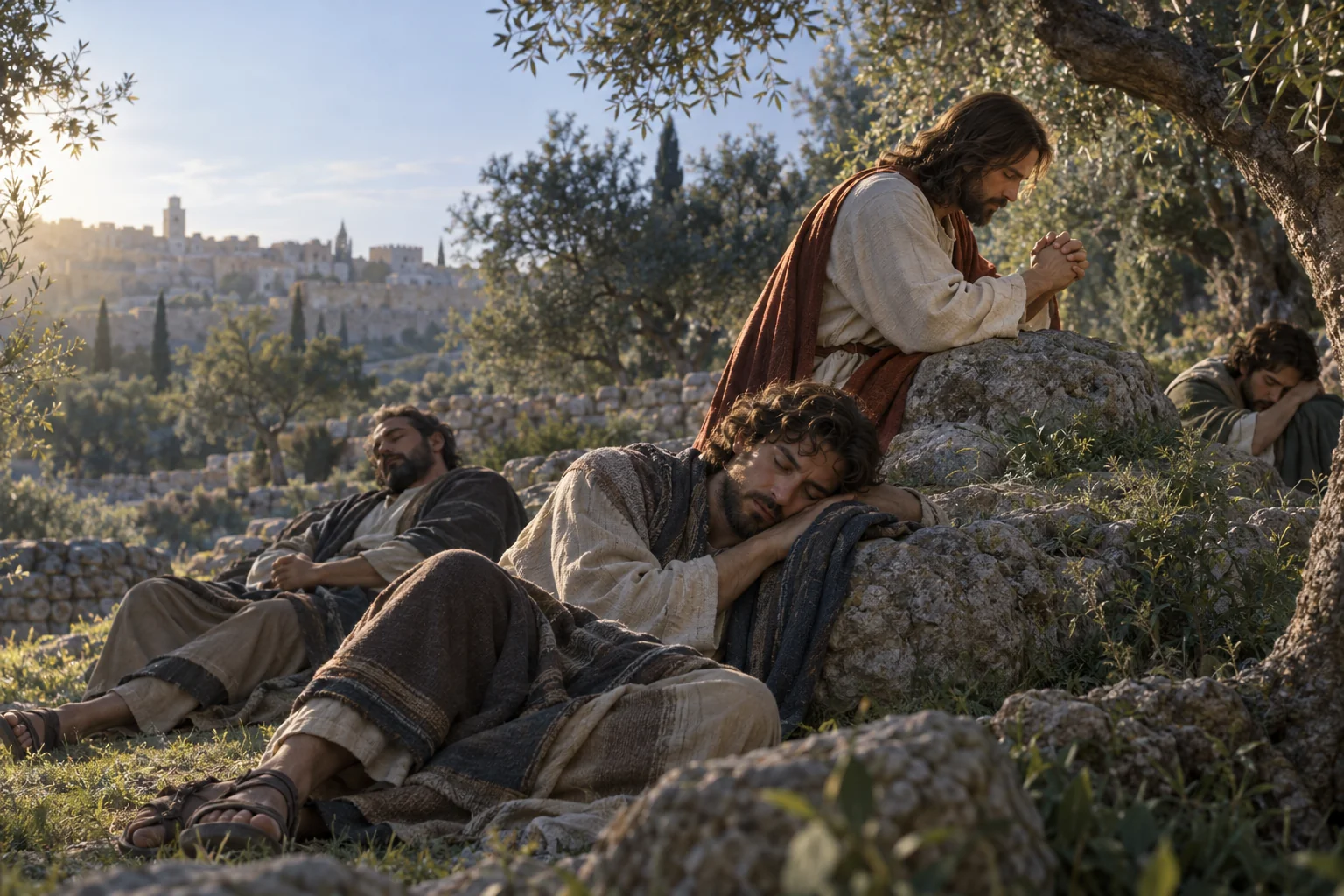
And yet, for all his temper, James was one of the three disciples his Master trusted most, along with Peter and his own brother. He was in the room when Jesus took the cold hand of Jairus’s dead daughter and called her to rise, as if waking her from sleep. He was on the high mountain when his Master’s face suddenly shone like the noonday sun, with Moses and Elijah standing beside him. And he was in the Garden of Olives on the night before his arrest, when his Master was in agony, his sweat falling like drops of blood.
Three times close to the Master, and each time completely different. The first time he saw power conquer death. The second, the dazzling glory of heaven. The third, the utter loneliness of a man about to be betrayed by one of his own. And it was that third time, when he most needed to stay awake and keep watch with his Master, that James fell asleep and left Jesus to wrestle alone with fear in the dark.
The man who had stood with his Master on the mountain of glory could still nod off at the very moment his Master most needed him. Great graces do not automatically make a person steadfast. Steadfastness still has to be learned, and it is learned through humiliating failures like that night in the Garden of Olives.
Perhaps precisely because he had been so close to the Master at such important moments, James quietly felt that he deserved a more special place than the others. Being close and being trusted can sow a hidden pride, and that pride was the trap that led to the request he was about to blurt out.
Chapter 3 of 5
A request for glory by the roadside
On the road to Jerusalem — the road the Master had just said would lead to suffering and death — the two brothers drew him aside, or, as another Gospel tells it, their mother knelt down and asked for them: that one might sit at his left and the other at his right when he came into his glory.
Jesus looked at them, not angry at all, and asked slowly:
“Can you drink the cup that I am about to drink?”
Without a second’s hesitation, they answered: “We can.” The answer came so fast that it was plain they had no idea what that cup was. They were thinking of a throne, while the Master was speaking of a cross.
Jesus did not scold them for that ambition. He used the moment to teach all the Twelve the very opposite of what they had asked for: whoever wants to be great must be the servant of all, for the Son of Man came not to be served, but to serve and to give his life as a ransom for many.
When the other ten heard about it, they were openly annoyed with the two brothers, perhaps not because they were any purer, but because they had harbored much the same ambitions. That lesson stayed with James for the rest of his life. When we are young, we hear some of the Master’s teachings as familiar words and soon forget them. Only when life backs us into a corner do we feel the full weight of every word.
Chapter 4 of 5
The first Apostle to fall – around the year 44
Many years later, under King Herod Agrippa I — grandson of Herod the Great, the very king who had ordered the slaughter of the innocent infants of Bethlehem — a persecution broke out against the young Church in Jerusalem. The Acts of the Apostles records it in a single line: the king laid violent hands on some members of the Church, and killed James, the brother of John, with the sword.
No trial is described in detail. No last words of his are recorded. No one tells how he reacted to the sword at his neck. The text closes a whole life as quickly and coldly as that sword stroke itself.
He was the first of the Twelve Apostles to give his life in witness to his Master. (The deacon Stephen had been martyred before him, but Stephen was not one of the Twelve.) The man who had once boldly said he could drink the bitter cup had now drained it, not in a dramatic scene remembered by a crowd, but in a silence almost no one bothered to record, apart from one short sentence in Scripture.
Right after killing James, and seeing that this pleased the Jewish leaders, the king went on to arrest Peter as well. Scripture deliberately places the two Apostles side by side: one falls by the sword, while the other is led out of prison by an angel in the night. The early Church had to live both realities at once: miraculous deliverance, and painful losses with no satisfying explanation.
Chapter 5 of 5
Companion of pilgrim footsteps
Centuries later, a legend began to spread across the west of the Iberian peninsula: after his martyrdom in Jerusalem, his disciples secretly placed his body in a boat, crossed the sea to the distant coast of Galicia in Spain, and buried him there quietly. Nothing more was heard for centuries, until, as the legend goes, around the ninth century a hermit saw a strange light shimmering in the night sky that led him to a forgotten tomb in a deserted field. People believed it was the tomb of James and named the place Compostela, which popular tradition still explains as “the field of stars.” In 1884, Pope Leo XIII officially recognized the rediscovery of this tomb.
From that tomb, one of the most famous pilgrim roads in the world gradually took shape: the Camino de Santiago, where every year pilgrims from all over Europe and beyond still walk hundreds of kilometers to reach it. To be honest, the New Testament says nothing of this legendary voyage, and historians still debate whether the tomb at Compostela is genuine. But however history decides, no one can deny what that road has done: for more than a thousand years it has nourished, healed and renewed the faith of countless people.
The Church celebrates Saint James the Greater on July 25 each year. In Vietnam, those who bear this saint’s name often think of him as a pilgrim: not a tourist traveling for pleasure, but someone whose whole life keeps moving forward, however long and rough the road.
Not all of us can walk hundreds of kilometers to a distant shrine in Europe. But there are quieter pilgrimages within the four walls of our own homes: learning to give way to a family member who is upset, taking on the job no one wants, bearing a long illness without a word of complaint. James began his journey by leaving a boat and an old father on the shore of the Sea of Galilee. He ended it by giving up his own life: not on a throne at his Master’s right, as he had dreamed in his foolish youth, but under a cold sword, on the very road his Master had walked before him.
The end of the story
You have walked with Saint James the Greater to the end of the story.
Three moments you will find hard to forget:
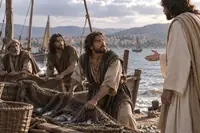
Asking the Master, with his brother, for a seat of glory, with no idea what cup he had just agreed to drink.
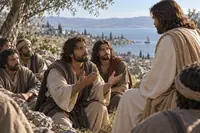
Three times close to the Master in his greatest hours — then falling asleep the very night his Master most needed him awake.
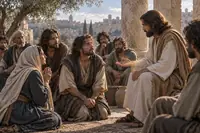
A single sentence closing his life: beheaded with the sword by King Herod.
Stay in silence
At the end of the story, you suddenly see: the man who once dreamed of a throne at his Master’s right became, in the end, the first of the Twelve to shed his blood for Him.
Some prayers we do not fully understand, until the day our own life has to answer them.
Let us pray
Saint James,
you once asked for a place of glory beside your Master without understanding the cup you agreed to drink. And then you were the first Apostle to shed your blood for Him.
Teach me not to look for the first place, but for ways to serve. When I grow drowsy just when the Lord needs me awake, wake me up.
You are the patron of travelers. Walk with me on my journeys, and on the long road of a whole life.
Amen.
Sources
- Feast dayAuthor’s edited profile
- Patron ofPatronages and symbols, version 1.1
- Often depicted withPatronages and symbols, version 1.1
- Reflectionvatican.va
- Reflectiongutenberg.org
Meet the next one
 Journey 1