

Journey 7 · Going Far, Standing Firm
Saint Peter Chanel
The first drop of blood sown in the islands of the Pacific
Feast day April 28
Tap to step inside
Saint Peter Chanel
The first drop of blood sown in the islands of the Pacific
Map of a life
This life told in 6 chapters
Begin the journey OpeningOpening1 min
 Chapter 1 of 6A shepherd boy of Cuet and a dream of distant lands1 min
 Chapter 2 of 6A ten-month voyage and the lonely island of Futuna1 min
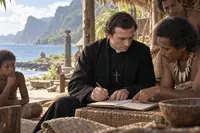 Chapter 3 of 6Three years of “the man with a good heart”1 min
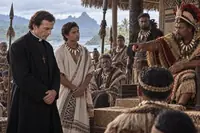 Chapter 4 of 6The dark plot of King Niuliki1 min
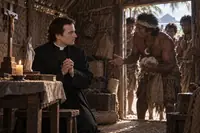 Chapter 5 of 6The blow of martyrdom and the miracle of a whole island’s conversion1 min
- Chapter 6 of 6The Protomartyr of Oceania1 min
Feast day
Saint Peter Chanel
Some places may celebrate on a slightly different day.
April 28
Patron of
- Oceania
Often depicted with
- A war club (recalling his martyrdom)
Opening
Opening
Early on the morning of April 28, 1841, in the rainy season, on the wild volcanic island of Futuna, alone in the vast South Pacific, a band of bare-chested, tattooed warriors gripping axes and clubs, led by the chief Musumusu himself, was breaking down the door of a poor hut of thatch and bamboo.
Inside, a thirty-seven-year-old French missionary priest, worn thin by malaria and hunger, was sitting on a wooden bench. He did not cry out, run or resist. He stood up and looked at his murderers with kindness and pity. A warrior rushed in and brought a club crashing down on his head, and blood poured down over his old cassock. He staggered and fell, both hands clutching the gaping wound, and whispered his last words of forgiveness in the language of Futuna:
“Malòlelei... It is well... Death is a gain for me!”
Musumusu raised a woodcutter’s axe and brought it down on his head. The priest lay dead in a pool of blood.
The priest who fell so silently on that distant island was Peter Chanel (Pierre-Louis-Marie Chanel), the protomartyr of Oceania and patron of the missions of the Pacific. His blood, freely given, bore astonishing fruit: only a few years after his death, the entire population of Futuna, including Musumusu, the man who had struck the fatal blow, knelt to ask for Baptism, and Futuna became a wholly Catholic island.
Chapter 1 of 6
A shepherd boy of Cuet and a dream of distant lands
Pierre Chanel was born on July 12, 1803, at the farm of La Potière, in the village of Cuet in eastern France. He was the fifth of eight children in a poor farming family, the son of François Chanel and Marie-Anne Kelveer.
From the age of seven to twelve, Pierre worked as a hired shepherd on the hillsides to earn his keep and help his family. He was a gentle, quiet, patient and very hardworking boy. Seeing the seed of holiness in him, the saintly parish priest, Father Trompier, took Pierre in and gave him an education.
In 1819 he entered the minor seminary of Meximieux, then went on to the major seminary of Brou in the diocese of Belley. He was a model seminarian, humble and always smiling, and his friends called him “heart of gold.” It was in the seminary, reading letters sent home by missionaries in the Americas and Asia, that the missionary fire took hold of him. On July 15, 1827, Pierre Chanel was ordained a priest at twenty-four.
He was appointed parish priest of Crozet, a remote parish where faith had grown sadly lukewarm since the French Revolution. In three years, through endless gentleness, faithful visits to every poor family and care for the sick, he brought the whole parish back to life. In 1831, feeling the call to the foreign missions ever more urgently, Father Chanel asked to join the Society of Mary, the Marists (SM), newly founded by Father Jean-Claude Colin. For five years he was director of the minor seminary of Belley. In 1836, when the Holy See entrusted the vast, still unevangelized territory of Western Oceania to the Marists, Father Chanel knelt and begged to go on the first missionary ship.
Chapter 2 of 6
A ten-month voyage and the lonely island of Futuna
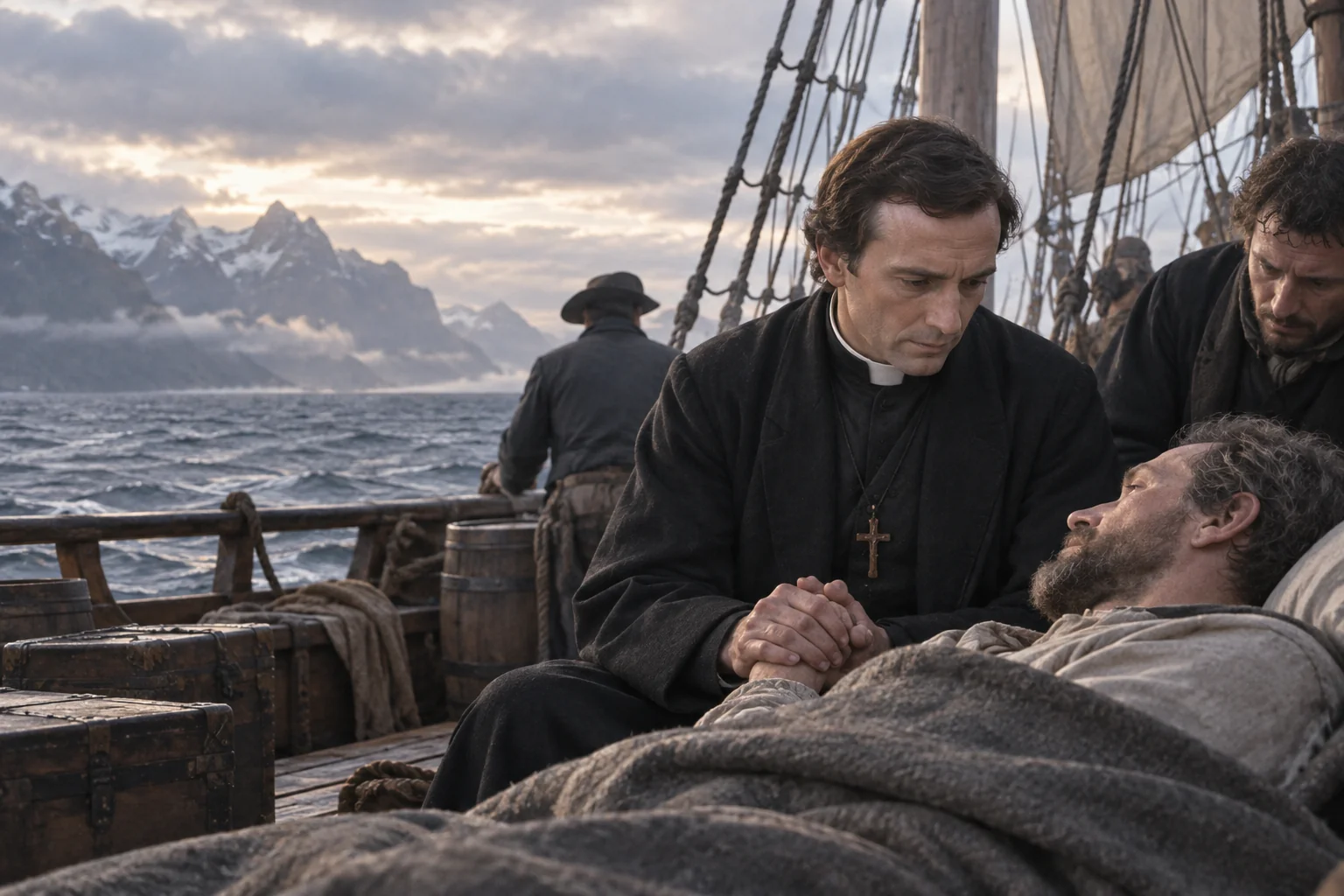
On December 24, 1836, Bishop Pompallier, Father Peter Chanel and the Marist priests and brothers boarded the merchant ship Delphine at the port of Le Havre. The voyage across the Atlantic, around stormy Cape Horn and into the Pacific took ten long months of danger, storms and seasickness.
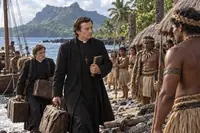
In November 1837 the ship reached Futuna, a lonely volcanic island of only about sixty square kilometers, cut off from the rest of the world. The bishop decided that Father Peter Chanel and a young French brother, Brother Marie-Nizier Delorme, would stay on this wild island while he sailed on to New Zealand. The two missionaries were left alone in the middle of the ocean, with no way of sending word and no idea when a ship would next call with supplies.
The people of Futuna were then a Polynesian people living a hard, primitive life, just emerging from bloody tribal wars over land and food. They ate prisoners taken from defeated enemies, worshiped bloodthirsty spirits called atua, and lived under the iron rule of King Niuliki, who was both ruler and high priest of the native religion.
Chapter 3 of 6
Three years of “the man with a good heart”
Completely alone among a strange people, with no dictionary, Father Chanel and Brother Marie-Nizier began by patiently learning the language of Futuna word by word. He built a hut of thatch and bamboo at Poi, hoed the ground with his own hands to grow cassava and bananas, and caught fish to live on.
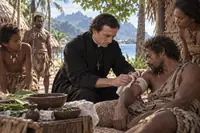
Father Chanel forced nothing on anyone. He won those fierce hearts with endless, patient kindness. He shared every root and every scrap of bread with the hungry islanders, walked through dense tropical forest to visit the sick, washed and dressed with his own hands the foul, festering wounds of tribal wars, and stepped in to save prisoners about to be killed and eaten.
Little by little, such gentleness and charity won the rough islanders over. They fondly called him “Petelo” and gave him a beautiful name in their own language, Tagata manava alofa, which means
“the man with a heart full of love”
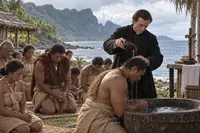
in Futunan. He baptized dying children and taught a group of young men on the island.
Chapter 4 of 6
The dark plot of King Niuliki
But the people’s growing affection for Father Chanel made King Niuliki and the spirit priests jealous and afraid. The king saw his absolute, sacred authority being shaken. Matters came to a head early in 1841, when Meitala, King Niuliki’s son, after listening to Father Chanel’s teaching, openly declared that he wanted to give up the old religion and become a Catholic.
For the tyrant this was the last straw. Urged on by his priests, Niuliki made a brutal decision: the white priest must be done away with to protect the throne and the ancestral religion. He gave the bloody task to Musumusu, his own son-in-law and a close relative of Meitala.
Father Chanel knew very well the danger he was in. He had sent Brother Marie-Nizier to take refuge in another village. Alone in his hut, he was not afraid. He spent the whole night in prayer before the wooden cross, entrusting his life to God and to Our Lady.
Chapter 5 of 6
The blow of martyrdom and the miracle of a whole island’s conversion
On the morning of April 28, 1841, Musumusu and his band of killers burst into his hut. Musumusu, who had just been wounded in a scuffle with Meitala, first came in pretending to ask for medicine for his wound, as a distraction. While Father Chanel was tending his wound, other warriors rushed in, looted his belongings and beat him savagely.
Father Peter Chanel met death as silently as a lamb before its shearers. Musumusu’s savage axe blow ended the life of the thirty-seven-year-old missionary, and his body was dumped in the bushes. The murderers thought that with him the Catholic faith on Futuna was gone forever.
But the martyr’s blood was a seed that bore wonderful fruit. Soon after his death, King Niuliki fell ill with a terrible ulcerous disease and died tormented by his conscience. Early in 1842 a French warship called at the island to take Father Chanel’s remains back to France. As they watched his remains leave, the islanders suddenly understood how much they had lost. Meitala became king, and with all the villagers he asked for new Marist priests to come and carry on the preaching.
By 1844, only three years after his martyrdom, something unheard of in the history of the missions had happened: the entire population of Futuna had freely asked for Baptism. Most remarkable of all, Musumusu himself wept in deep repentance and asked to be baptized, and before he died he begged to be buried beneath the threshold of the church, where people entered to visit the tomb of Saint Peter Chanel, so that everyone would walk over his body as an act of penance.
Chapter 6 of 6
The Protomartyr of Oceania
On November 17, 1889, Pope Leo XIII beatified Father Peter Chanel, and on June 12, 1954, Pope Pius XII canonized him. He was proclaimed principal patron of Oceania. The Church celebrates him on April 28 each year.
In 1977, at the earnest request of the islanders, a relic from the skull of Saint Peter Chanel was brought back from France to Futuna and placed in the fine Shrine of Poi, built on the spot where his hut once stood and where he fell.
Saint Peter Chanel has a message for missionaries in every age: the success of a disciple of Christ is not measured by immediate, visible results. In nearly four years on the island he did not baptize a single adult or see a single clear conversion, yet his death became the seed that flowered and bore fruit. He reminds each of us to sow the Gospel patiently, with gentle kindness, quietly bearing every hardship. When the grain of wheat is willing to fall into the earth and die, it bears a harvest large enough to fill an ocean.
The end of the story
You have walked with Saint Peter Chanel to the end of the story.
Some scenes move you beyond words:
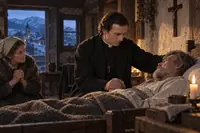
In nearly four years on Futuna, he never baptized a single adult, only quietly shared every root and bandaged every war wound.
When King Niuliki’s son wanted to become a Christian, the king ordered the priest killed. Struck down, he only whispered: "It is well... Death is a gain for me!"
Only three years after his death, the entire population of Futuna, even his killer Musumusu, asked for Baptism.
Stay in silence
You understand why a seed needs time: the success of a disciple of Christ is not measured by immediate results, but by being willing to die for a harvest you will never see.
It is well... Death is a gain for me!
Let us pray
Saint Peter Chanel,
for four years on a faraway island you did not baptize a single adult; you only quietly shared your food and bandaged wounds. And only three years after your death, the whole island followed the Lord.
Pray for all who work to spread the Gospel without yet seeing results, that they may not lose heart.
Teach me to believe that no sacrifice is wasted in God’s eyes.
Amen.
Sources
- Feast dayAuthor’s edited profile
- Patron ofPatronages and symbols, version 1.1
- Often depicted withPatronages and symbols, version 1.1
- Reflectionpeterchanel.info
- Reflectionsocietyofmaryusa.org
Meet the next one
 Journey 7