

Journey 8 · Faith with a Vietnamese Face
Saint Paul Tống Viết Bường
A loyal and dutiful guardsman at the royal court
Feast day October 23
Tap to step inside
Saint Paul Tống Viết Bường
A loyal and dutiful guardsman at the royal court
Map of a life
This life told in 4 chapters
Begin the journey
Feast day
Saint Paul Tống Viết Bường
Proper memorial; common feast of the Vietnamese Martyrs on November 24
October 23
Often depicted with
- A palm branch
- A royal guardsman’s uniform
Opening
Opening
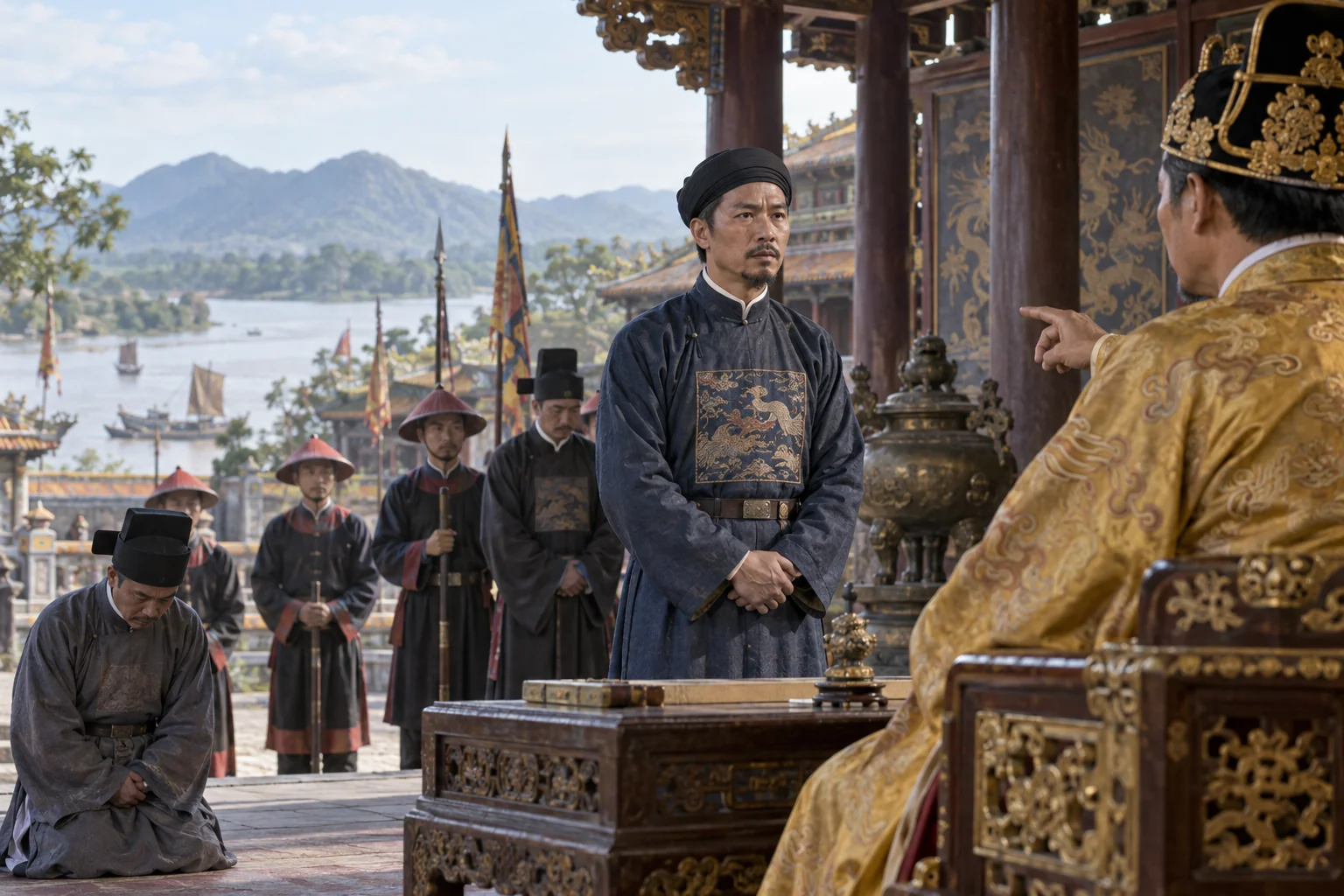
At the execution ground of Thợ Đúc, outside the imperial capital of Huế, one winter evening in 1833, a sixty-year-old commander of the royal guard, his body bruised from brutal floggings, knelt on a patterned mat.
He had been stripped of his guardsman’s uniform; a heavy cangue was around his neck and chains on his legs. Yet he still carried himself with the dignity of an officer who had risked his life to protect the throne of two emperors, Gia Long and Minh Mạng. Around him, the soldiers — many of whom had served under him for years — wept quietly. The supervising mandarin came up and urged him gently one last time:
“Your Excellency, you have won so many glorious merits helping the king build the country, and now, just because you will not step over the cross, you must die such a painful death? Please think again — just pretend to step on it once, and the king will spare your life at once and restore your rank!”
The guard commander raised his head, looked the supervising mandarin straight in the eye, and answered firmly, like the brave man he was:
“All these years I have received the king’s favor and the country’s bounty, and I have given every drop of my sweat and blood in loyal service to the country, never doing anything disloyal or undutiful toward the court! But the Cross is the holy sign of the Creator who made heaven and earth, the One who redeemed my soul! I worship Him all my life — how could I dare trample on Him to buy a shameful life? The king has the power to take this body, but my soul belongs to God forever!”
That steadfast officer was the guard mandarin Paul Tống Viết Bường, the martyr saint who embodies the loyalty and sense of duty of the Vietnamese Catholic soldier. He showed the feudal court that people of faith are not traitors; loyalty to God is the firmest foundation for loyalty to one’s homeland.
Chapter 1 of 4
A general who helped found the dynasty
Paul Tống Viết Bường was born around 1773 in the village of Phủ Cam, Phú Vang district, Thừa Thiên province, in the capital of Huế, into a noble family with a long, steadfast Catholic tradition. His father was Nicholas Tống Viết Giảng and his mother Maria Lương. He was a descendant of the distinguished Tống family, which had for many generations served as officials under both the Lê kings and the earlier Nguyễn lords.
Growing up in the fierce civil war of the late eighteenth century, when the struggle between the Tây Sơn and Lord Nguyễn Ánh plunged the whole central region into war for nearly thirty years, the young Tống Viết Bường joined Lord Nguyễn Ánh’s army. Tall, extraordinarily strong, skilled in martial arts and well versed in military strategy, he won many victories in the battles that drove back the Tây Sơn, battles that stretched from Gia Định all the way to the seaport of Thuận An. More than once he and his comrades had to cross the sea in flimsy warships, facing storms and enemy fire, returning to camp covered in wounds but with their loyalty intact.
After unifying the country and ascending the throne in 1802, Emperor Gia Long rewarded his great service by appointing him Cai Đội Thị Vệ, commander of the elite royal guard responsible for the safety of the emperor himself and the imperial city. It was a rare honor: in a whole court full of officials, only a very few were trusted by the king with his own life, and Tống Viết Bường was one of them — a soldier from a Christian family, in a court where not everyone looked kindly on such families.
In 1820, Emperor Minh Mạng succeeded to the throne. Seeing that the mandarin Bường was a talented, virtuous and utterly honest officer, the emperor continued to rely on him and gave him command of the guard always at his side. He married a devout Catholic woman and had many children. Though he held a position of great authority, the mandarin Bường always kept a devout and simple household: caring nothing for bribes, loving the soldiers under him, strictly forbidding them to oppress the people, and generously helping the poor and needy of the capital.
Chapter 2 of 4
The storm of persecution and the emperor’s persuasion
In 1833 came the uprising of Lê Văn Khôi in the citadel of Phiên An in the South, a great revolt that the court had to mobilize tens of thousands of troops to put down. A French missionary priest was arrested in the citadel, which made Emperor Minh Mạng even more suspicious of links between Catholics and the rebels. In a towering rage, distrusting all Catholics, he issued an edict of general persecution throughout the country. The emperor ordered strict checks on the faith of all soldiers and court officials, sparing no one, not even the most trusted men who had served him since his hardest days.
One day Emperor Minh Mạng had a wooden cross placed right in front of the royal courtyard and ordered the whole royal guard to step over it to prove their loyalty. One by one, the soldiers, afraid of losing their rank and of the lash, bowed their heads and stepped over it. When it was the turn of the commander Paul Tống Viết Bường, he walked up to the cross, stopped reverently, fell to his knees, made the Sign of the Cross and bowed down in worship. He firmly refused to step over it.
Emperor Minh Mạng was stunned and furious, but unwilling to lose a talented general who had long risked his life to protect him, he held back his anger and called him into a private room. The emperor gently urged him:
“Bường, I know how loyal you have been all these years to me and to the late emperor... I do not want to kill you! Just step over that piece of wood once, as the law of the land requires, and I will give you a high title!”
The mandarin Paul Tống Viết Bường bowed before the emperor and said quietly:
“Your Majesty, all these years your servant has had only a loyal heart to serve the king and help the country, and has never dared do anything deceitful! Your servant is ready to give this life on the battlefield for Your Majesty... But faith in God, who made your servant and grants Your Majesty the grace to reign, your servant can never betray! I beg Your Majesty in your mercy to let your servant keep faithfulness to God and loyal duty to the king!”
Chapter 3 of 4
Floggings in the Trấn Phủ and an unshaken will
When his persuasion failed, Emperor Minh Mạng’s pride was deeply wounded. He at once ordered him stripped of all rank, demoted to a common soldier and thrown into the Trấn Phủ prison. For nearly a year of imprisonment, from the end of 1832 to October 1833, the guard commander endured some of the most savage tortures: the court ordered the soldiers to bring him to the courtroom three times every month and lash his body with thorny rattan whips, from one hundred to one hundred thirty strokes each time, until his flesh was torn and bloody. The soldiers also dragged him over the cross, but he drew up his legs and bowed down before the Cross.
His former colleagues and soldiers came into the prison many times weeping and begging him to give in, but he smiled and comforted them:
“Brothers, don’t worry about me! The king’s lashes only hurt this passing body; but if I betrayed God, my soul would die forever!”
Some young soldiers he had trained himself stood outside the bars of the Trấn Phủ prison, not daring to look straight at their old commander’s battered body, and could only slip in a little clean water or a handful of rice — a silent way of showing a gratitude they did not dare put into words in a prison full of watching eyes and listening ears. From his dark prison he sent letters home to comfort his wife and children, telling them to hold fast to the faith and not to bear a grudge against the court because their father was imprisoned.
Chapter 4 of 4
A hero’s death at the execution ground of Thợ Đúc
Seeing that every brutal punishment was powerless against the officer’s iron will, Emperor Minh Mạng signed his death sentence by beheading. Because of his long service to the court, the emperor wanted the execution carried out discreetly, to avoid stirring up the people, who greatly admired this honest mandarin.
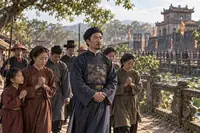
On the evening of October 23, 1833, the sentence was carried out at the execution ground of Thợ Đúc, outside Huế. The escort led him through the streets of the capital. The people of the capital poured into the streets, choked with emotion, watching the virtuous guard mandarin go by. At the execution ground, after refusing one last attempt at persuasion and offering a prayer commending his soul, he calmly bowed his head. The executioner’s sword swung, and the sixty-year-old hero shed the last of his blood, an honor to his homeland and to the Church.
The faithful of Phủ Cam bravely carried his body home for an honorable burial in his native village, the very village where he had been born sixty years before, and where decades later another high official of the Nguyễn court, the mandarin Michael Hồ Đình Hy, would also be brought to rest for the same reason: faithfulness to God to his last breath. Two sons of the same Phủ Cam parish, nearly a quarter of a century apart, walked the same road to the end.
On May 27, 1900, Pope Leo XIII beatified him. And on June 19, 1988, Pope John Paul II canonized Paul Tống Viết Bường together with one hundred sixteen other Vietnamese Martyrs in Rome. The Church celebrates him on October 23 each year, and on November 24.
Saint Paul Tống Viết Bường leaves us a noble example:
“A true Christian soldier is always the most loyal and courageous citizen of his country!”
From a young general who risked his life to help the king build the country to an old officer kneeling in worship before the Cross in the middle of the royal courtyard before all the court officials, he teaches each of us: live wholeheartedly for your homeland and fulfill your duties as a citizen completely, but never trade your faith and moral dignity for the passing glory of this world.
The end of the story
You have walked with Saint Paul Tống Viết Bường to the end of the story.
Some moments keep bringing him back to mind:

In the royal courtyard, when the whole guard stepped over the cross one after another, he stopped, fell to his knees, made the Sign of the Cross and bowed down in worship instead of stepping over it.
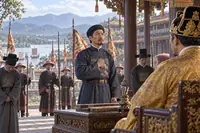
The emperor himself urged him, but he answered: "Your servant is ready to give this life on the battlefield for Your Majesty... but your servant can never betray!"

When he was dragged over the cross in prison, he drew up his legs so as not to step on it, then bowed down before the Cross right there.
Stay in silence
You understand the heart of a soldier’s loyalty: loyalty to the king does not contradict faithfulness to God, for the king may take the body, but the soul belongs forever to the Creator.
The king has the power to take this body, but my soul belongs to God forever!
Let us pray
Saint Paul Tống Viết Bường,
in the royal courtyard, when everyone else stepped over the Cross in turn, you stopped, knelt down, made the Sign of the Cross and bowed in worship. You were ready to give your life for the king on the battlefield, but could not betray God.
Pray for soldiers and all who serve their homeland.
Help me to be devoted to my duties in the world while keeping my faithfulness to God above all.
Amen.
Light a candle for Saint Paul Tống Viết Bường
Sources
- Feast dayCatholic Bishops’ Conference of Vietnam
- Often depicted withPatronages and symbols, version 1.1
- Reflectionsokien.org
- Reflectionsites.google.com
Meet the next one
 Journey 8