

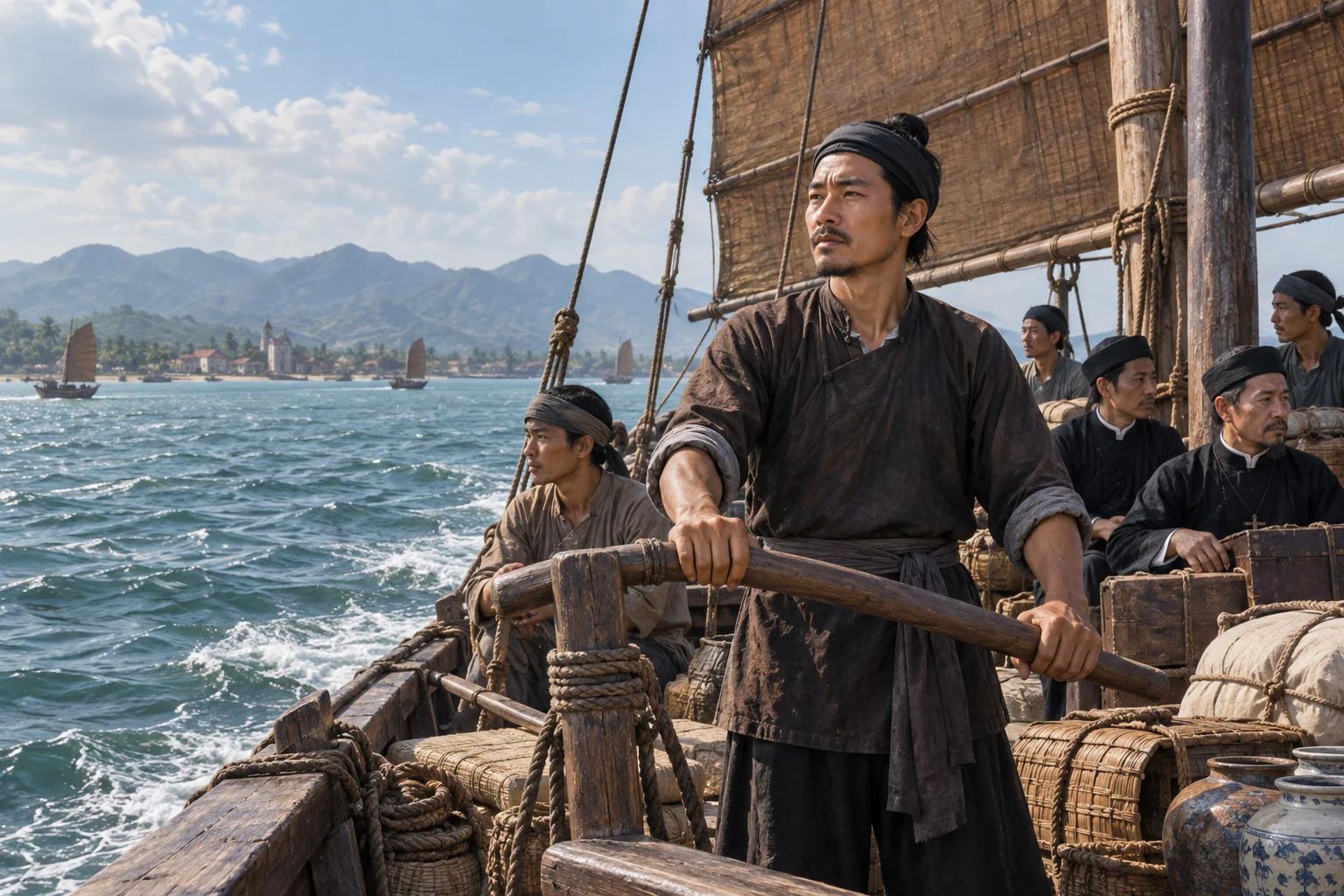
Journey 8 · Faith with a Vietnamese Face
Saint Matthew Lê Văn Gẫm
The merchant who crossed the sea for his people’s faith
Feast day May 11
Tap to step inside
Saint Matthew Lê Văn Gẫm
The merchant who crossed the sea for his people’s faith
Map of a life
This life told in 5 chapters
Begin the journey

Feast day
Saint Matthew Lê Văn Gẫm
Some places may celebrate on a slightly different day.
May 11
Often depicted with
- A palm branch
- A merchant boat
Opening
Opening
On the morning of May 11, 1847, at the execution ground of Cây Da Còm (the Da Còm market, near today’s Nguyễn Trãi Street in Chợ Lớn, Saigon), a scene took place that shook the whole South.
A thirty-four-year-old merchant, with the sturdy build of a man hardened by years at sea, had been stripped of his outer garment and tied tightly to a wooden stake. Thousands of people from Saigon and Bến Nghé packed the ground around him. The executioner stepped forward with his great sword and said, trembling: “I am following the orders of my superiors; please do not hold it against me!” The young merchant smiled calmly and answered:
“Do your duty; I bear you no ill will!”
Then he lifted his eyes to heaven, prayed fervently, and peacefully received the fatal blow.
The merchant who died that day in the heart of the South was Matthew Lê Văn Gẫm, the saint of business people, traders and seafarers in the Church in Vietnam. He was not a soldier or a monk; he was a man who traded by sailing ship. Yet he dared to use his ship and his life for something extraordinary: braving dangerous seas and slipping past the royal navy’s blockade to carry missionaries, bishops and seminarians in and out of the country, keeping the lifeblood of faith flowing for the Church in Vietnam in its darkest hour.
Chapter 1 of 5
A young man of the river country of Gò Công
Lê Văn Gẫm was born in 1813 in the village of Long Đại, Long Vĩnh Hạ canton, Gò Công district, Định Tường province, now in Tiền Giang province, into a fairly prosperous Catholic merchant family. His father was Paul Lê Văn Lại and his mother Maria Nguyễn Thị Hòa. He was the eldest of five children. He was baptized Matthew in the church of the Cầu Kho parish in Saigon.
Growing up beside the vast waters of the Tiền River, Matthew Gẫm grew into a strong young man, a good swimmer who knew the sea channels well, with the generous, outspoken character typical of the South. At fifteen, seeing how devout he was, the parish priest sent him to the minor seminary of Lái Thiêu to discern his vocation. But after a month, as the eldest son who was to carry on the family business, he had to leave the seminary and go home.
At twenty, at his parents’ wish, he married a devout local woman, and they had four children. After his first wife died, he remarried and had one more child. Matthew Gẫm took over his father’s trade, building large sailing ships to carry rice, sugar and farm produce from the South to the provinces of the center, and as far as Singapore and the Malay Peninsula. Such voyages demanded long experience of tides, monsoon winds and channels, and not every trader dared risk them, especially since the East Sea was then full of pirates and closely watched by the court. He was a scrupulously honest merchant who never cheated on weights or measures, helped poor boatmen generously, and was trusted by everyone. Those long voyages, sometimes months at sea, made him fearless and at home with danger, and that would prepare him for a mission far greater than trading rice and sugar.
Chapter 2 of 5
The Church’s secret merchant ship
In those days, under Emperors Minh Mạng and Thiệu Trị, the seaports of Vietnam were tightly closed. The court decreed death for anyone who brought a “Western master of religion” ashore. The bishops and missionaries were completely cut off, seminarians could not go abroad to study, and the Church’s letters could not get through.
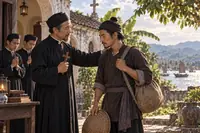
Faced with this deadlock, Bishop Lefèbvre (Đức cha Nghĩa), Vicar Apostolic of Western Cochinchina, sought out the merchant Matthew Lê Văn Gẫm and asked for his help. Matthew Gẫm knew the mission could cost him his life: if caught, he would surely be beheaded and lose everything he owned. He did not hesitate for a moment. He knelt and said to the bishop:
“Your Excellency, I gladly offer my ship and my life to serve the Church! If God wants me to die for this, I count it a great blessing!”
From 1844 to 1846, Matthew Gẫm’s ship made many daring secret voyages. He disguised it as an ordinary rice boat, lost among the hundreds of boats crowding the southern waters every day, so that no one would suspect what was hidden below deck. He secretly took Bishop Lefèbvre across the sea to safety in Singapore, carried Vietnamese seminarians to the major seminary at Penang in Malaya, and brought back liturgical objects, prayer books and letters. The Gò Công merchant’s ship became the one lifeline that kept the Church in the South from being cut off.
Chapter 3 of 5
An ambush at the mouth of Cần Giờ
At the beginning of 1846, Matthew Gẫm undertook his most perilous voyage: he sailed to Singapore to bring home Bishop Lefèbvre, who had earlier been freed through the intervention of the French navy and longed to return to Vietnam, along with a French missionary, Father Duclos, three seminarians and two Lovers of the Holy Cross sisters.
The crossing of the East Sea met storm after storm, and some days the ship had to hide from pirates prowling offshore, so that an already dangerous journey grew longer still. On the night of May 23, 1846, just as the ship slipped into the mouth of Cần Giờ, in the bay of Gành Rái, to put the missionaries ashore, royal navy patrol boats spotted it and closed in. Soldiers swarmed aboard and captured everyone: Bishop Lefèbvre, the missionaries, Matthew Gẫm and the sailors.
They were all put in cangues and taken under guard to the prison in Saigon. Under pressure from French warships anchored off Đà Nẵng, Emperor Thiệu Trị’s court was forced to deport Bishop Lefèbvre to Singapore. But all the court’s fury fell on the Vietnamese merchant Matthew Lê Văn Gẫm, for in the mandarins’ eyes, a Vietnamese who dared help a “Western master of religion” was even more guilty than the foreign missionaries.
Chapter 4 of 5
A year of torture in the prison of Bến Nghé
He was imprisoned for a whole year in the prison of Bến Nghé, in Saigon. The mandarins who interrogated him were enraged that a Vietnamese would risk his life to help Western priests. They tortured him cruelly: hundreds of rattan strokes tore his flesh, wooden clamps crushed the bones of his legs, and he was hung upside down from a beam for hours on end.
The high mandarins tried every threat and inducement: “You are a rich trader with a beautiful wife and clever children. Why be such a fool as to bring in Westerners and bring death on yourself? Just step over the cross once, and I will give you back your ship and let you go back to trading as before!” Matthew Lê Văn Gẫm raised his head and answered firmly:
“Your Excellencies, I carried the missionaries out of love for God’s religion, not to plot against the court! I am a Catholic; I would rather lose all my ships, all my wealth and even my life than ever betray my God!”
Unable to shake his faith, Emperor Thiệu Trị’s court sentenced him to be beheaded. Through the long months in prison awaiting death, Matthew Gẫm kept a remarkable cheerfulness. He encouraged his fellow prisoners and shared the food his family brought with those who were poor and hungry. When his wife and children came to visit him, weeping bitterly, he tenderly wiped his wife’s tears and told her:
“Go home and take good care of the children, and teach them to hold fast to the faith... Don’t worry about me; going to die for God is a great blessing for our whole family!”
Chapter 5 of 5
Blood shed at the Da Còm market
On the morning of May 11, 1847, the sentence was carried out at the execution ground of Da Còm, in the village of Chợ Đũi, then part of the Chợ Quán parish. Today it lies in the heart of Chợ Lớn, which only a few decades later became Saigon’s busiest commercial district, as if the ground where the merchant shed his blood had been quietly blessed.
Matthew Lê Văn Gẫm walked out to the execution ground in a clean white tunic, praying the Rosary. He knelt on a patterned mat the faithful had spread for him and lifted his eyes to heaven. The gong sounded three times, the great sword came down, and the thirty-four-year-old merchant shed his blood in witness to the Gospel in the heart of Saigon.
The faithful of Chợ Quán bravely recovered his body and buried it with honor in the grounds of Chợ Quán church, the oldest church in Saigon. His tomb is still venerated there today, in District 5 of Hồ Chí Minh City, and every year on his feast day crowds come to bring flowers and light candles in memory of the merchant who gave up his business and his life for a voyage made not for profit.
On May 27, 1900, Pope Leo XIII beatified him. On June 19, 1988, in Rome, Pope Saint John Paul II canonized Matthew Lê Văn Gẫm together with one hundred sixteen other Vietnamese Martyrs. The Church celebrates him on May 11 each year, and on November 24.
Saint Matthew Lê Văn Gẫm has a lesson for Catholic business people today:
“Trade and business are not only for making material profit; a merchant can fully use his profession, his talents and his means of business to serve God and the Church!”
A young man from the river country of Gò Công who left the seminary to carry on the family business, he became a merchant ready to stake his ship and his life on a voyage that earned him nothing. He teaches us to keep our conscience on a true course amid all the calculations of earning a living, and to dare to use the fruits of our work for God’s saving work in the world.
The end of the story
You have walked with Saint Matthew Lê Văn Gẫm to the end of the story.
Three scenes from the merchant’s life stay with you:
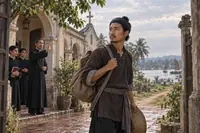
When the bishop asked for his help, he knelt and answered at once: "I gladly offer my ship and my life to serve the Church!"
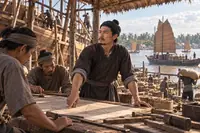
For two years his rice boat secretly carried bishops, priests and seminarians across the sea in and out of a country under blockade.

Captured at the mouth of Cần Giờ and imprisoned for a year, he still told his wife before his execution: "Going to die for God is a great blessing for our whole family!"
Stay in silence
You understand why one voyage could matter so much: a merchant can use his own ship and his life’s savings as a bridge that keeps a whole Church from being cut off.
I gladly offer my ship and my life to serve the Church! If God wants me to die for this, I count it a great blessing!
Let us pray
Saint Matthew Lê Văn Gẫm,
you were a merchant who used your own rice boat to secretly carry bishops and priests across the sea, keeping the Church of your homeland from being cut off.
Pray for those in trade and business, that they may live honestly and use their wealth to serve God and others.
Help me too to say as you did: "I offer what I have to serve the Church."
Amen.
Light a candle for Saint Matthew Lê Văn Gẫm
Sources
- Feast dayAuthor’s edited profile
- Often depicted withPatronages and symbols, version 1.1
- Reflectiongiaophanbacninh.org
- Reflectiontgpsaigon.net
Meet the next one
 Journey 8