

Journey 7 · Going Far, Standing Firm
Saint Paul Miki
Words of forgiveness from the hill of crosses at Nagasaki
Feast day February 6
Tap to step inside
Saint Paul Miki
Words of forgiveness from the hill of crosses at Nagasaki
Map of a life
This life told in 5 chapters
Begin the journey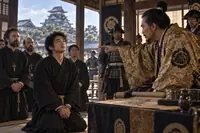
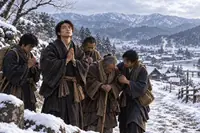
Feast day
Saint Paul Miki
Some places may celebrate on a slightly different day.
February 6
Patron of
- Japan
Often depicted with
- A cross
- A spear
Opening
Opening
At noon on a bitterly cold February 5, 1597, on windswept Nishizaka hill overlooking the bay of Nagasaki in Japan, twenty-six rough wooden crosses stood in a long row against the gray sky.
On each cross was a martyr, bound tight with ropes, iron rings clamped around neck, hands and feet. Among them were Jesuit and Franciscan missionaries from Spain and Portugal, but most were Japanese: catechists, craftsmen, a doctor, and even three altar boys, Louis Ibaraki, just twelve, Antonino, thirteen, and Thomas Kozaki, fourteen, who smiled and sang hymns on their crosses.
In the middle of the row was Paul Miki, a thirty-three-year-old Japanese Jesuit from a proud samurai family. Hanging on his cross, looking down at the thousands of people and soldiers below, he did not utter a word of complaint or curse his enemies. In a warm, firm voice he preached the last and greatest sermon of his life:
“My fellow countrymen! Seeing me hanging here, you may think I am being executed for some great crime... But I declare before God: I have committed no crime against the country or the ruler! The only reason I must die is that I have proclaimed the Gospel of Jesus Christ! I thank God for giving me this priceless grace... At the threshold of death, no one dares to lie! I assure you that apart from Jesus Christ there is no other way to be saved! And as the Master taught on the Cross, I forgive completely the Lord Taikō (Toyotomi Hideyoshi) and all who have taken part in my death! I earnestly pray that God in His mercy will bring them and the whole Japanese people to receive salvation!”
The samurai’s son who died on Nishizaka hill is honored as the first among Japan’s martyrs. He turned the warrior code of Bushido into unshakable loyalty to the one divine King, Jesus Christ.
Chapter 1 of 5
The son of a samurai general
Paul Miki was born around 1564 or 1566 in Tsunokuni, now part of the Osaka region, in Japan. His father, Miki Handayū, was a brave samurai general serving under the famous lord Oda Nobunaga.
When Paul was four, his father, after hearing the Jesuit missionaries preach, decided to receive the Catholic faith and had the whole family baptized. The boy received the baptismal name Paul. Paul Miki received an excellent education at the Jesuit school at Azuchi, which enjoyed lord Nobunaga’s patronage. He grew into an intelligent young man, at home in Japan’s traditional culture, poetry and Buddhist philosophy.
In 1586, at twenty, Paul Miki entered the Society of Jesus, giving up the military career his samurai family expected. It was no small decision: the Miki family lived for the honor and glory of battle, and laying down the sword for a religious habit meant dashing every hope his family had placed in him. He completed his studies in philosophy and theology with distinction and became the best-known catechist and preacher in Japan. Thanks to the Confucian and Buddhist learning he had received at Azuchi since childhood, he could quote Buddhist scriptures in a sermon and debate with the monks, and more than one learned scholar was startled to meet a Catholic preacher who knew their tradition so well. He used that knowledge to bring many samurai and ordinary people to the Catholic faith. He was only waiting for his ordination to the priesthood when the storm of persecution broke.
Chapter 2 of 5
The storm of Hideyoshi’s persecution
At first, the general Toyotomi Hideyoshi, the real ruler of all Japan, was open toward Christianity. But in 1596, after the Spanish merchant ship San Felipe was wrecked on the coast of Tosa, now Kōchi Prefecture on the island of Shikoku, the slanders of some foreign traders led Hideyoshi to suspect that the missionaries were an advance guard preparing the way for a Spanish invasion.
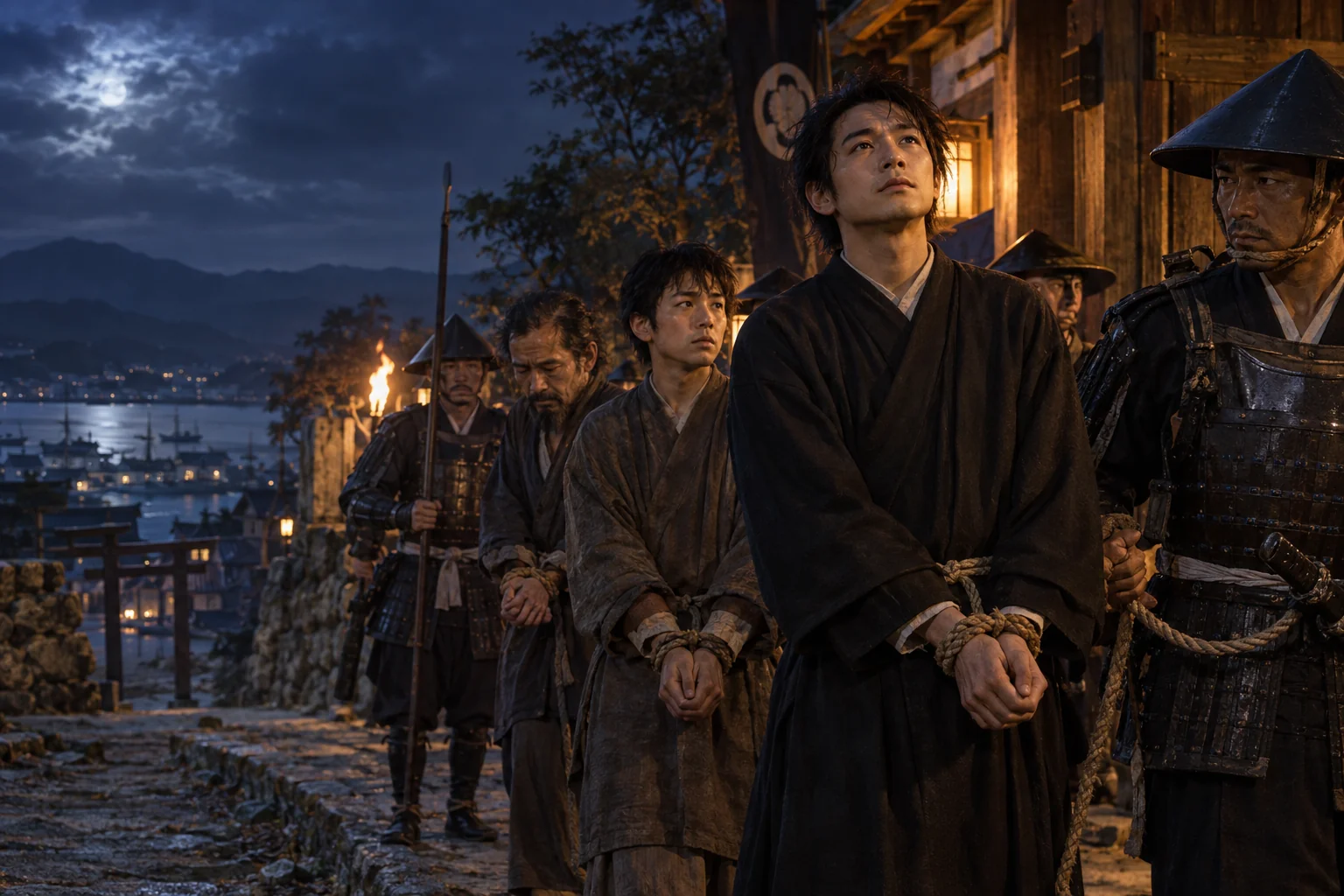
In his fury, Hideyoshi issued a harsh edict banning the faith and ordered the missionaries hunted down. In December 1596, Paul Miki was arrested at the Jesuit house in Osaka together with two companions, John Soan de Goto, nineteen, and James Kisai, sixty-four. In Kyoto, six Franciscan friars, led by Father Peter Baptist, and fifteen lay people were also arrested.
Chapter 3 of 5
A thousand-kilometer march of humiliation
To terrify all the Christians, Hideyoshi’s government handed down a savage sentence. On January 3, 1597, in a public square in Kyoto, the twenty-four prisoners (two more would later ask to join them) had part of their left ear cut off, a traditional way of branding criminals with public shame. Blood streamed down their cheeks. They were tied onto carts and paraded through the main streets of Kyoto, Osaka and Sakai while the crowds jeered.
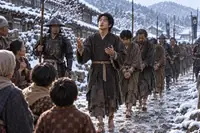
Then they were forced on a death march of nearly six hundred miles, almost a thousand kilometers, in the depths of winter, from Kyoto to Nagasaki, the great Catholic center of the south, to be executed in public as a warning to all. For a whole month they walked through sleet and snow, their bare feet bleeding on the stony roads, hungry and exhausted. Yet the martyrs were filled with a strange Easter joy. Paul Miki preached as he walked to the curious people lining the way; the three altar boys, Louis Ibaraki, Antonino and Thomas Kozaki, walked hand in hand singing the Te Deum and the psalm Laudate Pueri Dominum (“Praise the Lord, you His servants”) until the mountains and forests rang. Even the soldiers guarding them were moved to tears.
Chapter 4 of 5
The hill of crosses at Nagasaki
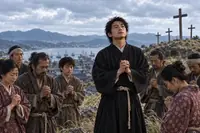
On February 5, 1597, the martyrs reached Nishizaka hill in Nagasaki. Seeing the twenty-six crosses already waiting on the windy hilltop, twelve-year-old Louis Ibaraki ran up the hill and asked the executioner: “Which cross is mine? Which cross is mine?” When he was shown the smallest cross, the boy hugged and kissed it. An official, taking pity on him, offered to spare his life if he would give up the faith, but the boy answered firmly:
“I do not want to trade this short earthly life for the loss of eternal life in heaven!”
The twenty-six martyrs were bound tightly to their crosses, and the crosses were raised together against the sky. From his cross, Paul Miki spoke his unforgettable words of forgiveness and proclaimed his faith aloud. He turned his eyes to the two Jesuit brothers beside him, John Soan de Goto and James Kisai, both of whom had been received into the Society of Jesus just before they died.
After Paul Miki’s sermon, four executioners with long spears stepped forward. Standing on either side of each cross, they thrust two spears crosswise up through each martyr’s sides into the chest. The blood of the twenty-six martyrs soaked Nishizaka hill. Their hymns mingled with the sound of the waves.
Chapter 5 of 5
The flame of faith of the “Hidden Christians”
The death of Saint Paul Miki and his companions opened more than two centuries of some of the most brutal persecution in the history of the Church. The churches were torn down, the priests executed or expelled, and Japan shut its doors to the world for more than two hundred years.
Yet something astonishing happened. For more than two centuries, with no priests and no Mass, kept alive only by Baptism handed down from parents to children and the Rosary prayed silently at night, more than thirty thousand Japanese Christians, the Kakure Kirishitan or Hidden Christians, kept their faith alive in secret.
In 1865, when French missionaries had returned and built the Ōura Church in Nagasaki, the Hidden Christians came out of hiding. They recognized the priests by three signs their ancestors had passed down since the time of Saint Paul Miki: the priest is celibate, obeys the Pope in Rome, and honors the Virgin Mary. That meeting, at the foot of Nishizaka hill where the twenty-six martyrs had shed their blood nearly three hundred years before, is seen by Church historians as one of the great miracles of faith in modern times. A community with no teachers, no books, and no Holy Communion for eight generations had handed down intact what Paul Miki preached from the cross.
Pope Urban VIII beatified the twenty-six martyrs on September 14, 1627. On June 8, 1862, Pope Pius IX canonized Paul Miki and his twenty-five companion martyrs. The Church celebrates him and his companion martyrs on February 6 each year.
Saint Paul Miki’s life says to us:
“The true courage of a knight is not to use the sword to destroy the lives of his enemies; the true courage of a Christian knight is to be ready to give his own life on the Cross and speak words of blessing and forgiveness for those who have harmed him!”
A young man of samurai blood who gave up the way of the sword, he became the martyr of Nishizaka who forgave the very man who ordered his death. He teaches us to stand firm in the truth amid injustice and misunderstanding, and to let sincere forgiveness make the glory of Christ shine out.
The end of the story
You have walked with Saint Paul Miki to the end of the story.
Some scenes stay with you:
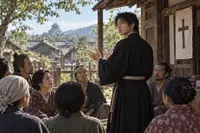
Twelve-year-old altar boy Louis Ibaraki ran up the hill of execution and eagerly asked: "Which cross is mine?"
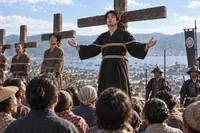
Throughout the march of nearly a thousand kilometers in winter, with part of their ears cut off in disgrace, the martyrs kept singing hymns that rang through the mountains and forests.
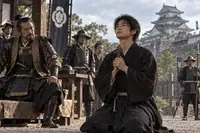
On his cross, Paul Miki offered complete forgiveness to the very general who ordered his death and to all who took part in the execution.
Stay in silence
You understand what true courage is: not the strength to destroy one’s enemies, but readiness to give one’s life while still blessing those who do harm.
I forgive completely the Lord Taikō and all who have taken part in my death!
Let us pray
Saint Paul Miki,
on the cross at Nagasaki you forgave the very man who ordered your death. Beside you, a little altar boy even asked: "Which cross is mine?"
Pray for Christians persecuted for their faith.
Teach me to forgive and bless those who harm me, and to have the courage to sing God’s praise in the midst of hardship.
Amen.
Sources
- Feast dayAuthor’s edited profile
- Patron ofPatronages and symbols, version 1.1
- Often depicted withPatronages and symbols, version 1.1
- Reflectionjesuits.global
- Reflectionkatolsk.no
Meet the next one
 Journey 7