

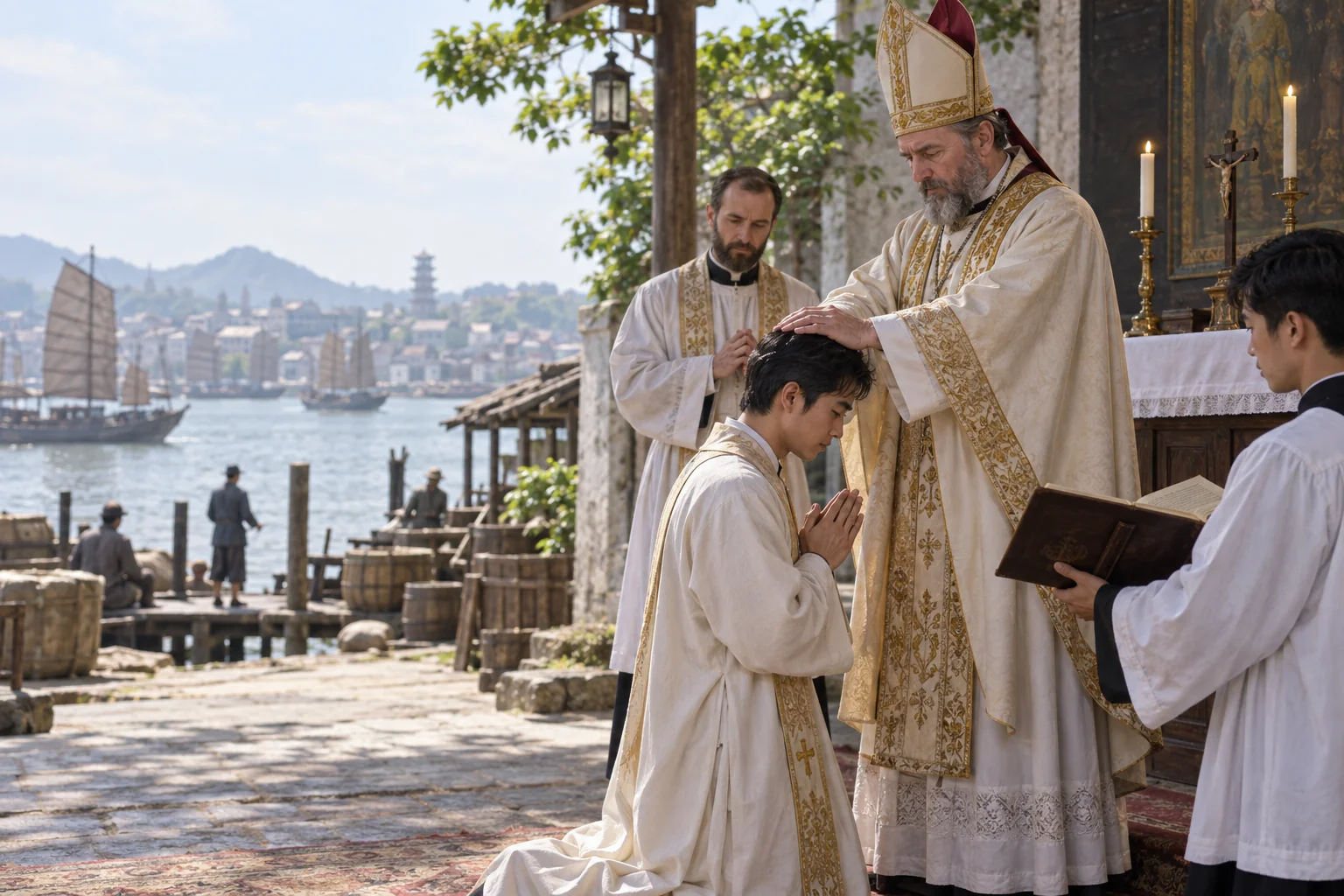
Journey 7 · Going Far, Standing Firm
Saint Andrew Kim Taegon
The first priest, on the sands of Saenamteo
Feast day September 20
Tap to step inside
Saint Andrew Kim Taegon
The first priest, on the sands of Saenamteo
Map of a life
This life told in 6 chapters
Begin the journey OpeningOpening1 min
 Chapter 1 of 6A family with three generations of martyrs1 min
 Chapter 2 of 6A journey of a thousand miles on foot to Macau1 min
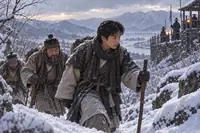 Chapter 3 of 6Across the border by wooden boat and a historic ordination1 min
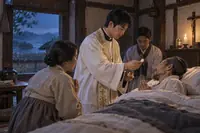 Chapter 4 of 6A shepherd of the dark nights1 min
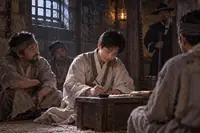 Chapter 5 of 6A steadfast heart in prison1 min
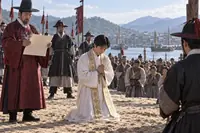 Chapter 6 of 6The martyr’s crown on the sands of Saenamteo1 min
Feast day
Saint Andrew Kim Taegon
Some places may celebrate on a slightly different day.
September 20
Patron of
- Korea and the Korean clergy
Often depicted with
- Traditional Korean priest’s robe and hat
- A palm branch
Opening
Opening
One autumn afternoon in 1846, on the execution sands of Saenamteo beside the Han River in Seoul, Korea, a scene unfolded that shook all who saw it: a twenty-five-year-old priest of noble bearing had been stripped of his outer clothes, his ears pierced with bamboo strips holding two crossed arrows, his face sprinkled with white lime.
He was tied to a wooden stake planted in the middle of the sand. Twelve executioners with long swords ran in circles around him, brandishing their swords and shouting, following the gruesome execution ritual of the Joseon court. Facing imminent death, the young priest did not tremble. He held his head high, looked straight at the crowd of officials, soldiers and people around him, and bore witness to his faith in a ringing voice:
“My fellow countrymen, listen to me! This is the last hour of my life... What I have done, I have done for my God! I die for the name of Christ! My eternal life is only now beginning... If you want to find eternal life, believe in God!”
At the executioner’s eighth sword stroke, his head fell onto the reddened sand. That heroic priest was Andrew Kim Taegon (Kim Dae-geon), the first priest of the Church in Korea. Together with Saint Paul Chong Hasang and one hundred two other martyr saints, he was a precious seed that brought forth an extraordinary Church: the only Church in history founded not by foreign missionaries, but by native lay people who learned the faith from books on their own, embraced it and kept it with their blood through a hundred years of persecution.
Chapter 1 of 6
A family with three generations of martyrs
Andrew Kim Taegon was born on August 21, 1821, at Solmoe, now part of Dangjin, in Chungcheong Province, Korea. He was born into a distinguished yangban (noble) family with a glorious tradition of martyrdom: his great-grandfather, Blessed Paul Kim Kwang-ok, was martyred in 1801; his grandfather, Blessed Andrew Kim Han-sin, was imprisoned for fifteen years and died in prison in 1816; and later his own father, Saint Ignatius Kim Je-jun, was also beheaded for the faith in 1839.
From early childhood, young Taegon grew up amid the relentless manhunts of the Joseon court. His family had to leave their ancestral home and flee to the wild mountains of Golbaemasil to make a living from slash-and-burn farming. The boy’s faith was forged in the silence of secret Masses in the dead of night and in stories of the ancestors who had shed their blood for God.
In 1836, when he had just turned fifteen, Saint Pierre Maubant of the Paris Foreign Missions Society (MEP), seeing the boy’s intelligence, courage and outstanding virtue, chose Kim Taegon and two other boys, Choe Yang-eop (Thomas Choe) and Choe Bang-je, to be sent abroad to study in a seminary.
Chapter 2 of 6
A journey of a thousand miles on foot to Macau
At that time the Korean court kept the country completely closed: the borders were strictly sealed, and anyone who dared slip abroad faced the extermination of three generations of his family. The three fifteen-year-old boys and their guide had to make an extraordinary journey of a thousand miles: walking for more than six months, across thousands of kilometers of ice and snow in Manchuria, sneaking past border checkpoints to go deep into mainland China.
In 1837 they reached Macau, then a Portuguese colony, and entered the seminary of the Paris Foreign Missions Society. In Macau the Korean seminarians studied French, Latin, philosophy and theology. The harsh tropical climate and disease took the life of their companion Choe Bang-je. Kim Taegon too fell gravely ill with malaria many times, close to death, but he pulled through. When the Opium War broke out and Macau became unsafe, he had to take refuge with the seminary in the Philippines for a while.
Though he was safe in a foreign land, the young man’s heart was always turned toward Korea, where the Gihae persecution of 1839 was savagely killing his own father, the missionaries and thousands of the faithful.
Chapter 3 of 6
Across the border by wooden boat and a historic ordination
After completing his theological studies, the hardest problem was how to get back into a homeland sealed off by persecution. From 1842 to 1844, the seminarian Kim Taegon made several dangerous scouting journeys along the Manchurian–Korean border. He walked through howling snowstorms, often spending nights buried in the snow or in stables, eating snow in place of meals, to find a secret route for the missionaries.
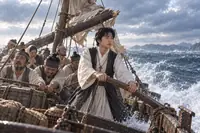
On December 15, 1844, in Jinan, China, he was ordained a deacon by Bishop Jean-Joseph Ferréol. At the beginning of 1845, the deacon Kim Taegon accomplished a daring feat: he slipped across the border alone, back to Seoul. There he collected money from the faithful and bought a rickety old wooden sailboat used for carrying fish. He gathered eleven poor peasant Christians who had never once been to sea, and, captaining it himself, steered that fragile wooden boat across the rough Yellow Sea to Shanghai. A storm broke the mast and the boat drifted close to disaster, but thanks to his firm faith all of them landed safely.
On August 17, 1845, in the small church of Jinshan near Shanghai, Bishop Ferréol solemnly ordained Andrew Kim Taegon a priest. It was a historic day for the Korean people: he became the first Korean Catholic priest. Soon afterward, Father Andrew Kim Taegon sailed that same wooden boat again, secretly bringing Bishop Ferréol and Father Daveluy across the sea to land on the coast of Chungcheong in October 1845.
Chapter 4 of 6
A shepherd of the dark nights
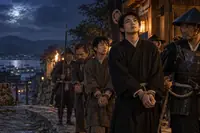
Back in his homeland, Father Andrew Kim Taegon began a hidden pastoral life. By day he disguised himself as a nobleman in mourning: by Korean custom of the time, no one could look at the face of, or question, a man wearing the large straw mourning hat that hid the face. By night he walked over dangerous mountain passes to reach every remote Christian community, celebrating Mass, hearing confessions and strengthening the faith of believers living in hiding and poverty.
Seeing that the land border was too dangerous, the bishop gave him the secret task of surveying the western sea routes to receive the next missionaries. On June 5, 1846, on the island of Sunwi near Hwanghae, while trying to contact Chinese trading boats to send letters and maps to Shanghai, Father Andrew Kim Taegon fell under suspicion and was arrested by the royal police.
Chapter 5 of 6
A steadfast heart in prison
Seeing that he was highly educated, fluent in French, Latin and Chinese, and widely knowledgeable about world geography, the court officials and the king himself at first greatly admired his talents. They tried every kind of promise to tempt him to give up the Catholic faith and accept a high post at court. But Father Andrew Kim Taegon smiled and refused. He said:
“I honor the king, but first of all I must honor God, the King above all kings!”
They turned to savage torture: he was beaten with thorny wooden rods, hung upside down from a beam and tortured with red-hot iron pincers. For three months in a dark prison, interrogated more than forty times, his body bruised and bleeding, the young priest remained remarkably serene. The jailers and his fellow prisoners were moved by his gentleness and kindness.
From his dark prison, he secretly wrote his last pastoral letter to all the faithful of Korea, a masterpiece of faith:
“Dear brothers and sisters, remember that our Lord entered a life of suffering before entering His glory... If we do not suffer with Him, how can we share in His glory? Do not let these trials frighten you or make you lose heart! Hold fast to the faith, love one another with all your hearts, and be united in Christ! Very soon I will finish my race at the place of execution... I will see you all again in Heaven!”
Chapter 6 of 6
The martyr’s crown on the sands of Saenamteo
On September 16, 1846, he was sentenced to death by beheading. Father Andrew Kim Taegon was led out to the sands of Saenamteo beside the Han River, a place now in Ichon-dong, Yongsan District, in the heart of Seoul, and still preserved today as a martyrs’ shrine. After bearing powerful witness to his faith before the crowd, he knelt on the sand and calmly bowed his head. The executioner’s sword came down, and the twenty-five-year-old first priest offered his blood to God as a sacrifice of thanksgiving.
His head was displayed on a wooden pole for three days as a warning. On the night of September 19, a group of brave faithful risked their lives to slip into the execution ground, recovered his body and buried it with honor at Mirinae.
Pope Pius XI beatified him on July 5, 1925. And on May 6, 1984, during his visit for the two hundredth anniversary of the Church in Korea, Pope Saint John Paul II canonized Andrew Kim Taegon together with one hundred two Korean martyrs in Seoul itself. It was the first canonization in history celebrated outside the city of Rome. The Church celebrates him and his companion martyrs on September 20 each year.
Saint Andrew Kim Taegon leaves all of Asia a shining witness: a Church built on the blood of its own sons and daughters will never be destroyed. He was the boy who walked thousands of kilometers to study the faith in a foreign land, and the priest who steered a boat with his own hands to bring missionaries home across the sea. He teaches each of us to cling to Christ even in life’s fiercest storms, because a believer’s true life does not belong to this passing world; it blossoms forever in our heavenly homeland.
The end of the story
You have walked with Saint Andrew Kim Taegon to the end of the story.
Some stages of the road he walked bring a lump to your throat:

Born into a family with three generations of martyrs, he walked for more than six months across Manchuria to reach Macau and study for the priesthood.
With his own hands he steered a fragile wooden fishing boat across the rough Yellow Sea to bring the bishop back to his persecuted homeland.
In his dark prison, when tempted with high office to give up the faith, he answered: "I honor the king, but first of all I must honor God, the King above all kings!"
Stay in silence
You understand how a Church can grow from blood: the Church in Korea was not planted by foreign missionaries, but by sons like him who sought out the faith themselves and kept it with their very lives.
I honor the king, but first of all I must honor God, the King above all kings!
Let us pray
Saint Andrew Kim Taegon,
you were the first priest of Korea, crossing the sea in a fragile boat to bring the bishop back to your persecuted homeland. In prison you said: "I honor the king, but I must honor God above all."
Pray for the churches of Asia, especially where the faith is still hindered.
Help me keep the faith that my forebears handed down with their very lives.
Amen.
Sources
- Feast dayAuthor’s edited profile
- Patron ofPatronages and symbols, version 1.1
- Often depicted withPatronages and symbols, version 1.1
- Reflectionewtn.com
- Reflectionweb.cpbc.co.kr
Meet the next one
 Journey 7