

Journey 1 · Those Who Met the Lord
Saint Matthias
The one who was there from the start
Feast day May 14
Tap to step inside
Saint Matthias
The one who was there from the start
Map of a life
This life told in 4 chapters
Begin the journey
Feast day
Saint Matthias
Some places may celebrate on a slightly different day.
May 14
Patron of
- The city of Trier (Germany), where his relics are kept
- Those recovering from alcoholism
Often depicted with
- An axe
- A book
Opening
Opening
When the name Matthias was suddenly called out in the community in Jerusalem, he was no stranger who had just walked into the crowd of believers. He had quietly traveled with the band of the Lord’s followers for years; the Gospels simply never once mention his name. Now a life so quiet and humble it was almost invisible was suddenly given a great responsibility, before the whole early Church.
Some people become known only on the day they are entrusted with an important mission. But the steadiness and faithfulness that let them carry that great task have usually been forged and tested quietly through many days that no one noticed.
Chapter 1 of 4
Years without a name in the story
Saint Matthias lived in the first century. We know nothing of his birth, hometown, trade or age. Note that he is a different person from the evangelist Matthew, the tax collector whose story is told elsewhere in this app, though the two names sound alike.
Everything the Acts of the Apostles tells us about Matthias comes down to a single condition Saint Peter set before the whole community: the person must be one who had accompanied the Apostles throughout the whole time the Lord Jesus went in and out among them — from the day John baptized him until the day he was taken up into heaven — so as to bear witness with them to his Resurrection before everyone.
Matthias was put forward by the community because he had walked that whole long road, without missing a single stage. He was not the kind of person who heard an exciting story secondhand and then rushed to claim a prestigious position. He had eaten with them, walked dozens of kilometers of road with them, shared the hardships and joys of the wandering life of those who followed the Lord. Yet in all the Gospels, not a single event of his own is told, as if he always stood somewhere in the crowd of disciples, never called by name to step forward.
Perhaps the band who followed Jesus through those years was much larger than the number Twelve we usually hear. Besides the core group always named, there was a wider circle: quiet disciples who followed to listen and to serve, then blended back into the crowd as the group moved on to another region. Matthias must have been one of them: close enough to witness everything, but humble enough never to try to push to the front.
Chapter 2 of 4
An empty place that carried pain
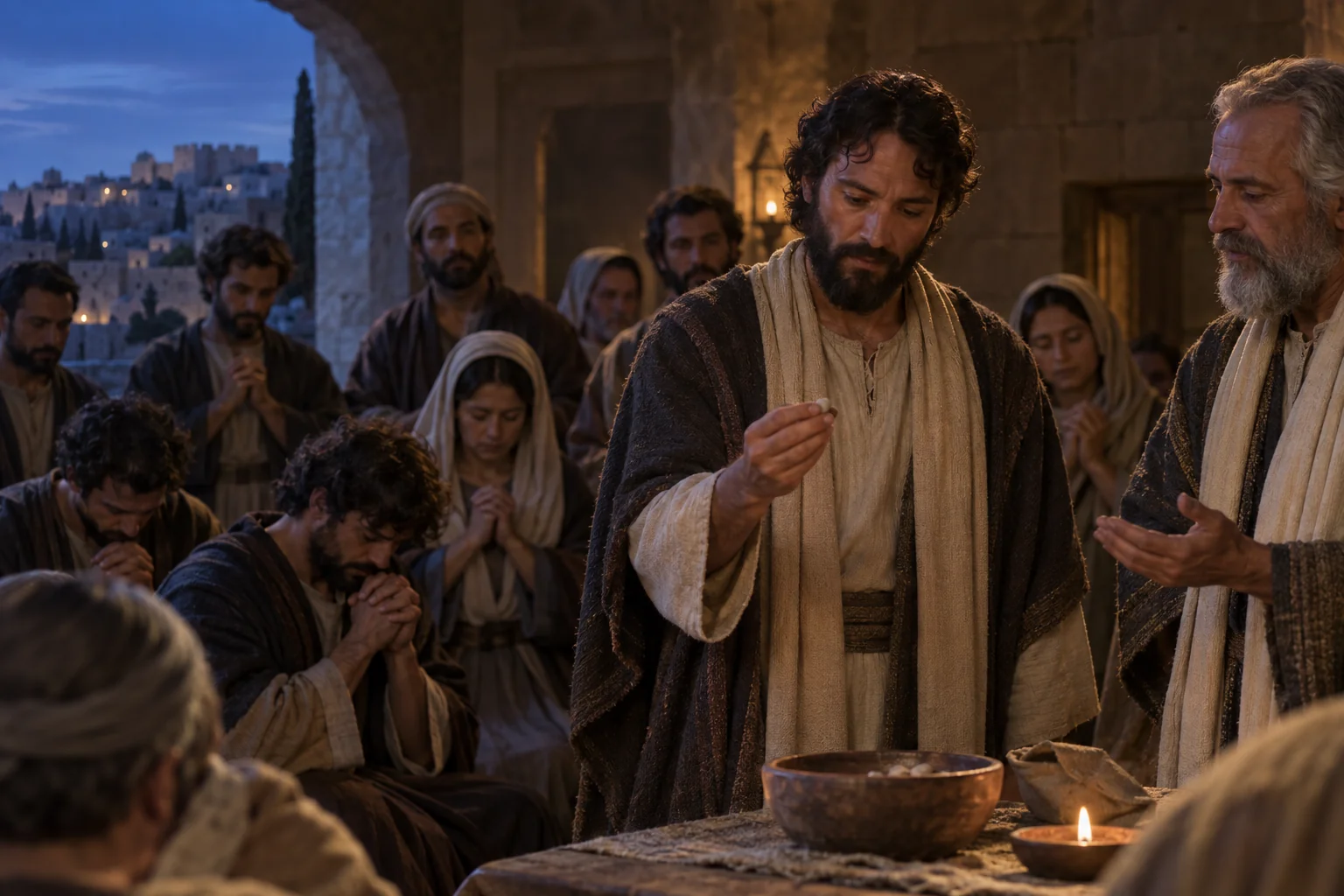
After the Lord ascended to heaven, about a hundred and twenty disciples returned together to the upper room in Jerusalem, devoting themselves to prayer. In that community, Peter, the chief of the Apostles, stood up and spoke of the still-raw grief over Judas Iscariot, who had once had a share in the apostolic ministry, who had eaten and lived with them all, but then fell and betrayed his own Master.
It was not just an empty chair, easily filled. It carried the wound of a man who had sat at the same table, heard the Master teach with his own ears, and then personally led the enemy to arrest the Master in the dark of night. The community had to face that painful fact with courage, without dodging it or pretending nothing had happened, in order to carry on the mission the Lord had entrusted to them.
Saint Peter proposed choosing a suitable person to fill that empty place. The community agreed on two men: Joseph called Barsabbas, also known as Justus, and Matthias.
It is worth noticing that Scripture also records, in full and with respect, the name of the man who was not chosen, neither forgotten nor erased. No jealousy, no struggle for power is mentioned here. Both men had lived holy lives, both were fully worthy to bear witness to the risen Lord. Only one would be given this official task, but the worth and dignity of the other before God were not lessened in the slightest.
We do not know how Joseph Barsabbas, the one not chosen, took the result. Scripture does not say whether he was sad, whether he felt let down after the whole community had trusted him enough to put his name forward. That silence is, in a way, a lesson too: there are times we are put forward, recognized, and in the end not chosen, and the way a person accepts that quietly, without resentment, is itself a witness of faith no less precious than being chosen.
Chapter 3 of 4
A prayer before the lots were cast
The community did not decide according to anyone’s personal preference or affection. Together they prayed earnestly:
“Lord, you know everyone’s heart. Show us which of these two you have chosen to take this place in the apostolic ministry.”
Only after that prayer did they cast lots, a practice with deep roots in the Old Testament, much like the way the high priests of old used the “Urim and Thummim” kept in the breastpiece of their robes to discern God’s will in important decisions. For Jews of that time, casting lots was not seen as a matter of chance, but as a way for people to humbly admit the limits of their own reason and entrust the final decision to the provident hand of God. The lot fell on Matthias. From that moment he was officially counted with the eleven remaining Apostles, making up the full number twelve. This took place in the early 30s of the first century, in the short time between the Ascension and Pentecost.
As for Matthias, Scripture records no solemn acceptance speech from him at all. He simply accepted, without fuss. From then on, his long, quiet presence became a fully public responsibility: to bear witness with his brothers to the risen Lord before the whole world.
Chapter 4 of 4
Bearing witness to the Living One
The one mission Matthias was chosen to take on was stated very clearly by Saint Peter from the start: to bear witness to the Resurrection. His responsibility was not to round out the number twelve for the sake of appearances, but to tell everyone he met along life’s road that Jesus is truly alive.
Then the day of Pentecost came, and the Holy Spirit came down on him as on all the other Apostles, with no distinction between the newly chosen and those who had followed the Lord from the very first days. But Acts tells nothing of his own travels. He blended completely into the shared mission of the whole Church, asking for no separate place, seeking to leave no personal mark. This is also the last time Scripture records the casting of lots to discern God’s will. After Pentecost, the early Church would seek God’s guidance in another way: through the Holy Spirit himself, alive and active in the community.
That self-effacement reminds us of something important: in the heart of the Church, countless people have quietly given their whole lives to God without their names ever being recorded in any great book. A thin biography does not mean a life any less fully given.
Later Christian traditions tell that he went to preach the Gospel in Judea and some more distant lands (some traditions mention Cappadocia or even the shores of the Black Sea), and finally received the crown of martyrdom with great courage. The Church celebrates Saint Matthias the Apostle on May 14 each year.
For ordinary believers, Saint Matthias is a close companion to those who suddenly have to take on unexpected responsibilities, those asked to carry shared work while it is still unfinished, or those who have quietly served for years in their parish with few noticing and few remembering their names. Matthias reminds us of something essential: a disciple’s greatest worth lies not in being widely known, but in being faithfully present, praying together, sharing together, and patiently following the Lord day by day. God, who knows every heart, has seen each of our hearts from all eternity, even if no one else on earth has ever noticed.
The end of the story
You have walked with Saint Matthias to the end of the story.
You will still remember:
Through the pages of the Gospel, he was never called by his own name — just standing quietly in the crowd of disciples.
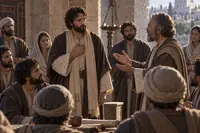
The community cast lots, and the lot fell on him, filling the very empty place Judas Iscariot had left.
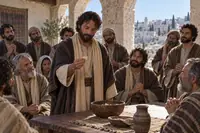
He accepted that great mission without a speech, without the slightest fuss.
Stay in silence
And you realize: a thin biography does not mean a life any less fully given.
God sees our hearts long before the world gets around to calling our name.
Let us pray
Saint Matthias,
through the pages of the Gospel, you stood quietly among the crowd of disciples. Then, chosen to fill the place Judas had left empty, you accepted a great mission without any show.
Teach me to stay faithful in the years no one notices. Make me ready when the Lord calls, even if the task is to fill a gap someone else has left.
Remind me that the Lord saw my heart long before anyone called me by name.
Amen.
Sources
- Feast dayAuthor’s edited profile
- Patron ofPatronages and symbols, version 1.1
- Often depicted withPatronages and symbols, version 1.1
- Reflectionvatican.va
- Reflectiongutenberg.org
Meet the next one
 Journey 1