

Journey 1 · Those Who Met the Lord
Saint Jude Thaddeus
A dwelling place for God
Feast day October 28
Tap to step inside
Saint Jude Thaddeus
A dwelling place for God
Map of a life
This life told in 4 chapters
Begin the journey
Feast day
Saint Jude Thaddeus
Some places may celebrate on a slightly different day.
October 28
Patron of
- Difficult cases that seem hopeless
- Armenia
Often depicted with
- An image of Jesus worn on his breast
- A flame above his head (Pentecost)
- An axe or club
Opening
Opening
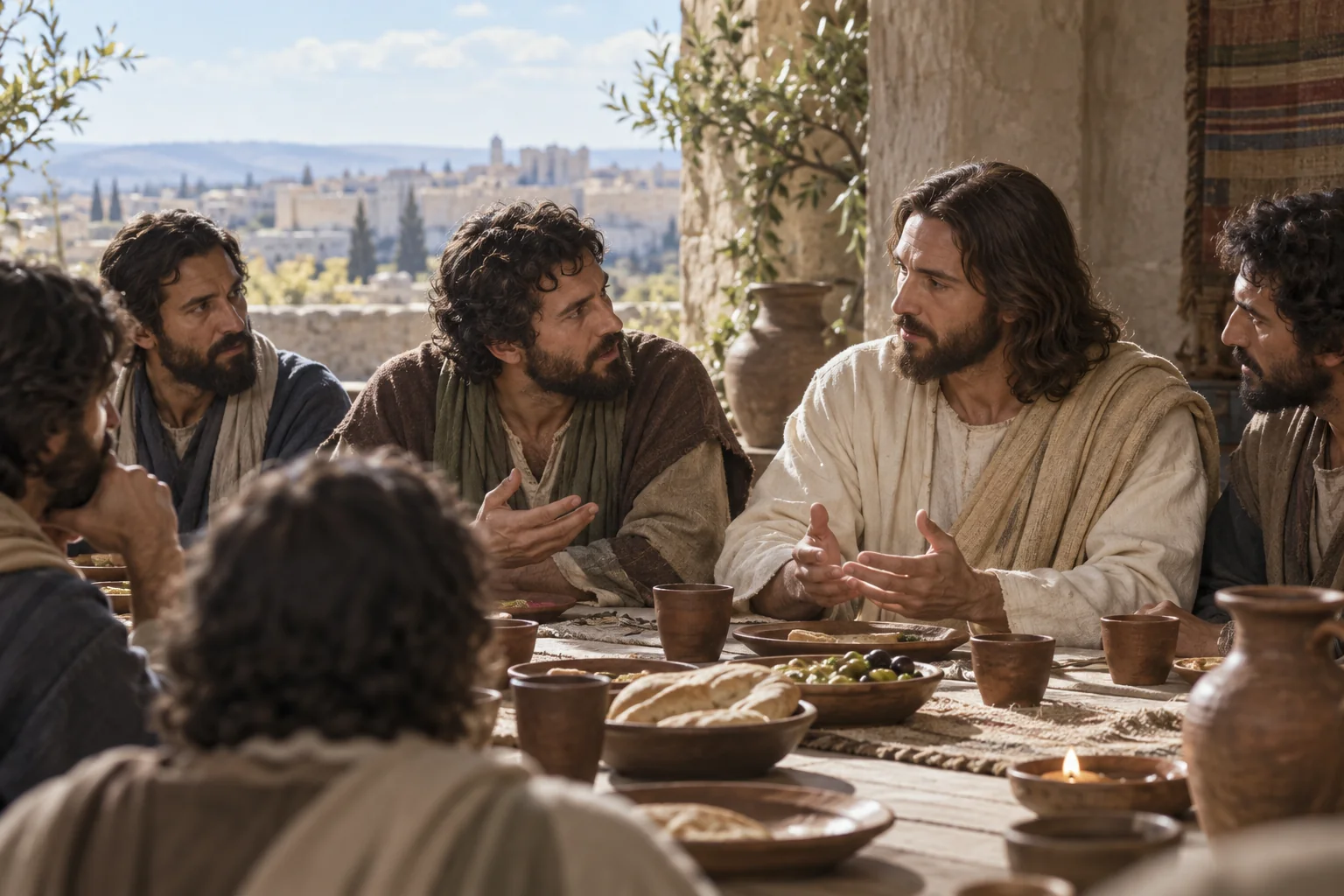
At the Last Supper, in an atmosphere so solemn and hushed it was almost stifling, one disciple could not hold back and asked Jesus a puzzled question:
“Lord, how is it that you will reveal yourself to us, and not to the world?”
Saint John, recording that question, was careful to add at once a short but important note: “That was Judas, not Judas Iscariot.”
Through that brief, respectful distinction, a faithful disciple was set apart for good from the dark shadow of the traitor who shared his name — a coincidence of names he must have carried all his life like an invisible burden. And from that seemingly simple question, he left the Church, without knowing it, one of Jesus’ most beautiful answers about the mystery of love: whoever loves me will keep my word, and my Father will love him, and we will come to him and make our home with him.
Chapter 1 of 4
The Apostle who was not the traitor
In the list of the Twelve Apostles, Matthew and Mark call him Thaddeus; Luke and the Acts of the Apostles list him as “Judas of James” — usually understood as Judas, son of a certain James, rather than brother of James. The Church’s ancient tradition has always taken these to be the same Apostle, and usually joins the two names: Jude Thaddeus.
Scripture tells us nothing else about his parents, hometown, trade or age. He lived in the first century, one of the community of disciples chosen personally by Jesus.
We should not, because of the name, rush to merge him with any other James or Judas in the New Testament, an easy trap, since the New Testament has several people bearing these common names. The lack of historical data here should be accepted honestly, without embellishment. But his own name, however little we know about him, is enough to remind us that here was a person with a whole life of his own, a “yes” of his own, and a faithfulness that can never be confused with the traitor who bore the same name.
Perhaps precisely because the name Judas immediately recalls Judas Iscariot, for many centuries believers were wary of praying to this faithful Apostle, as if afraid of calling on the wrong name and brushing against the traitor’s shadow. Only those who had reached the end of the road, with no one else left to call on, were desperate enough to turn to him. Over time, that strange reluctance gave rise to one of the most moving popular devotions in the later Church.
Chapter 2 of 4
The wondering of a heart
When Jesus gave his disciples his last instructions just before entering his Passion, he said he would reveal himself to those who love him. Jude Thaddeus immediately spoke up, unable to hide his puzzlement: why would he not show that glory to the whole world, instead of only to their small group?
The Gospel does not explain the deeper motive behind the question. We may sense in it the bewilderment of a man who wanted the One he loved to be known and rightly honored by the whole world, a very human and understandable wish. But we need not attribute to him any worldly political ambitions that Scripture itself never mentions.
Jesus did not answer with an explanation about power or fame. He took the conversation straight into the depths of love and of keeping God’s word. God does not choose to show Himself in thunderous power that frightens people into submission. He chooses to dwell, quietly and steadily, in a heart that humbly listens to His word and puts it into practice.
Jude Thaddeus asked the very question so many ordinary people quietly ask when they are struggling or at a dead end: why does God not work miracles so obvious that no one could deny them anymore? Through his answer, Jesus showed that God does not want to impose faith through displays of power, but to draw near to people through a living relationship of love, growing day by day from within each person’s heart.
The question also shows something else: even among those closest to Jesus, there was still a gap between what they wanted and what God actually intended. Jude Thaddeus was not the only one of the Twelve who pictured wrongly how the Kingdom would come. But unlike the times the other disciples squabbled over the best seats, his question came from a rather pure wish: he wanted his Master to be recognized by the whole world, not to bask in reflected glory himself. It was an endearing misunderstanding rather than a blameworthy ambition.
Chapter 3 of 4
Staying faithfully with his brothers
After the Ascension, the Acts of the Apostles records that Judas, son of James, was still among the Apostles praying earnestly with Our Lady and the other women in Jerusalem. That troubled question at the Last Supper did not separate him from the community, nor make him feel out of place for having asked something rather naive. He stayed, faithful, among brothers who shared one hope.
After that, Scripture tells us nothing more about his journey. The New Testament contains a short letter bearing the name Jude, whose author introduces himself as “a servant of Jesus Christ and brother of James.” Though the exact link between the author of this letter and the Apostle Jude Thaddeus is still debated by scholars, the letter remains a precious gift, urging believers to keep the faith pure and persevere in God’s love, even in the fiercest trials.
Remarkably, this letter, short as it is, contains one of the most beautiful blessings in the whole New Testament, often used as a closing in the liturgy:
“To Him who is able to keep you from falling, and to present you without blemish before His glorious presence with rejoicing.”
If this is truly the same Jude who asked his Master why he would not reveal himself to the world, then it seems he found the answer to his own question: God’s glory does not come through a noisy display before the crowds, but through each soul kept faithful to the very end.
Chapter 4 of 4
Memories of the lands of the East
Ancient Christian traditions link the missionary work of Jude Thaddeus to Mesopotamia and Persia — lands stretching across today’s Iraq and Iran — often together with Saint Simon the Apostle. Some traditions say he reached the city of Edessa and helped found the Church in Armenia, so that the ancient Armenian Church still honors him, together with Saint Bartholomew, as the two patron saints of the whole nation. These stories often say that the two Apostles were martyred together in those distant Eastern lands, around the year 65. Though the details of their routes, the year of death and the manner of execution lack the historical precision of the stories recorded in the New Testament, devotion to him has taken deep root in the liturgical tradition of the whole Church, East and West.
The Church celebrates Saint Jude Thaddeus together with Saint Simon the Apostle on October 28 each year.
Over the centuries, Catholics around the world have turned to Saint Jude Thaddeus as a powerful intercessor in difficult cases and situations that seem to have no way out, precisely because for a long time people hesitated to pray to a saint whose name recalled the traitor, so that only those at the end of the road, with nothing left to cling to, had the courage to turn to him. The devotion grew out of faith and the simple prayers of the poor; it is not some magical power apart from God.
For Vietnamese Catholics facing desperate circumstances, broken families or serious illness, turning to Saint Jude Thaddeus for his prayers is still a great support. But the answer Jesus gave him long ago leads us much further: even when circumstances have not changed at all, with no sign yet of an obvious miracle, we can still prepare a “dwelling place” for the Lord in our own hearts — by keeping our hearts upright, loving the people right beside us, and persevering in hope, however long the road, however unseen the result.
The end of the story
You have walked with Saint Jude Thaddeus to the end of the story.
Some images that do not fade:
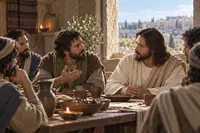
A puzzled question at the Last Supper: "Why will you reveal yourself to us, and not to the world?"
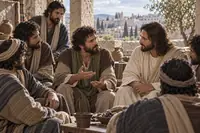
A name forever needing a footnote: "That was Judas, not Judas Iscariot."
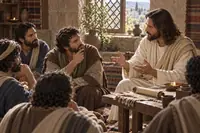
For centuries, only those at the end of the road, with nothing left to cling to, found the courage to turn to him.
Stay in silence
You suddenly notice: the man whose name recalled the traitor became, in the end, the last refuge of the most despairing souls.
Some names are misunderstood for a lifetime — but true faithfulness does not need to be called by the right name to be worth something.
Let us pray
Saint Jude Thaddeus,
for centuries those at the end of the road have turned to you. You bore a misunderstood name, and yet became the refuge of the most despairing souls.
I bring you the things in my life that seem to have no way out. Pray for me, so that I do not let go, but keep trusting in the Lord.
And help me stay faithful to the Lord even when no one knows me, even when no one calls me by my right name.
Amen.
Sources
- Feast dayAuthor’s edited profile
- Patron ofPatronages and symbols, version 1.1
- Often depicted withPatronages and symbols, version 1.1
- Reflectionvatican.va
- Reflectiongutenberg.org
Meet the next one
 Journey 1