

Journey 1 · Those Who Met the Lord
Saint Matthew
The man who rose from the tax booth
Feast day September 21
Tap to step inside
Saint Matthew
The man who rose from the tax booth
Map of a life
This life told in 5 chapters
Begin the journey
Feast day
Saint Matthew
Some places may celebrate on a slightly different day.
September 21
Patron of
- Accountants and bankers
- Tax and finance workers
- The city of Salerno (Italy)
Often depicted with
- A winged man (an angel)
- A money bag
- The book of the Gospel
Opening
Opening
Jesus was walking past a man sitting at a tax collector’s table beside a busy road. He stopped, looked straight at him, and said just two words:
“Follow me.”
The man sprang to his feet, left everything lying on the table, and followed him at once.
That is how Matthew enters the Gospel story: with a single, decisive, surprisingly brief gesture. He made no stirring speech to prove he deserved to be chosen. He offered no excuse for the trade everyone despised. There was only a loving call that reached him right at his disreputable place of work, and a whole life turned around from the moment he dared to stand up and answer.
Chapter 1 of 5
A booth in the street, and the eyes of the town
In the very Gospel that bears his name, Matthew introduces himself as a tax collector. Mark and Luke, telling the same scene, call him Levi. The Church has always held that both names belong to the same man; perhaps Levi was his birth name and Matthew the name he took after following the Lord. The meeting took place in Capernaum, the busy fishing town on the Sea of Galilee where Peter and Andrew had made their home.
The location was no accident. Capernaum lay right on the border between the territory ruled by Herod Antipas and the territory governed by his brother Philip — two separate realms in a Jewish land carved up under Roman rule. Goods crossing that border paid customs duty, and Matthew was the one collecting it. The post was guarded by a detachment of Roman soldiers, which shows this was no small, obscure job but a link in the empire’s great machine for squeezing out revenue.
Scripture does not record Matthew’s birth, age or childhood. But his work is stated plainly. In the Jewish society of the time, tax collectors were in a bitter position: despised and shunned by their own people as traitors, lackeys of a foreign power growing rich on the sweat and tears of the poor. The Gospels often list them alongside public sinners, the kind of people a devout Jew would avoid at all costs.
That does not give us leave to invent frauds Matthew might have committed. But it helps us feel the weight of Jesus’ gaze when he stopped in front of that tax booth. Where everyone else saw only a contemptible trade and a sin that could never be washed away, he saw a man who could be forgiven and made completely new.
Matthew stood up. Saint Luke has a beautiful phrase for that moment: he
“left everything and followed him.”
The Lord’s call was not just a passing feeling of being forgiven and comforted. It demanded a real change in his whole way of life: leaving the table where he had piled up money for so long, giving up a steady if disreputable income, and stepping into a future he could not foresee.
Chapter 2 of 5
A banquet that offended many
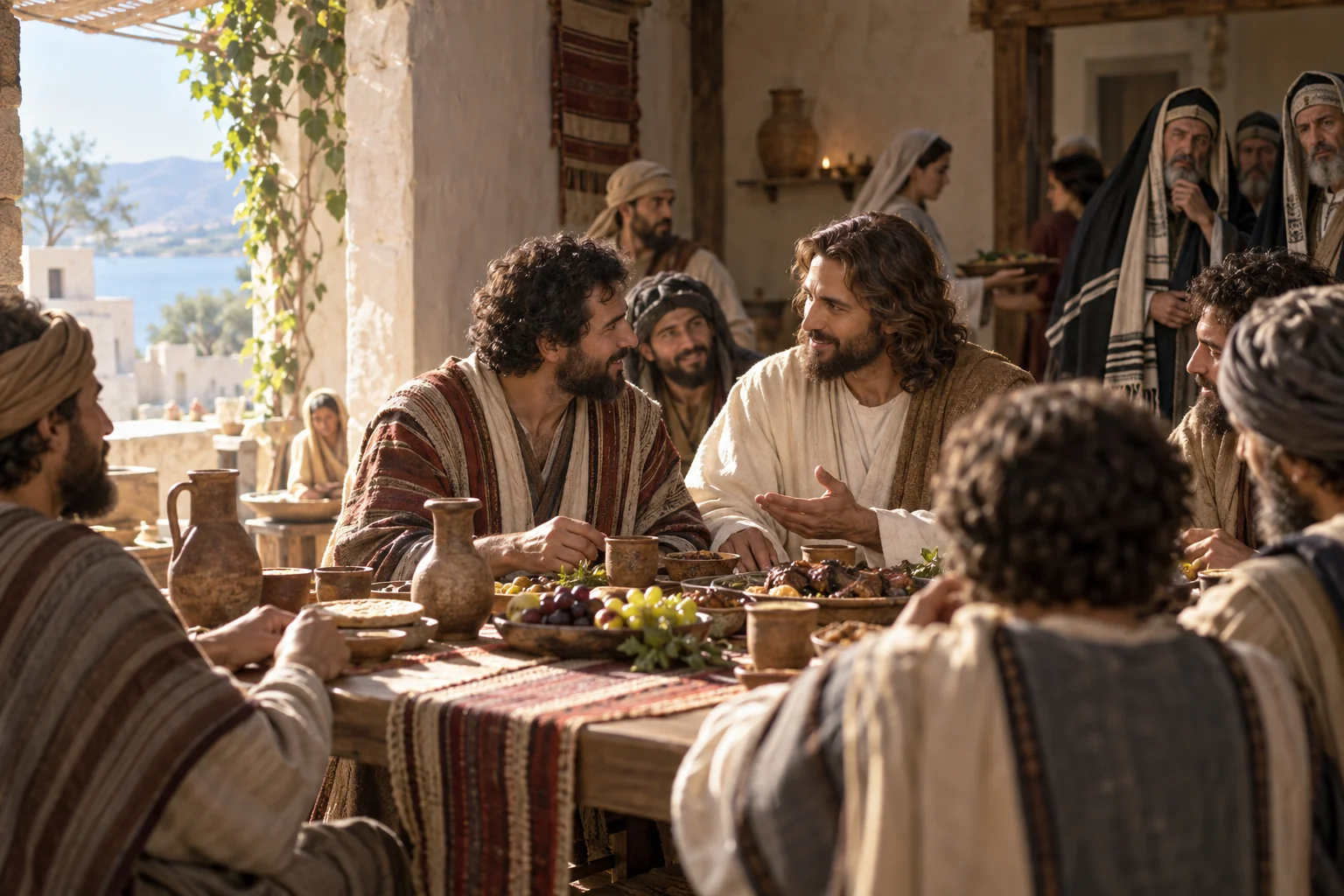
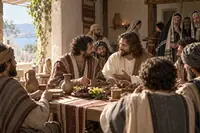
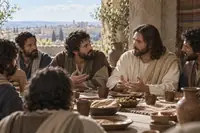
Right after that call came a lavish banquet. Many other tax collectors and people branded as sinners came and sat down to eat with Jesus and his disciples. Saint Luke says it was Levi himself who gave a great feast at his house in his Master’s honor, perhaps as a way to introduce his new Master to his old friends, outcasts like himself.
The Pharisees and scribes saw it and grumbled openly to the disciples: why does your Master eat and drink with tax collectors and sinners? Jesus answered with a simple image:
“It is not the healthy who need a doctor, but the sick. I have not come to call the righteous, but sinners to repentance.”
In the Gospel that bears his name, Matthew adds his Master’s pointed reminder that God desires mercy, not sacrifice.
That warm meal did not do away with the need for real conversion. But it shows that conversion often begins when a person feels truly welcomed, allowed to sit close to the One who can heal every hidden wound of the soul. Before he was an Apostle honored through the ages, Matthew was simply someone Jesus was glad to share a meal with.
We do not know exactly what he shared that day with his old friends. But the house of a shunned tax collector became a place where other lost souls could meet the Lord. The new life of a convert, it turns out, does not have to cut off every old tie; it can open up right in the middle of the friendships of their former life.
Chapter 3 of 5
Learning to be one who is sent
Matthew was chosen as one of the Twelve. Beside him were men of very different backgrounds, trades and temperaments: simple fishermen like Peter and Andrew, and Simon the Zealot, from a movement that loathed anyone working for Rome. A tax collector once seen as a traitor to his people now shared meals and roads with men who might once have openly despised him. The Twelve were not people who already got along or who came from the same class. They had to learn to live together and be patient with one another, around one center: Jesus himself.
He was among those who heard the Sermon on the Mount, who were sent out to preach in the villages, and who walked with the Master through the days of the Passion and the Resurrection. Yet the Gospels record nothing in particular that Matthew said or did afterwards. We cannot put words in his mouth that Scripture never recorded, nor say where he was in the hour of the Cross.
After the Lord ascended to heaven, the Acts of the Apostles still lists him among the Apostles gathered in prayer in the upper room, awaiting the Holy Spirit. From a lonely tax table by the road to a room where he prayed with his brothers in one heart and mind is a long way, and the lack of details takes nothing from it. He stayed quietly, steadily faithful to the call he had heard beside that tax booth long before.
Chapter 4 of 5
A Gospel bearing a tax collector’s name
The Church’s ancient tradition links Matthew’s name to the Gospel that stands first in the whole New Testament. Papias, writing in the early second century and quoted centuries later by the historian Eusebius, mentions that Matthew collected the sayings of the Lord in the Hebrew language. That ancient testimony is precious, though modern scholars note that the Greek Gospel we have today is not simply a word-for-word translation from his own pen.
In the Gospel bearing Matthew’s name, readers meet a Jesus who fulfills the promises of the Old Testament to the people of Israel. The genealogy that opens the book places him right in the middle of a human history full of failures and weakness, neither glossed over nor hidden. The Sermon on the Mount opens with the Beatitudes, for the poor, the meek, the peacemakers. And all through the book runs teaching about forgiveness and about caring for the least of our brothers and sisters. Perhaps it is no accident that the man who wrote those words had once been counted among the most despised.
The Gospel closes with the great command of the risen Lord: go and make disciples of all nations, together with the warm promise that comes with it:
“I am with you always, to the end of the age.”
A man who once sat alone collecting taxes by the roadside, shunned by everyone, is forever linked in the Church’s memory to a message that reaches the ends of the earth.
Chapter 5 of 5
Years in the silence of history
Later traditions tell that Matthew preached first to the Jews, then went on to more distant lands such as Ethiopia or other regions of the East, but these accounts do not agree, some saying he died in peace and others that he was martyred. The date of his death, his age, and the manner of his death cannot be known for certain from the records that survive.
The Church celebrates Saint Matthew the Apostle on September 21 each year. He has been venerated since the Church’s earliest days, without the formal canonization later saints received.
For Vietnamese Catholics who bear the name Matthew, his life brings comfort and hope: a wayward past or a despised trade cannot shut a person’s future before God. But that hope asks for action, not just good thoughts: daring to stand up and step out of old, self-serving habits, so that God’s love can make your whole life new. That tax booth by the Sea of Galilee is a reminder that the Lord can call us anywhere in our everyday lives. Perhaps all that matters is whether our heart is ready to stand up and follow Him.
The end of the story
You have walked with Saint Matthew to the end of the story.
You will hardly forget:
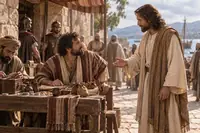
Sitting behind his tax booth, he heard just two words, "Follow me," and stood up at once, without a word of explanation.
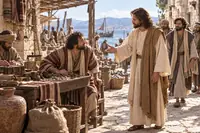
He threw a feast and invited his old friends, people shunned by society like himself, to meet the Master.
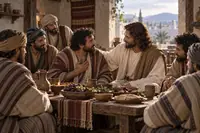
From a name everyone despised to the writer of the first Gospel of the New Testament.
Stay in silence
Turning it over, you realize: the Lord’s gaze stopped exactly where everyone else saw only a contemptible trade, and saw a life that could begin again.
The past locks no one’s future, as long as we still dare to stand up.
Let us pray
Saint Matthew,
sitting behind your tax booth, you heard "Follow me" and stood up at once. Then you threw a feast and invited even those shunned by society to meet the Master.
Do not let my past keep me bound. Help me stand up from whatever keeps me far from the Lord: money, bad habits, fear of what people think.
Teach me never to look down on anyone because of their work or their past, but to see them with the eyes with which the Lord saw you.
Amen.
Sources
- Feast dayAuthor’s edited profile
- Patron ofPatronages and symbols, version 1.1
- Often depicted withPatronages and symbols, version 1.1
- Reflectionvatican.va
- Reflectiongutenberg.org
Meet the next one
 Journey 1