

Journey 1 · Those Who Met the Lord
Saint Mark
The one who came back to the road
Feast day April 25
Tap to step inside
Saint Mark
The one who came back to the road
Map of a life
This life told in 5 chapters
Begin the journey
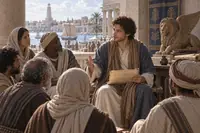
Feast day
Saint Mark
Some places may celebrate on a slightly different day.
April 25
Patron of
- The city of Venice (Italy)
- The Church of Alexandria and the Coptic Christians of Egypt
- Secretaries and lawyers
Often depicted with
- A winged lion
- The book of the Gospel
Opening
Opening
Once, in the middle of a journey, Mark turned around and went home. It looked like the small decision of a timid young man, but it left a rift so deep that years later, when the next journey was being planned, Paul flatly refused to take him along again. The argument grew so heated that the two closest companions, Paul and Barnabas, went their separate ways.
And yet, in the last pages of the New Testament, the same Paul says something quite different: bring Mark with you, for he is very useful to me in my ministry.
Between those two sayings lies a long stretch of a life quietly put right. The man who once gave up halfway was not buried forever in the failure of his youth. He got up, went on, and in the end gave every generation the most vivid Gospel pages we have about Jesus, so human and so close.
Chapter 1 of 5
A house where people were praying
The Acts of the Apostles calls him John, also called Mark. His mother, Mary, was a devout woman who owned a fairly large house in Jerusalem, big enough for a whole community of believers to gather there morning and evening to pray, at a time when the city was dangerous for anyone who openly believed in the One who had just been crucified. Around the year 44, when an angel freed Peter from prison in the night, the chief of the Apostles went straight to that very house and knocked at the door. Inside, the lamps were still lit, and everyone was murmuring prayers, unaware of the miracle that had just happened outside.
That was the faith Mark grew up in: a community whose members leaned on and sheltered one another under the daily threat of persecution. Scripture records nothing of his birth, his age or his father’s name. We are not even sure he ever met Jesus during His earthly life. Some like to think that the young man who panicked, left his linen cloth behind and fled naked on the night the Lord was arrested (a strange detail found only in Mark’s Gospel) was Mark quietly telling on himself. But the text names no one, so this will always remain a fond guess, not a fact.
Mark was also closely related to Saint Barnabas; the letter to the Colossians plainly calls him Barnabas’s cousin. That family tie would shape the road ahead of him, in ways both good and not so comfortable.
Chapter 2 of 5
To Cyprus, and back home
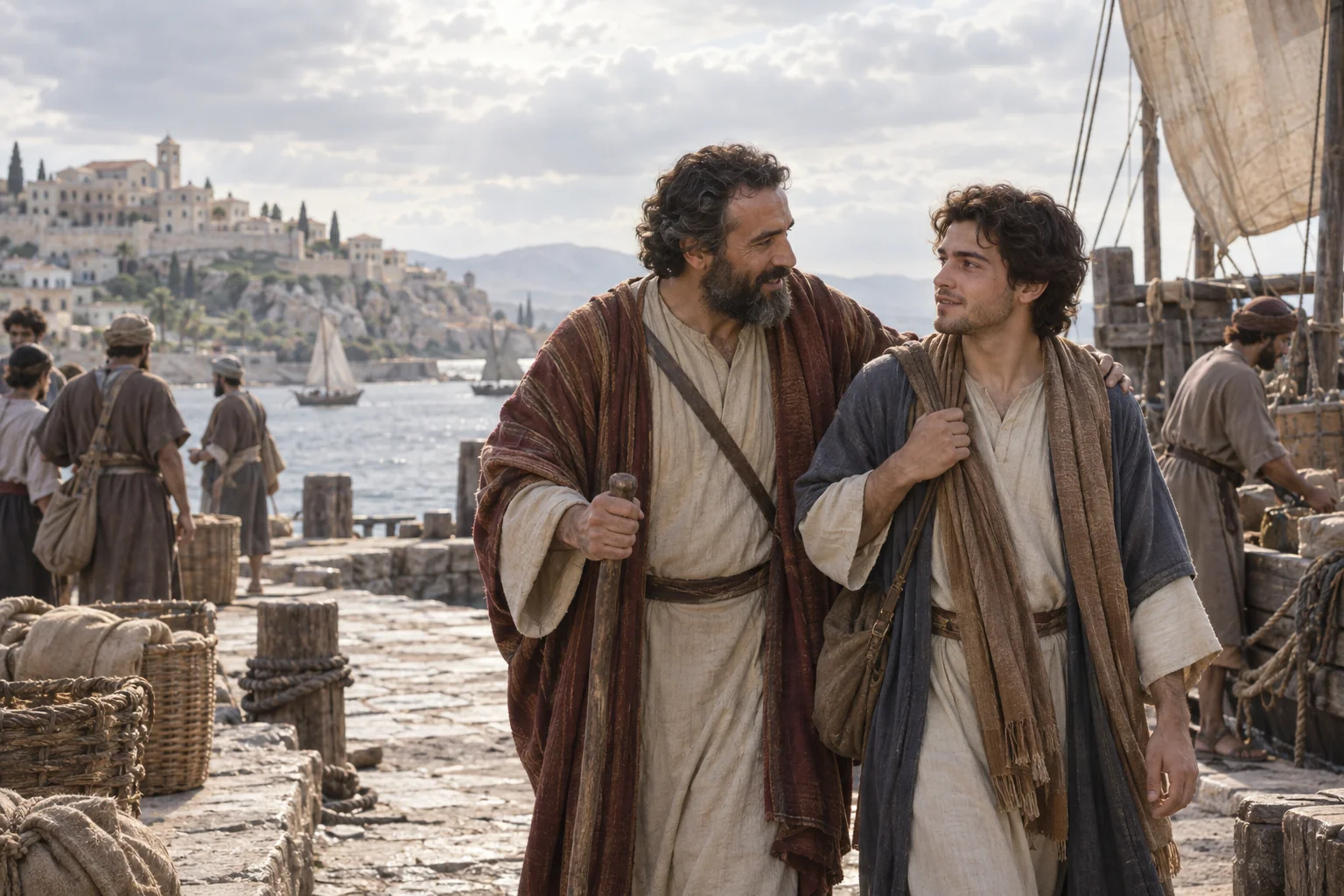
On the first missionary journey, around 46 to 49, Barnabas and Paul took the young John Mark along as their assistant. The group left Antioch, sailed to Cyprus, and then headed deep into the unfamiliar country of Asia Minor.
But when they reached Perga, in Pamphylia, Mark left the group and went back to Jerusalem. Acts never explains why. But a look at the road ahead of them helps us imagine the fear that may have gripped the young man. To go from Perga into the interior of Asia Minor, the group had to cross the rugged Taurus mountains by the only road, through a pass called the Cilician Gates, a narrow gorge notorious for centuries for robbers who lay in wait for travelers. The coastal plain of Pamphylia where they had just landed was also an unhealthy place, where malaria quietly raged every summer, driving the local people up into the hills. Perhaps Mark fell ill. Perhaps he trembled at the stories of bandits on the mountain passes. Perhaps his homesickness for Jerusalem had simply grown bigger than the courage he set out with. Scripture is silent, neither judging nor defending him.
But the consequences of that retreat were real, and very heavy. Some time later, as they prepared to revisit the churches they had founded, Barnabas wanted to give his cousin Mark another chance. Paul refused: Mark had already given up halfway once. The argument grew so heated that the two zealous Apostles parted: Barnabas took Mark by sea to Cyprus, while Paul chose Silas and went overland through Asia Minor.
In that painful episode, Mark was both the one who had let his brothers down and the one lucky enough to have a compassionate cousin who dared to trust him a second time, when others had shaken their heads. A second chance in life, it turns out, usually has a very concrete face: someone willing to keep walking patiently with us, even when the rest of the world has turned away.
Mark himself must have carried a heavy burden, knowing he was the reason the two older men he respected most had parted in bitterness. Not everyone has the courage to live with that feeling without giving up entirely or hiding from the community in shame. That he stayed with Barnabas and kept on serving, with such a stain on his name, took as much courage as crossing the Taurus mountains would have.
Chapter 3 of 5
Greetings that restored trust
Scripture records no formal apology, no solemn reconciliation between Mark and Paul. But in his letter to Philemon, Paul warmly names Mark among his closest co-workers. In the letter to the Colossians, Paul even urges the community to welcome him, as if afraid someone might still hold on to the old prejudice. And most moving of all, in the second letter to Timothy, perhaps the last lines he wrote before his execution, alone in a cold Roman prison and knowing he was about to die, Paul wrote:
“Get Mark and bring him with you, for he is useful to me in my ministry.”
No dramatic scene of reconciliation was ever recorded. And that is exactly what makes his story so close to our own. To regain the trust we have lost, we cannot simply say a few nice words and be done. It takes years of quiet work, patient presence, and faithfully carrying out each small, nameless duty. Mark kept going along that long, quiet road. The New Testament does not leave him with a bitter refusal; its last word on him is one of warm, complete trust.
Chapter 4 of 5
Keeper of Peter’s memories
In his first letter, Saint Peter affectionately calls Mark “my son”, words full of a spiritual father’s love that goes far beyond ties of blood. Ancient Christian tradition, recorded very early by Bishop Papias and the historian Eusebius, holds that it was Mark who wrote down the vivid preaching of Peter, chief of the Apostles, and it became the second Gospel of the New Testament.
The Gospel bearing Mark’s name has a rhythm all its own: fast, urgent, almost breathless, rushing the reader from one event straight into the next. In it the disciples are shown with almost painful honesty: they keep failing to understand their Master; they are weak and frightened and stumble again and again. And yet Jesus patiently leads them on and gives up on no one.
There is something very moving in this: the very man who once abandoned a journey and disappointed his companions wrote the most honest Gospel about the disciples’ weakness, glossing over nothing, hiding nothing. Perhaps because he knew how it feels to give up, Mark had the compassion to record the stumbles of others so honestly. Thanks to his pen, generations who have never set foot in Galilee can still hear the warm, deep voice of Jesus calling, see him reach out to touch the sick, and walk with him the whole road to the Cross.
Chapter 5 of 5
Alexandria and the last stretch of road
Long tradition links the last years of Mark’s mission with founding and building up the Church in the port city of Alexandria in Egypt, then one of the greatest centers of learning in the ancient world, famous for its vast library and its many scholars. The Christians of Egypt have honored him ever since as the father of their Church.
Ancient accounts say that he died a martyr in that city, though the details of his death are far less certain than what the New Testament tells us. The Church celebrates Saint Mark the Evangelist on April 25 each year. In sacred art he is often shown with a winged lion, recalling the voice crying in the wilderness with which his Gospel opens.
For Vietnamese Catholics, Saint Mark is a great comfort to anyone who has stumbled, who has let their parents or loved ones down. Giving up halfway once is never the end of a life. As long as we are humble enough to get up and patiently begin again with the smallest things, without needing anyone to notice, the Lord’s loving hand is still there, ready to send us out to serve once more.
The end of the story
You have walked with Saint Mark to the end of the story.
A few moments stay with you:
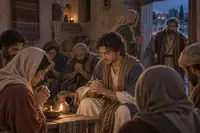
In the middle of a journey, he turned around and went home, and later his two closest friends parted ways because of him.
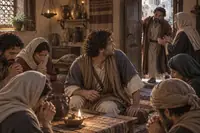
Years later, Paul himself wrote: "Bring Mark here, for he is very useful to me in my ministry."
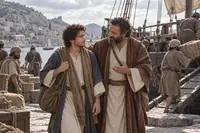
He became the writer of the most honest Gospel about the weakness of the disciples.
Stay in silence
And you see it: the very man who once gave up halfway was the one with the compassion to record most honestly the stumbles of others.
Giving up once is not a life sentence; it can be the beginning of a deeper compassion.
Let us pray
Saint Mark,
you once gave up halfway, and two friends parted because of you. But years later, Saint Paul himself called you very useful.
Pray for those who have given up, who have let others down. Let them have another chance, and know how to get up and go on.
Teach me, as you did when you wrote the Gospel, to look on the weaknesses of others with compassion, for I too have stumbled.
Amen.
Sources
- Feast dayAuthor’s edited profile
- Patron ofPatronages and symbols, version 1.1
- Often depicted withPatronages and symbols, version 1.1
- Reflectionvatican.va
- Reflectiongutenberg.org
Meet the next one
 Journey 1