

Journey 1 · Those Who Met the Lord
Saint John the Apostle
Remaining in love
Feast day December 27
Tap to step inside
Saint John the Apostle
Remaining in love
Map of a life
This life told in 5 chapters
Begin the journey
Feast day
Saint John the Apostle
Some places may celebrate on a slightly different day.
December 27
Patron of
- Theologians and writers
- Friendship
- Turkey (Asia Minor)
Often depicted with
- An eagle
- A chalice with a serpent emerging (the poisoned cup)
- The book of the Gospel
Opening
Opening
Once, Jesus gave the brothers James and John a nickname that was anything but gentle: “sons of thunder.” And yet over the years, the Church came to remember John as the gentlest Apostle of all the Twelve, with one sentence he repeated so often in his last writings that it became almost a refrain:
“Love one another.”
Between that thunderous nickname and those words about love lies the long road of a man shaped day by day, not a sudden miracle. He was not born gentle and holy. He was hot-tempered, eager for position, asking for very earthly things. Only by staying close to the One he loved, year after year, did he slowly learn what it really means to love.
Chapter 1 of 5
Leaving his father’s boat
John was the youngest son of Zebedee, the younger brother of James. His family fished on the Sea of Galilee, but they were probably not as poor as most fishing families in the region: Saint Mark’s Gospel notes that they employed hired men to help with the fishing, and later John himself knew the high priest of the day well enough to get Peter through the gate into the high priest’s courtyard on the night the Lord was arrested. That detail suggests his family had rather more standing than ordinary fishermen.
That day, when Jesus passed along the shore and called out, the two brothers were sitting in the boat with their father, mending a torn net. Hearing the call, they left their old father among the hired men at once and followed him without hesitation, without even time for a proper goodbye.
He was chosen as one of the three closest disciples, along with Peter and his brother James. He was there when Jesus took the hand of Jairus’s dead daughter and called her back to life. He was there on the high mountain, gazing on his Master’s face transfigured in blinding light. And he was the one his Master led deepest into the darkness of the Garden of Olives, on the night when his anguish was so great that he sweated blood.
Still very young, he saw human life at its extremes: power that conquers death, the dazzling glory of heaven, and suffering so deep it was almost despair. Those things cannot have been easy to reconcile in his young mind. Only after walking the whole way of the Cross to the Resurrection did John truly understand that God’s love has never stood outside human suffering, and certainly never turned away from it.
As the youngest son of a family with means, John must have been used to a somewhat more comfortable life than his companions from poorer homes. Leaving the boat and nets, for him, was not simply giving up a livelihood, but giving up a position, a security that not everyone is willing to trade. Perhaps because he had been sheltered as a child, in his early years with the Master he had something of the indulged young man about him, one who had never had to learn to give way to anyone.
Chapter 2 of 5
A “son of thunder” is shaped
The temperament of that young Galilean could be very fierce, nothing like the gentle figure people later pictured as “the disciple whom Jesus loved.” Once John came rushing to tell his Master that he had tried to stop a man who was driving out demons in Jesus’ name, simply because the man did not belong to their group. Jesus answered calmly:
“Do not stop him.”
Another time, passing through a Samaritan village whose people refused to welcome the group, the two brothers flared up and asked their Master to call down fire from heaven to burn the whole village and settle the score. Jesus turned and rebuked them very sternly.
And that was not all: the two brothers even had their own mother go to the Master to ask a special favor for them — that one might sit at his right and the other at his left when he came into his glory. Jesus looked straight at them and asked a hard question:
“Can you drink the cup that I am about to drink?”
Then he used the moment to teach all the Twelve a lesson at the heart of discipleship: whoever wants to be great must be the servant of all, for the Son of Man came not to be served, but to serve and to give his life as a ransom for many.
Scripture does not hide these blunt, rather rash episodes. Because of that, we do not mistake holiness for a gentle temperament someone is simply born with. John was as full of zeal as any young man, but that early zeal was still mixed with possessiveness, and with the craving to stand above others.
For anyone carrying responsibilities in a parish or a church group today, John’s story is not strange at all. People can be very fervent, very devoted to their own work, and still have to learn again and again to open their hearts and rejoice when someone outside their group does something good. John went through each of those painful lessons long before we had to learn them ourselves.
Chapter 3 of 5
The disciple who leaned on his Master’s heart
The Church’s tradition has always recognized John as “the disciple whom Jesus loved,” mentioned many times in the fourth Gospel — a book that, in its humility, never names its author. Reading its pages, we follow the identification that Christians have cherished for two thousand years.
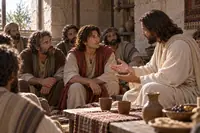
At the Last Supper, that disciple sat right beside Jesus, leaning his head on his Master’s breast to ask quietly which of them would betray him. And then, on the afternoon of Good Friday, when all the other disciples had scattered in fear, only that disciple still stood firm at the foot of the Cross, right beside Our Lady. In his last agony, struggling for breath, Jesus looked down and spoke his last wish:
“Woman, here is your son.”
Then he turned to the disciple: “Here is your mother.” From that very hour, the disciple took Our Lady into his own home.
At that moment, the Cross turned love from a vague feeling into a very concrete responsibility: to stay with the Master meant taking in the very person the Master had entrusted to him with his dying words. A new home was opened in the darkest hour of grief.
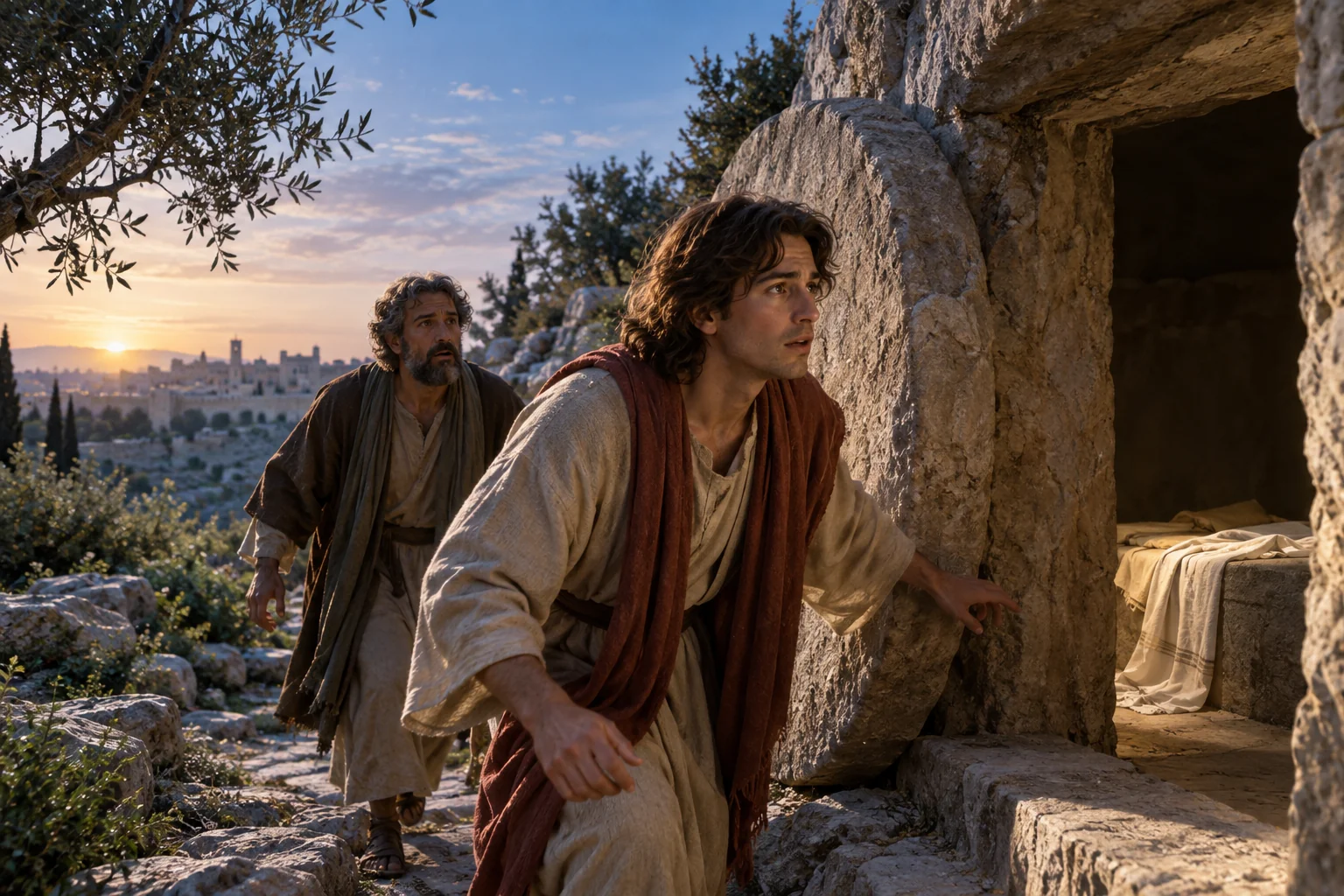
Early on the first day of the week, hearing Mary Magdalene come running back with news of the empty tomb, John and Peter raced there at once. He was younger and faster and got there first, but respectfully stopped outside the entrance, letting Peter, the eldest, go in first. Then he went in after, saw the burial cloths lying neatly folded, and he believed, though he did not yet understand it all. Later, one early morning with the mist still hanging over the shore of the Lake of Tiberias, while the disciples were still peering uncertainly at the stranger grilling fish on the shore, it was John’s keen eyes that recognized him first, exclaiming softly:
“It is the Lord!”
That close bond gave John a particular gift: a keen eye that could recognize love even in the smallest signs others usually missed. It was not some strange talent for knowing everything, but simply the natural sensitivity of a heart that belonged entirely to its Master.
Chapter 4 of 5
From Jerusalem to the memory of Ephesus
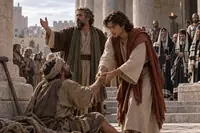
After Pentecost, the Acts of the Apostles tells us that John stayed constantly at Peter’s side. He went up with Peter to the Temple at the hour of afternoon prayer, helped heal the lame beggar at the Beautiful Gate, was arrested with him and bore witness boldly before a whole powerful council. When the good news reached Samaria, the Apostles in Jerusalem sent Peter and John down there to lay hands on the new believers and pray for them to receive the Holy Spirit.
In his letter to the Galatians, Saint Paul names John, together with James and Cephas, as pillars of the early Church. After that, Scripture tells us nothing more of John’s own travels; he quietly steps out of recorded history.
Ancient Christian tradition places his last years in the city of Ephesus, in Asia Minor — a flourishing city famous for its colossal temple of the goddess Artemis, one of the seven wonders of the ancient world, drawing pilgrims from all over the Mediterranean. Preaching one God in the heart of a city devoted to a goddess must have clashed fiercely with a whole polytheistic religion at the height of its power. And yet he held his ground there and lived to a great old age, something rare among the Apostles, most of whom shed their blood in martyrdom early on.
In that same tradition, his name is also linked to the small island of Patmos in the Aegean Sea — where the emperor Domitian exiled those he considered enemies of the state — and to the book of Revelation, so full of powerful images. On the island there is still a small cave today, said to be the place where he received the vision to write that book. Since ancient times, scholars have asked whether the author of Revelation is truly the same person as the Apostle. So the picture of John on Patmos should be received with due care, not turned into an exile with fixed dates as if from a chronicle.
At a time when the communities of the late first century were suffering persecution after persecution, the book of Revelation lifted the eyes of believers to the Lamb who had been slain and now stands in triumph. Suffering is neither hidden nor glossed over in its pages, but hope is something no earthly power is strong enough to put out.
Another legend, not found in Scripture but handed down by many ancient Christian writers, tells that before his exile to Patmos, John was taken to Rome and thrown into a cauldron of boiling oil before the city gate, but came out completely unharmed. Though the historical truth of this story cannot be verified, the image has been kept as a sign of a life preserved through every hardship, so that he could live to a rare old age and see with his own eyes the Church he had followed from its very first days spread throughout the empire.
Chapter 5 of 5
What remains when the thunder falls silent
The fourth Gospel and the three letters bearing John’s name are a priceless treasure the Church has received and kept for two thousand years. Though scholarly questions about how those texts came to be still have no final answers, running through every page is a testimony that has never faded: the Word truly became flesh, and
“God is love.”
That love, in his letters, is never a distant, abstract theory. It has a very concrete, very real face: Jesus bending down to wash each disciple’s feet, loving them to the end, giving his whole life, and inviting those who follow him to love one another just as he loved them first. John’s letters also ask bluntly: how can anyone say they love God, whom they have never seen, if they close their eyes and turn away from a brother or sister in need right beside them?
The Church celebrates Saint John the Apostle on December 27, right after Christmas. For believers who take him as their patron saint, his life is an invitation to grow little by little in charity: to be less hot-headed and impulsive, less busy fighting to be right, to know how to be quietly present beside others when they suffer, and to be willing to take on duties we did not choose for ourselves.
The “son of thunder” of those early days was never forgotten along that journey. The very blunt, somewhat rough man who once asked for fire from heaven to burn a whole village kept following his Master year after year, and day by day, side by side, his Master’s love patiently polished and transformed him into the Apostle of that very love. His life gives great hope to each of us: however clumsy our nature, however many rough edges remain, God’s grace is strong enough to transform us day by day, if we open our hearts to remain forever in His love.
The end of the story
You have walked with Saint John the Apostle to the end of the story.
You will find it hard to forget:
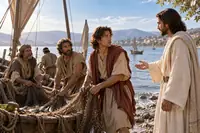
Leaving his father among the hired men, following the call without time for a word of goodbye.
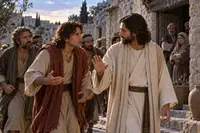
Asking for fire from heaven to burn a village that would not welcome them — and being sternly rebuked by his Master.
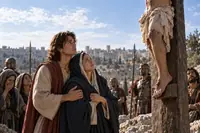
Standing alone at the foot of the Cross, receiving Our Lady as his own mother.
Stay in silence
One thing quietly stays with you: that "son of thunder" was not born gentle. His Master’s love polished him day by day, until all he had left to say was one thing: "Love one another."
No one is born knowing how to love fully — only those who let love shape them, day after day.
Let us pray
Saint John the Apostle,
in your youth you were so hot-tempered that you asked for fire from heaven to burn a village. But your Master’s love polished you, until you had only one thing left to say: "Love one another."
May the Lord shape my heart as He shaped yours: less anger, less fighting to be right, more giving way to those under my own roof.
You stood at the foot of the Cross and took Mother Mary into your home. Help me also to stay beside those who are suffering, and to open the door of my home to our Mother.
Amen.
Sources
- Feast dayAuthor’s edited profile
- Patron ofPatronages and symbols, version 1.1
- Often depicted withPatronages and symbols, version 1.1
- Reflectionvatican.va
- Reflectionvatican.va
Meet the next one
 Journey 1