

Journey 1 · Those Who Met the Lord
Saint Titus
The one who brought brothers back together
Feast day January 26
Tap to step inside
Saint Titus
The one who brought brothers back together
Map of a life
This life told in 5 chapters
Begin the journey
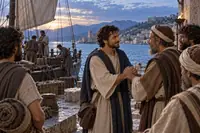
Feast day
Saint Titus
Some places may celebrate on a slightly different day.
January 26
Patron of
- The island of Crete (Greece)
Often depicted with
- A bishop’s staff
Opening
Opening
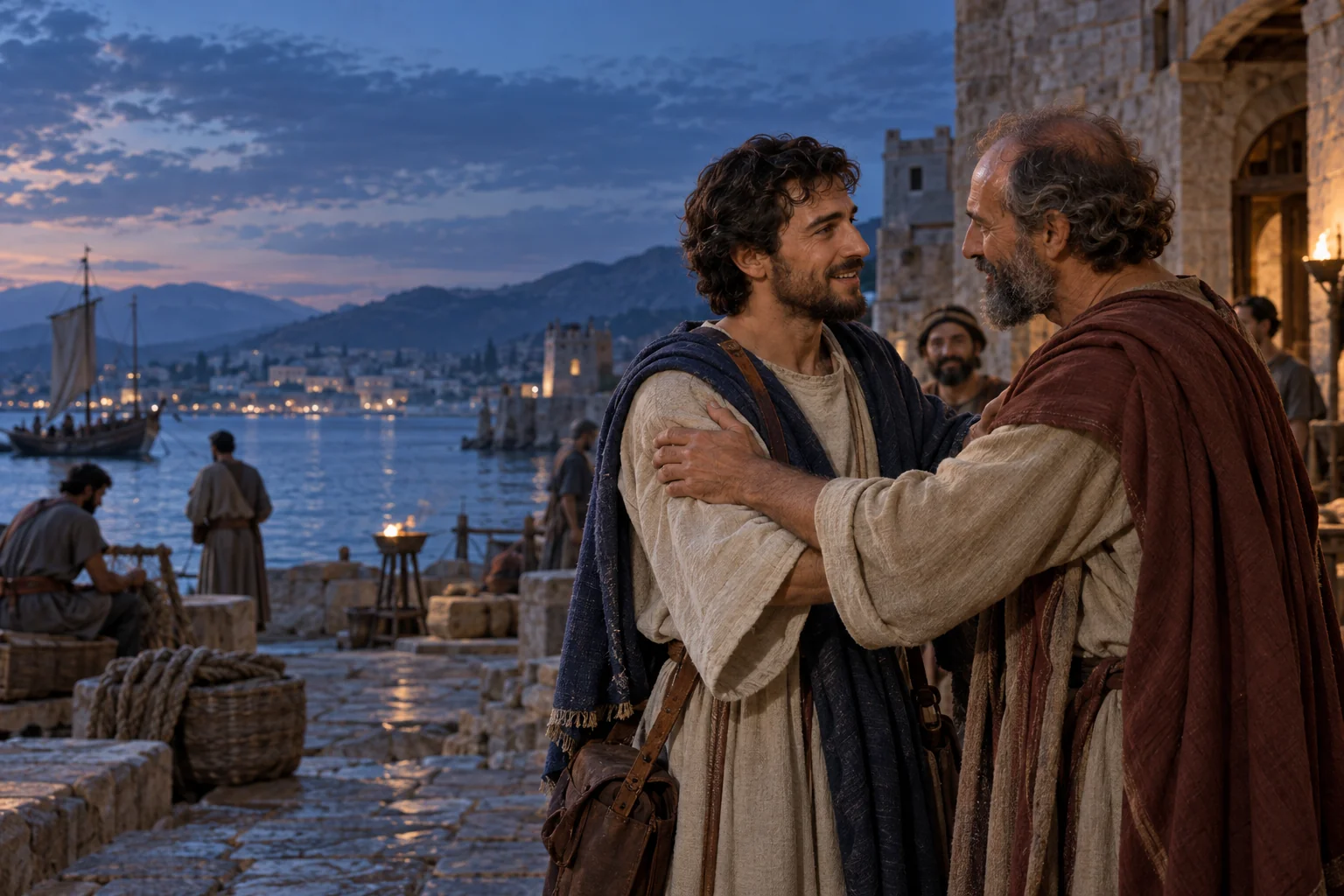
Paul’s travels had once taken him as far as Macedonia, and yet his heart had not a moment’s peace. Outside there was opposition and threats on every side; inside, a gnawing anxiety for the church at Corinth, which was in danger of falling apart.
And then Titus appeared.
He brought not just the presence of a dear friend but good news: the believers there still loved their spiritual father, their hearts had softened, and they wanted to be reconciled and put right what had gone wrong. Paul’s grief melted away, and comfort flooded in.
In that episode we see Titus doing quiet but very hard work: walking straight into a broken relationship, standing patiently among people who were angry and hurt, listening, calming them, and helping them trust each other again.
Chapter 1 of 5
A Greek in the family of faith
Titus was Greek by birth. In the letter addressed to him, Paul calls him affectionately “my true son in our common faith.” Scripture records nothing of his birth, his exact hometown, his parents’ names, or the story of the day he first received the Gospel.
The Letter to the Galatians tells how Titus once went up to Jerusalem with Paul and Barnabas. At the time a fierce debate had broken out among the Church’s leaders over whether Gentile converts had to keep the Jewish law. Though he was Greek, Titus was not compelled to be circumcised. This took place in the late 40s of the first century.
Titus’s flesh-and-blood presence turned an abstract theological debate into something very concrete. Standing before the Apostles was not a theory about the law but a real brother: a man who believed in Christ, who prayed with them, shared their meals, and was ready to give himself for their common mission.
He did not have to make himself a cultural copy of others to be accepted as a member of the household. The Savior’s grace had opened the door wide and given him his full place in the great family of the Church.
Chapter 2 of 5
Stepping into the pain of division in Corinth
In the 50s, the relationship between Paul and the church at Corinth went through heavy storms. His letters to the believers there show the slander, the bitter opposition, the misunderstandings, and the deep hurt of a father who had poured out his heart to build up a community, only to be distrusted and rejected by it.
Titus was given a delicate task: to go as a messenger into the heart of the storm. Paul was eager to meet him in Troas to hear the news. Though a door for preaching had opened there, he could not rest because his brother had not come, so he left the work and crossed into Macedonia to look for him.
And then Titus came. He brought good news of a wonderful change of heart in Corinth: the community had accepted the correction, recognized its faults, shown its love and respect, and earnestly wanted to make peace. Titus himself had been heartened by the brothers’ and sisters’ unexpectedly warm welcome. Paul wrote, deeply moved, that God, who comforts the downcast, had comforted him by the coming of Titus and by the news of peace he brought.
Scripture keeps no record of the conversations Titus patiently held on that journey. We do not know how he broached the subject, how many harsh words he had to swallow, or how long he waited for hearts to change. But the result makes one thing clear: he did not shirk a hard task to spare himself trouble.
A peacemaker needs both truth and endless patience. If we only repeat angry reproaches, the rift grows deeper. But if we want peace at any price and close our eyes to what is wrong, there will be no real healing. The Church remembers Titus for a mission that demanded both of these seemingly opposite things at once.
Chapter 3 of 5
Collected gifts and honest hands
Titus was also entrusted with a very practical job: organizing the collection for the poor believers suffering famine in Jerusalem. The Second Letter to the Corinthians mentions that he had begun this work of charity himself, and was now asked to bring it to completion.
Paul introduced the co-workers traveling with Titus and gave careful instructions that the relief money be handled openly, honorably in the sight of the Lord and of others, as if he foresaw the gossip that can arise when money gets mixed up with matters of faith. A whole community’s generosity had to be guarded with complete honesty, so that the trust of the poor, who had given their small coins, would never be betrayed.
For Titus, the communion of the Church took a very concrete form: donated coins carefully counted, passing from those who had enough into the hands of those in need. Those who do charity work or keep the parish accounts today can find an example in him: loving the poor is not just a passing burst of feeling, but also the duty of keeping clean hands and taking care with every figure.
Chapter 4 of 5
Keeping order on the island of Crete
The Letter to Titus places him on Crete, a large island in the Mediterranean that had had a bad reputation for centuries. Paul himself, in this letter, quotes a harsh saying of an ancient Cretan poet:
“Cretans are always liars, wicked beasts, lazy gluttons.”
These were not Paul’s own insults but a well-known saying that reflected the island’s poor reputation; for centuries before Christ it had been notorious as a pirates’ den. Building up the first communities of faith in such a place can hardly have been easy.
The letter charges him to set in order what remained unfinished and to appoint elders in every town on the island. Ancient tradition regards him as the first bishop of the Church there.
The letter also pays close attention to the character of those who lead the community: not arrogant, not quick-tempered, not given to drink, not greedy for dishonest gain, but hospitable, loving what is good, self-controlled, upright, and holding firmly to sound teaching. Caring for a parish, it turns out, has always been bound up with concrete things like relationships between generations, family life and the duties of daily work, not just sermons from a high pulpit.
At the end of the letter, Titus is asked to join Paul in Nicopolis once someone else arrives to take over his work. The Second Letter to Timothy later mentions him going to Dalmatia. These scattered traces sketch a man always ready to set out when his mission called, never shrinking from hardship, never clinging too long to a familiar place.
Chapter 5 of 5
A servant with no need for the spotlight
Tradition says he lived to old age and died peacefully on Crete, where he spent most of his life in service. The early sources do not tell us for certain the year of his death or his age. The Church celebrates Saint Titus together with Saint Timothy on January 26 each year.
In Vietnamese parish life, the name Titus is probably much rarer than Peter or Paul. But what he did is very familiar and still needed today: stepping in to settle a parish quarrel, rebuilding unity in a divided Catholic village, guarding trust in the community’s works of charity.
Many people remember Paul only for his stirring sermons and great letters. But if we read more slowly, we see behind those letters the quiet, weary footsteps of people like Titus, who crossed mountains and rivers to bring love and peace to their brothers and sisters.
On days when he was so exhausted it seemed he could not go on, Paul found his joy again just by seeing Titus come through the door. This saint reminds us of something simple: sometimes the faithful, caring, listening presence of a very ordinary person is enough to bring God’s peace to those who need it most.
The end of the story
You have walked with Saint Titus to the end of the story.
You still remember clearly:
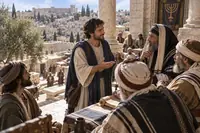
While Paul was in turmoil over the church at Corinth, Titus appeared with good news: their hearts had softened.
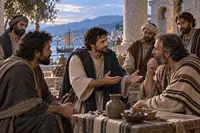
Entrusted with the collected money, he kept every coin of the poor completely accounted for.
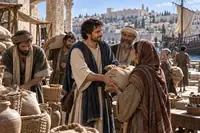
Sent to Crete, an island with a bad name, he quietly built up the first communities.
Stay in silence
You realize: not everyone is remembered for a stirring sermon. Some are remembered simply for being there at the right moment.
Sometimes just being there at the right moment for someone in need is a small miracle.
Let us pray
Saint Titus,
you brought good news when Saint Paul was in turmoil: hearts had softened. You kept every coin of the poor accounted for, and quietly built up a community in a land with a bad name.
Teach me to be honest with money, even when no one is checking.
Help me to be there at the right moment for those in need, and to bring peace back to those who are angry with one another in my family and in my parish.
Amen.
Sources
- Feast dayAuthor’s edited profile
- Patron ofPatronages and symbols, version 1.1
- Often depicted withPatronages and symbols, version 1.1
- Reflectionvatican.va
- Reflectiongutenberg.org
Meet the next one
 Journey 1