

Journey 1 · Those Who Met the Lord
Saint Mary Magdalene
Called by name at dawn
Feast day July 22
Tap to step inside
Saint Mary Magdalene
Called by name at dawn
Map of a life
This life told in 6 chapters
Begin the journey
Feast day
Saint Mary Magdalene
Some places may celebrate on a slightly different day.
July 22
Patron of
- Apostle of the Apostles (the Church’s title for her)
- Penitents
- The Dominican Order (co-patron)
- Perfumers and pharmacists
Often depicted with
- A jar of ointment
- Long hair
- A red egg (Eastern tradition)
Opening
Opening
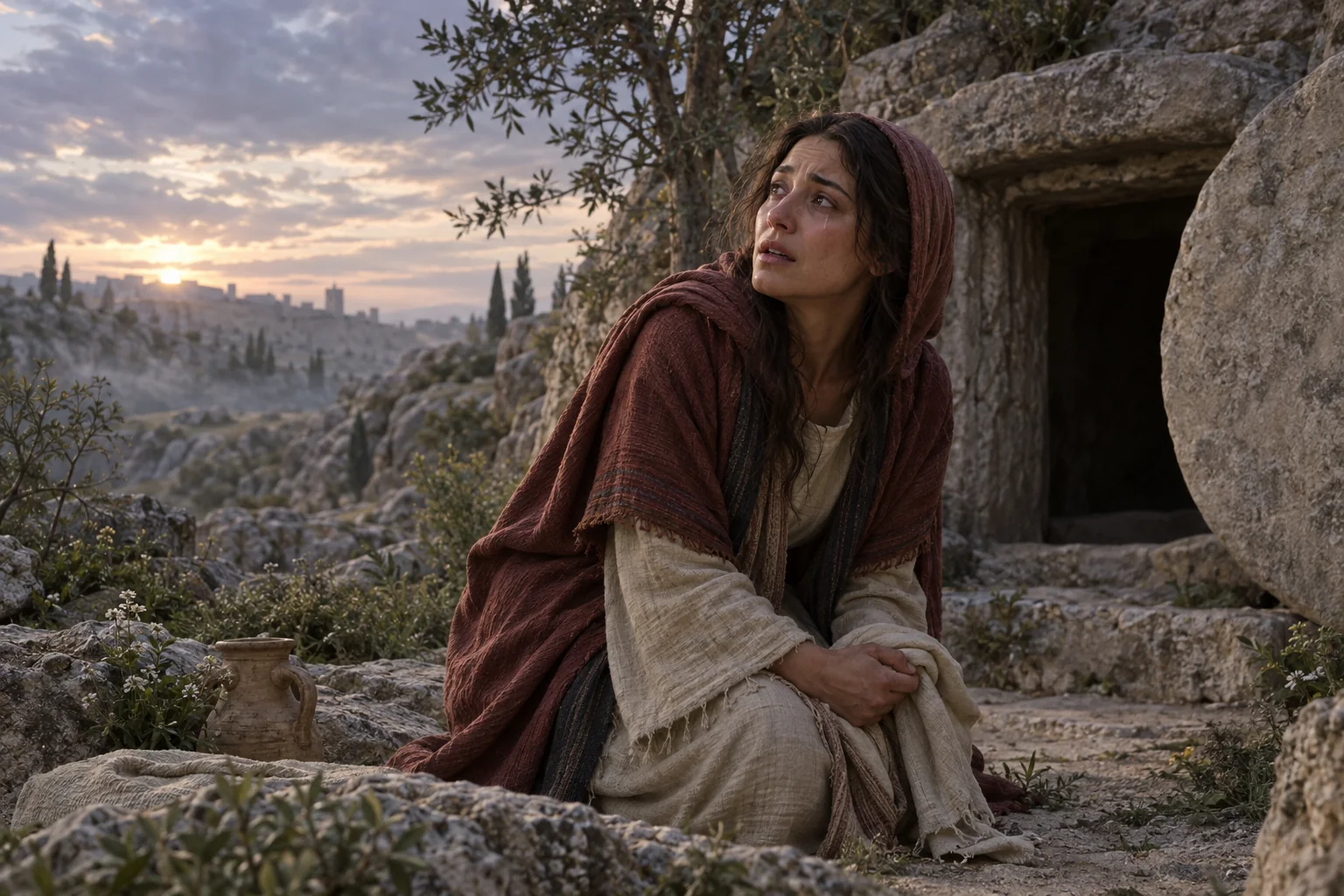
The woman stood outside the empty tomb, tears streaming down her face. She had followed Jesus for years, had seen with her own eyes the hill of Calvary soaked in blood, and remembered the very stone where his body was laid. And now even her Master’s lifeless body seemed to have been taken away. In the depth of that grief, when a stranger appeared and asked why she was crying, her eyes were so blurred with tears that she took him for the gardener.
Then he said softly: “Mary!”
That was all. Easter morning broke into Mary Magdalene’s life through one dear, familiar word. The One she had been searching for among the dead was standing right in front of her, alive.
Chapter 1 of 6
A life set free
Saint Luke introduces her as “Mary, called Magdalene,” first among the women who followed and supported Jesus and the Twelve. The name Magdalene points to her hometown: Magdala, a town on the shore of the Sea of Galilee. It was no poor, nameless fishing village, but a busy center for salting fish: the Greeks even called it Taricheae, literally “the place where fish are salted.” Archaeologists recently uncovered an ancient synagogue from the Second Temple period, one of the oldest ever found in Galilee, along with villas with finely patterned mosaic floors, showing that this was once a well-to-do town with a wealthy merchant class. Scripture records nothing of her birth, age or parents’ names.
The detail of the
“seven demons”
is Scripture’s way of describing someone gravely bound by evil and suffering terribly. It does not mean she had been a prostitute, as people mistakenly imagined and embroidered centuries later. Nowhere in the whole New Testament is she called a prostitute. She is also a completely different person from Mary, the sister of Martha in Bethany; and the Gospels never identify her with the nameless sinful woman who wept over the Lord’s feet in the house of Simon the Pharisee, though over the centuries Western imagination and art merged those three women into one.
To set the record straight is to give Mary Magdalene back the dignity Scripture gives her: a woman who had suffered dark torment, but whom the love of Jesus pulled out of the grip of evil into a free and full life. Her painful past was no longer a life sentence.
We do not know how terrible her days were before that healing. There is no need to imagine scenes of depravity to make the Lord’s mercy seem greater. That a suffering woman was rescued and given back her dignity is more than enough to explain a life overflowing with gratitude and love to the very end.
Chapter 2 of 6
Traveling with the group and caring for them
Together with Joanna, Susanna and many other devout women, Mary Magdalene used her own means to provide for Jesus and his disciples. Perhaps coming from a prosperous fish-trading town like Magdala gave her some resources to do so. That simple detail takes her out of the frame of still paintings and makes her a living person, helping keep the whole missionary band going, seeing to their food and clothing so that the preaching of the Gospel could go on day after day.
That service took place throughout the years Jesus traveled through the villages, from the late 20s to the early 30s of the first century.
For Vietnamese Catholic grandmothers and mothers who have always toiled over the shopping, the cooking and sweeping the church, Mary Magdalene feels like one of their own. The preaching of the Kingdom rested on very real, practical sacrifices. There were hands that quietly scrimped and shared so that the Apostles’ footsteps could keep going. Mary did not simply receive grace and go home to live comfortably on her own; she bound her whole life to the Savior, never leaving his side.
Chapter 3 of 6
Staying when everything seemed over
All four Gospels record that Mary Magdalene was among the women who watched the crucifixion on Calvary. When the Apostles had scattered in fear, she stood firm by the Cross. And as evening fell, when Jesus’ body was taken down and hastily buried in a rock tomb because the Sabbath was about to begin, she still sat there quietly, watching closely where he was laid.
To know where someone is buried is to know the one place you can still go to be near them. After years of new life since her deliverance, Mary now had to face the shameful death of the very One who had given her life its meaning.
Scripture never says she understood then the full saving mystery of the Cross. Her faithfulness need not be painted as perfect theological understanding to deserve honor. Her greatness lies in this: she stayed steadfast in the depth of sorrow and loss, even when the whole sky was black, without the faintest glimmer of dawn.
Chapter 4 of 6
While it was still dark
Early on the first day of the week, while it was still dark, Mary Magdalene hurried to the tomb; perhaps she had not slept all night, longing only for daylight so she could be near her Master once more. Seeing that the stone had been rolled away from the entrance, she ran back in alarm to tell Peter and the disciple whom the Lord loved:
“They have taken the Lord out of the tomb, and we do not know where they have laid him!”
The two disciples ran to the tomb, looked, and went back home. Only Mary stayed behind, standing outside the tomb, weeping. Her deep love moved her to bend down and look inside once more. Turning around, she saw someone standing there, but did not recognize him. Choking with tears, she pleaded with the one she took for the gardener:
“Sir, if you have carried him away, tell me where you have laid him, and I will take him away.”
Her love, at that moment, was still only searching for a body to anoint and mourn one last time.
Just then, Jesus called her by name: “Mary!”
No explanation was needed. With that one personal, familiar word, every wall between death and life came down. Stunned, she turned and cried out in her own tongue:
“Rabbouni!”
— which means “Teacher!”
Chapter 5 of 6
Going to tell the brothers
Jesus said to her:
“Do not hold on to me, but go to my brothers and tell them: I am ascending to my Father and your Father, to my God and your God.”
Mary Magdalene ran at once to the disciples with the news,
“I have seen the Lord!”
, and told them everything he had said to her.
The joy of Easter was not kept as a private gift for her alone. The woman who had just heard her name called was at once given a great mission: to go and call others into that Easter hope. She became the first to announce that the Lord had risen, and she announced it to the Apostles themselves, the very men one would have expected to be first with the news. That is why, since ancient times, the Church has given her a rare title:
“Apostle of the Apostles.”
That title does not make her one of the Twelve, but it recognizes her special place: a woman trusted by the Lord himself with the first witness to the Resurrection, before even those closest to him. A life that began bound by seven demons became a bright torch, proclaiming God’s victory to the whole world.
Chapter 6 of 6
The years after Easter
Scripture tells us nothing more about Mary Magdalene’s later years. Later Christian traditions sometimes link her life to Ephesus, beside Our Lady and Saint John; a Western tradition tells that she and her family crossed the sea to Provence in the south of France, where she spent her last years in a hermit’s cave. Those devout stories reflect the great love so many generations of believers have had for her, though no one can say exactly when she died or where her tomb truly lies.
The Church celebrates Saint Mary Magdalene on July 22 each year. On June 3, 2016, Pope Francis issued a decree raising her celebration from a memorial to a feast, on a par with the Apostles themselves: a late but well-deserved recognition after centuries in which she was misunderstood and wrongly labeled.
For Vietnamese Catholics who bear the name Mary Magdalene, she is a model of faithfulness, of a love that never gave up, even when every hope seemed gone.
When your life feels as dark as that early morning beside the stone tomb, remember that the Lord still knows your name; He is still standing there, very close, patiently waiting for you to recognize Him, and then to send you out to bring joy and comfort to your brothers and sisters.
The end of the story
You have walked with Saint Mary Magdalene to the end of the story.
Some moments never fade:
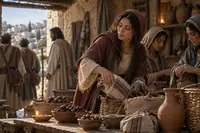
Weeping outside the empty tomb, taking the one standing there for the gardener.
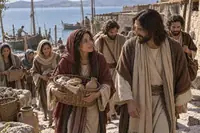
A single call — "Mary!" — and every wall between death and life collapsed.
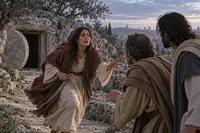
Running to tell the Apostles themselves: "I have seen the Lord!"
Stay in silence
In the quiet, you see it: the woman once bound by seven demons became the first to be sent to announce humanity’s greatest good news.
The Lord still calls us by name in our darkest mornings — if only we are still standing there to hear.
Let us pray
Saint Mary Magdalene,
you stood weeping beside the empty tomb, until you heard the Lord call you by name: "Mary!" Then you ran to tell the news: "I have seen the Lord!"
In my darkest mornings, let me still be standing there to hear the Lord call my name.
Pray for those bound by their past, that they may know the Lord can set them free as He set you free. And help me also bring the joy of Easter to others.
Amen.
Sources
- Feast dayAuthor’s edited profile
- Patron ofPatronages and symbols, version 1.1
- Often depicted withPatronages and symbols, version 1.1
- Reflectionvatican.va
- Reflectiongutenberg.org
Meet the next one
 Journey 1