

Journey 5 · Seeking God in Silence
Saint Teresa of the Andes
A lily blooming on the snowy mountains
Feast day July 13
Tap to step inside
Saint Teresa of the Andes
A lily blooming on the snowy mountains
Map of a life
This life told in 5 chapters
Begin the journey

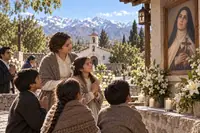
Feast day
Saint Teresa of the Andes
Some places may celebrate on a slightly different day.
July 13
Patron of
- The young people of Chile
- The sick
Often depicted with
- The Carmelite habit
Opening
Opening
In the sunny, windswept valleys of Chile on the Pacific coast, beneath the majestic Andes covered in snow all year round, a young woman lived a life as brief as a drop of morning dew. She spent only eleven months in the Carmel, never made her solemn profession in the usual way, and died of typhus before she turned twenty.
Yet that short life stirred the whole of South America. Millions of young people have caught from her a burning love for God. She is the first saint of Chile and the first Discalced Carmelite of Latin America to be raised to the honor of the altars.
She is Teresa of the Andes, known in Spanish as Teresa de Los Andes.
With her radiant smile, her lively love of life and her deep mystical love, she showed young people that you can love sports, swimming, horseback riding, music and singing, and at the same time be a great saint, in love with Jesus with every breath.
Chapter 1 of 5
Juanita, a young noblewoman of Santiago
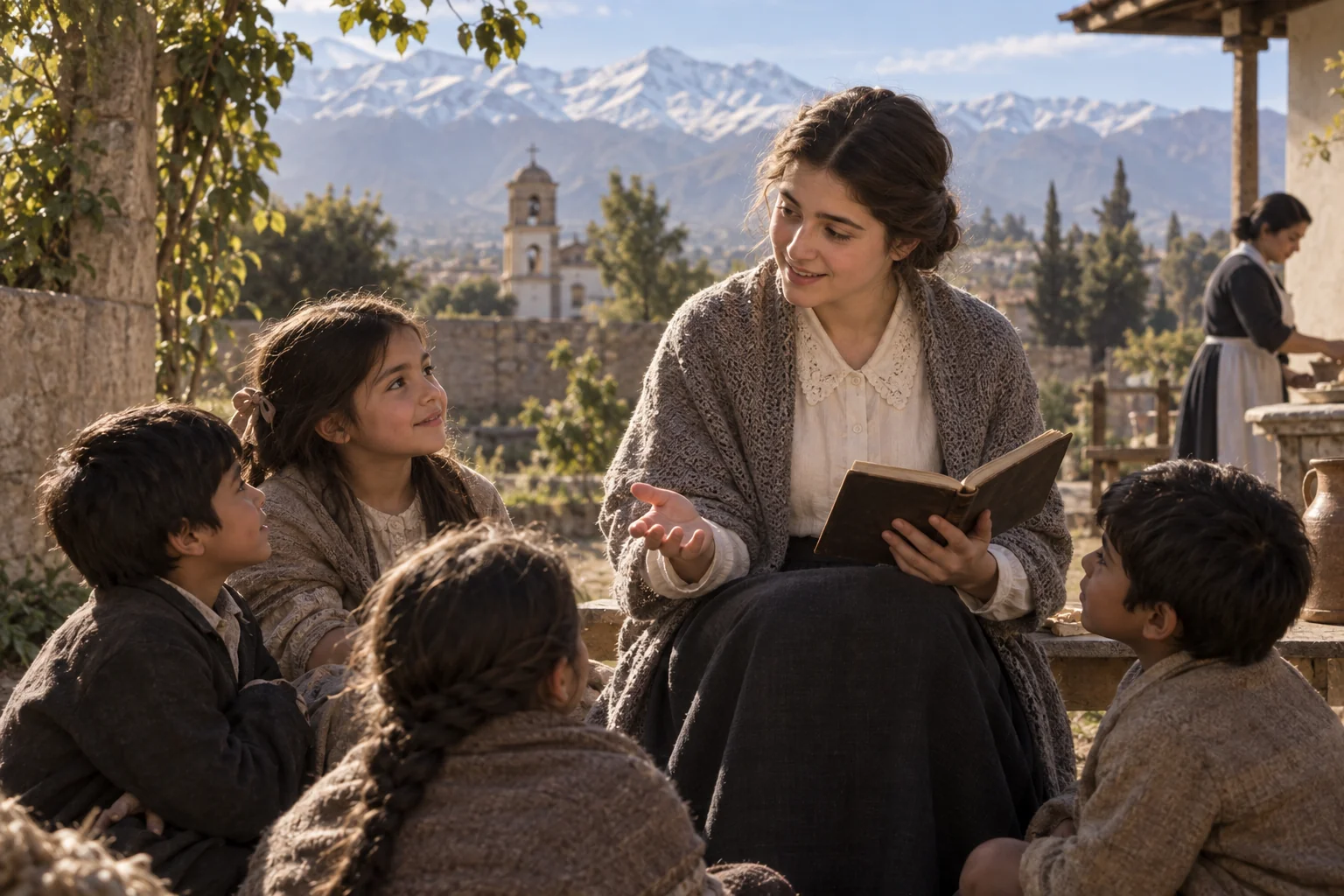
Juana Enriqueta Josefina de los Sagrados Corazones Fernández Solar, known to everyone as Juanita, was born on July 13, 1900, in Santiago, the capital of Chile. Her father, Miguel Fernández, and her mother, Lucía Solar, belonged to wealthy and distinguished upper-class families. She was the fourth of seven children.
Juanita grew up in luxury on the vast estates of Chacabuco. She was a pretty little girl with large, expressive eyes and jet-black hair. As a child she had faults like any other: she was stubborn, quick to sulk and somewhat proud because of her family’s wealth.
But after her First Communion on September 11, 1910, at the age of ten, a wonderful change came over the girl’s soul.
Later she wrote in her diary:
“The day of my First Communion was the most beautiful day of my life... From that day on, Jesus came to dwell in my heart and began to speak intimately with me every day!”
By God’s grace, Juanita made an extraordinary effort to master her pride, becoming an obedient, gentle daughter who always gave way to her brothers and sisters.
Juanita was sent as a boarder to the school of the Religious of the Sacred Heart, the Sacré-Coeur, in Santiago. She was a diligent, intelligent student who especially loved the outdoors: she was a fine swimmer, loved playing tennis and was a fearless horsewoman on the slopes of the Andes.
She played the piano beautifully, sang moving Chilean folk songs and was always at the heart of the fun when friends got together.
Yet beneath all those high spirits lay a burning love for the poor. During summer holidays, Juanita often went to the poor hamlets around the estate, bathing and combing the hair of grubby children with her own hands, teaching them catechism and bringing food and clothing to share with needy families. She even sponsored and helped raise a poor orphan boy named Juanito.
Chapter 2 of 5
Reading Story of a Soul and the call of Carmel
At fifteen, Juanita read “Story of a Soul,” the autobiography of Saint Thérèse of the Child Jesus, who had died in France less than twenty years earlier.
That book awakened in her the call to give her life to God. Juanita discovered the way to holiness through small things done with love.
She went on to read Saint Teresa of Ávila and Saint John of the Cross. Carmel became the one place she dreamed of.
On December 8, 1915, Juanita made a vow of virginity of her own accord, giving her whole life to Jesus. She wrote in her diary:
“I belong entirely to Jesus... He is the only Bridegroom of my heart, and earthly love could never satisfy my heart!”
In 1917, Juanita’s family went through a serious financial crisis: her father’s business losses forced them to sell their beloved estate at Chacabuco. Juanita accepted the loss calmly. She comforted her parents and saw it as a blessed chance to be freed from the ties of material wealth.
After exchanging many spiritual letters with the Mother Prioress of the Carmel in the small town of Los Andes, about ninety kilometers from the capital, Santiago, Juanita recognized that this was where God wanted her to give herself.
The hardest battle was persuading her father. Miguel, who loved his beautiful daughter dearly, held her in his arms many times, sobbing and begging her not to leave her parents for the cold walls of a convent.
Yet Juanita’s gentleness and steadfast faith finally won her father over.
Chapter 3 of 5
Eleven months in the heaven of Los Andes
On May 7, 1919, Juanita entered the Carmel at Los Andes. On October 14 that year, she received the habit and the religious name Sister Teresa of Jesus; today she is known as Teresa of the Andes.
Her life in the Carmel lasted only eleven months, but they were eleven months filled with heavenly joy. She wrote to her mother:
“Mother, I am living in heaven! I could never have imagined that on this earth there could be a place so happy... Here there is only Jesus and love!”
She gladly did the humblest jobs: sweeping the leaf-strewn convent yard, helping in the kitchen, doing laundry at the freezing water trough in winter.
Her superior also gave her the task of answering the hundreds of letters people sent asking for prayers. Written with freshness, intelligence and love, the nineteen-year-old novice’s letters became living lessons in the faith, bringing many young people back to God, reconciling divided families and awakening priestly vocations in many young men.
Her spirituality is summed up in a simple motto:
“Jesus is my only joy!”
She said:
“A Carmelite must be someone who brings joy... If we live gloomy and sad, how can we bear witness to a God who is Love?”
Chapter 4 of 5
Her passover in Holy Week
At the beginning of Lent 1920, Sister Teresa of the Andes sensed that her day to go home to the Father was near. She told her confessor that she would not live more than another month, but he took it for youthful fervor.
On Good Friday 1920, April 2, Sister Teresa fell gravely ill with typhus. A raging fever ravaged her young body.
Since she was in danger of death and could not recover, the Mother Prioress, as the canon law of the time allowed for the dying, let Sister Teresa make her solemn perpetual vows on her sickbed on April 7, 1920.
The joy of becoming a bride of Christ lit up her pale face. She whispered the words of profession through tears of thanksgiving.
For six days and nights afterwards, she bore wrenching pain and burning fevers with extraordinary patience, always smiling and constantly making the Sign of the Cross to bless her sisters.
On the evening of April 12, 1920, after receiving Holy Communion for the last time with great fervor, Sister Teresa of the Andes died peacefully, three months short of her twentieth birthday.
Chapter 5 of 5
A lily for a continent of hope
After her death, the young novice’s body lay in the convent chapel, and crowds from all over Los Andes and Santiago came to pay their respects. People were amazed to see her face fresh, as if she were smiling in her sleep, and a sweet fragrance filled the church.
From the 1940s, more and more of the faithful reported graces through her intercession, and the place where she was venerated was gradually moved to nearby Auco. On January 16, 1988, construction of the new shrine officially began, and it was dedicated that same year; on December 11, 1988, her body was solemnly brought from the Carmel of Los Andes to rest permanently in the crypt of the Auco shrine. Today that shrine welcomes more than two hundred and thirty thousand pilgrims each year, and especially on the third Saturday of October each year, tens of thousands of young people from all over Chile and beyond walk twenty-seven kilometers together in the pilgrimage called “From Chacabuco to Carmelo,” linking the estate of her childhood with the convent where she gave her life, praying and singing joyfully as they go.
On April 3, 1987, during his visit to Santiago de Chile, Pope Saint John Paul II beatified Sister Teresa of the Andes before more than a million Chileans.
And on March 21, 1993, the same Pope canonized Teresa of the Andes in Saint Peter’s Basilica in Rome. The Church celebrates her on July 13 each year; the Carmelites keep April 12.
Saint Teresa of the Andes has a message for young people today: don’t let your youth slip away in mediocrity and waste.
She shows that true holiness is completely compatible with youth, with the joy of living, with sports and pure friendship.
When a young person dares to open their heart wide to let the love of Jesus take hold of them completely, then even if their life is as brief as a drop of morning dew, it will shine like a star over this earth.
The end of the story
You have walked with Saint Teresa of the Andes to the end of the story.
Words and moments you will want to return to:
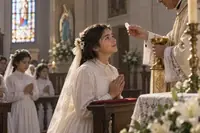
After her First Communion at ten, the girl wrote: "From that day on, Jesus came to dwell in my heart and began to speak intimately with me every day!"
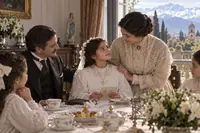
In only eleven short months in the Carmel, she wrote to her mother: "I am living in heaven! Here there is only Jesus and love!"
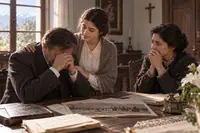
On her sickbed with typhus, she was allowed to make her perpetual vows before dying, not yet twenty.
Stay in silence
You understand why people call her a lily blooming on the snowy mountains: holiness in her needed no long life, only a heart opened as wide as it could go to the love of Jesus.
Jesus is my only joy!
Let us pray
Saint Teresa of the Andes,
you lived less than twenty years, but from the day of your First Communion you talked with Jesus every day as with your closest friend.
Pray for young people, that they may know Jesus as the friend who is always beside them.
Help me too to tell God about very ordinary things, and to find true joy in Him.
Amen.
Sources
- Feast dayAuthor’s edited profile
- Patron ofPatronages and symbols, version 1.1
- Often depicted withPatronages and symbols, version 1.1
- Reflectioncarmelitaniscalzi.com
- Reflectionteresadelosandes.org