

Journey 3 · Young Lives Freely Given
Saint Jacinta Marto
A small heart that loved people far away
Feast day February 20
Tap to step inside
Saint Jacinta Marto
A small heart that loved people far away
Map of a life
This life told in 5 chapters
Begin the journey

Feast day
Saint Jacinta Marto
Some places may celebrate on a slightly different day.
February 20
Often depicted with
- Sheep
- A rosary
- The holm oak of Fátima
Opening
Opening
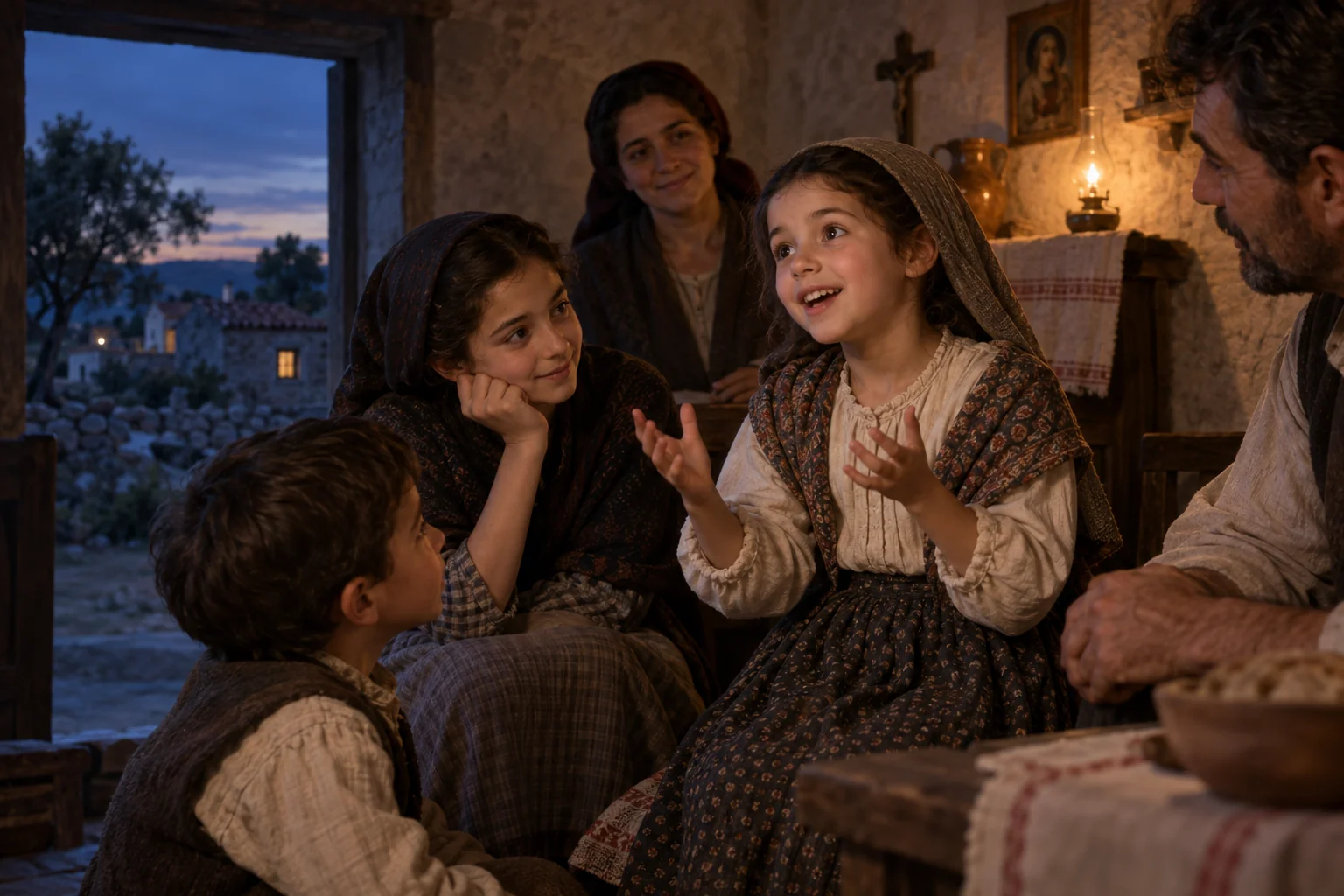
Jacinta was a little girl who loved the wildflowers in the fields, delighted in lively country dances and liked to snuggle up beside her cousin Lucia. As those who loved her remembered, she was no child made to sit still like a statue. She was lively, sensitive, affectionate, a little stubborn as children are, and she enjoyed life to the full, as children do.
Then that tender heart opened wide to people she had never once met: sinners who had strayed far from home, people suffering in war, and even the faraway Pope in Rome. The world’s pain found a warm refuge in the prayers of a girl not yet ten years old.
Chapter 1 of 5
A childhood among wildflowers
Jacinta Marto was born in the poor hamlet of Aljustrel in the parish of Fátima, Portugal. According to the parish records of the time, she was born on March 5, 1910; a civil record drawn up later gives March 11. She was baptized on March 19, the youngest child of Manuel Pedro Marto and Olímpia de Jesus.
As the youngest in a poor farming family with many children, Jacinta was loved and cherished by her parents and her older siblings. Her brother Francisco was nearly two years older, and her cousin Lucia, three years older, was her closest friend. Every morning, while the dew still lay on the grass, the three children led the sheep out, and filled the bare hillsides with laughter. The Marto family’s simple stone house in Aljustrel — just a few steps from Lucia’s home — still stands almost unchanged today, and there pilgrims can picture the poor life of a farming family in the hills of Portugal at the beginning of the twentieth century.
Lucia remembered that Jacinta loved to hug the little white lambs, loved to tuck wild lilies into her hair, and loved to gaze at the moon at night, which she called “Our Lady’s lamp”. Her childhood faith was woven into nature and into the stories her mother told by the fire. Her innocent heart took in the holy mysteries in a child’s way, long before she could think in big ideas.
Chapter 2 of 5
A joy that could not be hidden
After three meetings with the Angel of Peace in 1916, what happened on May 13, 1917, in the valley of Cova da Iria completely changed the seven-year-old’s life. Our Lady appeared in radiant light, inviting the children to offer themselves to God and to pray for peace in the world.
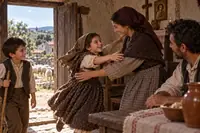
Jacinta saw Our Lady and heard every word she said. Though the three children had agreed to keep it secret, when she got home, her heart bursting with joy, Jacinta could not hold back and ran into her mother’s arms crying out:
“Mother, today I saw Our Lady at Cova da Iria!”
From that moment, their simple life with the sheep vanished. The curious and the skeptical streamed into the poor hamlet of Aljustrel, and the authorities began to watch closely. A seven-year-old had to face a barrage of questions and the suspicious eyes of adults.
Some believed at once without a shadow of doubt; some mocked, and even the parish priest was at first very cautious, unwilling to rush to accept it. Jacinta, though far too young to understand the complicated motives of adults, still felt the weight of a whole community’s eyes turned on her. But instead of shrinking back in fear, she became all the more convinced: what she had seen was real, and no slander could shake it.
Through Our Lady’s apparitions in June and July, the call to conversion and the vision of the suffering of sinful souls left a deep mark on Jacinta’s soul. She did not keep that vision as a fear with which to frighten others. On the contrary, a burning compassion rose up in her. How could souls be saved from being lost? How could people stop wounding the Hearts of Jesus and Mary?
She began to realize that the lives of sinners in some faraway, unknown place were closely bound up with her own prayers.
Chapter 3 of 5
A child crying in a cold jail
On August 13, 1917, the administrator of the Ourém district arrested all three children, held them at his residence and threatened to drop them into boiling oil to force them to deny the story of the apparitions.
Separated from her parents’ arms, Jacinta buried her face in her hands and sobbed, missing her mother. That small detail reminds us how young she really was. Courage did not turn a seven-year-old into someone who felt no fear; faith did not erase her need for her mother’s comforting arms.
Yet even in tears, she steadfastly refused to betray the truth. The three children knelt down and prayed the Rosary right in the jail cell, and the prisoners joined in. Unable to break them, the administrator returned them to their families on August 15.
After October 13, 1917, when tens of thousands witnessed the miracle of the sun, Jacinta gave herself more and more to quiet sacrifice. She gave her lunch to poor children who came begging, and ate bitter acorns as penance.
Those sacrifices belong to the simple fervor of a child of her time. What is worth treasuring and handing on today is her generous heart that knew how to share; children today still need proper nutrition and care for their health so they can grow up.
Chapter 4 of 5
Loneliness in a sickbed far from home
In the autumn of 1918, the devastating influenza pandemic swept through the Marto family. Her brother Francisco grew weaker and died on April 4, 1919. Her closest companion in the fields was gone; Jacinta was left with severe complications of pleurisy, her body exhausted.
From July 1 to August 31, 1919, she had to stay for treatment in the hospital at Ourém. Her illness did not improve, and the wound in her chest festered painfully. Early in 1920, she was taken to Lisbon in the hope that specialists could cure her, staying for a time at an orphanage named for Our Lady of Miracles before being admitted to hospital.
On February 2, 1920, Jacinta was admitted to the Dona Estefânia hospital in Lisbon with a diagnosis of purulent pleurisy and infection of two ribs. On February 10, she had to undergo a painful operation to remove those two ribs. Because she was so weak, the doctors did not dare give her general anesthesia, and could only inject a little local anesthetic that was hardly enough to ease the pain — meaning the nine-year-old had to endure almost the whole operation fully awake. Hundreds of kilometers from her family, the searing pain and utter loneliness inside those stark white hospital walls were a terrible trial for a girl not yet ten.
In her most painful hours, Jacinta still whispered, offering it all for sinners and for the Pope. Too weak to lift an arm, she still found a way to reach beyond her sickbed with love.
On the night of February 20, 1920, the nine-year-old died alone, with no parent or relative beside her.
We admire her extraordinary faith, and still feel a pang at a child dying so alone. Jacinta’s story is a sharp reminder to grown-ups: we must do everything we can so that sick children always receive proper medical care, have their pain eased and always have their loved ones beside them.
Chapter 5 of 5
A love beyond the limits of time
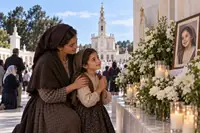
Jacinta’s remains were first buried at Ourém, and in 1935 were moved to Fátima. When the coffin was opened for the move, people were astonished to find her face remarkably intact; but by 1951, when she was moved once more to rest permanently in the Basilica of Our Lady of Fátima beside her brother Francisco, her body had returned to dust in the ordinary way.
On May 13, 2000, Pope Saint John Paul II beatified the brother and sister Francisco and Jacinta. On May 13, 2017, Pope Francis solemnly canonized them right in the square at Fátima. The Church celebrates the two young saints on February 20 each year.
Jacinta never set foot in great cities, never met the people she prayed for day and night. Yet she showed that love is not held back by distance or age.
In Vietnamese homes, a mother praying at night for a child working in a foreign land, or a family sharing part of a meager income with flood victims far away, has a heart that beats like Jacinta’s.
Her life holds together the carefree smile of a child who loved chasing butterflies and picking flowers, and the depth of a soul that felt the pain of others. Both belonged to her, just as the peaceful moonlight and the tears of sacrifice belonged to one childhood that God held wholly in His arms.
The end of the story
You have walked with Saint Jacinta Marto to the end of the story.
A few things you cannot forget:
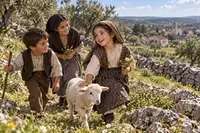
Unable to keep her joy inside, she ran into her mother’s arms crying out: "Mother, today I saw Our Lady!"
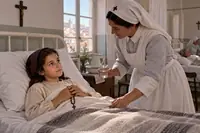
In a cold jail, she buried her face and sobbed for her mother — but still refused to lie to be let out sooner.
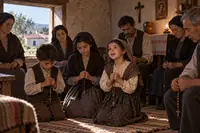
Undergoing surgery without proper anesthesia, she still whispered prayers for sinners through the pain.
Stay in silence
You feel this: she never met the people she prayed for, but her love was never limited by distance.
A small heart can still hold even faraway sorrows it has never seen.
Let us pray
Saint Jacinta,
small as you were, you loved sinners far away, and offered even your pain for them. In a cold jail you cried for your mother, but still refused to lie.
Teach me to pray for people I have never met, especially those who are far from God.
Pray for children who are gravely ill, that they may be brave, and that their parents may be comforted.
Amen.
Sources
- Feast dayAuthor’s edited profile
- Often depicted withPatronages and symbols, version 1.1
- Reflectionsantuario-fatima.pt
- Reflectionfatima.pt
Meet the next one
 Journey 3