

Journey 6 · Keepers of the Lamp of Faith
Saint Augustine of Hippo
The late call of an ancient beauty
Feast day August 28
Tap to step inside
Saint Augustine of Hippo
The late call of an ancient beauty
Map of a life
This life told in 5 chapters
Begin the journey
Feast day
Saint Augustine of Hippo
Some places may celebrate on a slightly different day.
August 28
Patron of
- Theologians
- The Augustinians
- Brewers and printers
Often depicted with
- A flaming heart
- A book
- A child emptying the sea with a shell
Opening
Opening
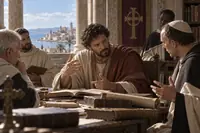
One afternoon on the coast of North Africa, the old bishop of Hippo sat at his desk, gazing at an oil lamp burning low. Outside, the waves of the Mediterranean beat steadily on the rocks, as they had beaten for thousands of years before him and would go on beating long after he was gone. He took up his quill and carefully wrote lines of heartfelt confession that have moved every generation since:
“Late have I loved You, O Beauty ever ancient, ever new, late have I loved You! You were within me, but I was outside myself... You called, You shouted into my ears and broke through my deafness; You shone brightly and dispelled my blindness; You breathed Your fragrance, I drew in my breath and now I long for You; I tasted You, and now I hunger and thirst for You; You touched me, and I burn with the fire of Your peace!”
The one who wrote those fervent words was Augustine — the greatest Doctor of the Western Church.
His life was a passage through one storm after another. He was the unruly son who broke the heart of his gentle mother Monica for thirty years, a young man sunk in sensual pleasure and lost in the maze of heresy, until God’s grace “conquered” him and made him a towering pillar of faith, defending the Church as the Roman Empire collapsed.
No one in the history of the Church has told the story of his own life so carefully, honestly and painfully. Thanks to that, more than sixteen hundred years later, we can still sit beside Augustine and follow him step by step as he wanders off and comes home, as if reading a friend’s diary.
Chapter 1 of 5
A wayward youth and the stolen pears
Aurelius Augustinus was born on November 13, 354, in the city of Thagaste, in North Africa, now Souk Ahras in Algeria — a small town on a dry plateau about a hundred kilometers from the Mediterranean coast, where olive groves and wheat fields stretched out under the harsh sun of Roman Africa. His father, Patricius, was a hot-tempered pagan official; his mother was Saint Monica — a Christian woman of steadfast faith and extraordinary patience.
As he grew up, Augustine showed a sharp, brilliant mind. He loved Latin literature, especially the poetry of Virgil and the rhetoric of Cicero. Seeing their son’s talent, his parents scraped together the money to send him to Carthage — then the foremost center of culture and pleasure in North Africa — to study rhetoric.
In Carthage, the young student was quickly swept into the loose life of the big city. He lived with a woman, unmarried, for fifteen years and had a son, whom he named Adeodatus, meaning “Gift of God”.
Later, in his Confessions, Augustine spent many painful pages picking apart one sin of his youth, the theft of the pears: he and his friends climbed into a neighbor’s orchard, shook down a load of ripe pears and threw them to the pigs. He realized he had not stolen out of hunger or a craving for pears, but out of a sick pleasure in doing what was forbidden. That, he saw, is the heart of sin: the pride that wants to be its own master and defy the law of God. It was a teenager’s petty prank, yet decades later the old bishop still paused to analyze every hidden motive in it — as if that small detail shed the truest light on the fall of all humanity.
At nineteen, after reading Cicero’s Hortensius, his heart burned with a longing to search for truth. But because he proudly looked down on the rough style of the Latin Scriptures of his day, he fell into the Manichaean heresy for nine years. The Manichaeans divided the world into two absolutely opposed principles: Light and Darkness, Good and Evil. This heresy allowed him to blame all his sins of the flesh on an outside “evil nature” rather than on his own free will.
Learning that her son had fallen into heresy, Saint Monica was heartbroken and prayed for him day and night in tears. Once she went to a holy bishop to ask him to counsel her son, but the bishop only smiled and comforted her with words that later became a prophecy:
“The son of so many tears cannot be lost!”
Chapter 2 of 5
Flight to Italy and the fig tree of Milan
In 383, hungry for greater fame and wanting to escape his mother’s watchful eye, Augustine secretly boarded a ship for Rome. That night, while Monica knelt in a small chapel on the North African shore, praying that God would not let her son sail away, his ship was quietly slipping out of the harbor. She wept all night without knowing he was already gone.
In 384, thanks to his gift for public speaking, he was appointed imperial professor of rhetoric in Milan — the seat of power of the Western Roman Empire. Fame, money and a brilliant future lay wide open before the thirty-year-old.
Yet it was in Milan that he met the holy Archbishop Ambrose. At first, Augustine went to hear Saint Ambrose preach only out of curiosity, to enjoy the bishop’s eloquence. But Ambrose’s spiritual reading of the Old Testament exposed the crude errors of the Manichaeans, and Augustine came away full of admiration.
At the same time, Saint Monica made her way across the sea to Milan to find her son. Seeing his mother’s holy, self-giving life and hearing from friends about the austere life of the monks in the Egyptian desert, Augustine was torn by a fierce inner war: his reason had fully recognized the truth of Christianity, but his will was still held back by the chains of sensual passion. At one point he prayed, half-heartedly:
“Lord, grant me chastity, but not yet!”
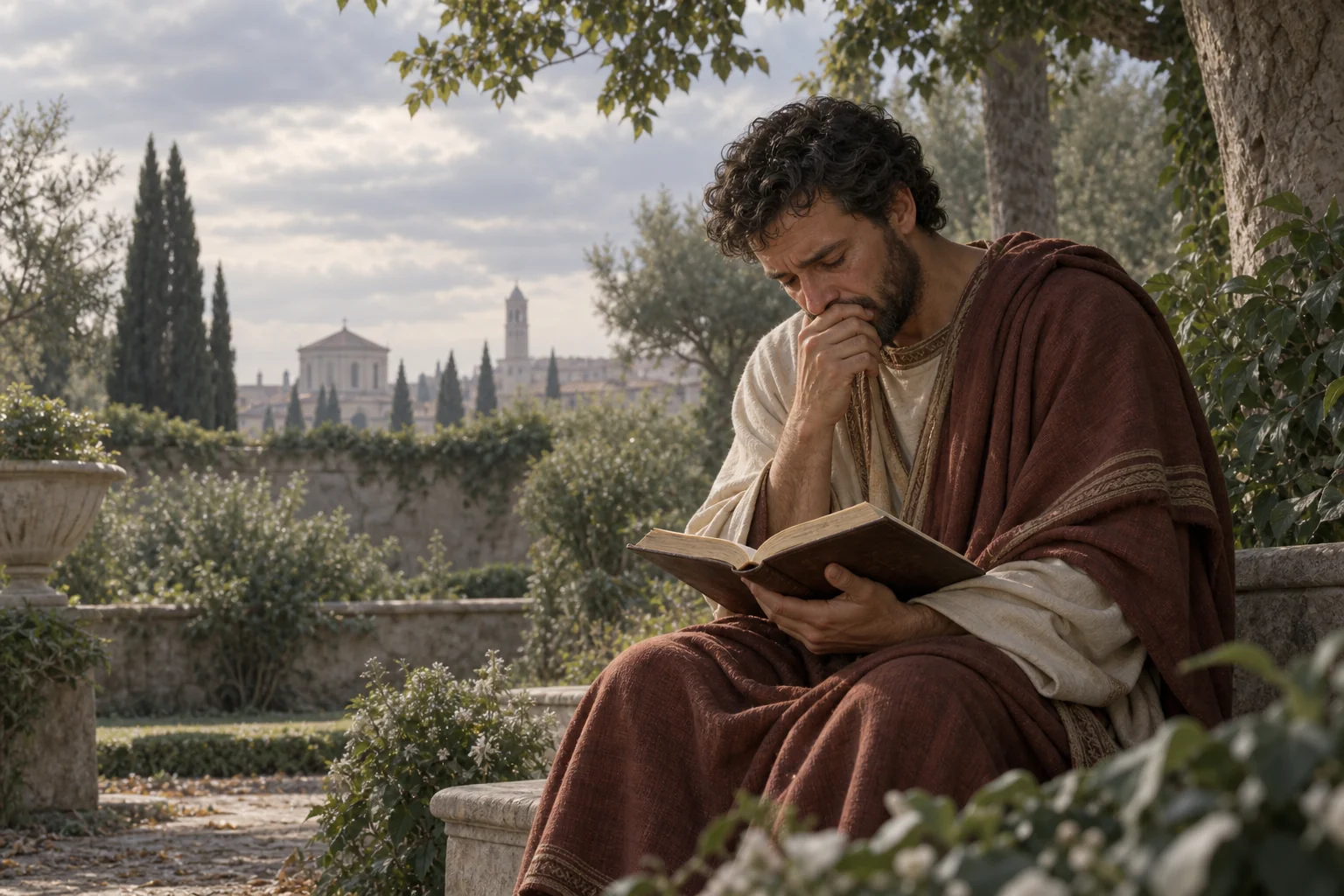
One afternoon in August 386, the crisis reached its peak. Augustine rushed out into the garden behind his lodging in Milan, threw himself down sobbing under a fig tree, beating his breast and crying:
“How long, Lord? How long? Tomorrow? Why not now? Why not this very hour an end to my filthiness?”
Suddenly, from beyond the wall, he heard a child’s clear voice chanting over and over:
“Tolle, lege! Tolle, lege!”
— Take up and read! Take up and read!
Taking it as the voice of God, Augustine sprang up, ran to the table where his friend Alypius was sitting, and opened the Letters of Saint Paul at random. The first passage his eyes fell on was chapter 13 of the letter to the Romans:
“Let us live decently as in the daytime, not in reveling and drunkenness, not in sexual immorality and debauchery, not in quarreling and jealousy; but put on the Lord Jesus Christ, and make no provision for the desires of the flesh!”
At once every shadow of doubt vanished, as if light had flooded his heart. He closed the book, smiled peacefully and went in to tell his mother Monica.
At the Easter Vigil of 387, in the cathedral of Milan, Saint Ambrose himself baptized Augustine together with his son Adeodatus and his close friend Alypius. Saint Monica’s tears of more than thirty years had borne the fruit of salvation.
Chapter 3 of 5
A shepherd at the port of Hippo
After his mother died at the port of Ostia on the journey home, Augustine returned to his hometown of Thagaste in North Africa. He sold his entire inheritance from his father, gave it to the poor, and with a group of friends founded a small community devoted to prayer, poverty and the study of God’s word, laying the foundation for what would later be the Rule of Saint Augustine.
In 391, on a visit to the port city of Hippo Regius, now Annaba, Algeria, he went into the church for Mass. The old bishop Valerius was standing before the congregation, earnestly asking God for an assistant priest able to preach in Latin. Seeing Augustine in the crowd, the people crowded around him, calling for him to be ordained a priest. Augustine wept, feeling unworthy, but bowed his head in obedience to God’s will.
In 395 he was ordained coadjutor bishop, and soon afterwards succeeded as Bishop of Hippo, serving for thirty-five years until his death.
His bishop’s house became a monastery where the priests lived together in poverty: eating at one table, owning nothing of their own, dressing plainly and opening the door every day to share food with the hungry poor. He was a devoted father: every day he preached God’s word to the faithful, sat from early morning until late at night hearing the people’s lawsuits, and at night lit his lamp to write books defending the faith. The church where he ministered — which the people then called the Basilica Pacis, the Basilica of Peace — and the ancient town of Hippo Regius still exist today as ruins: a stone-paved forum, public baths, a theater and even an ancient baptistery, scattered among wildflowers and olive trees on a wide stretch of land looking out to sea.
Chapter 4 of 5
A shield for Christian truth
Over three decades as bishop, Augustine’s pen became a sturdy shield for the Church against the storms of heresy.
Against the Donatists: a rigorist schismatic movement in North Africa that held that the validity of the sacraments depended on the moral holiness of the minister. Augustine explained clearly that Christ Himself is the supreme minister of the sacraments; however imperfect or sinful the minister, the sacrament still bears fruit by the power of God, ex opere operato. He stressed the unity and charity of the universal Church.
Against the Pelagians: Pelagius held that people could reach salvation by their own free will without needing God’s grace. Augustine brought all his theology to bear to show that after original sin, human nature was deeply wounded; without the free grace of Christ going before and sustaining us, we are utterly powerless to do any good work for salvation. For this work he is honored as the “Doctor of Grace” (Doctor Gratiae).
He left the Church more than a thousand sermons, hundreds of letters and classic theological masterpieces. The “Confessions”, Confessiones: perhaps the greatest spiritual autobiography ever written, in which he lays bare every sin of his life to make God’s boundless mercy shine out. “On the Trinity”, De Trinitate: a summit of theology exploring the mystery of the Holy Trinity through the spiritual image of the human person — memory, understanding and will. “The City of God”, De Civitate Dei: written after Rome was sacked by the Visigoths in 410. He sets out a great philosophy of history: two cities have been built by two opposing loves — the “earthly city”, built on love of self to the point of contempt for God; and the “City of God”, built on love of God to the point of forgetting self. Every earthly empire will fall; only the City of God endures forever.
Chapter 5 of 5
His hour of death amid a barbarian siege
In the summer of 430, the barbarian Vandal army swept across the Strait of Gibraltar, bringing slaughter and plunder to North Africa. They advanced and besieged the city of Hippo for many months. Famine, disease and the clash of swords filled the city.
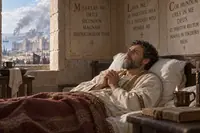
In the midst of that misery, the seventy-five-year-old bishop fell ill with a high fever. Knowing he would soon go home to the Father, he asked to have King David’s Penitential Psalms copied out in very large letters and fixed to the four walls around his bed. He lay there gazing at the penitential psalms, reading them over and over in tears of repentance. He asked everyone to leave him alone for his last ten days so that he could be wholly united with God.
On August 28, 430, amid the roar of the enemy besieging the city walls outside, Saint Augustine peacefully breathed his last, at the age of seventy-five.
Remarkably, after Hippo fell and was set on fire, his library with all his priceless works came through the flames intact. Nearly fifteen hundred years later, on the hill overlooking the ruins of Hippo Regius and the old foundations of the Basilica of Peace, a new basilica bearing his name was begun in 1881, completed in 1900 and consecrated in 1914. To this day, on the very African soil where he lived, taught and died under siege, its bell rings out every day, as if to say that the City of God he wrote about outlasts every ruin of history.
Pope Boniface VIII declared him a Doctor of the Church in 1298. The Church celebrates him on August 28 each year, the day after the feast of his mother, Saint Monica.
Saint Augustine’s life shows that no sinful past can keep a person from becoming a great saint, if they dare to open their heart to God’s transforming grace.
He reminds each of us that we were made for God, and our heart is restless until it rests in Him.
The end of the story
You have walked with Saint Augustine of Hippo to the end of the story.
Three glimpses you will hardly forget:

As a teenager, he and his friends stole a load of pears and threw them to the pigs — not out of hunger, but just to taste the thrill of doing what was forbidden.
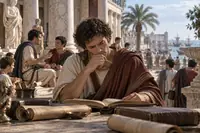
Under a fig tree in Milan, in the midst of a tormenting crisis, he heard a child singing "Tolle, lege!" and opened Saint Paul’s Letters at random to the fateful passage.
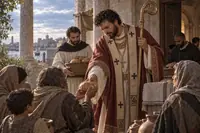
For more than thirty years, his mother Saint Monica wept and prayed without rest for her wayward son, until the day she saw him step into the waters of baptism.
Stay in silence
You see the long journey of a soul: from a young man sunk in pleasure and heresy to the Doctor who wrote the most honest confession in the Church’s history.
Late have I loved You, O Beauty ever ancient, ever new!
Let us pray
Saint Augustine,
you wandered far in pleasure and error, and your mother wept and prayed for thirty years. Then under a fig tree you heard "Take up and read" and returned to God.
Pray for young people who have lost their way, and for mothers weeping for their children.
Let my heart know that it will only be at rest when it rests in God. Even if I come late, may I still have time to love Him.
Amen.
Sources
- Feast dayAuthor’s edited profile
- Patron ofPatronages and symbols, version 1.1
- Often depicted withPatronages and symbols, version 1.1
- Reflectionaugustinus.it
- Reflectionnewadvent.org
Meet the next one
 Journey 6