

Journey 5 · Seeking God in Silence
Saint Anthony the Great
A lamp in the burning desert
Feast day January 17
Tap to step inside
Saint Anthony the Great
A lamp in the burning desert
Map of a life
This life told in 5 chapters
Begin the journey OpeningOpening1 min
 Chapter 1 of 5A Gospel word heard in the village church1 min
 Chapter 2 of 5First steps, and battle in the tombs1 min
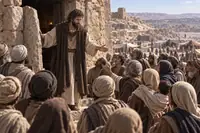 Chapter 3 of 5Twenty years behind the walls of the fort at Pispir1 min
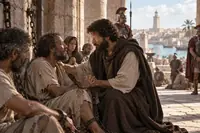 Chapter 4 of 5Mount Colzim and two journeys back to the city1 min
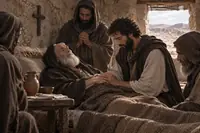 Chapter 5 of 5Meeting Saint Paul the Hermit, and his departure1 min
Feast day
Saint Anthony the Great
Some places may celebrate on a slightly different day.
January 17
Patron of
- Monks
- Farmers and livestock
- Those with skin diseases
Often depicted with
- A pig
- A small bell
- A T-shaped cross
- A flame
Opening
Opening
In the third century, while the Roman world reeled from political crisis, moral decay and struggles for power, a wealthy young Egyptian suddenly left his estate and his fertile fields and walked alone into the burning wilderness.
He was not running away. He went into the desert the way a soldier goes into battle: to face the hidden temptations of self, of desire and of the devil, and to win the freedom of a soul that belongs wholly to God.
He was Anthony the Great, also called Anthony the Abbot, honored through the ages as the “Father of Monks”, the man who turned a barren desert into a holy city.
Chapter 1 of 5
A Gospel word heard in the village church
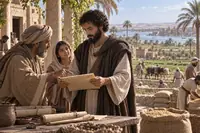
Anthony was born around 251 in Coma, now Qiman al-Arus, a prosperous village on the west bank of the Nile in Middle Egypt. His parents were wealthy Christians who owned fertile land. Young Anthony grew up in comfort and quiet, drawn early to his family’s devout way of life and caring little for worldly learning.
When Anthony was about eighteen to twenty, his father and mother died one after the other, leaving the young man a huge estate of more than three hundred acres of rich farmland and the responsibility of raising his little sister.
About six months after his parents died, Anthony went to church for Mass and heard the Gospel of Saint Matthew, where Jesus says to the rich young man:
“If you wish to be perfect, go, sell what you have and give to the poor, and you will have treasure in heaven; then come, follow me.”
Those words pierced the young man’s heart like an arrow. Anthony knew they were not meant for someone else centuries ago; the Savior was speaking them straight to him.
As soon as he left the church, Anthony gave all three hundred acres of fertile land to the poor villagers; he sold all his valuable possessions and gave the money to the needy, keeping only a small part to provide for his sister.
Not long afterwards he heard another Gospel line, “Do not worry about tomorrow.” Anthony gave the rest of the money to the poor, entrusted his sister to a community of consecrated virgins, put on rough clothing and walked out of the village.
Chapter 2 of 5
First steps, and battle in the tombs
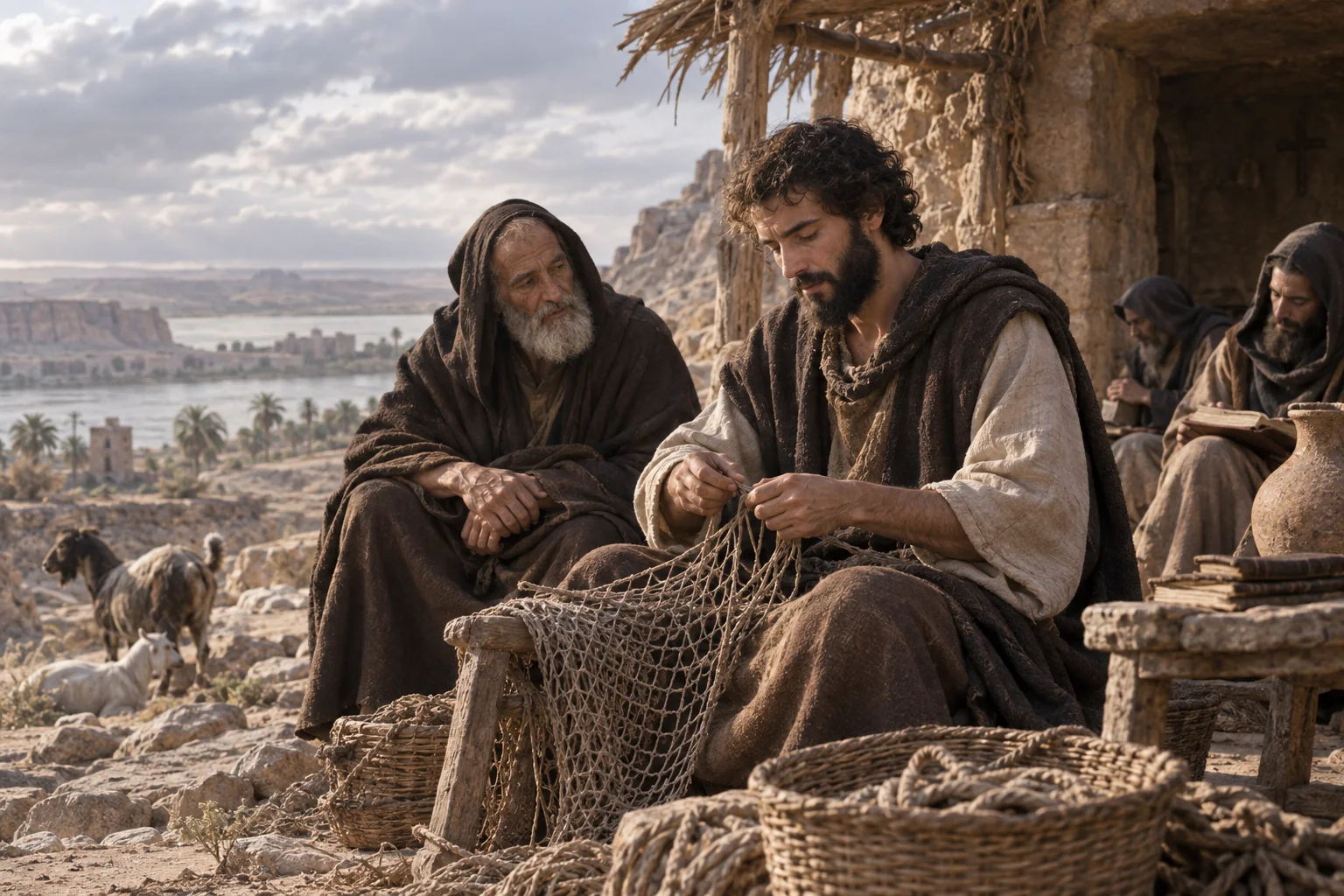
At that time in Egypt there were not yet any monasteries organized as they would be later. Anyone who wanted to live an ascetic life simply withdrew to a small hut on the outskirts of the village to pray. Anthony sought out old hermits and humbly learned something from each: patience from one, silence from another, from a third watchfulness and a burning love of God. He worked with his own hands weaving baskets to support himself and to share with the poor.
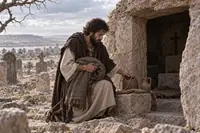
Yet God was calling him further still. He decided to withdraw to an abandoned cemetery and live in an ancient stone tomb.
There, according to Saint Athanasius, who wrote the famous Life of Anthony, terrifying spiritual battles took place. Demons attacked Anthony in every form. They brought back to his mind memories of the rich, comfortable life he had left behind, stirred up burning passions of the flesh, and even took the shapes of wild beasts and serpents that tore at his body until he was bruised and unconscious.
Through those raging temptations, Anthony clung to the name of Jesus. When a beam of light from heaven broke through, scattering the darkness and driving the demons away, the wounded monk cried out:
“Lord Jesus, where were You when I was being crushed with such pain?”
And a gentle voice spoke from heaven:
“Anthony, I was right here, watching you fight... And because you stood firm, I will make your name renowned throughout the earth!”
Chapter 3 of 5
Twenty years behind the walls of the fort at Pispir
At thirty-five, around the year 285, Anthony decided to cross the Nile and go deep into the barren desert. He found an old abandoned Roman fort on the mountain of Pispir (now Der el-Maimun), moved in and blocked the entrance with large stones.
Twice a year, a friend brought him dry bread and let it down over the wall. He lived there in silence and solitude for twenty long years, under the burning sun and through howling sandstorms: twenty years without a voice to talk to or a face to look at, only sand, stone and the wind whistling through the cracks in the wall.
In 305, in answer to the earnest pleas of hundreds of people who had come and pitched their tents around the fort asking for his guidance, Anthony pushed aside the stone and came out.
Everyone was amazed. He was not aged, wasted or gloomy from his confinement; his body was still supple and strong, his eyes bright, his face shining with a strange peace. He came out a free man, master of himself and filled with the Spirit of God.
Thousands flocked to him: some came to be healed of bodily illness, some to seek counsel for troubled souls, and countless young men asked to stay under his guidance. Anthony became their spiritual father. The empty desert became a “city” ringing with psalms and busy with working hands.
Chapter 4 of 5
Mount Colzim and two journeys back to the city
When his fame grew so great that it disturbed his inner silence, Anthony set out with a caravan of camels deeper into the eastern desert, to rugged Mount Colzim near the Red Sea. There he dug the ground and planted vegetables and wheat to support himself and continued his life of contemplation. The monastery his disciples built there, Deir Mar Antonios, is still alive today and is considered the oldest continuously inhabited Christian monastery in the world. It has five chapels and a library of more than seventeen hundred ancient manuscripts, and not far away is the cave where Anthony himself lived.
Though he loved solitude, Anthony was never indifferent to the sufferings of the Church.
In 311, when the brutal persecution of the emperor Maximinus Daia broke out, Anthony left the desert and made his way to the city of Alexandria. He went openly to the prisons and places of execution to comfort and strengthen the martyrs, ready to give his own life if God willed it.
In 338, when the Arian heresy was raging, denying the divinity of Jesus and shaking the faith of believers, the holy bishop Athanasius begged him to come, and the monk, nearly ninety, left the desert for Alexandria once more. His holy presence and his simple, powerful witness strengthened the faith of the whole city and brought thousands of heretics back to the Church.
Even the Emperor Constantine the Great and his sons wrote to him respectfully, asking for his prayers and advice. When the monks marveled at this, Anthony only smiled and said:
“Do not be amazed that the emperor writes to us; be amazed that the most high God has written His Word for humanity and has spoken to us through His only Son!”
Chapter 5 of 5
Meeting Saint Paul the Hermit, and his departure
Tradition also preserves the moving meeting between Anthony and Saint Paul the Hermit, the first of the hermit saints, who had lived more than ninety years alone in a deep cave. When the two met, a raven brought a whole loaf of bread for the two old friends of God to share. When Saint Paul the Hermit died, Anthony wrapped his friend’s body with his own hands in the cloak of Saint Athanasius, and two lions came and dug the ground with their claws to help him bury his old friend.
Sensing that the hour of his death was near, Anthony gave instructions to his two most trusted monks: he asked to be buried in a secret grave in the desert, not embalmed in the Egyptian way, and for his old sheepskin cloak to be given to the holy bishop Athanasius.
On January 17, 356, Anthony the Great died in perfect peace, at the age of one hundred and five.
The “Life of Anthony” written by Saint Athanasius not long afterwards was translated into Latin, spread quickly throughout the Roman Empire and moved many souls, Saint Augustine among them, to turn from worldly ways and set out on the road of conversion.
The Church celebrates Saint Anthony the Abbot on January 17 each year.
For believers today, Saint Anthony the Great has a lesson worth more than gold: each of us needs a “desert” for our soul.
Modern life is full of the noise of social media and the worries of making a living. If we do not set aside moments of silence to look at ourselves and speak with God, we are easily swept away by empty illusions.
Anthony’s desert reminds us that only in the deep silence of the heart can we hear the loving whisper of God.
The end of the story
You have walked with Saint Anthony the Great to the end of the story.
Some moments stay with you:
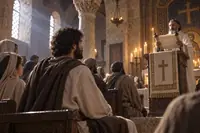
As soon as he heard the Gospel word "sell what you have and give to the poor" in church, the young man gave all three hundred acres of land to the villagers.
For twenty long years he shut himself behind the stone walls of an abandoned fort on the mountain of Pispir, receiving dry bread over the wall twice a year.
In the fierce temptation in the tomb, when he asked where God had been while he was being crushed, a voice answered: "I was right here, watching you fight."
Stay in silence
You come away understanding that some battles are seen by no one: they are fought between a soul, the darkness, and a God who quietly stands beside it.
I was right here, watching you fight.
Let us pray
Saint Anthony the Great,
when you heard the Gospel in church, you gave all your land to the poor and went into the desert to live with God. In the midst of temptation, you heard the Lord say: "I was right here, watching you fight."
Help me know that in the temptations no one sees, God is still standing beside me.
Teach me to listen to God’s word and act on it at once, without delay.
Amen.
Sources
- Feast dayAuthor’s edited profile
- Patron ofPatronages and symbols, version 1.1
- Often depicted withPatronages and symbols, version 1.1
- Reflectionnewadvent.org
- Reflectionoca.org
Meet the next one
 Journey 5