

Journey 8 · Faith with a Vietnamese Face
Saint Andrew Trần An Dũng Lạc
The shepherd of many names and the cup of thanksgiving
Feast day November 24
Tap to step inside
Saint Andrew Trần An Dũng Lạc
The shepherd of many names and the cup of thanksgiving
Map of a life
This life told in 6 chapters
Begin the journey OpeningOpening1 min
 Chapter 1 of 6A poor boy from Bắc Ninh, and ten strings of cash that changed his fate2 min
 Chapter 2 of 6The shepherd who moved in secret through the night2 min
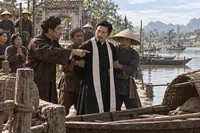 Chapter 3 of 6Arrested three times, and freely stepping up to martyrdom1 min
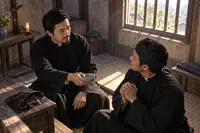 Chapter 4 of 6A serene poem from the dark prison of Kẻ Chợ2 min
- Chapter 5 of 6The day of triumph at the Cầu Giấy gate1 min
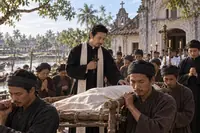 Chapter 6 of 6The saint who stands for generation upon generation of witnesses1 min
Feast day
Saint Andrew Trần An Dũng Lạc
Some places may celebrate on a slightly different day.
November 24
Often depicted with
- A palm branch
- Cangue and chains
- A cup (the poem from prison)
Opening
Opening
At the execution ground outside the Cầu Giấy gate of Hà Nội, on a bitterly cold winter morning, December 21, 1839, a forty-four-year-old Vietnamese priest, still straight and strong, his eyes bright with kindness, stood waiting to be beheaded.
Around him stood soldiers with drawn swords and gleaming spears. The executioner looked uneasily at the holy priest, stepped closer and whispered: “I don’t know what crime you have committed that the court orders you beheaded... Please forgive me, I only follow the orders of my superiors!” Father Andrew smiled gently, looked at him with a father’s warmth and answered softly:
“Go ahead and do your duty... I forgave you long ago, and I will pray that God gives you His grace!”
Then he asked the mandarin for a few minutes to kneel and pray. He bowed his head, fervently commended his soul to God, and calmly offered his neck to the executioner.
That priest, whose name heads the Vietnamese Martyrs celebrated by the Church every year, was Saint Andrew Trần An Dũng Lạc. His life was one long, patient song. Once a poor, hungry boy whose parents sold him for money to buy rice, he later had to change his name again and again as he went secretly through the night carrying the Eucharist to comfort his flock, and he offered his whole life to God as a cup of thanksgiving.
Chapter 1 of 6
A poor boy from Bắc Ninh, and ten strings of cash that changed his fate
Saint Andrew Dũng Lạc was born in 1795 in the Kinh Bắc region, today’s Bắc Ninh province, into a destitute family that had never been Catholic and followed the traditional folk beliefs of the northern Vietnamese countryside. The name his parents gave him at birth was Trần Văn Dũng.
When Dũng was ten, the family was so poor that his parents could no longer feed their children. In the middle of a famine, the couple sadly took little Dũng to Kẻ Chợ, today’s Hanoi, looking for a way to survive. It is not hard to picture: a father and mother holding their thin son’s hand, walking dozens of kilometers along muddy roads with hunger gnawing at them, not knowing what tomorrow would bring, hoping only to find someone who would take the child in so that he would not starve before their eyes.
In Kẻ Chợ, a devout Catholic catechist noticed the poor boy, with his bright, intelligent eyes and gentle manner, and was moved with pity. He paid ten strings of cash for the boy, took him in, raised him and sent him to school. Ten strings of cash was no small sum for a poor catechist then, but for little Dũng’s parents it was money that carried the whole family through a season of famine. Dũng was taught Chinese characters and the Vietnamese script, learned the catechism and received the sacrament of Baptism, taking the Christian name Andrew.
Ten strings of cash had rescued the boy from poverty, and, far more important, they opened the door to the treasure of faith. Young Andrew grew into a hardworking, well-behaved and honest altar server who early on wanted to give himself to God. At nineteen he was received among the catechists, a traditional form of consecrated life in the Church in Vietnam at the time: unmarried laymen who taught the catechism and assisted the priests, close to the clergy but not yet part of it.
For ten long years as a catechist he traveled through the parishes of the Đoài and Đông regions, patiently teaching poor children their prayers and their letters and assisting the missionary priests. It was quiet, unnoticed work that took a perseverance not everyone could keep up for a decade. Seeing his outstanding holiness, his superiors called him to the minor seminary of Kẻ Vĩnh (today Vĩnh Trị parish, Yên Tiến commune, Ý Yên district, Nam Định province) to study philosophy and theology. On March 15, 1823, the catechist Andrew Trần Văn Dũng was ordained a priest.
Chapter 2 of 6
The shepherd who moved in secret through the night
After his ordination, Father Andrew Dũng was sent as assistant priest of Đồng Chuối parish, helping Father Khiết for four months, then became parish priest of Đoài, later moved to care for Kẻ Đầm parish, and also helped many other parishes in the region.
He was a pastor in stormy times. Emperor Minh Mạng had come to the throne and issued a series of harsh edicts banning the faith throughout the country. Churches and seminaries were torn down, Western missionaries were imprisoned, gathering to pray was strictly forbidden, and Catholic villages were watched and raided by soldiers day and night. It was one of the fiercest persecutions in the history of the Church in Vietnam, lasting from the early nineteenth century until the 1860s and taking the lives of tens of thousands of believers.
In the midst of that danger, Father Andrew Dũng never abandoned his flock. He took off his black cassock and put on the coarse brown clothes of a poor farmer, his legs wrapped in puttees and a torn conical hat on his head. By day he hid in tunnels dug deep beneath the village bamboo hedges, or in the lofts above the buffalo and cattle sheds, where the soldiers seldom searched because of the stench and filth.
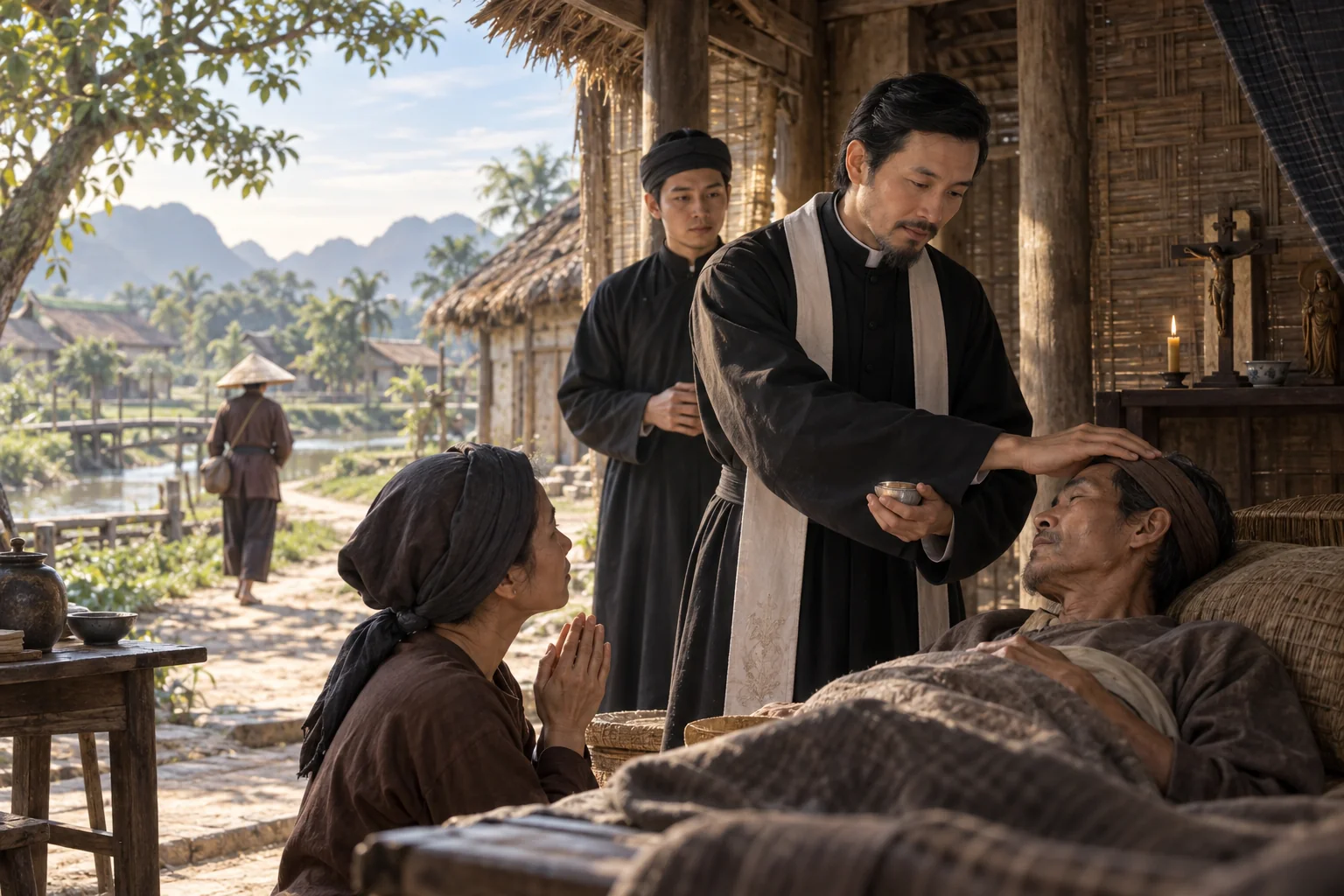
At night, when the whole village was asleep, he crept out of hiding and waded across muddy fields from one Catholic family to the next. Sitting on a bamboo bed, he offered a silent Mass by the flicker of an oil lamp, heard confessions, anointed the sick and baptized newborns. Picture a shepherd wading through mud in the pitch dark, always straining to hear a barking dog or a strange footstep, ready to flee at the first sign he had been discovered.
To hide from the mandarins’ soldiers and prowling spies, he changed his name from Dũng to Lạc. He said:
“I changed my name to Lạc — joy — to remind my heart that it is always filled with the Lord’s joy in the midst of countless hardships!”
He lived very simply on rice with sesame salt and boiled water spinach, and whenever the faithful gave him a coin, he at once passed it all on to the poorest families in the parish.
Chapter 3 of 6
Arrested three times, and freely stepping up to martyrdom
His zeal led him through three hard trials. The first came in 1835 at Kẻ Sông, when soldiers burst in and arrested him. The parishioners, grieving for their spiritual father, raised a hundred strings of cash between them to ransom him from the district mandarin. Father Lạc said sadly:
“Why waste your money ransoming me? If God wants me to bear witness to Him, I am ready to die!”
But out of love for a flock whose faith was not yet firm, he let them ransom him so that he could go on serving elsewhere.
The second came on November 10, 1839, at Kẻ Liêu, where he was arrested together with a frail old priest, Father Peter Trương Văn Thi. Once again the faithful quickly raised money and ransomed Father Lạc, while Father Thi stayed in custody. But as soon as he was through the village gate, Father Lạc stopped on the riverbank. He looked back at his frail old friend in chains, and his heart wrenched as he asked himself:
“Why should my friend bear chains for the name of the Lord, while I try to run away to safety alone?”
At that very moment God settled his fate. As he crossed the river to Kẻ Trình to escape, a non-Christian village chief recognized him and had him arrested again. Once more the faithful wanted to ransom him, but Father Lạc firmly waved them away:
“No, brothers and sisters, don’t try to ransom me anymore! This is God’s holy will... I want to share prison and death with old Father Thi, to bear witness to Christ!”
Chapter 4 of 6
A serene poem from the dark prison of Kẻ Chợ
The two priests were locked in heavy wooden cangues with iron chains around their necks and taken under guard to the prison of Kẻ Chợ (Hà Nội). At the tribunal the mandarins tried everything, from promises of stipends and titles to ordering them to step over a crucifix laid on the ground as a sign that they renounced their faith. This was a common test under Minh Mạng, since stepping over the Cross was thought to be the plainest denial of faith, without a single word being spoken.
Father Andrew Dũng Lạc held his head high and declared before the mandarins:
“Your Excellencies, from my childhood until now I have worshiped only one God, the Creator who made heaven and earth, and I am wholeheartedly loyal to the king and his officials! I have never committed any wrong that harms the people or the country... But if you order me to trample on the Cross of my Master, then better that you behead me right here, for I will never betray my God!”
Unable to shake the priest’s faith, the furious mandarins threw him into a dark cell to await execution. In that stinking prison, with the cangue weighing on his neck and his body bruised and bitten by mosquitoes and bedbugs, Father Andrew Dũng Lạc stayed wonderfully serene. When a friend wrote asking after him and worrying about what would happen to him, he smiled and sent back a beautiful poem in Nôm script, full of the spirit of the Gospel:
“Winter is over, the season turns, and spring is here; all around, the land grows lush and bright with new life. Wandering the earthly road, my heart has never changed; loyalty and filial love have never left my soul. The heavy cangue I count as light; the sufferings of this world — I can only smile at them! The cup of thanksgiving I will drink to the last drop; radiant Heaven comes to welcome me!”
He saw the cangue on his neck as a victor’s garland, and his coming death as a sweet cup of thanksgiving he was blessed to drink with Jesus. Something in that poem is worth pausing over: in chains and in prison, with death only days away, the prisoner used the traditional poetry of his own people, the Nôm verse every Confucian scholar of the time knew, to express not fear or bitterness but joy.
Chapter 5 of 6
The day of triumph at the Cầu Giấy gate
On December 21, 1839, Emperor Minh Mạng’s decree of beheading reached Kẻ Chợ. Father Andrew Trần An Dũng Lạc and old Father Peter Trương Văn Thi were led out to the execution ground outside the Cầu Giấy gate. He walked calmly, praying the Rosary and softly singing psalms of thanksgiving.
He knelt for a last prayer of surrender and forgave the executioner. Then the sword was raised, and the gentle forty-four-year-old shepherd finished his earthly race, shedding his last drop of blood on the soil of his homeland. The faithful bravely gathered his remains and buried them for a time near the Cầu Giấy execution ground.
Chapter 6 of 6
The saint who stands for generation upon generation of witnesses
On May 27, 1900, Pope Leo XIII beatified Father Andrew Dũng Lạc and his fellow martyrs. And on June 19, 1988, the greatest day of grace in the history of the Church in Vietnam, in Saint Peter’s Square in Rome, Pope John Paul II canonized Andrew Trần An Dũng Lạc together with one hundred and sixteen Vietnamese Martyrs.
His name was chosen to head the list of the Vietnamese Martyrs in the liturgical calendar of the universal Church, celebrated every year on November 24. He is remembered not only for himself but on behalf of the hundreds of thousands of Vietnamese believers who shed their blood for the faith over nearly three centuries of persecution, from the time of the Trịnh and Nguyễn lords to the reigns of Minh Mạng, Thiệu Trị and Tự Đức.
Saint Andrew Trần An Dũng Lạc left Vietnamese Catholics a lasting lesson:
“The faith of God never runs against love of country or a people’s filial piety!”
The boy sold for ten strings of cash to escape famine, who became the priest walking out to the Cầu Giấy execution ground with a smile of forgiveness, teaches each of us to keep joy alive in our hearts, however society changes and however many hardships life brings. Make your hard-working life a cup of thanksgiving offered to God, and love and serve your people with a loyal, devoted heart.
The end of the story
You have walked with Saint Andrew Trần An Dũng Lạc to the end of the story.
A few details of his life that touch the heart:
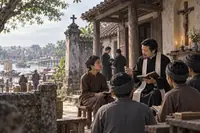
At ten, in the middle of a famine, his parents had to sell little Dũng to a catechist for ten strings of cash, just to get the family through.
To escape the spies hunting him, he changed his name from Dũng to Lạc, saying: "I changed my name to Lạc — joy — to remind my heart that it is always filled with the Lord’s joy in the midst of countless hardships!"
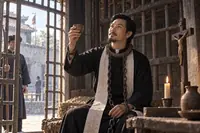
From his dark cell he sent out a Nôm poem, calling the cangue a victor’s garland and his coming death a sweet cup of thanksgiving.
Stay in silence
You understand why he changed his name: a boy once sold for ten strings of cash to escape famine had learned to turn even the harshest hardships into joy offered to God.
The cup of thanksgiving I will drink to the last drop; radiant Heaven comes to welcome me!
Let us pray
Saint Andrew Dũng Lạc,
as a boy you were sold for ten strings of cash to escape famine. Grown up, you took the name Lạc — joy — to remember that even in hardship your heart held the joy of the Lord.
Do not let me lose that joy when life turns sad: when my work fails, when I am misunderstood, when I feel small.
Pray for the land of Vietnam, for families still living in poverty, and for all who quietly keep their faith.
Amen.
Light a candle for Saint Andrew Trần An Dũng Lạc
Sources
- Feast dayAuthor’s edited profile
- Often depicted withPatronages and symbols, version 1.1
- Reflectiongphaiphong.org
- Reflectiontonggiaophanhanoi.org
Meet the next one
 Journey 8