Martyr 61 of 117 · Bishop
Saint José Díaz Sanjurjo (An), Bishop
The man who wrote a Latin grammar in Vietnamese
1818 – 1857 · Feast day July 20
Bishop, from Spain · Spanish
There is a Latin grammar written in Vietnamese, to make learning easier for Vietnamese seminarians. Its author was a young Spanish priest who had been in Vietnam only a few years. To do that, he had to master Vietnamese and really understand his students.
The eldest son leaves home
José Díaz Sanjurjo was born on October 26, 1818, in Spain. He was the eldest of five children. An eldest son was usually expected to support his parents. Yet he chose to leave.
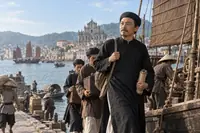
He entered the Dominican Order, made his profession in 1843, and was ordained a priest in 1844. By way of Manila and Macau, he reached Eastern Tonkin on September 12, 1845, and took the Vietnamese name An.
Teacher of seminarians
He was assigned to teach the seminarians at Nam Am. He learned Vietnamese, and learned it so well that he was able to write a Latin grammar in Vietnamese for his students.
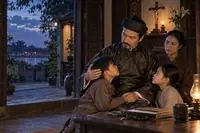
Think of that work. A foreigner, sitting beside an oil lamp, translating each rule of Latin grammar into Vietnamese, searching for the clearest way to explain it to country boys from Nam Định and Thái Bình. That is love: for his students, and for the Church in Vietnam.
A bishop at thirty-one
In 1849, when he was only thirty-one, he was chosen as coadjutor bishop of the Central Vicariate. He visited the Catholic communities, and once had to break off a journey because he was being hunted and had fallen ill with malaria.
When things calmed down for a while, he organized community life, taught the catechism and gathered the communities together. And on one matter he was very clear: when an uprising broke out against the court, he spoke out and forbade the faithful to take part. He wanted Catholics to live their faith, not to be drawn into political or military conflicts.
Arrest and solitary confinement
But that did not save him. He was denounced as a leader of the Catholics, arrested, and held in solitary confinement in Nam Định for about two months.
In those days he may often have prayed over the words of the Psalm:
“May those who sow in tears reap with shouts of joy!” (Ps 126:5)
He had gone out to sow, leaving his family and his homeland. He had sown seeds in the hearts of seminarians and in the Catholic communities. He would not see the harvest. But he believed the harvest would come.
Thanksgiving before death
On July 20, 1857, in the reign of Emperor Tự Đức, Bishop An was led to the Bảy Mẫu execution ground. Before he was executed, he knelt down to pray, thanking God for creating him and for leading him to Đại Nam to preach the faith.
He gave thanks. He did not complain about dying in a foreign land; he thanked God for bringing him to it.
He was beheaded at only thirty-eight.
He was beatified on April 29, 1951, and canonized on June 19, 1988. His own feast day is July 20.
The harvest to come
Bishop An lived in Vietnam for twelve years. Not long, but long enough to leave a book for his students, communities gathered together, and an example of gratitude.
The seminarians who learned Latin grammar from his book later became priests, and they in turn taught other generations. That was the harvest he believed in, though he never saw it.
Biography on the website of the Catholic Bishops’ Conference of Vietnam ↗